
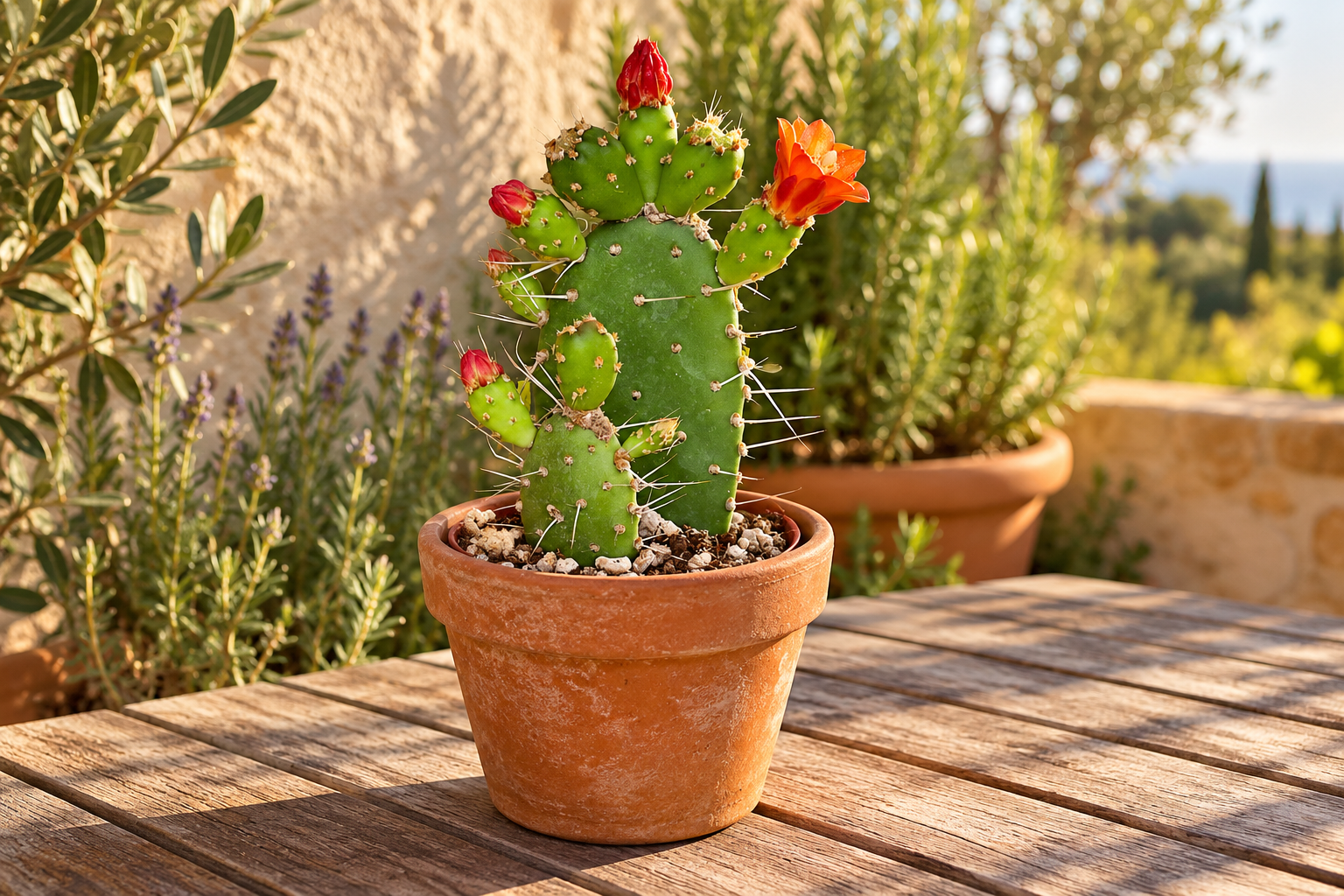
This plant at Exotenherz
Check the shop offer for current availability, price and what is included.
Product details, availability and delivery information are provided in the shop offer.
Your care table
| Topic | What to do | Why it helps |
|---|---|---|
| Light | Very bright to sunny; introduce stronger sun gradually. | With sufficient light, segmented stems stay more compact. |
| Watering | During growth, water thoroughly after the root ball dries well. | Permanently moist roots do not suit a well-drained cactus mixture. |
| Drainage | Keep drainage holes clear and remove remaining water from decorative pots. | The small root ball responds quickly to standing wetness. |
| Growing medium | Use free-draining cactus compost loosened with mineral components. | Water should drain and air reach roots. |
| Summer | After acclimatisation, place outdoors sheltered. | Sun is welcome; persistent rain and unexpectedly cold nights remain risks. |
| Winter | Very bright and reliably frost-free; water much more sparingly with little growth. | Low light and a wet root ball are an unfavourable winter combination. |
| Feeding | Give measured doses only during active growth. | A young cactus needs no heavy continuous feeding. |
| Handling | Use gloves or folded paper and handle the pot, not the segments. | Fine barbed bristles can irritate skin as well as visible spines. |
Check the compost and pot weight. The care table explains how far the compost may dry.
Water only when needed. The water should reach the root ball without spilling over the rim.
Remove surplus water from the saucer or cachepot. Then return the plant to a suitable position.
An opuntia with its own character
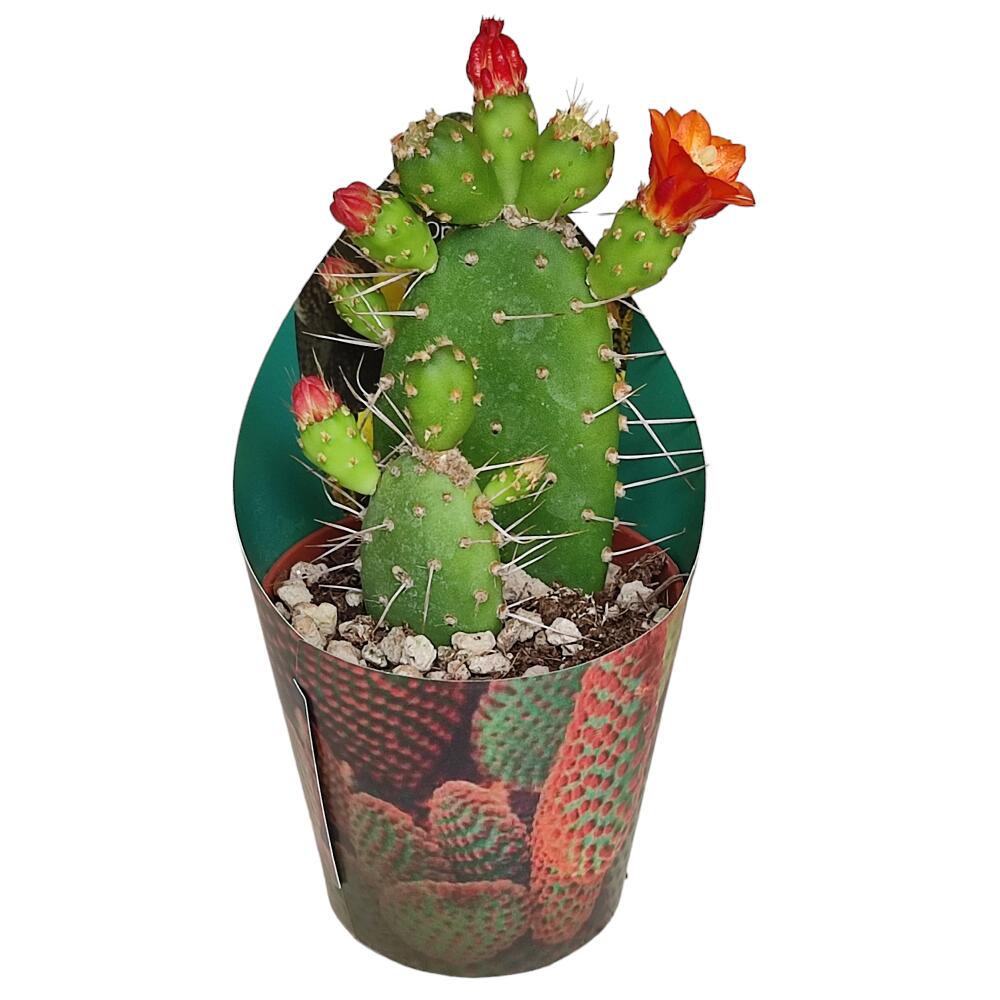
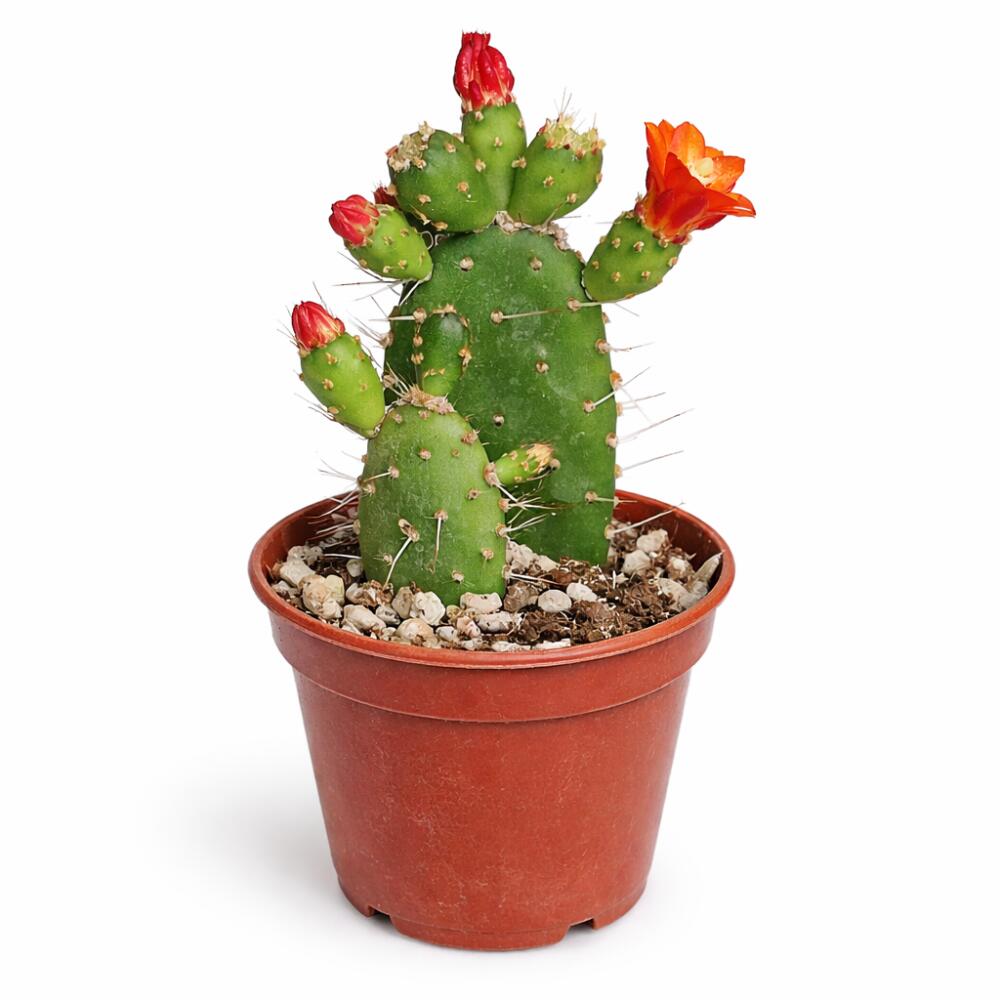
Opuntia quitensis belongs to the cactus family and grows from flat segmented green stems. Spines sit at the areoles; young side segments continue the shape. Its natural range extends from Colombia through Ecuador to Peru. The shop offers a young plant in a 6.5 cm pot at around 15 cm total height. It is a small collection plant rather than a mature garden cactus. Original photographs show buds and an orange flower. This illustrates a possible development stage but does not guarantee every dispatched plant is flowering. Segment count, spines and flowering stage naturally vary in living plants.
Introduce sunshine thoughtfully
We give this small cactus very bright light. A sunny window or sheltered terrace in the warmer half-year may suit. After shipping, winter or a darker place, however, it needs acclimatisation to stronger direct sun. Otherwise even a sun-loving cactus can develop patches. Outdoors, choose a position where the pot does not remain soaked during long rainy spells. Bring it back in time when nights become colder. Frost-hardiness information for large planted opuntias cannot be transferred to this young small pot.
Water should flow through, not stand
When watering, check the root ball rather than just the surface. If soil has dried well and the plant is growing, water thoroughly and let excess water drain. A drier phase can follow. The pot needs a clear drainage hole; no water should remain in the decorative pot. With little light and slower growth, intervals lengthen. A softening segment does not automatically mean thirst. Check root collar and moisture deeper in the growing medium before giving more water. Drainage and observation are more reliable than a fixed weekly schedule.
A pot that matches the root ball
Cactus compost loosened with mineral components keeps the root area airy. Do not repot into an oversized container, where much unrooted soil can stay moist for a long time. The best time is during active growth, when the root ball genuinely needs more room or old growing medium has lost structure. Measured feeding at the cactus dosage then suffices. Spines and fine barbed bristles are easily underestimated. Handle the container and support stems with folded paper if necessary rather than gripping segments with bare hands.
Flowers as a possibility, not a promise
The German sale name emphasises its readiness to flower. Suitably cultivated plants can indeed produce striking flowers. Whether and when a young opuntia flowers, however, depends on development stage, light, temperature and season. A very bright frost-free winter phase with little water matters more than trying to force flowers with lots of fertiliser or frequent watering. Fruit set or consumption are not part of this offer. Use of the species in its native regions mentioned in the plant profile is not a recommendation to eat a purchased ornamental plant.
Read changes in the stems
New segments first appear small and can later increase in area. We watch whether they grow firm and evenly. Elongated thin stems suggest too little light; soft dark patches call for checking water and roots. Do not pick up broken segments with bare fingers, because inconspicuous barbed bristles may stick. Healthy stems usually need calm care without frequent turning, repotting or topping up water. This small species particularly shows how a few segments become a distinctive plant shape step by step.
One plant, several views
Good to know
Will I receive a flowering plant?
Original images show a possible flowering phase. Current flowering is not guaranteed on the young plant offered.
Can Opuntia quitensis stay outdoors all year?
For the young plant in a 6.5 cm pot, we recommend a sheltered summer place and bright reliably frost-free overwintering.
How often should I water in winter?
Much less often than during growth. Check actual moisture and water only when the root ball has dried well.
Are spines a risk when repotting?
Visible spines and fine barbed bristles can irritate skin. Handle the container and protect your hands when repotting.
Do I need a larger pot straight away?
No. A slightly larger container makes sense only once roots fill the pot heavily or the growing medium no longer dries properly.
Sources and editorial note
- Product and delivery size: Exotenherz
- Royal Botanic Gardens, Kew: Opuntia quitensis, taxonomy and distribution
- Royal Horticultural Society: growing cacti and succulents
Product size, availability and original images checked on 30 September 2026 in the German shop offer. Species name and origin checked against Kew POWO, growing guidance against RHS and shop offer. A flower image is not a flowering guarantee.