
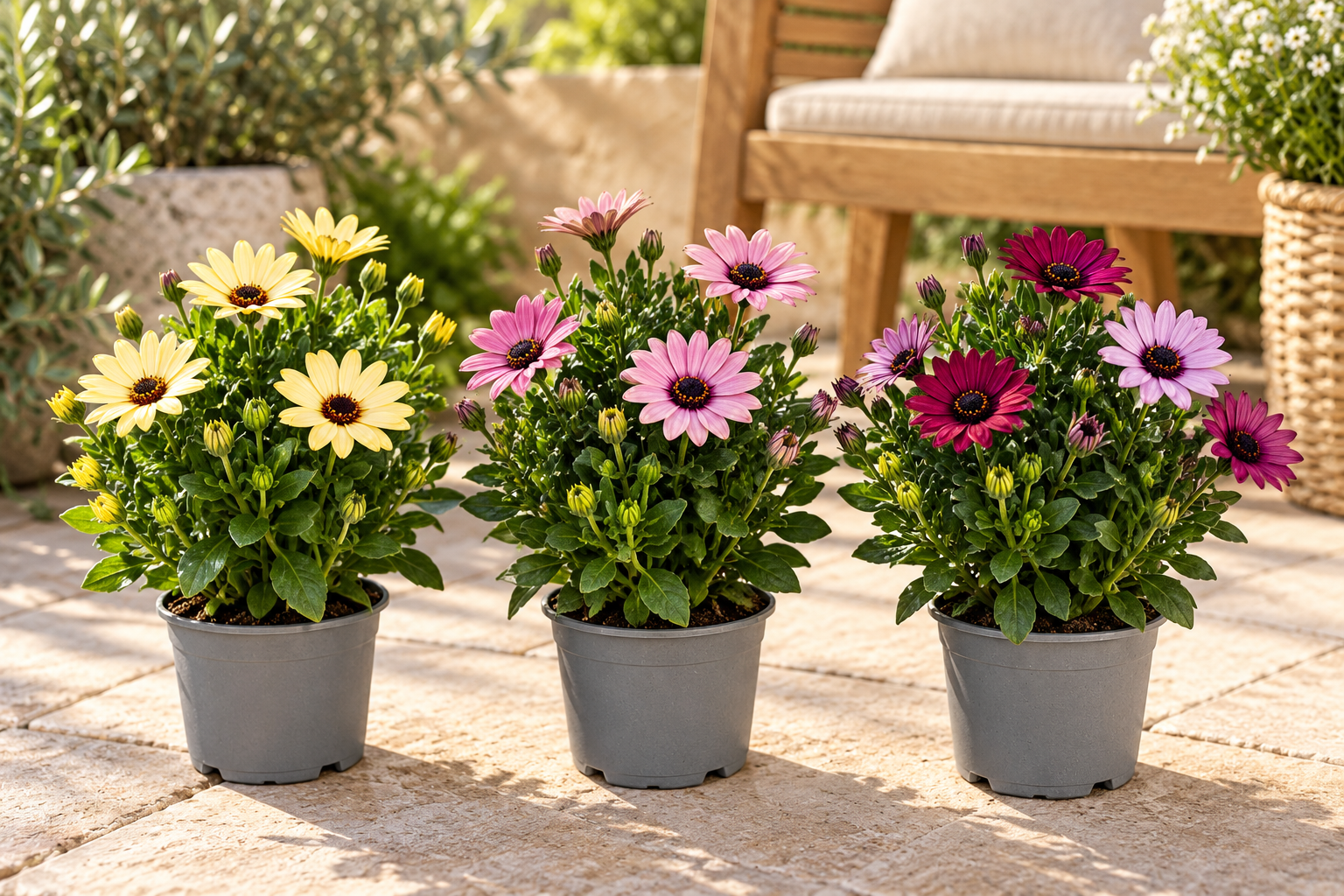
This plant at Exotenherz
Check the shop offer for current availability, price and what is included.
Check the shop for the current price, availability and offer contents.
Your care table
| Topic | What to do | Why it helps |
|---|---|---|
| Light | Position in sun and shelter. | New foliage should receive light too. |
| Planting | Acclimatise outdoors gradually after frost risk. | A fixed calendar date does not replace the transition. |
| Root ball | Water directly after checking moisture. | Avoid prolonged complete dryness. |
| Drainage | Let excess drain freely. | Check cover pots after rain. |
| Soil | Use free-draining planting soil. | Roots need air as well as moisture. |
| Nutrients | Dose according to the label during growth. | Account for pre-fertilised compost. |
| Flower care | Remove faded stems carefully. | Preserve new buds. |
| Winter | Plan bright frost-free continued cultivation. | Perennial does not mean reliably garden-hardy. |
Check the compost and pot weight. The care table explains how far the compost may dry.
Water only when needed. The water should reach the root ball without spilling over the rim.
Remove surplus water from the saucer or cachepot. Then return the plant to a suitable position.
The eye follows the rays to the centre
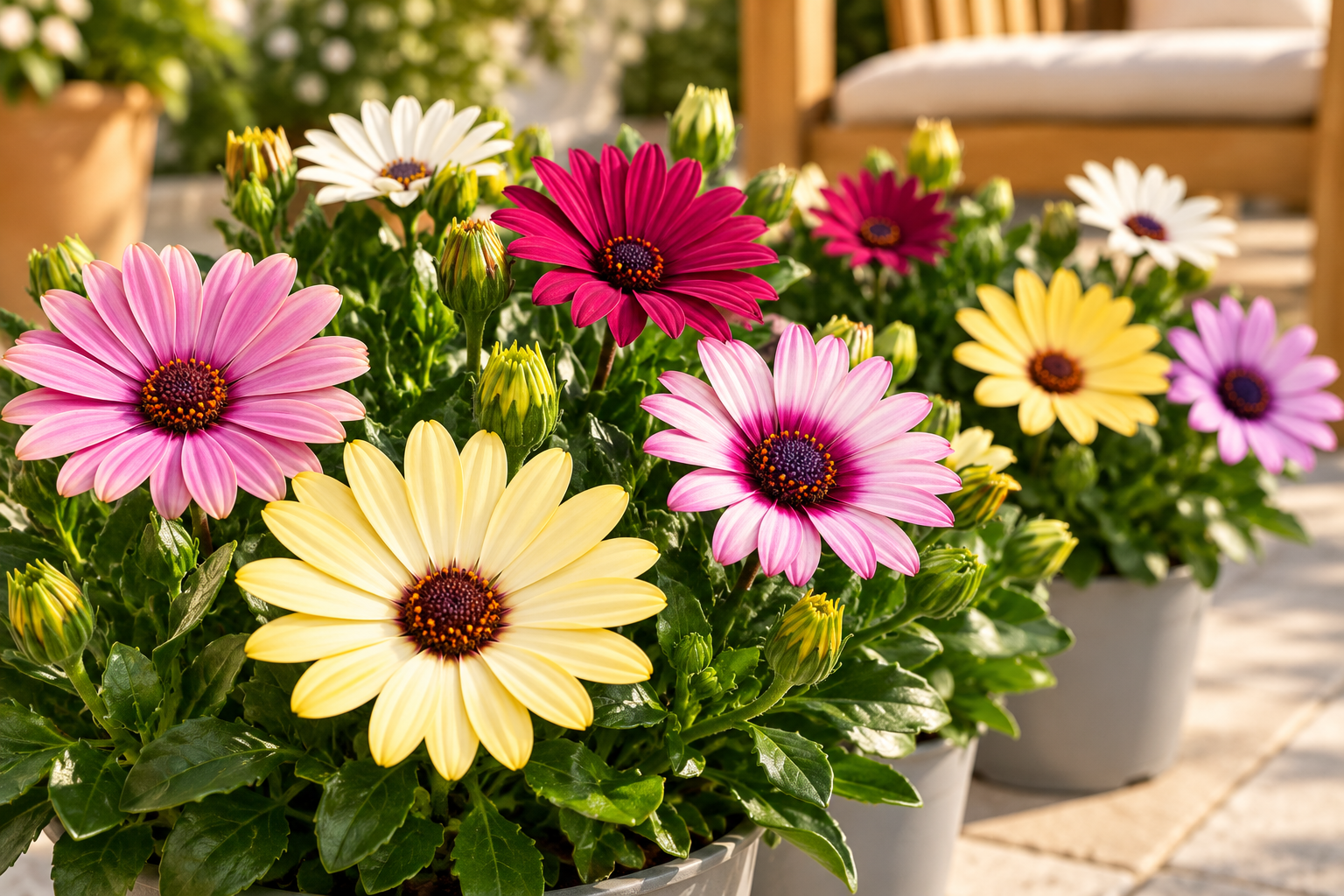
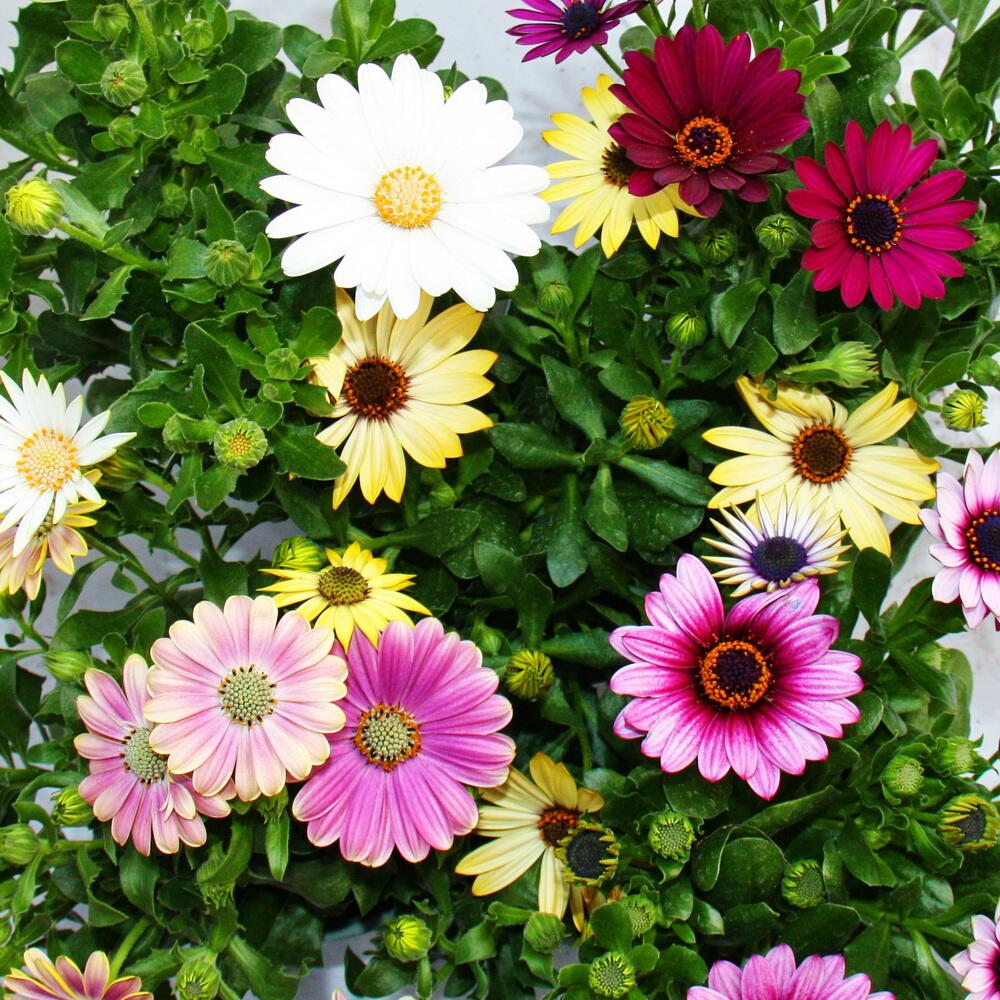
Large individual flower heads sit above the green foliage. Their rays can look white, yellow, pink or violet, with each centre giving its flower a distinctive contrast. A young group on the terrace need not disappear behind a dense ring of other summer flowers to achieve this. The original photograph shows a colour selection with single flowers. The name Osteospermum ecklonis does not establish a particular named cultivar. The distinctive size of a wild species is therefore not an automatically promised dimension for these young potted plants.
Three small pots make a manageable start
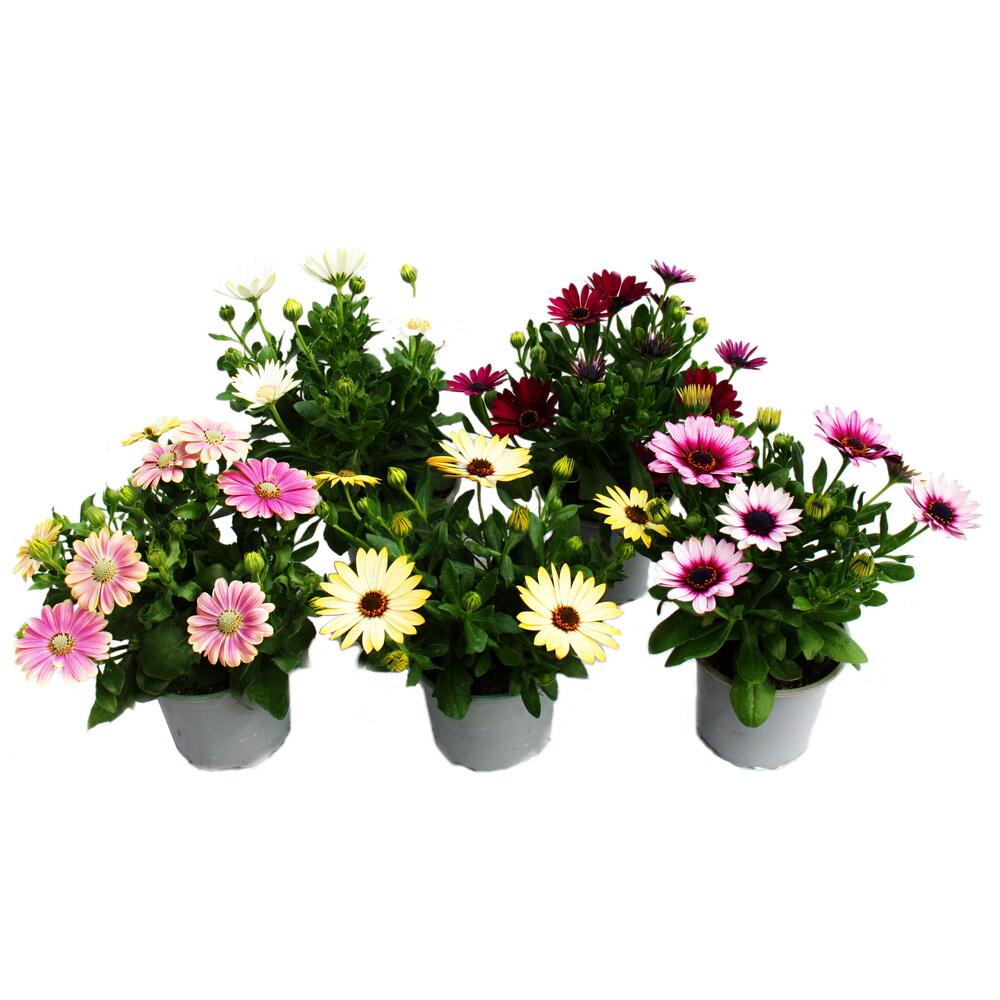
The assortment specifies three plants, each in an 11 cm pot with about 25 to 35 cm plant height. Before planting, distribute the crowns loosely. Space between plants helps later watering and keeps flowers visible. No fixed cultivar spread is given; plan around the existing crown and allow room for new growth. Small pots are easy to move, but stems are not intended as handles. A photograph after unpacking records the actual colours and young growth.
Find a flowering place in the sun
A sunny, sheltered position and well-drained soil suit cultivation. After protected growing conditions, acclimatise the plants gradually to the outdoors. Plant after local frost risk has passed. A chair or large neighbouring container can later cast shade on a terrace; observe the position through the day. Stronger feeding alone does not improve a low-light location. Also keep a distance from narrow walkways so flowers and young stems are not constantly brushed. Design supports development when light and accessibility suit the plants together.
Judge moisture at the root ball, not the flower
Water after checking the soil and pot weight. Supply the root ball before prolonged complete dryness develops; excess drains away. After rain, check closed cover pots. A changed flower position is no reliable replacement for checking the root ball. With wilted foliage, therefore also inspect the base and drainage. A sunny day can increase consumption and cool weather reduce it. Accompany these changes with suitable applications rather than repeatedly topping up a fixed quantity regardless of the container.
Remove faded flowers and preserve new buds
Free-draining planting soil and moderate feeding according to the fertiliser label support the season. Faded flower stems can be removed carefully. Look for the next bud and healthy shoot tips rather than constantly shearing the whole plant to the same height. If leaves become unusual or young tips distorted, check their undersides too. An airy crown makes inspection easier after damp weather. More fertiliser is not the blanket answer to every leaf problem. The plant book is particularly useful for recording which lit side of the group produced new flowers.
Prepare frost-free conditions for another season
The species is perennial, but reliable outdoor overwintering is not promised for this unnamed colour selection. In cold regions it is often used as a summer plant. Continued cultivation needs suitable bright, frost-free conditions. With less growth, water consumption falls; the soil still remains part of observation. Decide on the winter position in good time, not only after a freezing night. Comparing the young crown with its later bushier form shows in the plant book what the season actually produced, without promising fixed flower quantities for next year.
One plant, several views
Good to know
Are all Cape daisies the same height?
The colour selection specifies no fixed cultivar; later dimensions may differ.
Which colours does the picture show?
It shows an example selection from the original colours, not a guaranteed arrangement.
Is 35 cm the eventual height?
No. The offer gives the young plant height.
Must faded flower heads remain?
They can be removed carefully without damaging new buds.
Can the pot stay outdoors every winter?
Reliable outdoor overwintering is not promised for this selection.
Sources and editorial note
- Exotenherz: offer and original images (03.10.2026)
- RHS – Osteospermum ecklonis, species and cultivation (03.10.2026)
Shop offer, item number, GTIN, availability and original images directly checked on 02.10.2026; specialist acceptance on 03.10.2026. Specialist sources read directly. Specific SKU, dimensions, original images and orderability directly checked in the shop on 03.10.2026. Specialist sources read in full; shop name and botanical synonyms remain distinguishable. Currently not orderable: knowledge portrait without a purchase link, social drafts without sending clearance. No Wawi, server or tool changes. Currently not orderable: knowledge portrait without a purchase link; social drafts not cleared for sending.