
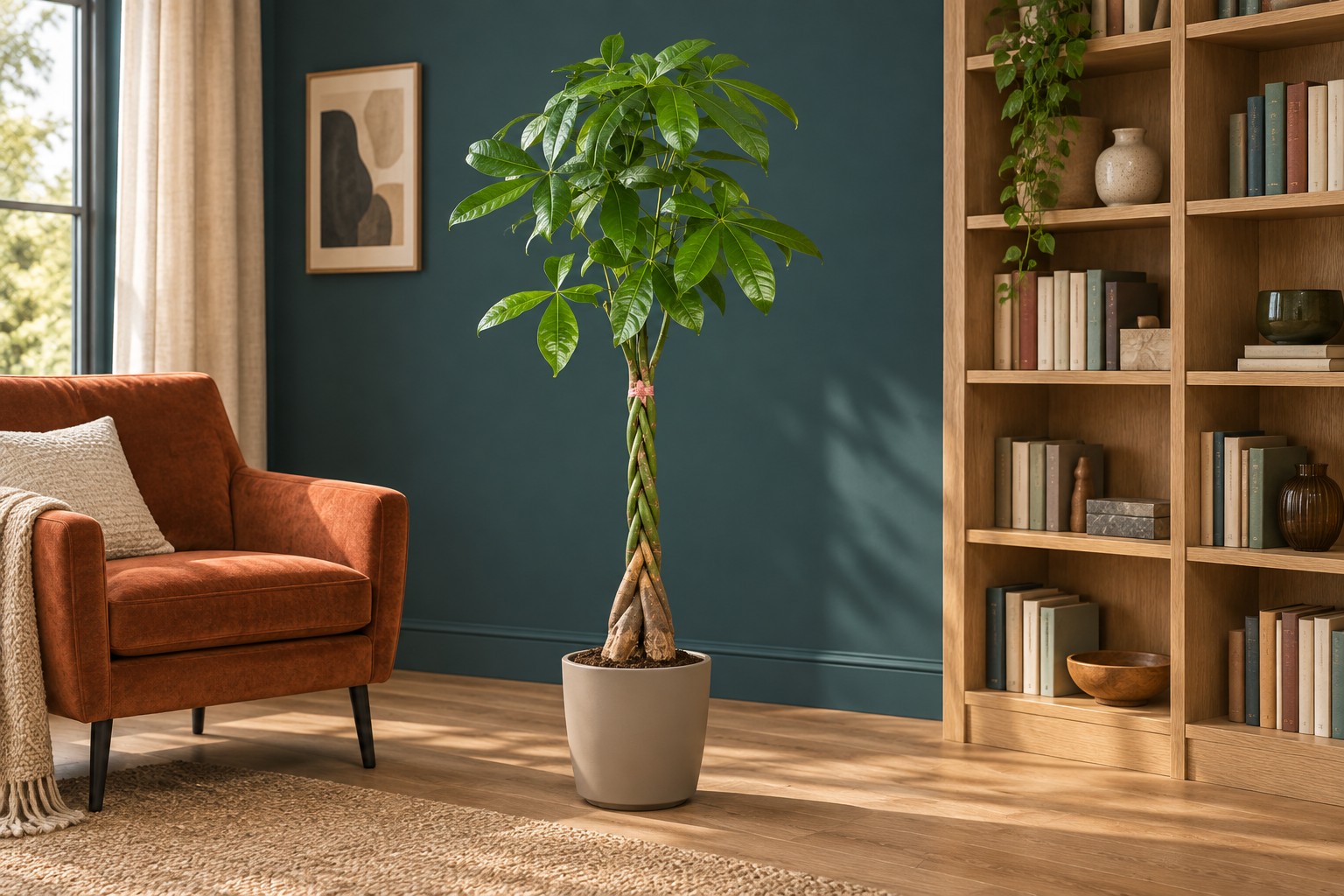
This plant at Exotenherz
Check the shop offer for current availability, price and what is included.
The linked shop is in German. Product details, availability and delivery information are provided in that shop.
Your care table
| Topic | What to do | Why it helps |
|---|---|---|
| Light | Keep bright with indirect sunlight. | Avoid hot direct sunshine after shipping. |
| Water | Let surface compost dry slightly, then water after checking the root ball. | Avoid water collecting constantly in the outer pot. |
| Compost | Use a loose, humus-rich mix with good drainage. | Combine moisture with root aeration. |
| Nutrients | During growth, feed moderately according to product instructions. | Reduce accordingly with little growth or pre-fertilised compost. |
| Warmth | About 18–25 °C according to the shop; avoid cold draughts. | Protect the container from cold floors and panes. |
| Braided trunks | Check ties and contact points regularly. | Thickening growth can cause constrictions. |
| Pruning | Shorten long shoots gently during healthy growth. | The crown branches only gradually. |
| Problems | With leaf loss, check compost, trunk firmness and leaf undersides. | Different causes require different measures. |
Check the compost and pot weight. The care table explains how far the compost may dry.
Water only when needed. The water should reach the root ball without spilling over the rim.
Remove surplus water from the saucer or cachepot. Then return the plant to a suitable position.
Five or more leaflets form a hand
Pachira’s glossy foliage consists of several individual leaflets extending from one point like fingers. The species belongs to the mallow family and can become a large tree in its tropical homeland. Its striking flowers and fruits rarely take centre stage indoors. The German trade name Glückskastanie connects the plant with gift-giving and good-luck symbolism. A botanical relationship with the local chestnut cannot be inferred from that name.
A braided trunk is a horticultural creation
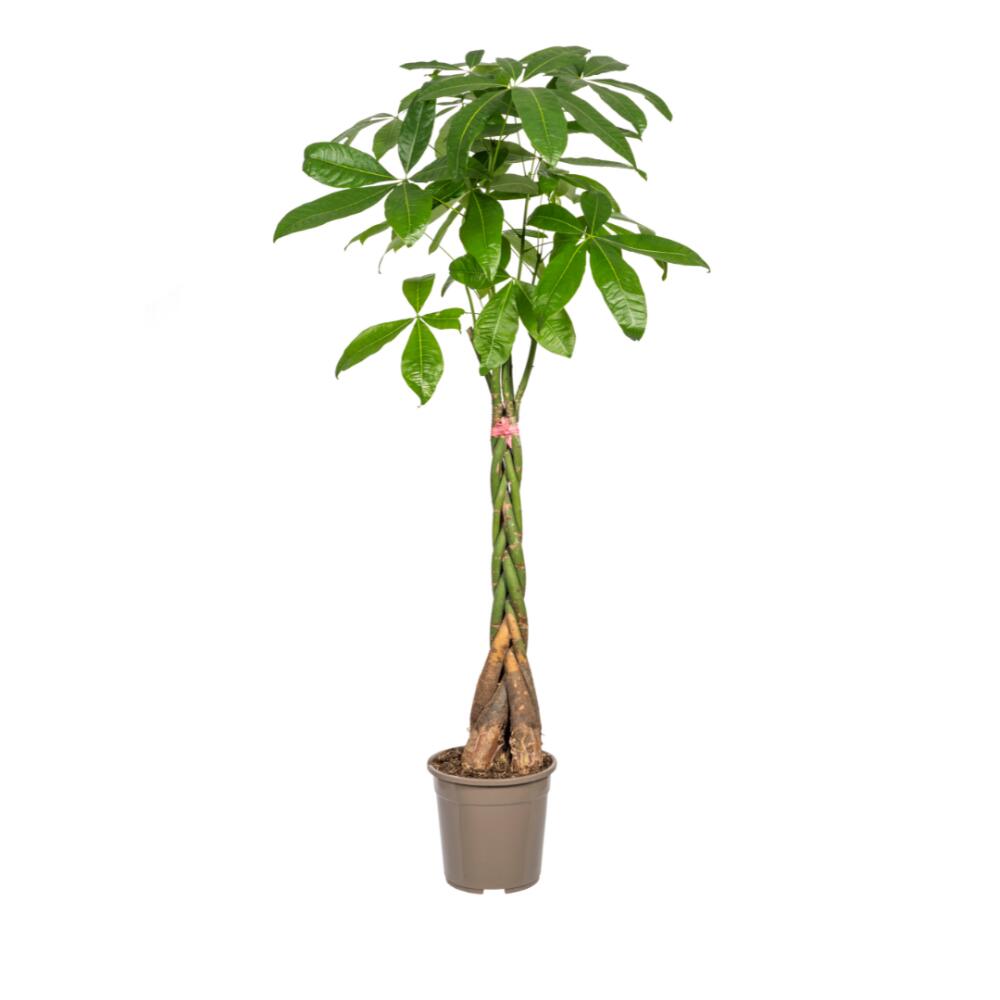
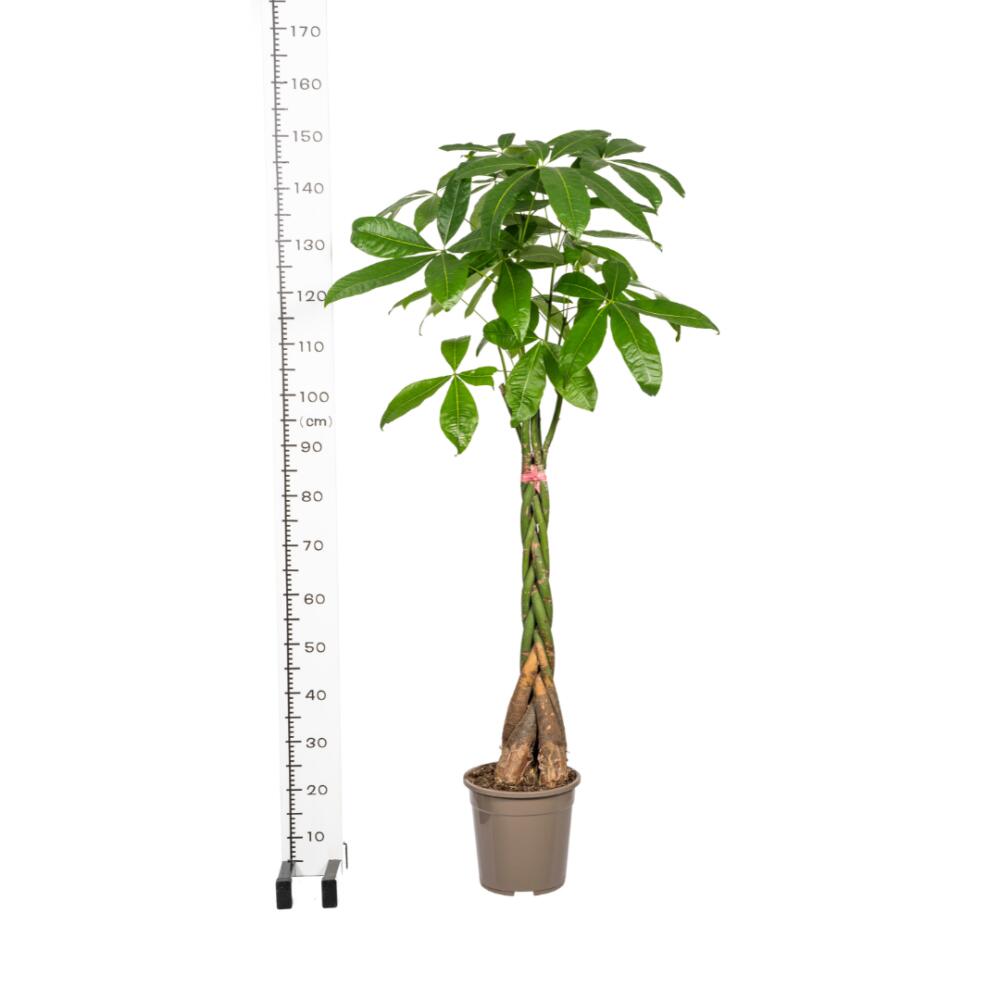
The offered form in a 24 cm pot measures approximately 120–140 cm total height. Its braid is made from several young, flexible trunks and is not a natural twist of a single trunk. As the trunks thicken, ties can become tight, so check them occasionally for constrictions. The airy crown looks attractive beside a reading chair or in a bright workspace. The tree needs lateral space so the individual leaflets do not constantly hit a wall or furniture.
Bright indoor light and even warmth
A bright position with indirect sunlight suits it well. Hot, direct sun after shipping can cause scorch. The shop recommends approximately 18–25 °C and protection from draughts. Turn the pot slightly from time to time if the crown grows strongly towards the light, and avoid unnecessarily frequent moves. A warm room with a very dark position does not give balanced growing conditions. In winter, the temperature at the container matters: cold floors or panes can chill the roots more than expected.
Aquatica does not mean constantly wet in a pot
The species occurs in moist tropical habitats. This does not mean an indoor container should constantly stand in water. Let the surface compost dry slightly, check the root ball and then water according to need. Water must drain completely. A soft trunk and wet compost warn of root or trunk problems. The weekly guide in the shop does not replace a moisture check; winter intervals between applications can become considerably longer.
Caring for the crown and preserving the root zone
A loose, humus-rich potting mix with stable structure combines moisture retention with aeration. Repot when roots are cramped and keep trunk bases at their previous level. During growth, feed moderately according to product instructions without heavily supplementing fresh, pre-fertilised compost. Remove dust gently from leaf surfaces. Overlong shoots can be shortened under good growing conditions. Pruning changes branching gradually; first restore stable growing conditions for a weakened tree.
Not explaining leaf fall with one cause
Overly dry compost, constant wetness, changes of position or pests can produce different signs in the foliage. Assess moisture, trunk firmness and leaf undersides together. Detect mealybugs, scale insects and aphids early; observe new plants separately at first. Individual old leaves may age naturally. Repeated, substantial leaf loss, however, deserves investigation. Although specialist descriptions also cover fruits and seeds, the offered houseplant is grown as an ornamental. This portrait provides no recommendation to eat any part of the plant.
One plant, several views
Good to know
Does the trunk grow braided by itself?
No, several young trunks are braided together by the grower.
Must Pachira aquatica stand in water?
No. Standing water in an indoor container can encourage root rot; its moist natural origins are not instructions for constant wetness.
Does it really bring good luck?
The name expresses cultural symbolism and makes it a popular gift idea.
How large is this offer?
Approximately 120–140 cm total height in a 24 cm pot, with natural variation in trunk and crown shape.
Sources and editorial note
Sources checked: 15 September 2026. Product information and the contents of delivery follow the linked shop offer. Care advice was checked against the cited specialist sources and should still be adapted to the plant’s condition, position and season.