

This plant at Exotenherz
Check the shop offer for current availability, price and what is included.
Check the shop for the current price, availability and offer contents.
Your care table
| Topic | What to do | Why it helps |
|---|---|---|
| Light | Choose partial shade to shade. | Hot full sun can lighten and strain foliage. |
| Soil | Prepare humus-rich moisture-retaining draining soil. | Persistent wetness and a dry container rootball remain unsuitable. |
| Planting | Moisten the rootball, plant at the previous height and water in. | New roots need contact with prepared soil. |
| Water | Check the young root zone directly and water thoroughly as needed. | Tree roots can remove water even from shaded borders. |
| Edges | Monitor runners beside paths and small neighbours. | The plant spreads over an area rather than staying at its starting point. |
| Leaf care | Remove diseased or dead shoots individually. | Healthy evergreen foliage need not all be removed routinely. |
| Feeding | Account for soil supply and supplement moderately as needed. | More fertiliser replaces neither suitable shade nor good drainage. |
| Checking | With spots or dying shoots, inspect leaf undersides and soil. | Dense stressed planting may develop leaf and shoot disease problems. |
For young plants, feel the soil directly at the root ball. The surface and deeper soil may have different moisture levels.
Water thoroughly after planting; later, water according to the soil, weather and establishment rather than a fixed calendar.
Avoid standing water. For plants in containers, also check that water runs out of the drainage hole.
Leaf coverage holds the garden edge together
Light spots and shade alternate through the day below woody plants. Pachysandra terminalis gradually forms low continuous coverage there. Individual leaves are recognisable by wedge-shaped bases and coarser teeth in their upper sections. Crowded at shoot tips, they almost resemble small green rosettes. A young delivery plant initially shows only a few shoots; later coverage still needs to develop. When planning, look beyond each pot to the whole intended margin: where should a calm leaf surface emerge and where should neighbours and paths stay visible?
Pachysandra is no substitute for every dark place
The German name Schattengrün describes a garden plant for partial shade to shade, not one permanently suited to dark interiors. Outdoor shade differs too. Beneath a large tree, soil sometimes stays dry after light rain while exposed ground farther away becomes moist. Check the planned position over several days and directly in the root zone. Very hot full sun can strain foliage. A bright path edge with intermittent shade is easier to supply than a hot dry area that merely looks dark briefly in the morning.
Treat the 9 cm plants as a start
Offered sets contain young plants each in 9 cm pots at about 10–25 cm total height including pot. Species profiles give approximately 15–30 cm garden height for older planting. These measure different things, so do not conflict. The shop recommends 25–30 cm spacing as guidance. Lay pots over the area before digging holes. Smaller perennials, watering access and the course of paths remain visible. A closed covering does not arise on day one. How quickly gaps fill depends on garden position, plant development and density.
Underground shoots need a planned edge
Pachysandra widens through underground runners. This helps build a continuous area but needs monitoring at the edges. Where a little neighbour should remain free, check regularly for incoming shoots. A margin beside larger woody plants offers different space from a narrow pocket between sensitive individuals. Retain accessible check points and a clear path boundary. Move rooted sections when relocating pieces, treating them as fresh planting again. Cut greenery alone is not established new ground cover. Position and ongoing care keep the later area manageable.
Water to the rootball during establishment
Spring or early autumn often offers milder planting conditions. Soil must be frost-free and workable. Loosen the spot without unnecessarily damaging large woody roots and check drainage. Moisten the pot ball before unpotting, set at its previous height and gently bring soil around it. After watering in, check the former container ball where new roots start growing. A quick splash on distant surface soil does not reliably supply it. Water slowly and deeply when needed, letting surplus drain. A fixed number of watering days suits neither changing weather nor competition from neighbouring roots.
Discover spring flowers close up
Small whitish flower spikes may appear at shoot ends in spring. They are a quiet addition to foliage, not a large colour area like a profusely flowering summer perennial. A delivered plant need not yet have them. When older leaves become unsightly, remove dead material individually rather than pre-emptively cutting everything back. With spots or dying shoots, look closer: soil moisture, density and unusual leaves belong in the same assessment. Do not cover recurring damage with extra fertiliser. Maintain air movement in dense coverage and water soil where possible instead of repeatedly wetting all leaves.
Even evergreen edges change
Evergreen means foliage may persist through winter; individual leaves and shoots still age. After dry windy or strongly sunny winter periods, coverage may look patchier. Watch spring growth and first inspect actual roots before abandoning the whole area. Pots lack the moisture reserves of larger garden ground. Open drainage holes, enough root space and sheltered outdoor position remain important. In normally supplied soil, feed only as needed. A good shade edge comes from suitable conditions and accessible planting whose leaves and boundaries are monitored through the year.
One plant, several views
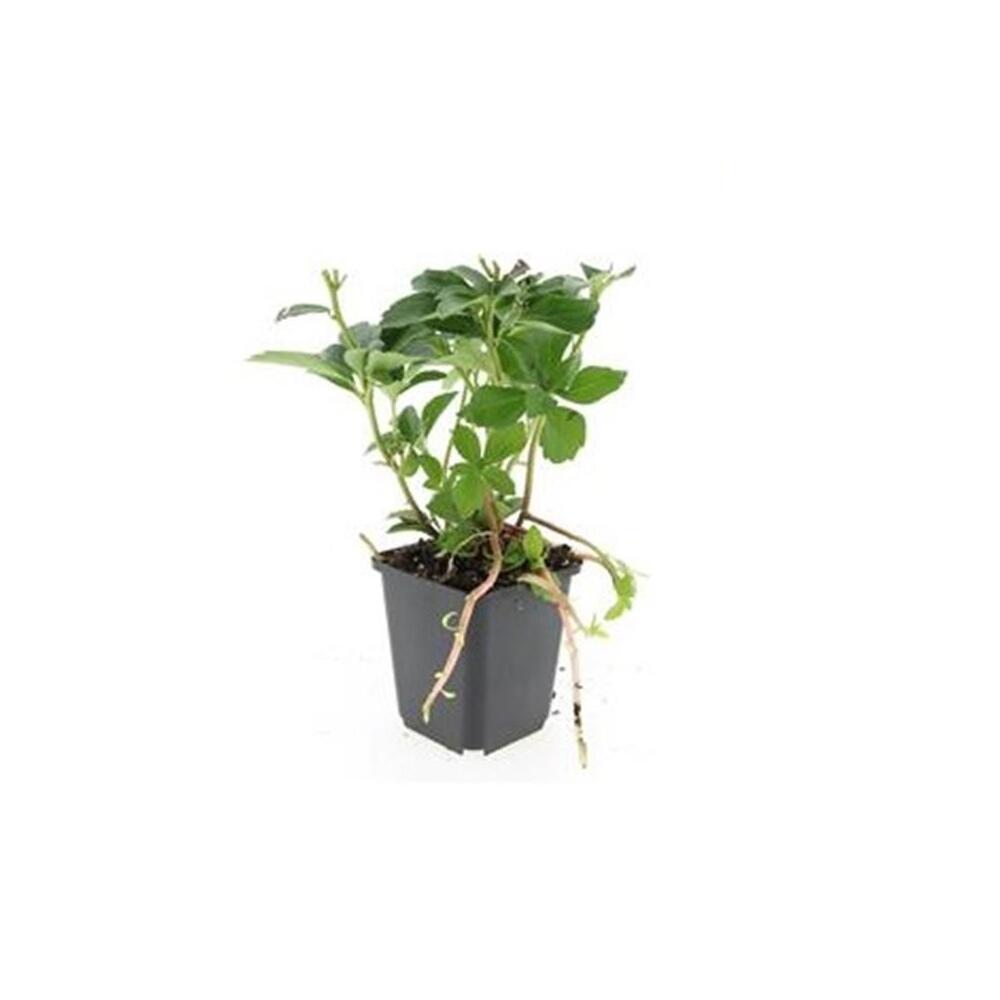
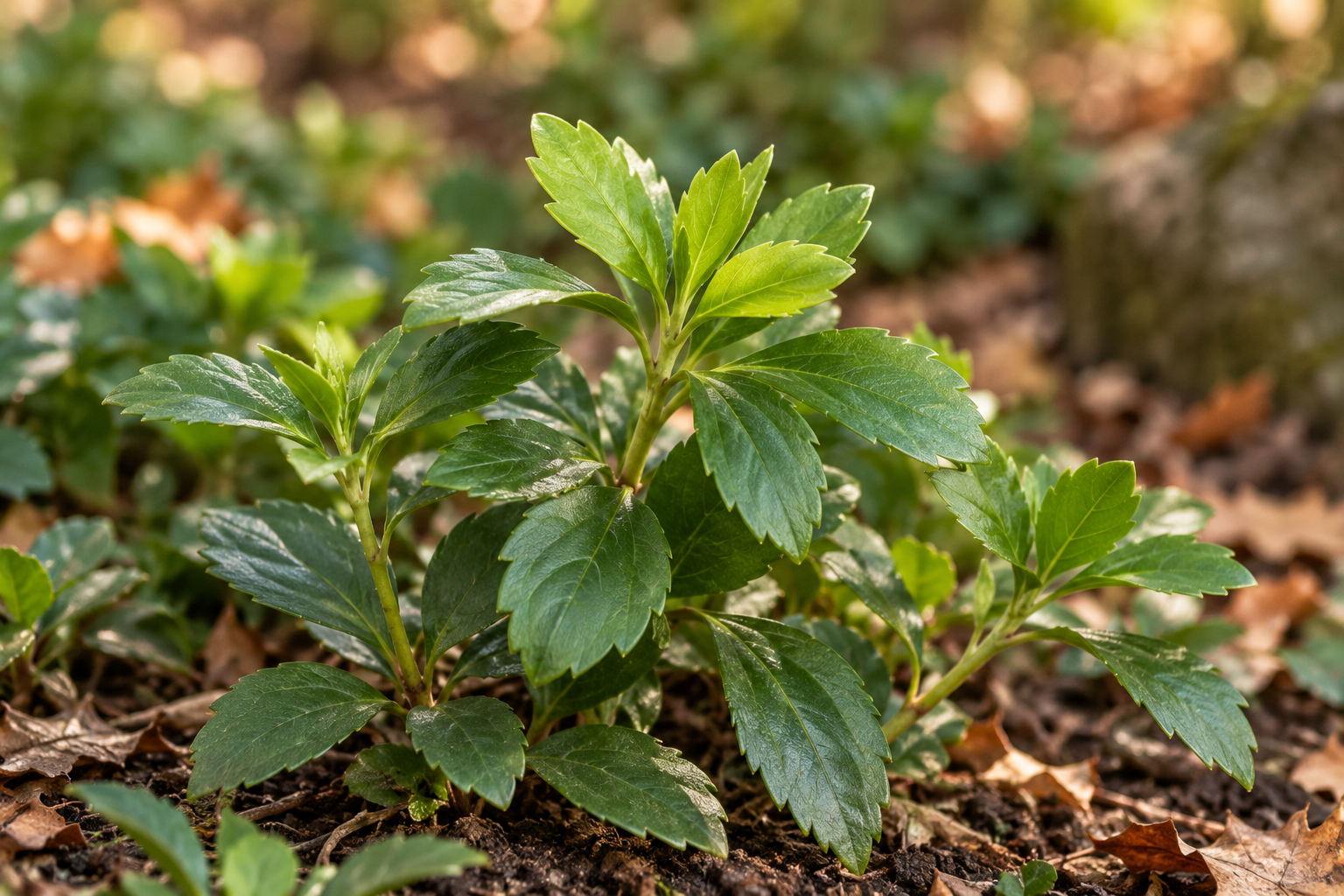
Good to know
Is pachysandra a houseplant?
This portrait describes garden ground cover in partial shade to shade, not a plant for a dark home.
How tall does Pachysandra terminalis grow?
Species profiles give about 15–30 cm garden height. Approximate 10–25 cm delivery height includes pot.
When does it flower?
Small whitish spikes may appear in spring. Delivery need not be flowering.
How densely should I plant?
The shop gives 25–30 cm spacing. Coverage and time depend on position and development.
Why is a shade border still dry?
Large tree roots may take water, and rain does not reach everywhere. Check the young root zone directly.
Does it stay at the planting point?
No. Underground runners widen the planting. Check edges and small neighbours regularly.
Sources and editorial note
- Exotenherz: offer and original photographs (03.10.2026)
- NC State Extension: Pachysandra terminalis, species features and cultivation (03.10.2026)
- International Dendrology Society: Pachysandra terminalis and Variegata (03.10.2026)
- Morton Arboretum: Pachysandra and Green Sheen and Variegata cultivars (03.10.2026)
- Exotenherz: checked 6-plant child offer (03.10.2026)
- Exotenherz: checked 12-plant child offer (03.10.2026)
- Exotenherz: checked 20-plant child offer (03.10.2026)
- Exotenherz: checked 40-plant child offer (03.10.2026)
- Exotenherz: checked 60-plant child offer (03.10.2026)
Shop offer, article number, availability and original images directly checked on 03.10.2026. Specialist sources directly read. Species identity, rhizomes, leaf features and spring flowers directly read. Differing specialist drought assessments (Morton versus NC State): no general drought tolerance; moisture-retaining draining soil and young rootball checks. Sources 03.10.2026. Morton fully accessible by web reading, local 403 separately recorded. All five child offers individually checked; available quantities: 6, 12, 60. Clean original view retained unchanged; young scene and leaf or flower detail appropriately labelled.