
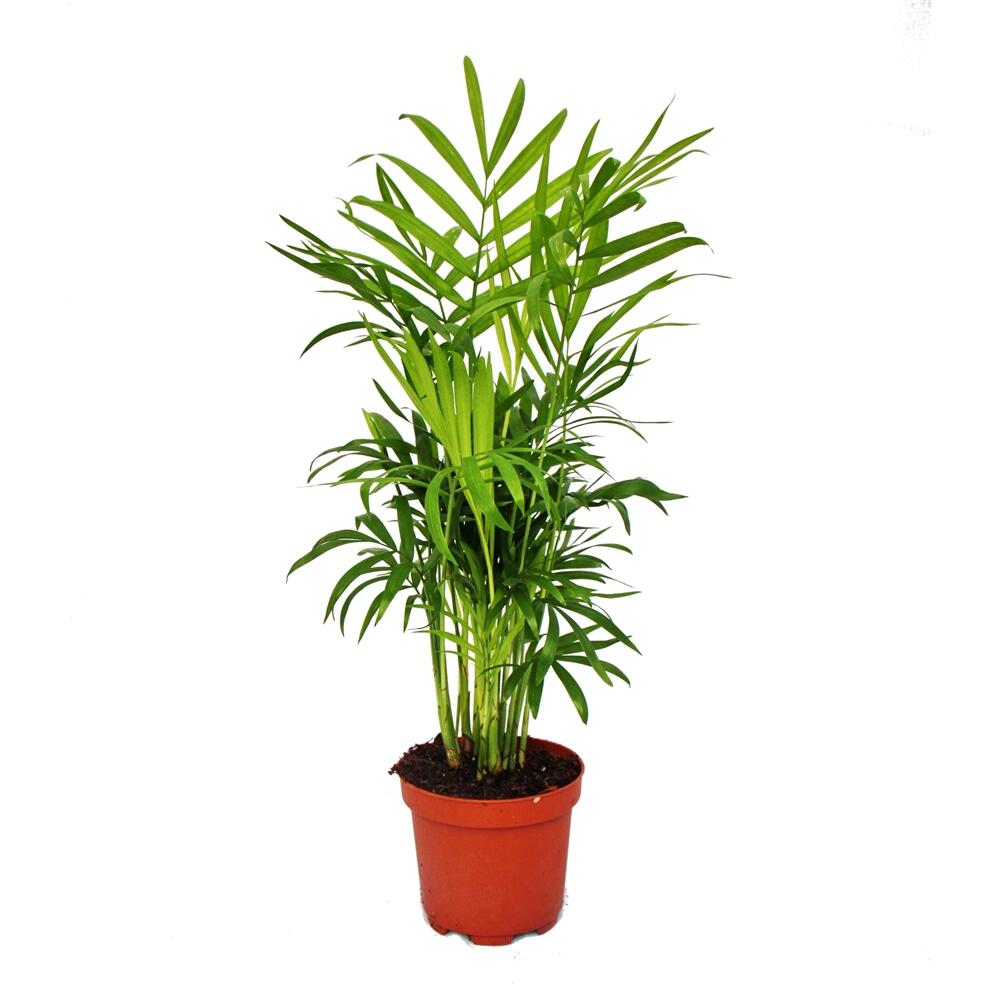
This plant at Exotenherz
Check the shop offer for current availability, price and what is included.
Link to the offer in German. Check the shop for the current price, availability and delivery contents.
Your care table
| Topic | What to do | Why it helps |
|---|---|---|
| Light | Place in bright indirect light; avoid intense summer sun. | The parlour palm is adapted to sheltered light conditions. |
| Watering | Let the upper compost dry somewhat and check the root ball before every watering. | Slight, even moisture is better than alternating drought stress and waterlogging. |
| Drainage | Let it drain after watering and check the decorative pot. | Standing water displaces air from the root area. |
| Temperature | Choose a warm place year-round, preferably around 16 °C or warmer in winter. | Cold draughts and a chilled root ball stress the tropical palm. |
| Leaf care | Gently remove dust with a soft damp cloth or a careful shower. | Clean leaflets make visual checks and light reception easier. |
| Fertiliser | Feed moderately during active growth according to the label. | Slow growth does not need heavy feeding. |
| Repotting | Choose a slightly larger pot with loose compost only when the root ball is dense. | Frequently disturbing roots unnecessarily offers no benefit. |
| Pruning | Remove only dead fronds; keep healthy shoot tips. | Cutting to reduce height can permanently damage the affected palm shoot. |
Check the compost and pot weight. The care table explains how far the compost may dry.
Water only when needed. The water should reach the root ball without spilling over the rim.
Remove surplus water from the saucer or cachepot. Then return the plant to a suitable position.
Fine leaves rather than a heavy crown
The parlour palm is a true palm. Its narrow leaflets sit along a central axis and give the frond its light shape. Chamaedorea elegans comes from Central American forests and grows rather slowly. It is therefore a good companion for people who want to watch a plant over a long period. Several young plants often stand close together in a pot, giving an early bushy impression. The thin green stems are not a sign of poor quality but part of its natural appearance.
Which size suits your living space?
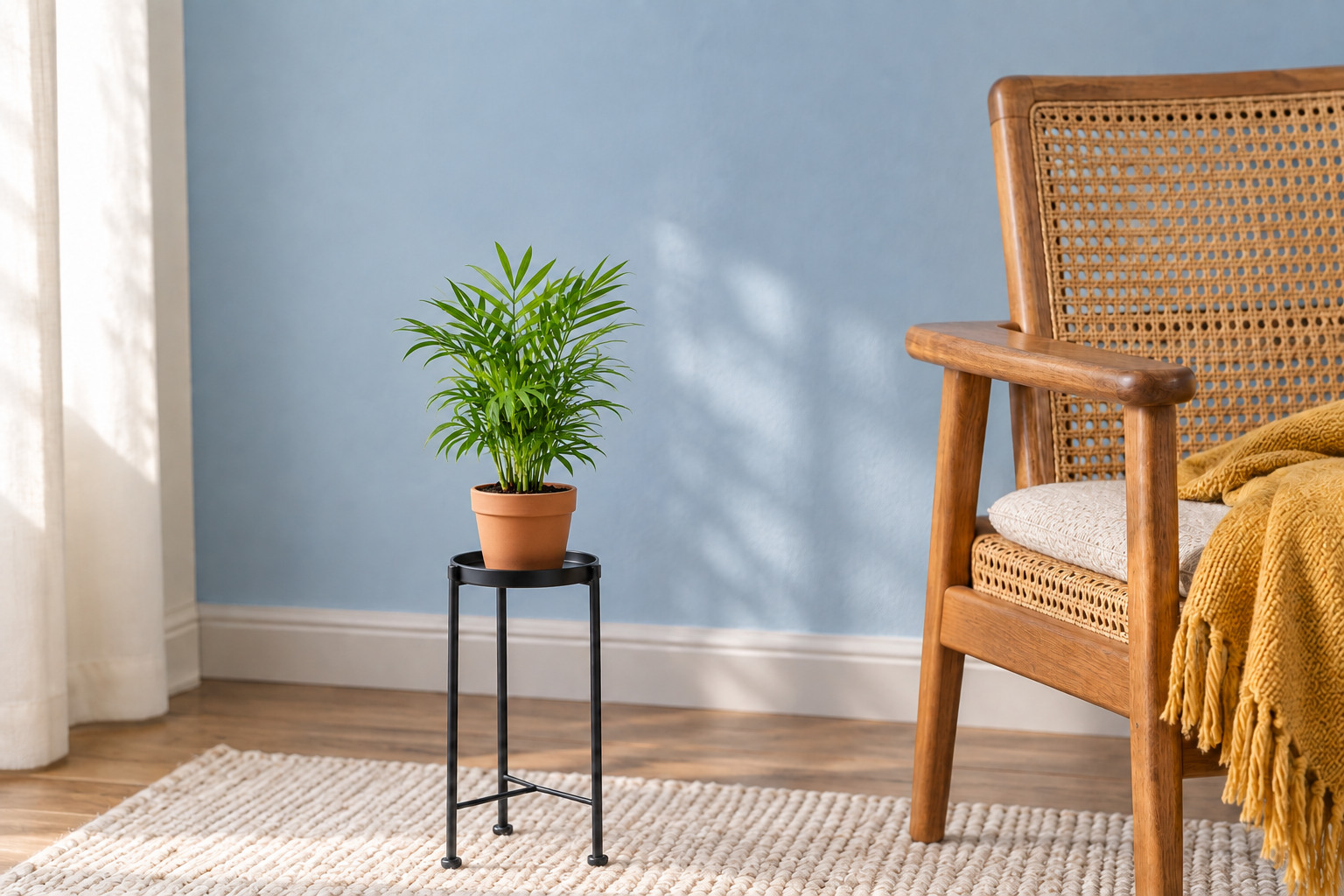
The version shown here has a 12 cm pot and approximately 40 cm overall height. A small plant stand can bring it to a pleasant viewing height without making the palm itself bigger. The shop also lists a 9 cm version at approximately 30 cm and a mini-plant in a 5.5 cm pot at approximately 12 to 15 cm overall height. These sizes belong to the same portrait. Allow side space for the fronds. Where a bag constantly brushes past or a chair bumps them, the fine leaf tips are quickly damaged.
A good place indoors
A bright position with filtered light suits the parlour palm. It does not have to stand on a windowsill; a clear place near a suitable light source can show its shape even better. In a deep, dark room corner, however, it does not grow well just because it tolerates shade. The term describes tolerance, not the ideal permanent position. Watch new growth and protect it from intense direct summer sun. A passage beside a frequently opened outside door is also unsuitable in winter because of cold air.
Water for roots that can breathe
Check the upper compost and pot weight. When the surface has dried somewhat, remaining moisture in the root ball decides the next watering. Water evenly and allow leftovers to drain. A parlour palm is not treated like a dryness-loving succulent but should not stand in water either. Remaining water is easily overlooked in an enclosed decorative pot. Occasionally take out the nursery pot and check the bottom. Needs may rise in summer; intervals often lengthen in winter. A short checking look is more reliable than a fixed weekday.
Radiator air and brown tips
Brown tips can result from dry air, unsuitable watering, salt build-up or mechanical damage. Check the obvious conditions first instead of inferring fertiliser deficiency from colour alone. Direct warm radiator air can often be avoided with another position. Support the narrow leaflets when wiping rather than pulling them between your fingers. An occasional gentle shower removes dust; water must drain well afterwards. Regular spraying alone corrects neither a wet root ball nor a permanently unsuitable position.
A palm is not pruned like a hedge
New fronds develop at the growing point of a shoot. Do not cut it off to lower the plant. A completely dried old frond can be removed with clean tools. Keep still-green leaves where possible, even if some tips are not perfect. Do not forcefully pull dead leaves from the dense base. A calm hand is more valuable in pruning than a radical tidy-up. If the plant eventually becomes too large, find a suitable place for it or choose a smaller version for the old position.
Repot with consideration for roots
The parlour palm does not automatically need a larger pot every spring. Check the root ball and how quickly compost dries after watering. If root space is tight, a slightly larger container is sensible. Loose, well-drained houseplant compost offers air and moisture together. Release the old pot gently and avoid tearing apart densely planted young plants. A larger pot alone does not make the palm grow bigger faster. After moving, keep it in the suitable bright position; heavy feeding immediately after a stressful intervention is not a starting aid.
Keep the winter position in mind
The parlour palm remains a houseplant in the cold season too. Choose a bright, warm position and prevent the root ball chilling at a cold pane or in a draught. With declining growth, reduce water and fertiliser accordingly. Less watering does not mean leaving it unchecked for weeks. Small pots in particular still need attention. If a new frond opens slowly, give it time. Pulling or pressing it open damages the young leaf without accelerating its development.
Notice early what hides between leaflets
During care, look at leaf undersides and stems. Fine webbing or pinprick pale areas can be a reason to check for spider mites; scale insects and thrips may also occur as problems. Clear identification matters more than precautionary spraying with different products. Initially move an unusual-looking plant aside and document its progress. Older parlour palms may produce inconspicuous flower clusters. Fruits are not intended as food; their sap can irritate skin. Gloves and clean tools are sensible for such care tasks.
One plant, several views
Good to know
Can the parlour palm stand in a dark corner?
It tolerates less light than many other palms but still needs daylight. Bright light protected from intense sun is the better starting point.
Why do new fronds appear so slowly?
The species grows rather slowly. Check light, temperature and roots; more fertiliser alone does not sensibly speed up healthy development.
Can I cut the top off the palm?
Do not cut off a shoot’s growing point to reduce height. Mainly remove completely dead fronds.
Do brown leaf tips always mean a lack of water?
No. Wet roots, dry air, salt build-up or mechanical damage can contribute too. Check conditions together.
Is the plant on the stand bigger than the shop offer?
The scene follows approximately 40 cm overall plant height including the pot. The stand is decoration only and is not part of the plant or delivery contents.
Sources and editorial note
- Product and delivery size: Exotenherz
- Parlour palm in a 9 cm pot
- Mini parlour palm in a 5.5 cm pot
- NC State Extension: Chamaedorea elegans
- RHS: parlour palm
- RHS: indoor palms
Sources checked: 14 September 2026. The specific version is described from the shop offer and care assessed using the linked specialist sources. Plant condition, position and season remain decisive for every action.