
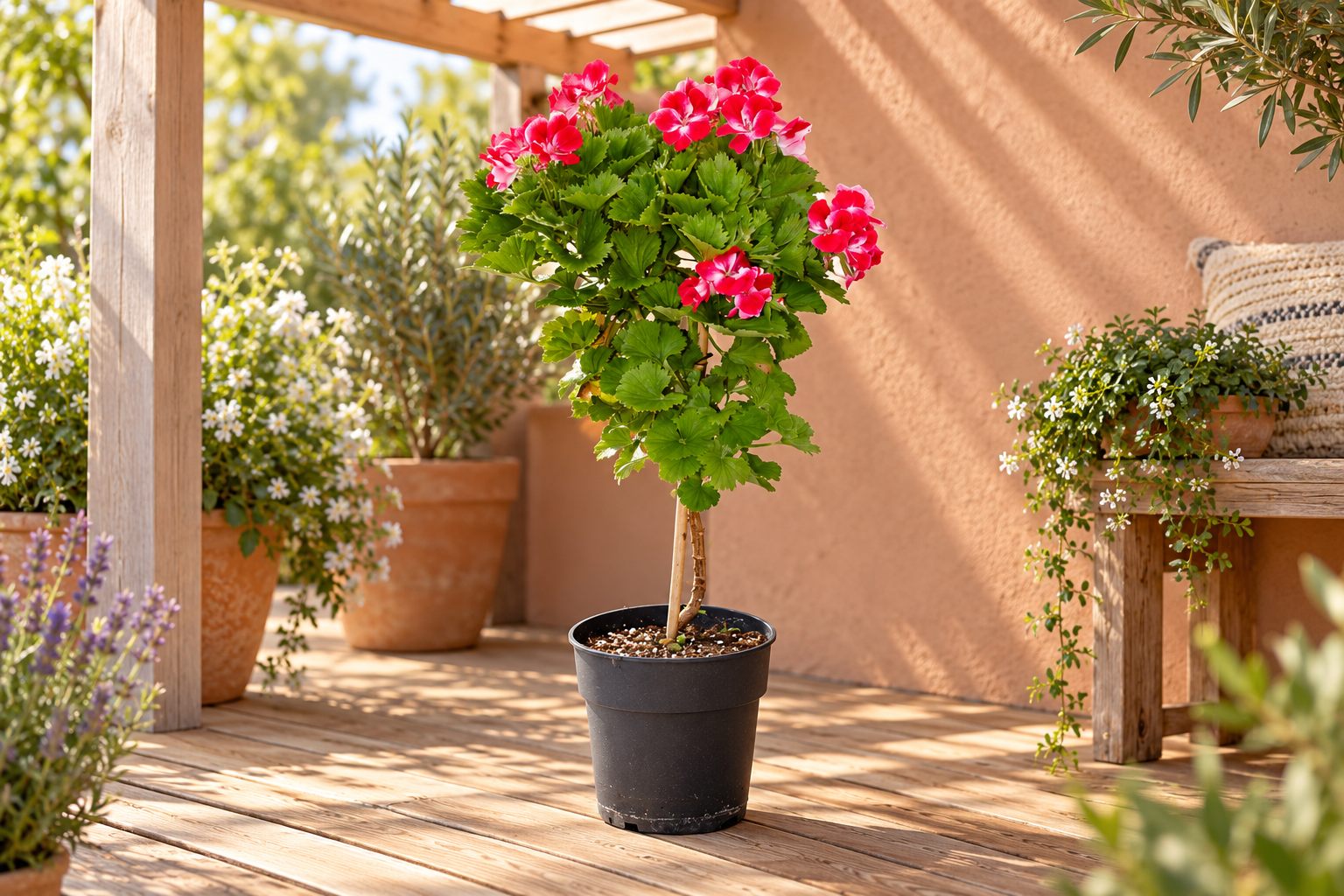
This plant at Exotenherz
Check the shop offer for current availability, price and what is included.
Check the shop for the current price, availability and offer contents.
Your care table
| Topic | What to do | Why it helps |
|---|---|---|
| Position | Bright, airy and sheltered from heavy rain. | Broad regal flowers should be able to dry. |
| Moving indoors | Before frost, to bright protected quarters. | The group is perennial but frost-sensitive. |
| Water | Check the root ball after drying starts and water directly. | The standard form says nothing about stored water. |
| Drainage | Remove excess and keep holes open. | An outer pot is not a water reservoir. |
| Soil | Free-draining, structurally stable planting soil. | Roots need moisture and air. |
| Nutrients | Follow the label during growth; account for pre-fertilisation. | Strong flowering is no invitation to overdose. |
| Stem | Check support and loose ties. | The crown is not used as a handle during transport. |
| Flowers | Remove faded parts cleanly and check leaves. | Damp dense crowns merit particular attention. |
Check the compost and pot weight. The care table explains how far the compost may dry.
Water only when needed. The water should reach the root ball without spilling over the rim.
Remove surplus water from the saucer or cachepot. Then return the plant to a suitable position.
Bright edges make every flower visible
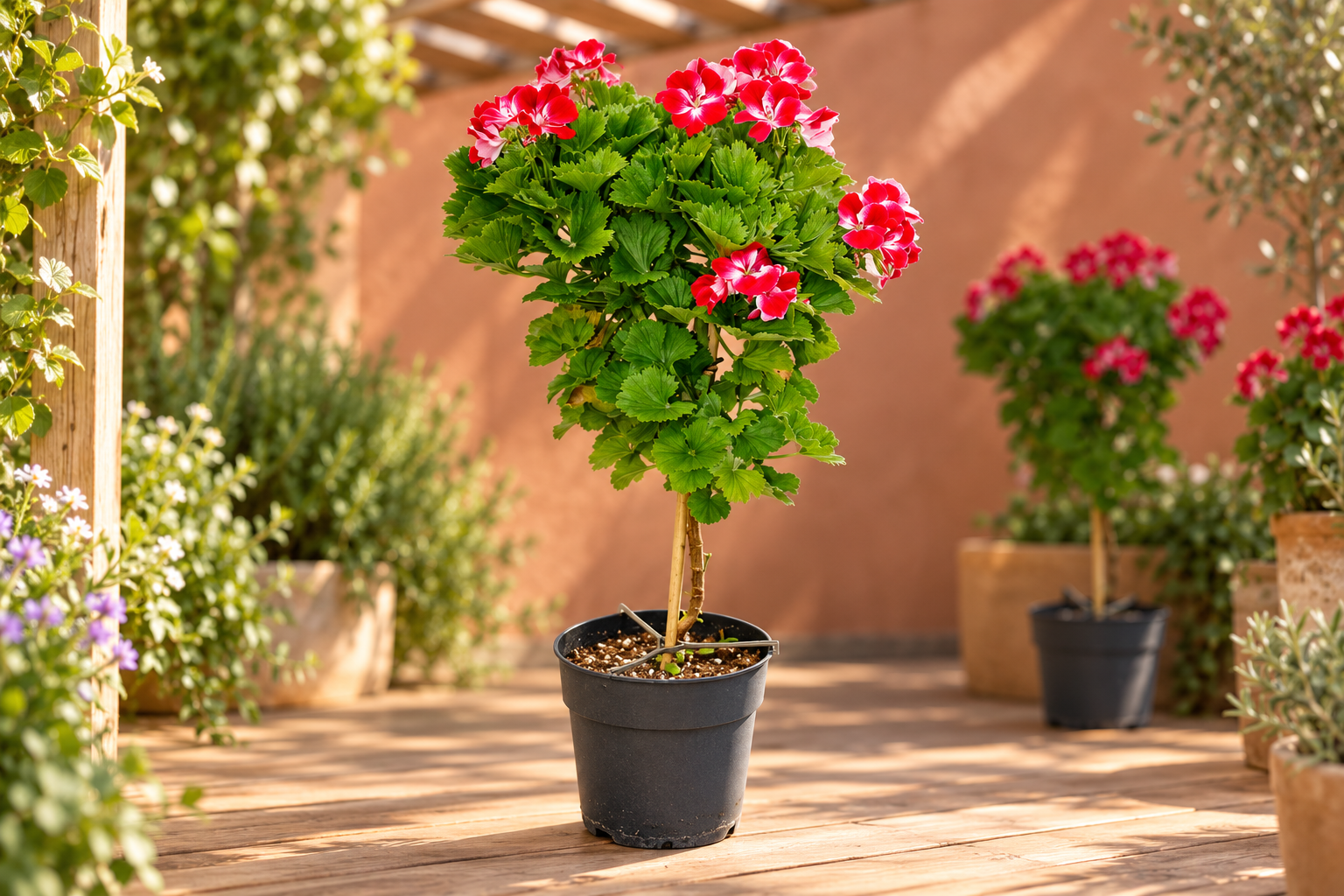
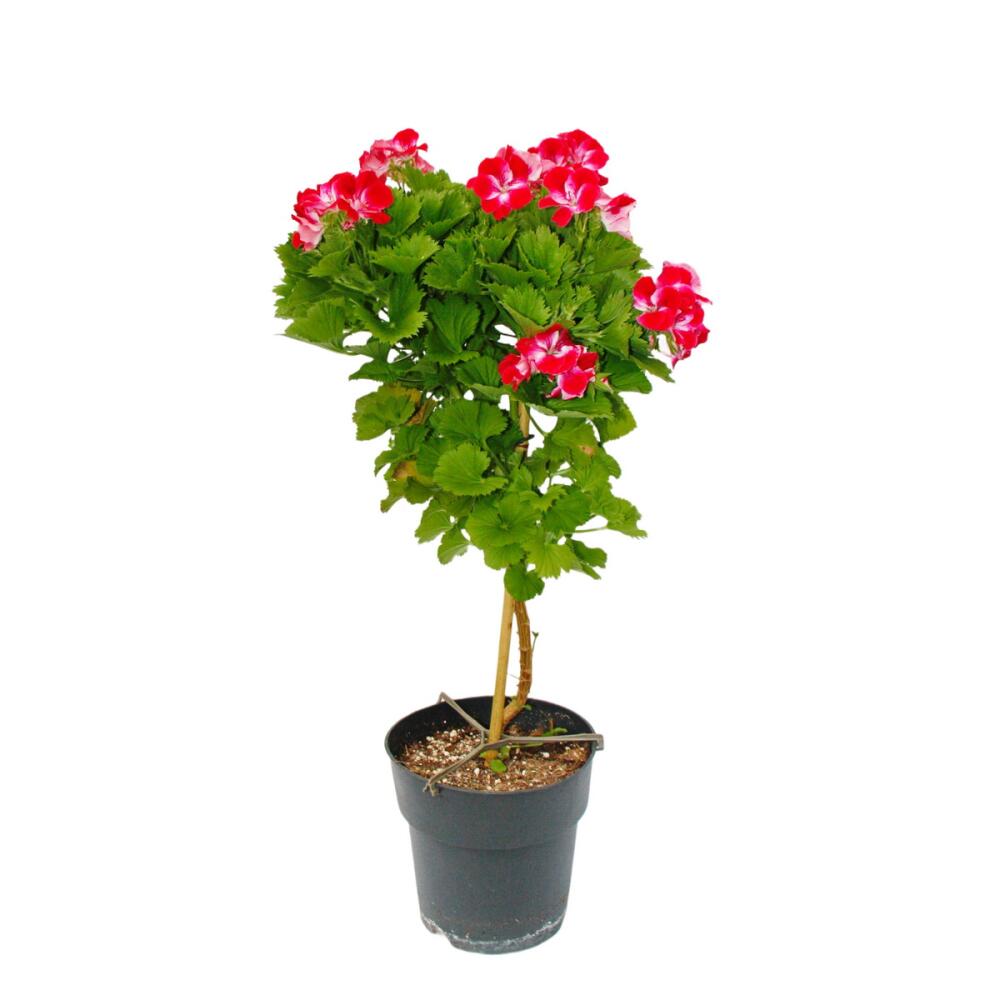
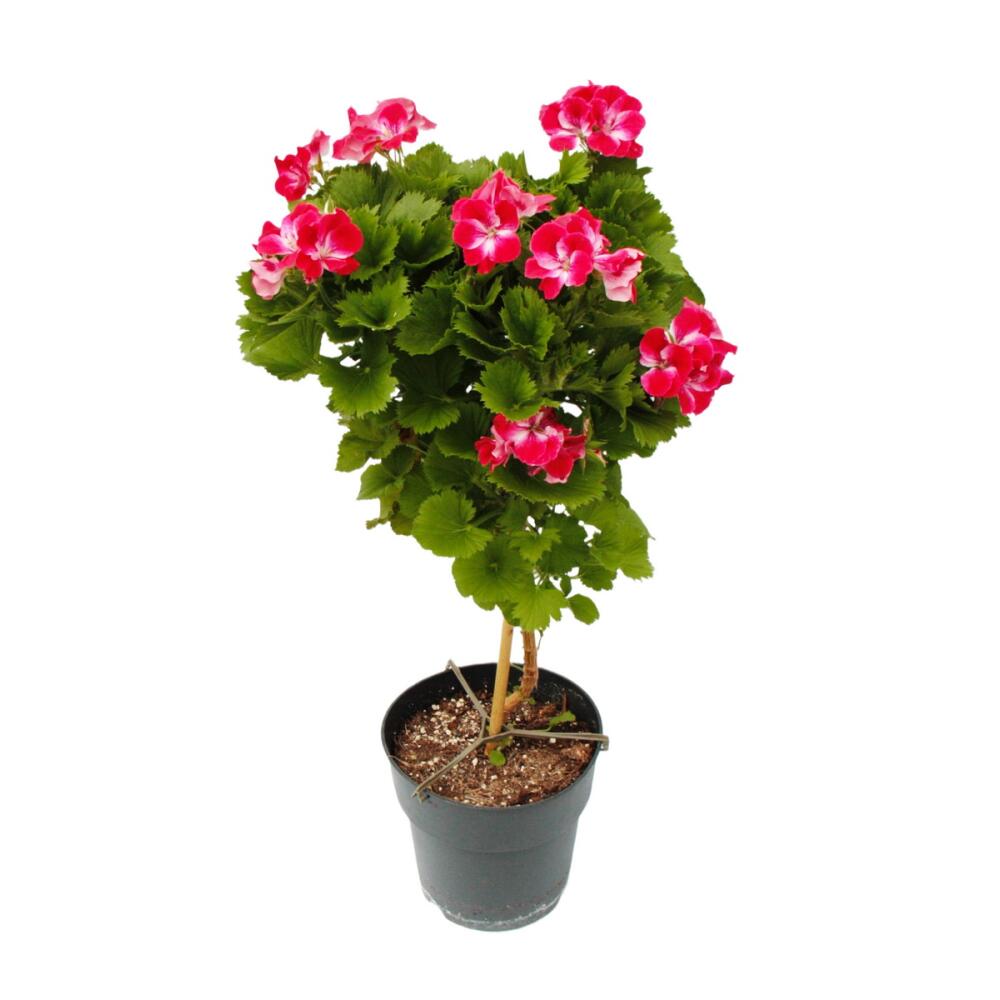
Swiss combines red flower surfaces with white edges. Above toothed green leaves, a lively interplay of colour is supported by a round crown. Individual flowers may naturally differ slightly in their markings. The slender stem separates container and flower head. The portrait retains the shop name of the English regal pelargonium and describes the specific standard form. The word Grandiflorum is not used to calculate an exact wild-species ancestry. What matters for everyday care is the offered regal pelargonium group with its broad flowers.
A young crown on a 60 cm standard
The selected item is offered with a 19 cm pot diameter and about sixty centimetres total height. This includes the pot. Other shop sizes are not silently mixed into this size reference. When unpacking, hold the container and check the existing support. Do not twist the crown between packaging and stem. On a sheltered balcony it can make an impression at its natural height without needing another high pedestal. Give the pot a stable surface and free drainage.
The balcony must suit changes in weather too
A bright airy position with protection from heavy rain is a good starting point. After transport, introduce the plant gradually to stronger light and leave it outdoors permanently only after frost risk. The crown may be sheltered under a pergola; still observe whether deep shade or strong heat develops. Flowers and leaves respond to actual weather. Demanding a permanently full flower crown easily leads to unnecessary interventions. Instead, check whether light, root-ball supplies and air movement continue to work together.
The raised crown needs water from the root ball
Feel the soil and check pot weight before watering. After surface drying starts, water according to need. Excess drains fully even if the standard stands in a decorative cover pot. The slender stem is no large water reservoir. Under rain protection the soil may remain dry despite a wet garden day. Conversely, it dries more slowly on a cool day. Do not therefore treat limp foliage only by appearance. With already wet soil, drainage and root-zone condition matter too.
Care for form and flowers together
Structurally stable, free-draining planting soil helps the young root ball. During active growth, feed sparingly following the fertiliser label and account for pre-fertilisation. Remove old flowers cleanly without tearing neighbouring white and red petals. Check the support tie and freedom of movement. Looking under the foliage crown may reveal sap-feeding pests earlier. Shape care considers the stem: do not apply a general pruning instruction for small bush pelargoniums to the entire standard. Healthy development matters more than a geometrically perfect ball at every moment.
Follow the markings in your personal plant book
The regal pelargonium is perennial and frost-sensitive. Prepare a bright frost-free position before the first frosts. With less light and growth, consumption falls; water according to root-ball condition. Check crown and leaves before bringing it inside. The plant book can place the red flower with its white edge beside an overall picture. Record summer position, rain exposure and development of the stem support. After winter this reveals how the specific plant grew without confusing different sale sizes or individual flower markings.
One plant, several views
Good to know
Does Swiss always have exactly the same markings?
The red-and-white pattern may vary within a natural plant.
Which size item is described?
The item with a 19 cm pot and about 60 cm total height.
Must it flower continuously?
Flowering without pauses is not guaranteed.
Why check the stem support?
The crown loads the slender stem; ties must not grow into it.
How does it get through winter?
Bright and frost-free, with water adapted to reduced growth.
Sources and editorial note
- Exotenherz: offer and original images (03.10.2026)
- RHS – pelargoniums, cultivation and overwintering (03.10.2026)
- NC State Extension – Regal group and care classification (03.10.2026)
Shop offer, item number, GTIN, availability and original images directly checked on 02.10.2026; specialist acceptance on 03.10.2026. Specialist sources read directly. Specific SKU, dimensions, original images and orderability directly checked in the shop on 03.10.2026. Specialist sources read in full; shop name and botanical synonyms remain distinguishable. Currently not orderable: knowledge portrait without a purchase link, social drafts without sending clearance. No Wawi, server or tool changes. Currently not orderable: knowledge portrait without a purchase link; social drafts not cleared for sending.