
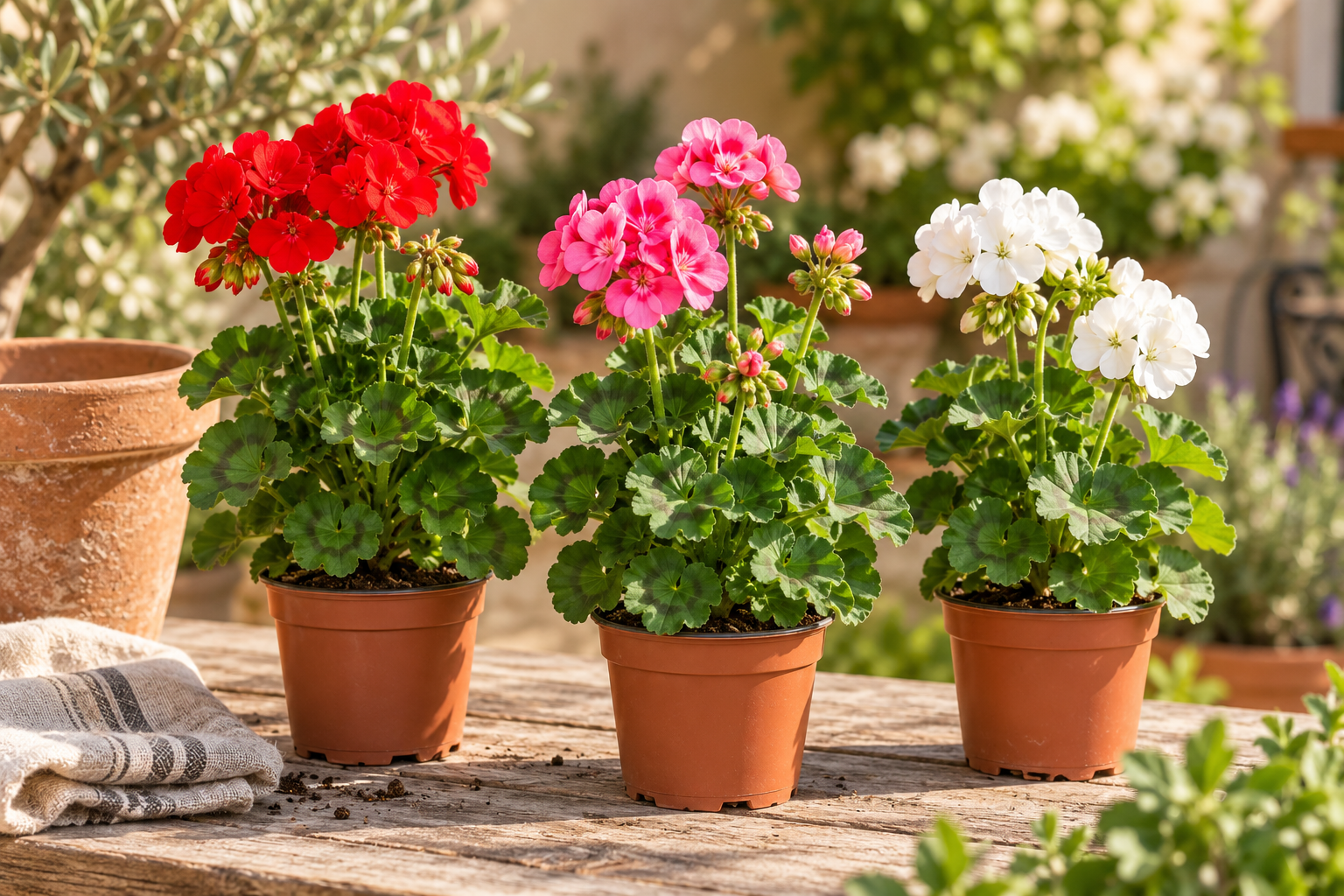
This plant at Exotenherz
Check the shop offer for current availability, price and what is included.
Check the shop for the current price, availability and offer contents.
Your care table
| Topic | What to do | Why it helps |
|---|---|---|
| Location | Bright to sunny and airy. | The crown needs light for strong development. |
| Planting time | Acclimatise and plant after the last frosts. | The group is not winter-hardy. |
| Water | Allow upper soil to dry slightly, then water. | Align moisture with actual consumption. |
| Drainage | Keep holes clear and cover pots free of standing water. | Roots need air. |
| Soil | Use free-draining planting soil. | Avoid heavy constant wetness. |
| Nutrients | Feed during growth according to the label. | No double application against low light. |
| Flowers | Remove faded stems gently. | Preserve healthy shoots. |
| Winter | Continue growing bright, airy and frost-free. | Reassess water requirements. |
Check the compost and pot weight. The care table explains how far the compost may dry.
Water only when needed. The water should reach the root ball without spilling over the rim.
Remove surplus water from the saucer or cachepot. Then return the plant to a suitable position.
Round leaves carry the flowers upwards
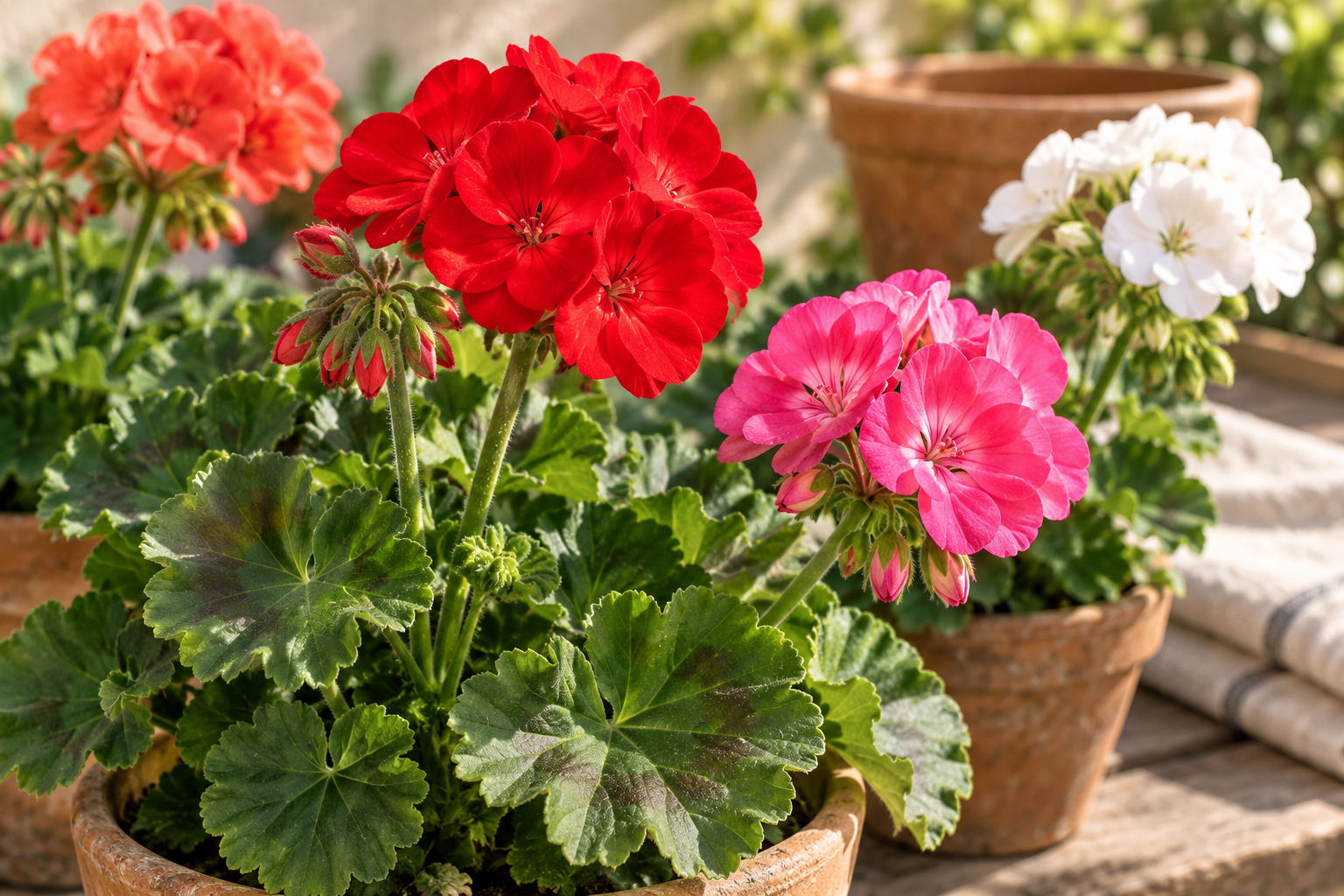
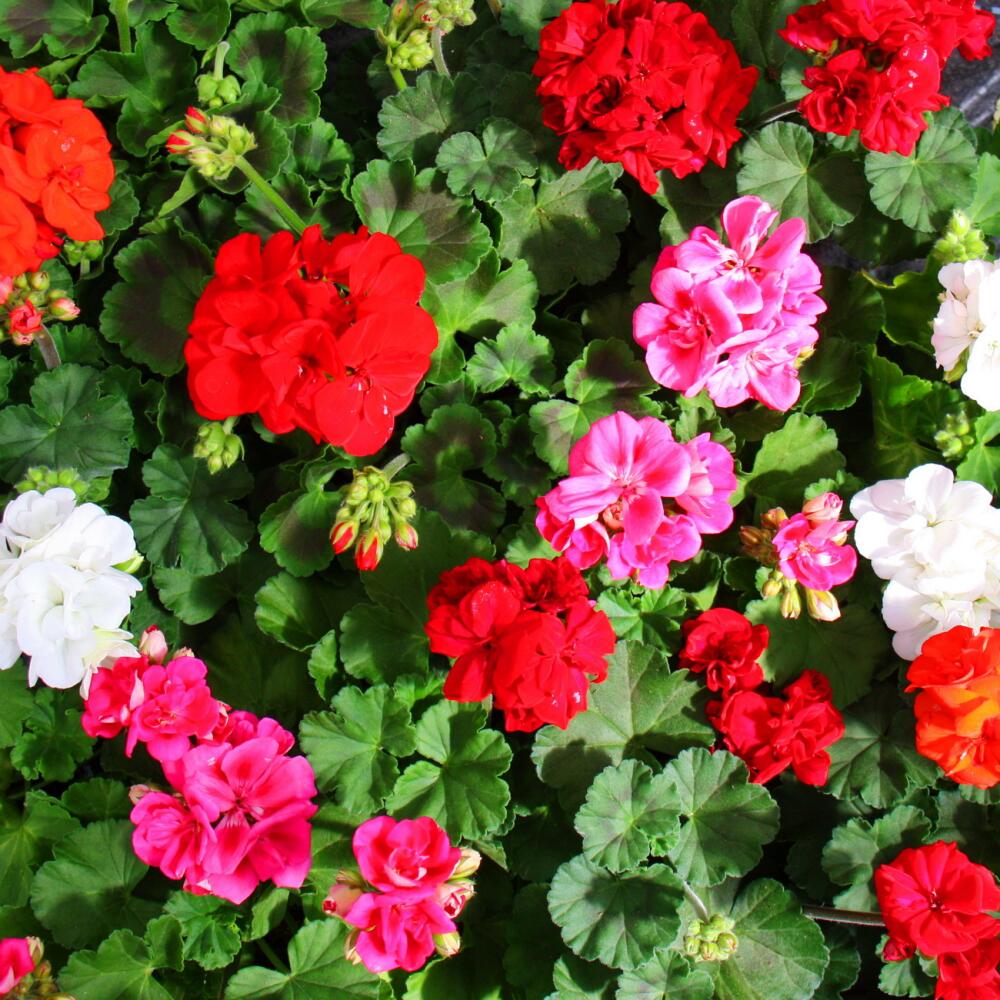
On the upright pelargonium, flower heads sit above a young upright crown. Its rounded scalloped leaves clearly distinguish it from a trailing pelargonium with smooth ivy leaves. Red, pink, white or coral tones can give the balcony a lively centre. The trade also uses the name Pelargonium zonale for bred Zonale forms. No particular pure wild species or named cultivar is assigned retrospectively to this colour set. Appropriate care starts with the actually visible plant.
Three pots do not become one enormous pelargonium
The offer contains three plants, each in a 12 cm pot. Their plant height is given as approximately 25 to 35 cm. An older crown can develop further; young delivery height is not a fixed final size. Before planting together, distribute the pots loosely and look from above. Lateral air and light matter more than immediately covering all the soil. A simple container keeps leaf form and flower colour visible. The colour mixture in a scene is not a promise for every delivered set.
A sunny position with a calm transition
A bright to sunny location suits summer use. After transport or overwintering, introduce the foliage outdoors gradually. Planting time follows the last frosts and local weather. Look for a balcony where cold wind does not constantly pass through the flower heads. With little light, shoots more readily grow loose and flowering may weaken. This relationship helps location choice more than trying to turn a dark window into a sunny place with extra fertiliser.
The root ball decides the next application
The upper soil may dry slightly. Then water the soil thoroughly and allow excess to drain. In warmth, small pots can dry faster than a large established planting. After rain, check whether a cover pot has collected water. Consider yellow leaves together with light, moisture and leaf age. A wet heavy pot does not automatically need another application. The clearly visible rim and open drainage holes are therefore practical design features, not merely details behind the pretty flowers.
Flower care without constant shearing
During active growth, use suitable flowering-plant fertiliser according to its label and account for pre-fertilisation. Carefully remove faded stems at their bases. Individual very long shoots can be shaped when needed; the whole crown need not be constantly cut to equal height. Air between plants helps in damp weather. Look more closely at unusual spots or deposits rather than diagnosing a particular disease from one leaf. Pelargoniums are not intended for consumption; wear gloves when cleaning if your skin is sensitive, and keep pets away.
The second season begins with winter quarters
Upright pelargoniums are frost-sensitive perennials even if they often accompany only one season. Continued cultivation needs light, air and freedom from frost. Less growth lowers consumption, but continue regularly inspecting soil and shoots. In spring, the living crown can be arranged selectively before new growth emerges. The plant book can include a before-and-after winter comparison. Simply moving the outdoor container against a slightly more sheltered house wall does not replace well-planned overwintering.
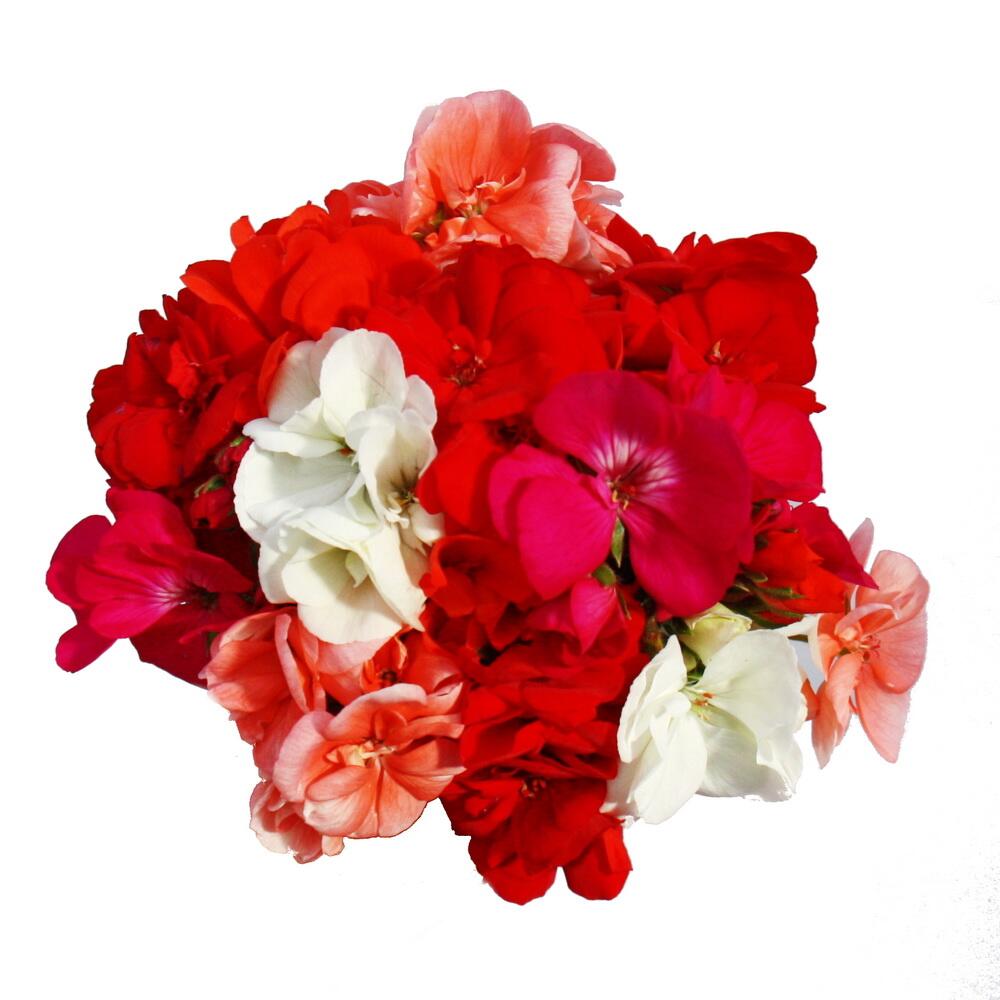
One plant, several views
Good to know
Why does zonale appear in the shop name?
The term describes the upright Zonale pelargonium group in the trade.
Are three plants delivered?
The associated offer specifies three separate plants in 12 cm pots.
Are all leaves dark-zoned?
Marking and intensity may vary within the selection.
Does more fertiliser help with little light?
An extra application does not replace a suitable location.
Can the set overwinter outside?
No. A bright frost-free room is needed for continued cultivation.
Sources and editorial note
- Exotenherz: offer and original images (03.10.2026)
- NC State Extension – Zonale hybrids, cultivation and growth (03.10.2026)
- RHS – pelargoniums through the year (03.10.2026)
Shop offer, item number, GTIN, availability and original images directly checked on 02.10.2026; specialist acceptance on 03.10.2026. Specialist sources read directly. Specific SKU, dimensions, original images and orderability directly checked in the shop on 03.10.2026. Specialist sources read in full; shop name and botanical synonyms remain distinguishable. Currently not orderable: knowledge portrait without a purchase link, social drafts without sending clearance. No Wawi, server or tool changes. Currently not orderable: knowledge portrait without a purchase link; social drafts not cleared for sending.