
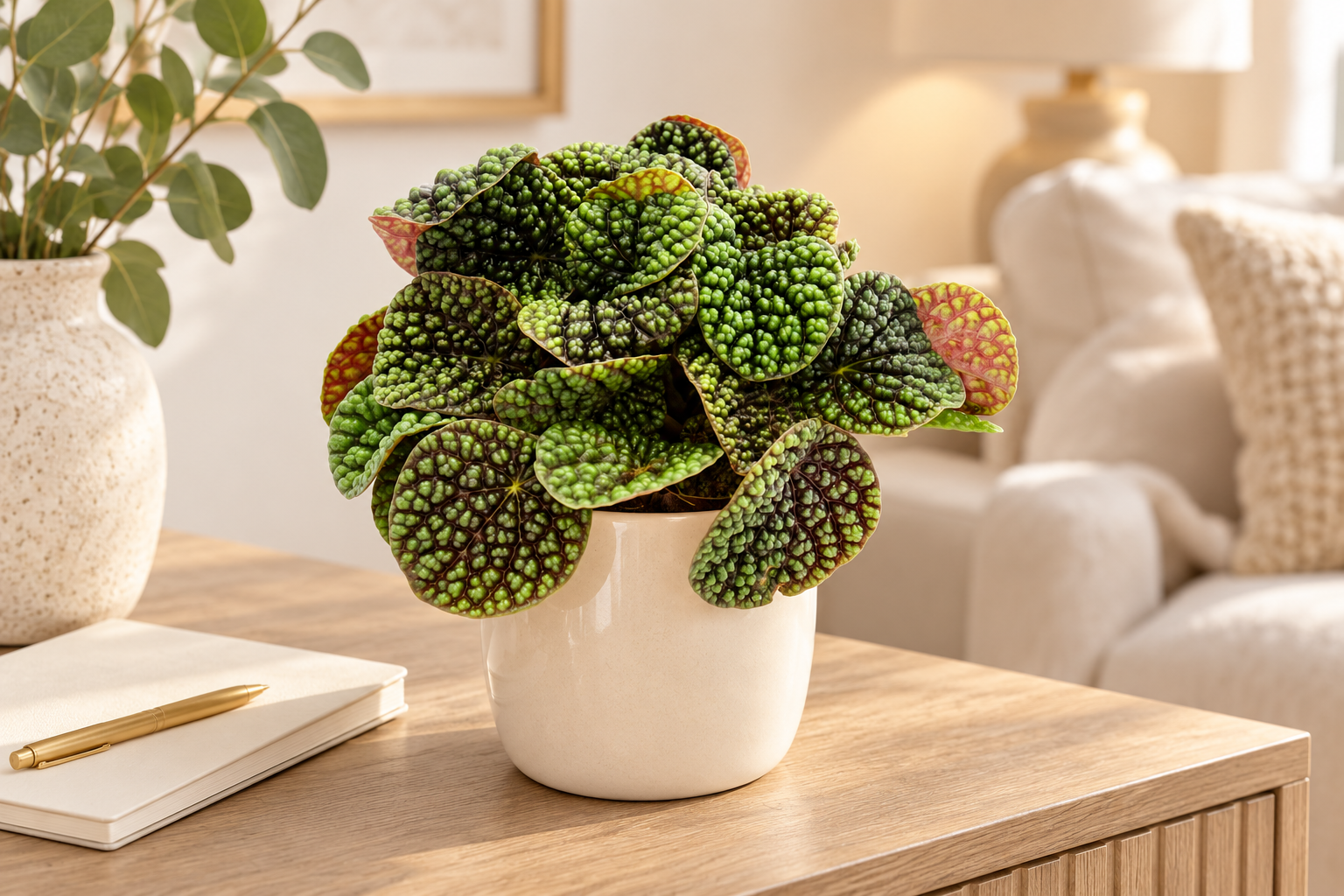
This plant at Exotenherz
Check the shop offer for current availability, price and what is included.
Check the shop for the current price, availability and offer contents.
Your care table
| Topic | What to do | Why it helps |
|---|---|---|
| Location | Grow bright and warm with filtered daylight. | Side light makes the structure visible. |
| Root ball | Let upper soil dry slightly and water as needed. | Do not keep permanently wet or completely parched. |
| Foliage | Direct watering at the soil. | Moisture should not remain unnecessarily in leaf folds. |
| Drainage | Let it drain and check the cover pot. | Excess may remain hidden in a small container. |
| Substrate | Use loose free-draining houseplant soil. | Roots need moisture and air. |
| Pot | Move slightly larger when space is genuinely needed. | Large volumes of free soil complicate monitoring. |
| Nutrients | Feed moderately during growth, following the label. | Oversupply does not improve leaf structure. |
| Winter | Keep frost-free and reassess consumption. | Lower-light periods may reduce demand. |
Check the compost and pot weight. The care table explains how far the compost may dry.
Water only when needed. The water should reach the root ball without spilling over the rim.
Remove surplus water from the saucer or cachepot. Then return the plant to a suitable position.
The leaf is a small landscape
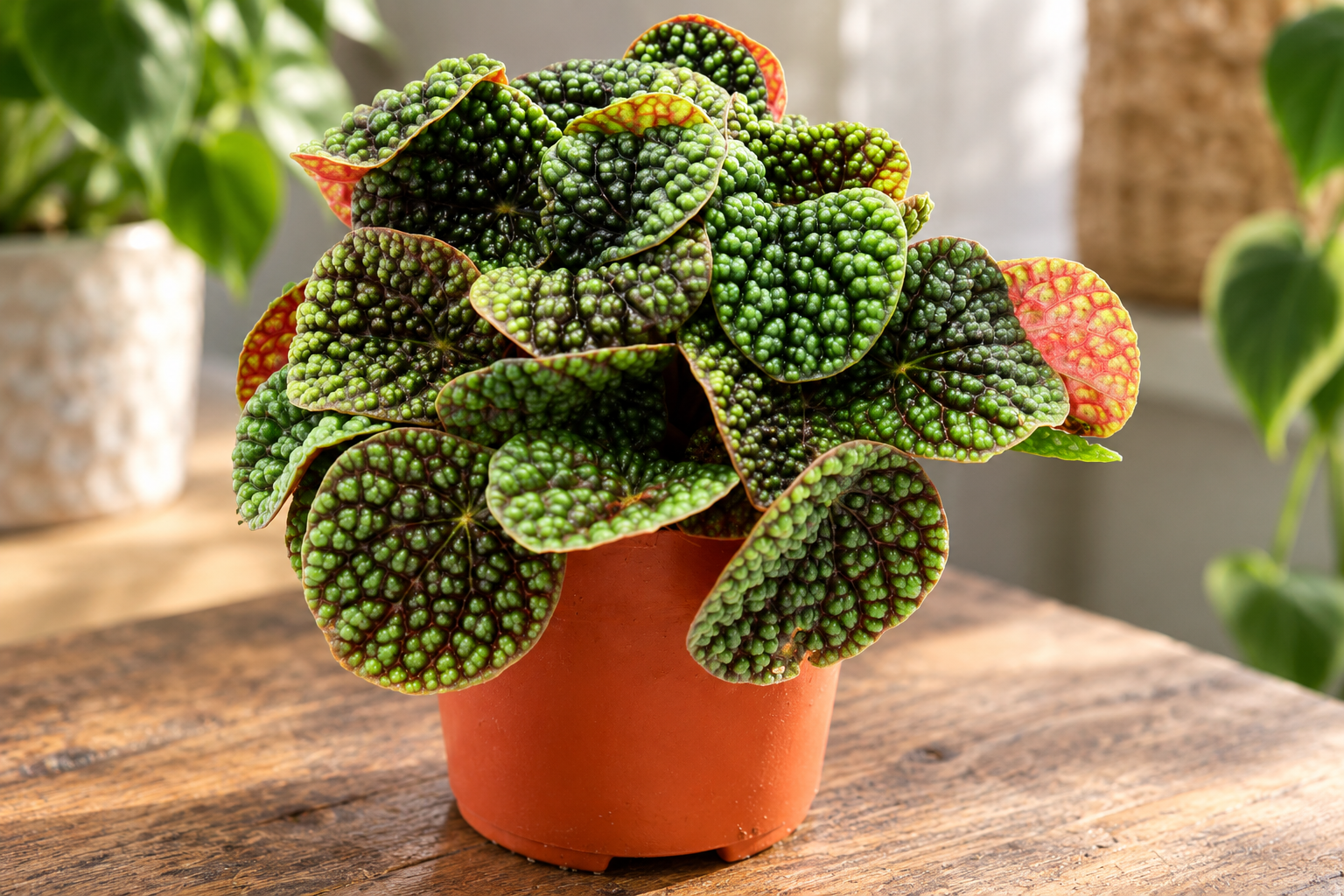
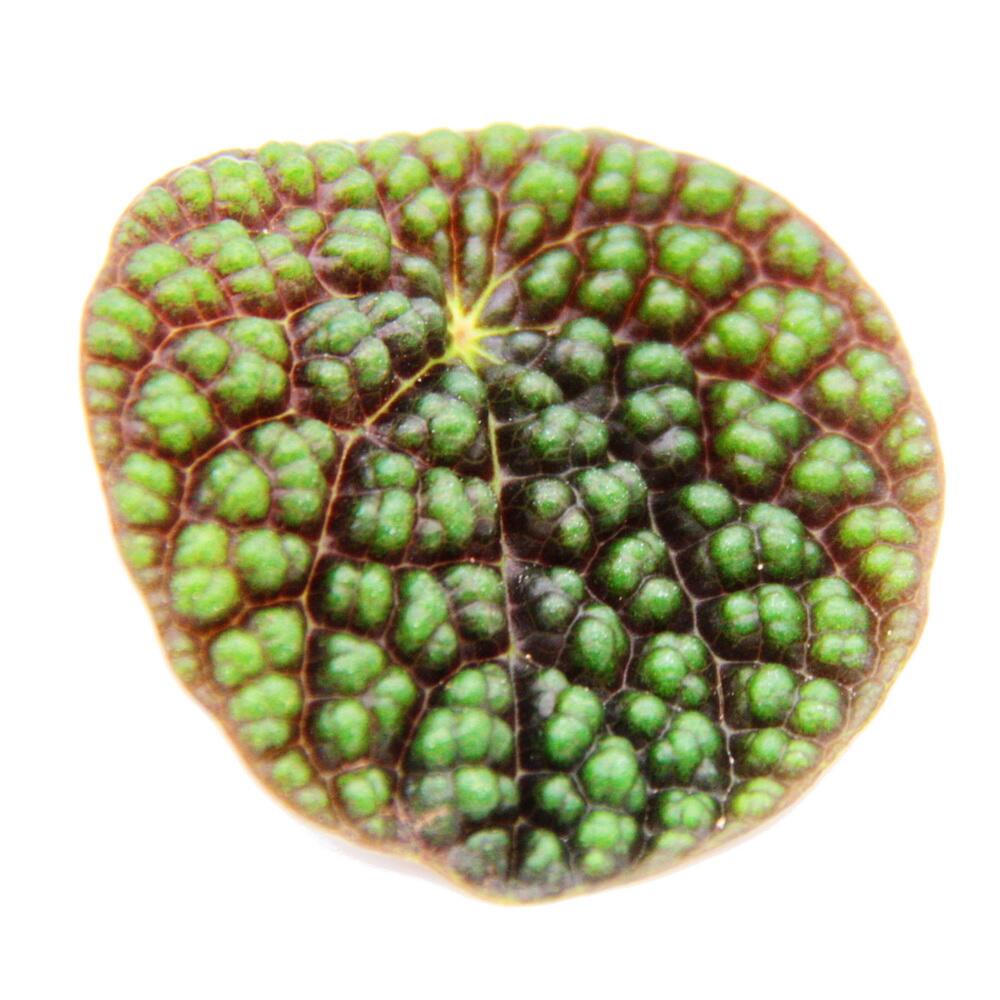
Green Bubble stands out through its sculpted surface. Small green bulges sit between darker veins, making a leaf look almost padded. Its rounded to slightly heart-shaped outline combines this structure with a compact plant. On a low sideboard in bright indirect light, the pattern is easy to observe. A quiet matte outer pot makes an attractive companion. The trade name remains Peperomia Green Bubble; no additional species assignment is assumed solely from this distinctive surface pattern.
The small crown needs a visible position
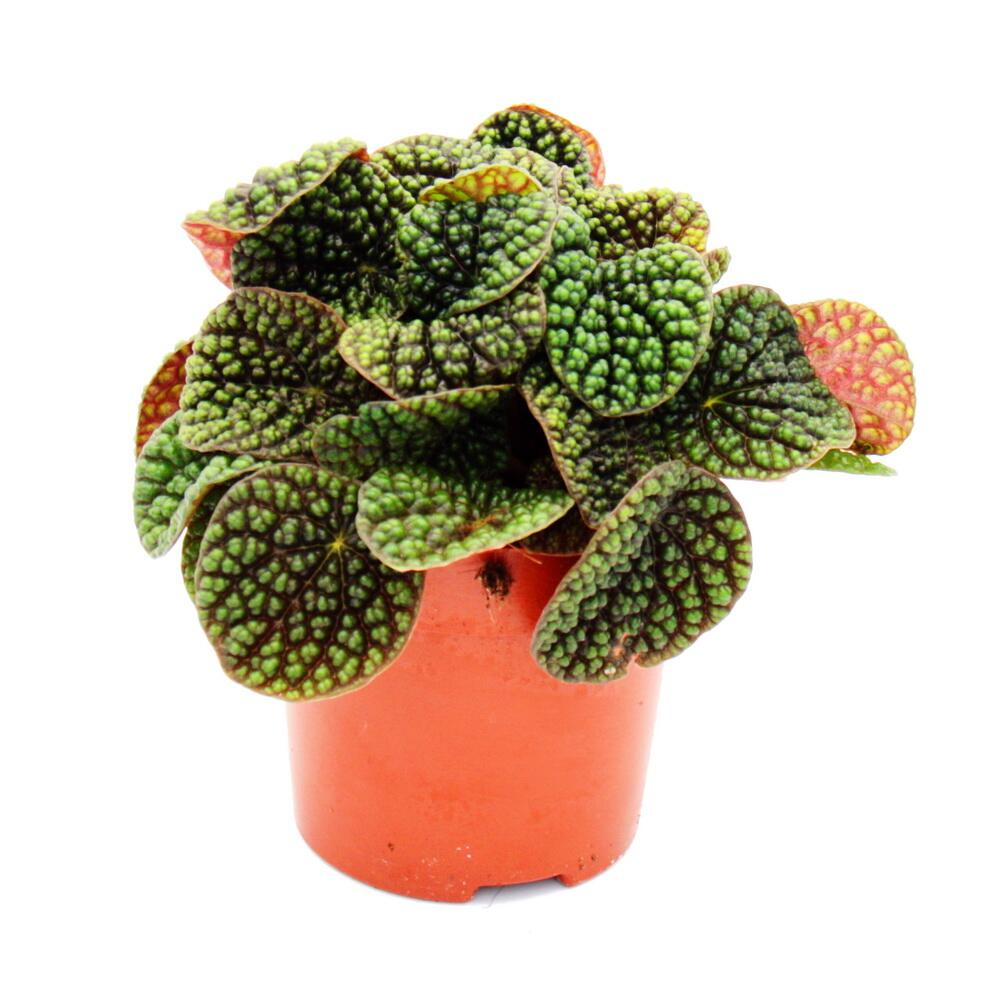
The assortment gives an 11 cm pot and about 20 to 25 cm total height including pot. The young plant looks compact, but leaves should not be squeezed between decorations. When unpacking, release compressed parts carefully and hold the container rather than leaf stalks. A first photograph shows reddish tones and vein lines already present. This prevents natural markings being judged too quickly as new damage. The size figure does not promise a permanently unchanged final size.
Grazing daylight shows the fine bulges
A bright warm place with filtered daylight suits peperomia. Side light makes the leaf structure especially visible without placing it in hot direct sun. An open shelf may work if objects do not hide the crown. Check cold air during ventilation and very dry radiator air at the actual position. A permanently dark recess is no method for preserving compact form. Care should enable healthy new leaves, not slow growth through unfavourable conditions.
Water the soil rather than the leaf folds
Before every application, check upper soil and pot weight. After slight drying, water the root ball according to need, then let excess drain. Soil should be neither constantly waterlogged nor completely dry for a long time. Direct the spout at the substrate instead of soaking textured foliage unnecessarily. In a closed cover pot, the container base remains part of checks. Assess soft leaves together with moisture condition; by themselves they do not justify another round of watering.
The root space stays manageable
Loose free-draining houseplant soil supports the compact plant. Repot only when space is actually needed and only a little larger. A huge pot with much free soil would complicate moisture checks. Feed moderately during growth following the label and account for pre-fertilisation. The interesting leaf surface needs no extra fertiliser treatment. Peperomias may produce narrow inconspicuous flower spikes; these are not promised for the young offer. Healthy new growth is a more useful everyday comparison than expecting immediate flowers.
Close-ups help calm observation
Remove dust gently without rubbing leaf folds hard. Occasionally check undersides and stalk bases for small shields, cottony deposits or unusual damage. In winter Green Bubble stays frost-free indoors and water consumption is reassessed. Photograph a leaf under similar side lighting if you want to compare its structure later. The plant book can additionally show the overall growth. Detail and overview then come together rather than every shadow in the vein network becoming an imagined care problem.
One plant, several views
Good to know
Are the small green bulges normal?
They belong to the described structure of the offered leaves.
Which exact species is Green Bubble?
The offer names Peperomia Green Bubble; no further species assignment is assumed here.
Should I keep spraying the leaves wet?
The described care waters the soil directly and avoids unnecessary leaf wetness.
Does more fertiliser strengthen the surface?
No additional fertiliser treatment is intended for that.
How can I compare changes?
With pictures under similar light and a combined check of position and root ball.
Sources and editorial note
- Exotenherz: offer and original images (03.10.2026)
- NC State Extension – Peperomia, leaf diversity and indoor cultivation (03.10.2026)
Shop offer, item number, GTIN, availability and original images directly checked on 02.10.2026; specialist acceptance on 03.10.2026. Specialist sources read directly. Shop item with SKU, delivery dimensions, current orderability and all available original images directly checked on 03.10.2026. Specialist sources read, no outside photographs used. Trade names retained; species care not presented as cultivar-specific delivery promises. Not orderable: knowledge portrait without purchase connection and without social sending. No Wawi, server or tool changes. Currently not orderable: knowledge portrait without a purchase link; social drafts not cleared for sending.