

This plant at Exotenherz
Check the shop offer for current availability, price and what is included.
Check the shop for the current price, availability and offer contents.
Your care table
| Topic | What to do | Why it helps |
|---|---|---|
| Light | Position brightly with filtered daylight. | Protect from sudden hot sun. |
| Water | Let upper soil dry slightly; water the root ball as needed. | Avoid constant wetness and prolonged complete dryness. |
| Drainage | Let it drain after watering and empty the cover pot. | Free drainage preserves air in the root space. |
| Soil | Use loose free-draining houseplant soil. | Dense wet soil may burden roots. |
| Pot | Move slightly larger only when space is needed. | Keep volumes of free soil manageable. |
| Nutrients | Apply moderately during growth, following the label. | Silver markings need no fertiliser treatment. |
| Leaves | Support and wipe gently when cleaning. | Do not pull stalks apart to correct the shape. |
| Winter | Keep frost-free and check moisture again. | Darker periods change water consumption. |
Check the compost and pot weight. The care table explains how far the compost may dry.
Water only when needed. The water should reach the root ball without spilling over the rim.
Remove surplus water from the saucer or cachepot. Then return the plant to a suitable position.
Silver shows between the green veins
Moonlight brings cool pale tones to a small leaf crown. Its heart-shaped surfaces look silvery grey to grey-green, with darker veins emphasising the pattern. Slight folds and changing leaf angles alter light on the surface. This structure looks attractive on a light wooden desk. A quiet cream container accompanies it without competing with the pattern. The portrait follows the shop designation Peperomia caperata Moonlight and describes the plant visible in the original photograph.
The offer pot is a size reference, not a final size
Moonlight appears in the associated assortment in a 15 cm pot. Total height is described as about 20 to 25 cm including pot. The young plant therefore suits a place where leaves can be viewed closely. When unpacking, hold the container and release trapped leaf stalks gently. A quick look at the soil helps before the first watering. Leaf arrangement may be individual; a perfectly symmetrical surface and exactly equal silver colouring are not prerequisites for a healthy peperomia.
A bright indoor position instead of a hot-sun test
Filtered daylight and even warmth suit indoor cultivation. Avoid hot direct sun immediately after shipping. At the actual position, see how long light reaches the crown and whether furniture shades it. An open shelf or bright work surface may suit it, while a deep dark compartment remains unfavourable. Check cold draughts and cooling surfaces too. The silvery surface is a leaf feature; it does not need strengthening with ever more sun or an extra fertiliser treatment.
Water a slightly dried root ball deliberately
Before watering, check upper soil and container weight. It may dry slightly, but the entire root ball should not stay completely dry for a long time. When needed, water the soil slowly, let the nursery pot drain and remove excess from the cover pot. Sensitive leaf stalks need not be pulled apart for this. If leaves look soft, consider moisture, temperature and drainage together. Do not saturate a heavy wet pot with more water merely because one leaf hangs.
Connect roots, growth and nutrients
Loose free-draining houseplant soil prevents the root space staying short of air for too long. Repot only when genuinely needed, a little larger. Feed moderately during active growth according to the label and account for pre-fertilisation. Peperomias may produce thin pale flower spikes, but no specific flowers are promised for the young offer. Nor is a particular later height from a general species profile adopted as a delivery promise. Observe healthy new leaf stalks and actual space needs before making several care changes simultaneously.
Follow silvery foliage calmly through winter
Keep the plant frost-free indoors. Less light may lower consumption; reassess the root ball instead of retaining the summer rhythm. Remove dust gently from a supported leaf and check undersides and stalk bases at the same time. Small shields or cottony deposits need a closer look. A picture of the whole crown and a close-up of vein markings complement each other in the plant book. Compare under similar light: a changing reflection may make the silvery surface look much lighter or darker without the leaf having changed.
One plant, several views
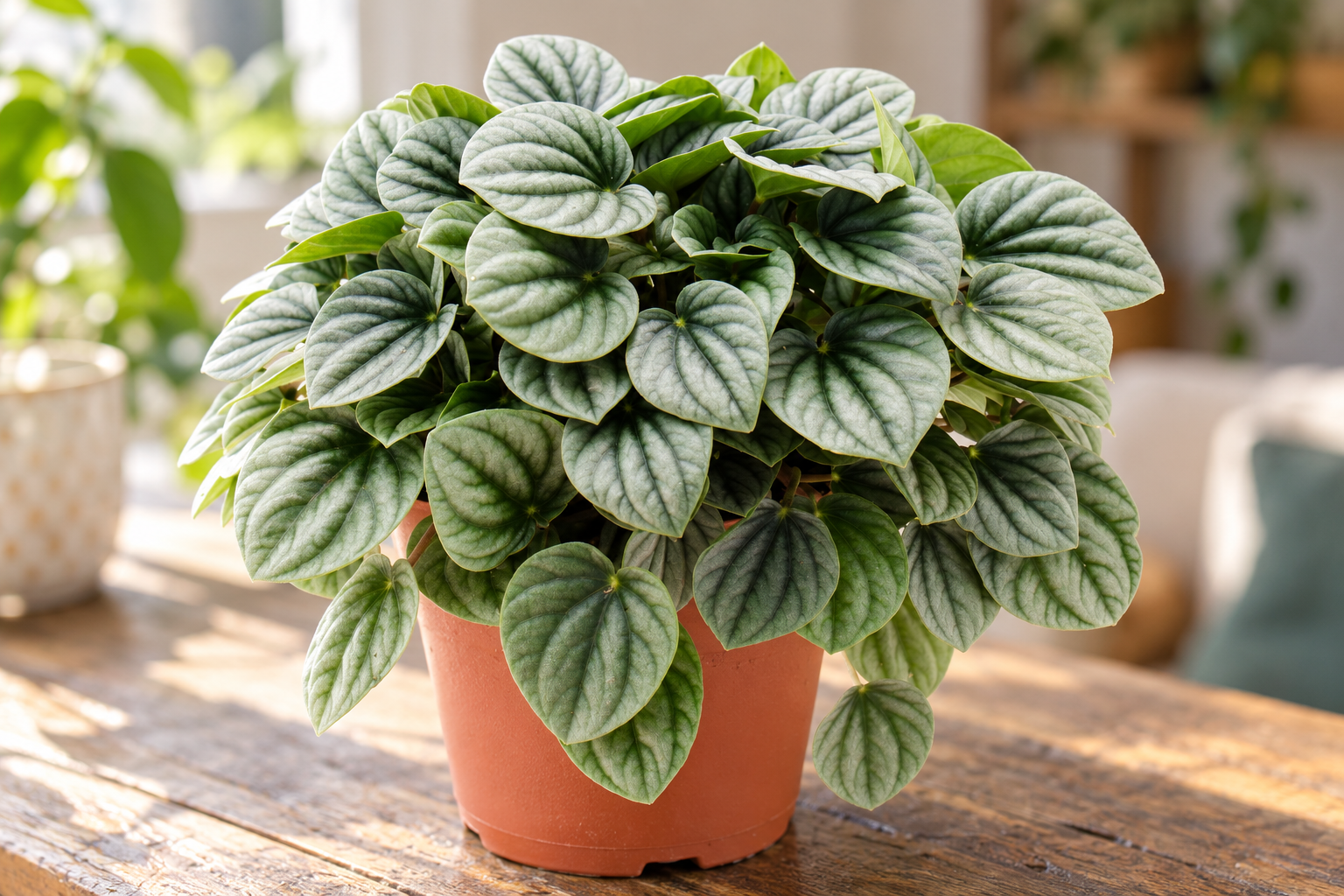
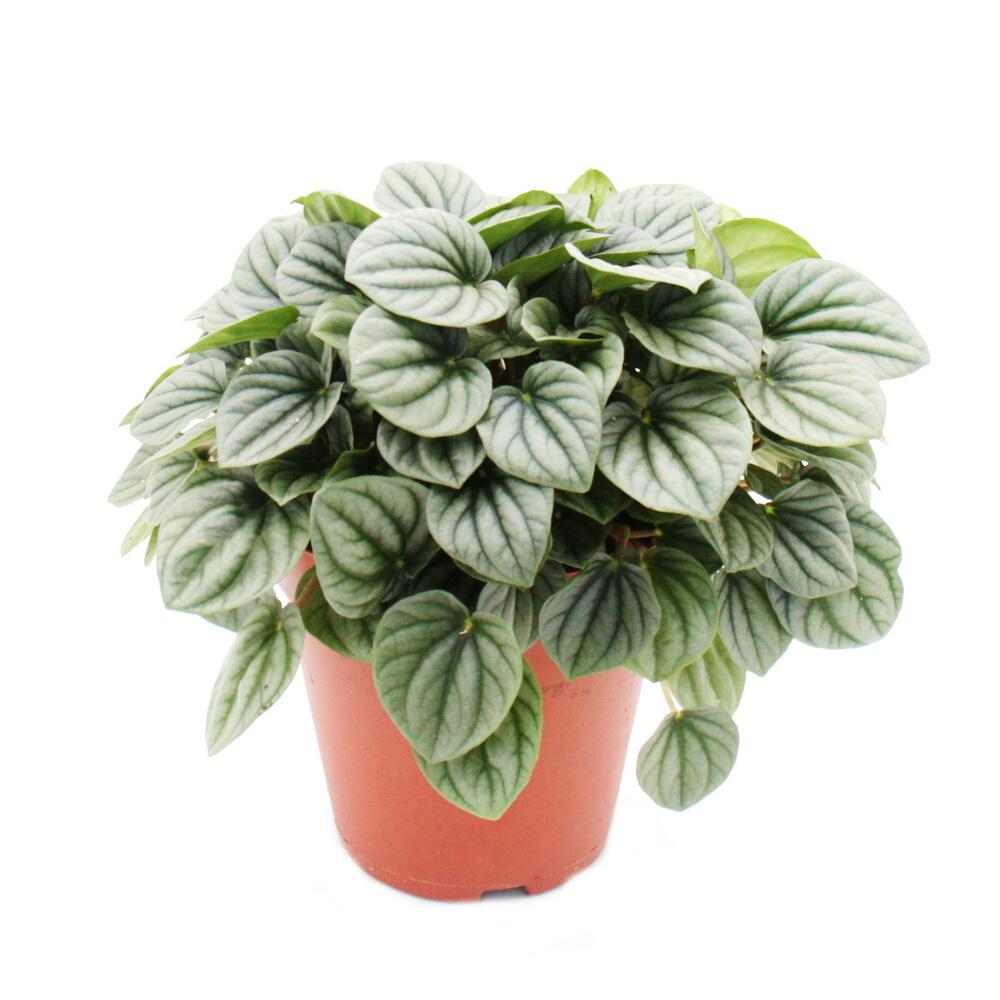
Good to know
Is the silvery leaf appearance normal?
It belongs to the described original plant and looks different depending on light.
Is 25 cm a fixed eventual height?
No. It means total height of the young offer including pot.
Should I water the same amount every week?
No. Check upper soil, pot weight and position before the next application.
Are flowers promised?
No. Narrow flower spikes are possible but not a promised delivery feature.
Why does the leaf look different in two photographs?
Leaf angle and reflections can make the silvery surface appear different.
Sources and editorial note
- Exotenherz: offer and original images (03.10.2026)
- NC State Extension – Peperomia caperata, leaf structure and care (03.10.2026)
- NC State Extension – peperomias indoors (03.10.2026)
Shop offer, item number, GTIN, availability and original images directly checked on 02.10.2026; specialist acceptance on 03.10.2026. Specialist sources read directly. Shop item with SKU, delivery dimensions, current orderability and all available original images directly checked on 03.10.2026. Specialist sources read, no outside photographs used. Trade names retained; species care not presented as cultivar-specific delivery promises. Not orderable: knowledge portrait without purchase connection and without social sending. No Wawi, server or tool changes. Currently not orderable: knowledge portrait without a purchase link; social drafts not cleared for sending.