
This plant at Exotenherz
Check the shop offer for current availability, price and what is included.
Product and delivery details are given in the individual offer.
Your care table
| Topic | What to do | Why it helps |
|---|---|---|
| Position | Bright, with gentle daylight on top of the pot. | Lighting only the long trailing stems is not enough. |
| Water | Let the top layer dry somewhat, then water carefully. | The fine root system should not stay permanently wet. |
| Drainage | Let drain completely after every watering. | Hanging covers can collect water unnoticed. |
| Air | Combine comfortable humidity with some air movement. | Constantly wet foliage is no substitute for suitable conditions. |
| Compost | Use a loose, structured mixture. | Fine roots need both water and air. |
| Fertiliser | Feed at a weak dose during growth. | The small leaf mass needs no strong applications. |
| Handling | Keep trailing shoots away from furniture edges and fastenings. | The fine shoots tear off easily when pulled. |
| Repotting | Enlarge gently and only slightly when needed. | Unnecessary dismantling damages the fine rootball. |
Check the compost and pot weight. The care table explains how far the compost may dry.
Water only when needed. The water should reach the root ball without spilling over the rim.
Remove surplus water from the saucer or cachepot. Then return the plant to a suitable position.
A pattern discovered close up
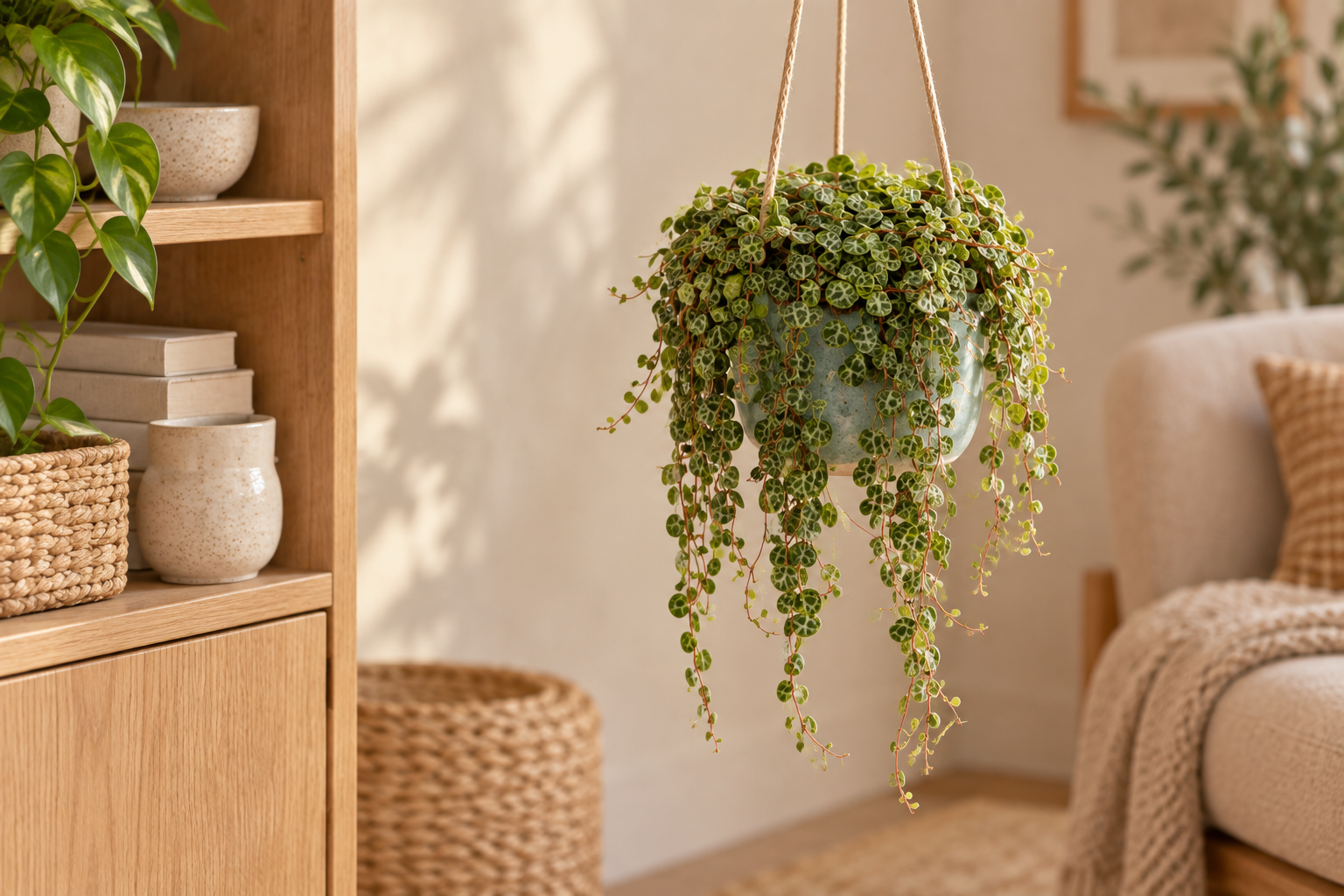
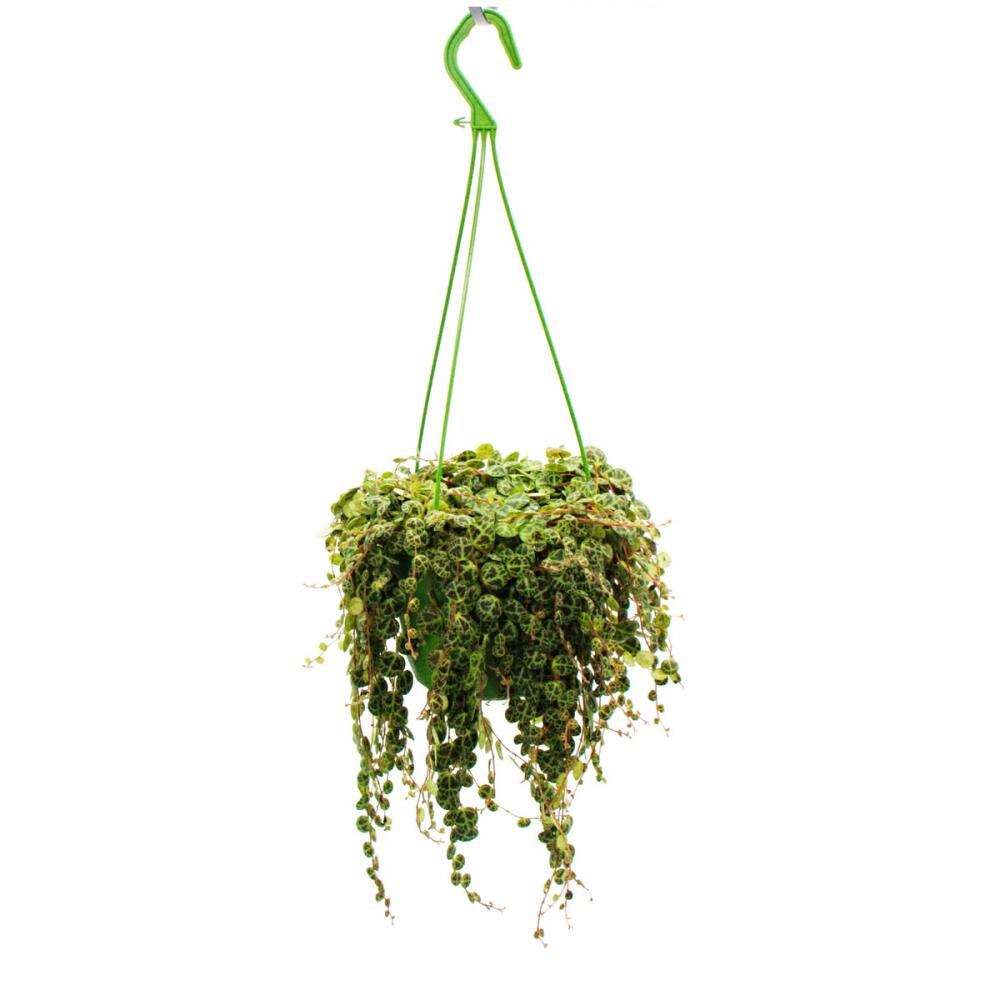
String of Turtles is a fitting trade name for Peperomia prostrata. Its small, round leaves carry a fine pattern reminiscent of turtle shells. Together, its delicate trailing stems form a light green curtain. Unlike large-leaved hanging plants, the effect here comes from many tiny details. I therefore like to position it where you can come close enough to see the markings properly. The hanging plant offered has a fourteen-centimetre pot and is around twenty-five to thirty centimetres high excluding the hanger. This manageable format remains a good starting point for a bright living area.
The top of the pot needs daylight too
With a hanging plant, we usually look at the trailing stems. For the plant, light reaching the top of the pot and the new shoots is just as important. Directly beneath a deep, opaque shelf board, that area can remain very dark. I therefore choose an open, bright position with room above the foliage. Hot, direct sunshine behind glass is avoided or filtered. A thin curtain may be helpful. On a distant hook in the middle of the room, the hanging plant may look good but does not automatically receive enough daylight. Later growth reveals whether arrangement and position work together.
Small leaves do not mean desert care
The foliage is somewhat fleshy, but the plant is not treated like a large, drought-tolerant desert cactus. Between waterings, the fine roots should neither lie permanently in water nor regularly dry out completely. I feel the upper layer of compost and check the rootball before watering. Once the surface has dried a little, water is given carefully and evenly. A long stream straight onto the trailing shoots is unnecessary. With dense foliage in particular, a narrow watering can helps direct water onto the compost while keeping its course clearly in view.
Take the hanging plant down for care
For watering, I prefer to take the plant briefly off its hook. I hold the pot rather than pull on an individual shoot. This makes checking drainage easier and reveals hidden damp areas. After watering, everything drains before the hanging pot returns to its cover. With a watertight decorative container, I check the bottom again. Collected water is barely visible from outside. The sensitive trailing stems are not trapped beneath the pot rim. A little extra care during handling saves considerable trouble later with broken shoots and unexplained leaf loss.
Compost that keeps its structure
Loose growing medium with good drainage suits the plant better than permanently compacted, wet compost. At the same time, enough moisture must remain available for the fine root system. The mixture is therefore judged by its actual behaviour, not only the name on the bag. Repotting provides only a little more space. I keep the coherent rootball as intact as possible and plant it at its previous depth. Too much compost around a small root group dries slowly. A gravel layer does not make a pot without drainage safe either. The nursery pot with a hole remains the reliable foundation beneath every attractive cover.
Let the delicate leaf cover develop calmly
Peperomia prostrata needs no constantly changing arrangement. A good position and consistent care help more than frequent rehanging, turning and misting. Where air is very dry, higher room humidity may be useful; the foliage still does not remain permanently wet. Feeding is sparing during visible growth. Individual intrusive shoots can be shortened cleanly without cutting back the whole hanging plant heavily. The little leaves tolerate rough wiping poorly. When removing dry remnants, I work carefully between the shoots and keep healthy leaf groups undamaged. Their fine pattern needs no additional leaf-shine product.
When gaps appear among the trailing stems
If the plant suddenly loses many leaves, I first check water, warmth and possible damage. A wet rootball that has become cold can cause problems even when the upper leaves still look beautiful. A completely light, dry pot calls for a different response. Healthy remaining shoots are therefore not hastily cut back radically. Conditions are improved first and subsequent growth observed. In winter, brightness and freedom from draughts remain important; water requirements often fall. The image scene shows a bright hanging arrangement, while the unchanged original photograph keeps the actual shop size and fine growth visible beside it.
One plant, several views
Good to know
What does String of Turtles mean?
The leaf pattern resembles little turtle shells.
Does only the lower part need to hang in light?
No. The top of the pot and new shoots also need light.
Does it tolerate full midday sun?
Avoid hot, direct sun; bright, filtered light suits it better.
Should the compost always be wet?
No. Let the top layer dry slightly and avoid persistent wetness.
Why do trailing stems break?
The fine shoots are sensitive to pulling and being trapped against pot rims.
Does it need a very large pot?
Enlarge only slightly as needed and handle the fine rootball gently.
Where can I check delivery information for Peperomia prostrata?
Check the linked shop offer for current delivery terms, price and availability.
Sources and editorial note
- Exotenherz: offer and original photographs (01.10.2026)
- RHS: Peperomia and String of Turtles (01.10.2026)
- RHS: caring for peperomias (01.10.2026)
Shop offer, SKU, GTIN and availability checked live on 01.10.2026. Original photograph unchanged. Independently researched gardening texts and an individually reviewed scene.