
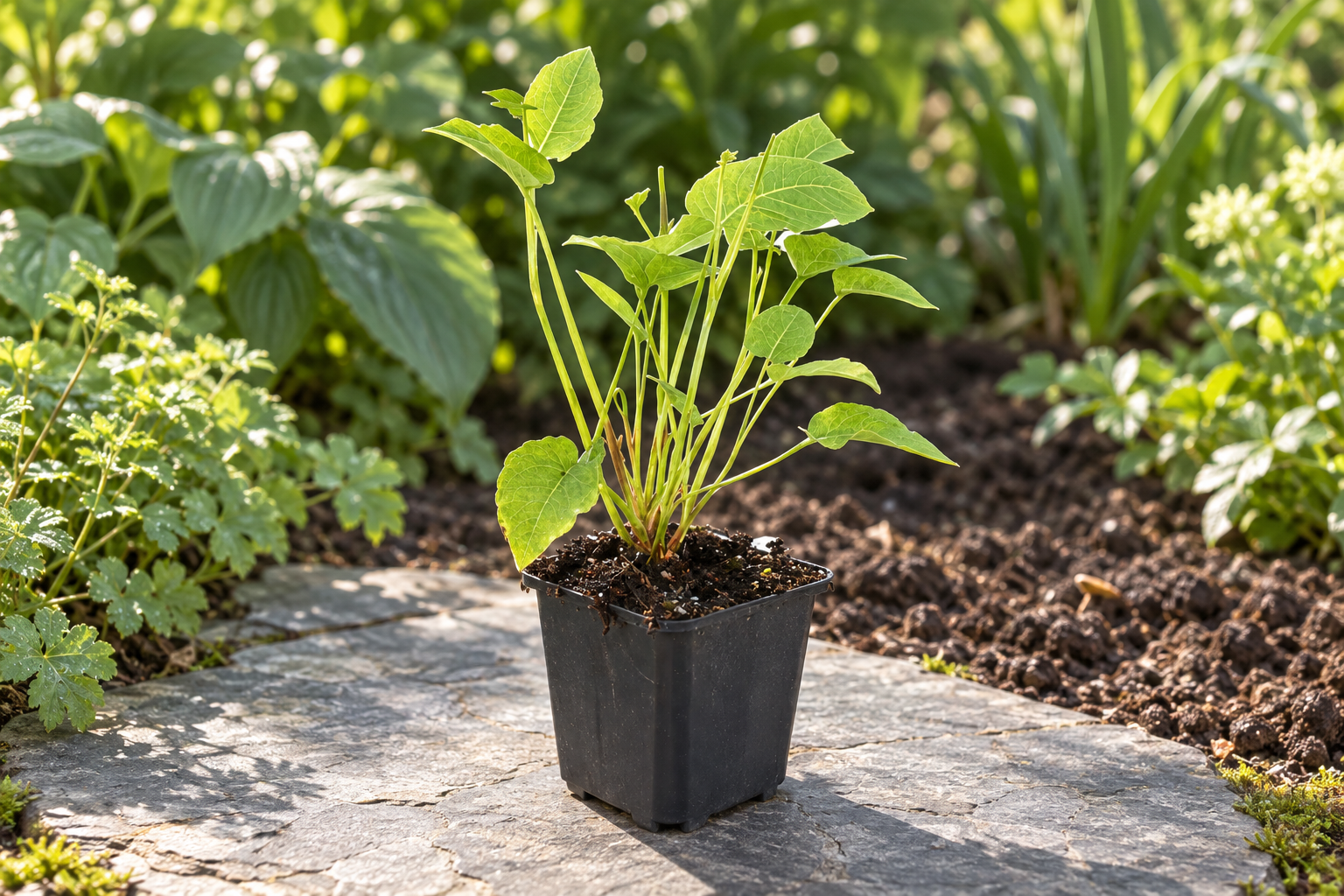
This plant at Exotenherz
Check the shop offer for current availability, price and what is included.
Check the selected shop offer for price, availability and delivery contents.
Your care table
| Topic | What to do | Why it helps |
|---|---|---|
| Light | Choose sun or partial shade with sufficient soil moisture. | Large leaves need water even in bright places. |
| Soil | Prepare moist humus-rich loamy soil. | The perennial develops its vigorous foliage cushion there. |
| Planting | Plant in spring or early autumn in frost-free soil. | Mild weather makes small rootballs easier to establish. |
| Spacing | 50–60 cm as an initial guide; plan for later clump width. | Adult plantings may grow 1–1.5 m wide. |
| Water | During drought water thoroughly at the soil. | Briefly wetting leaves does not supply the rootball. |
| Feeding | Consider soil condition and feed moderately. | Fertiliser does not fix a dry root zone. |
| Pruning | After flowering remove old stems, protecting young shoots. | Flowering and foliage development have different phases. |
| Division | If space is limited, replant rooted pieces in spring or autumn. | The clump-forming planting expands over the years. |
| Handling | Wear gloves for pruning and division. | Contact with plant sap may irritate skin. |
For young plants, feel the soil directly at the root ball. The surface and deeper soil may have different moisture levels.
Water thoroughly after planting; later, water according to the soil, weather and establishment rather than a fixed calendar.
Avoid standing water. For plants in containers, also check that water runs out of the drainage hole.
Between broad foliage and narrow flowers
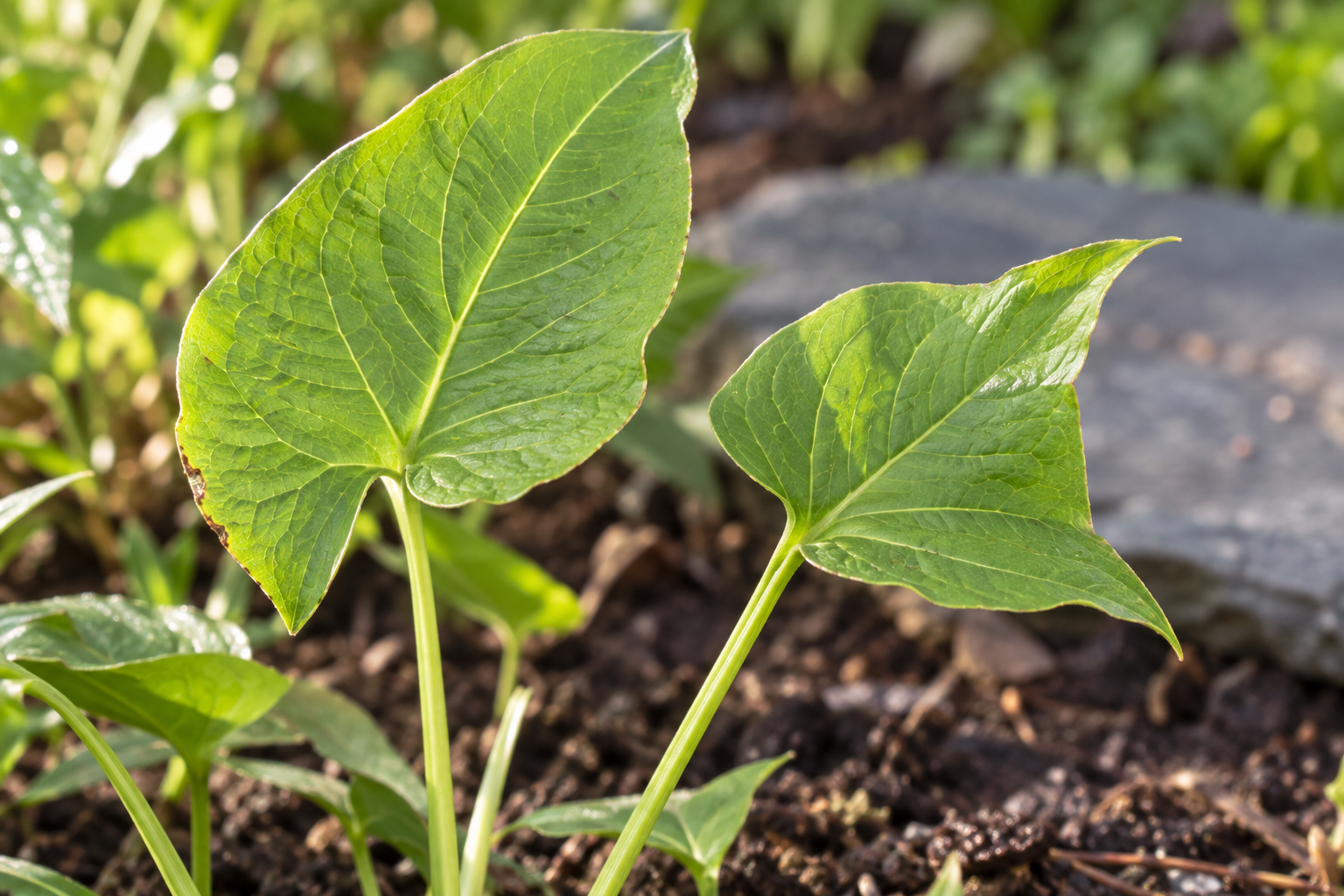
This perennial’s effect comes from two very different shapes. Below, broad pointed green leaves build a vigorous cushion. Above them long narrow flower spikes stand on taller stems in summer. The shop image shows a red-flowered form, but no expressly named cultivar such as Firetail is sold. I therefore stay with the documented species identity: Bistorta amplexicaulis, still often called Persicaria amplexicaulis in trade. When choosing a later bed position, think less of the little delivery rootball than of the foliage volume that will surround it over the years.
The young plant gets room to develop
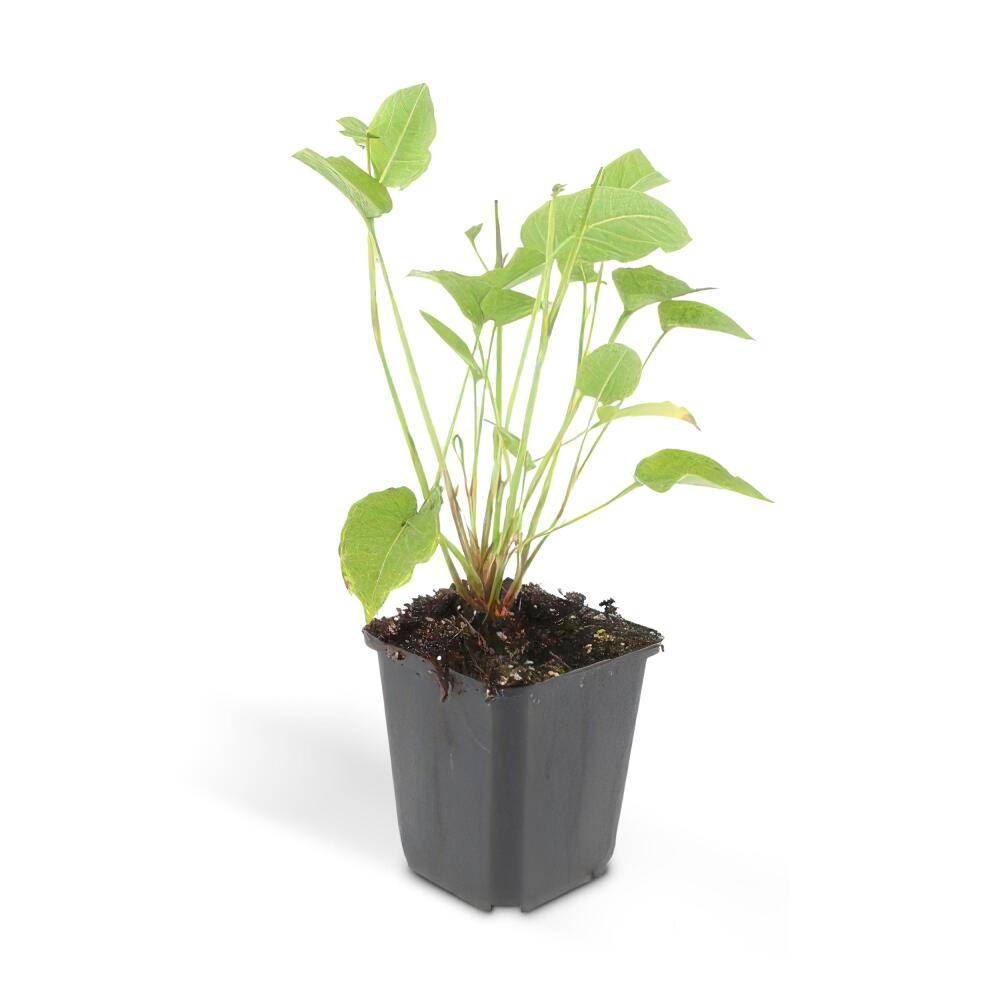
According to set selection, several individual plants arrive in 9 cm pots. Total height of about 10–25 cm includes the pot; it is not this perennial’s garden height. An adult planting may grow about 1–1.5 m tall and equally wide. After unpacking the young plant may initially carry only a few leaves and need not show a flower spike yet. Before planting I check rootball moisture and the fine stems’ strength. A leaf base or fresh shoot is not used as a handle to release the plant from its pot.
Moist soil determines a suitable position
Sun and partial shade are possible when sufficient soil moisture is present. A moist humus-rich loamy planting place suits well; a hot dry gravel edge would be difficult for the later large foliage. Beside woody plants too, what matters is how much water actually remains in the root zone. Look at the position after a dry weather spell before planting. Soil moisture here means an evenly supplied rootball, not a pot without drainage. Water and space are substantially harder to provide long term in a container than in a sufficiently broad bed.
Spacing for a group and width for many years
Plant in spring or early autumn in frost-free soil and set the moistened rootball at its previous height. The shop gives 50–60 cm spacing for young groups. Do not confuse that with the eventual total width of a fully grown clump. To preserve individual neighbouring perennials, allow more free room or plan later division. Around the first rootballs initially remove weeds, water in and ensure root contact. Small companions directly among the young stems may look pretty temporarily, but often become crowded as large foliage cushions develop.
Give water according to soil condition
Check regularly in dry weather while roots establish. When needed water thoroughly at the soil instead of only briefly wetting leaves. A loose mulch around the planting may protect soil from rapid drying; keep the immediate shoot base clear. With limp foliage look first at the soil. Drought, heated container walls and damaged roots may look similar but require different measures. More fertiliser is no answer to a dried-out rootball. In a well-prepared bed moderate supply accounting for existing soil condition is sufficient.
Summer spikes and the right time to tidy
The species flowers from midsummer to early autumn; the precise start depends on weather and developmental stage. Strong foliage remains a large part of its form meanwhile. Spent or later dead stems may be cut back after flowering without injuring young shoots. In autumn the perennial loses much of its foliage depending on climate, while mild situations may retain some green. This is not a promise of a closed surface year-round. When pruning and dividing I wear gloves because contact with plant sap may irritate skin.
Support the foliage cushion in an older bed
Over the years the clump grows distinctly beyond its starting rootball. If neighbours are crowded or the area is to be rearranged, division in spring or autumn is an option. Well-rooted pieces receive fresh soil contact and are then supplied. A once-planted large stand is therefore not a bed that stays unchanged without further attention. Especially along a path it is worth checking foliage width so spikes later stand free and the perennial is not squeezed into a narrow gap. Its distinctive structure needs room, moist soil and observed development.
One plant, several views
Good to know
Is the offered plant the cultivar Firetail?
A named cultivar is not documented in the offer. The species described is Bistorta amplexicaulis, called Persicaria in the shop.
Are Persicaria and Bistorta different plants here?
No. With amplexicaulis the names refer to the same species in different botanical classifications.
How tall does it grow in a bed?
A developed planting reaches about 1–1.5 m. Delivery height 10–25 cm instead includes the little pot.
Is 50–60 cm permanently enough room?
That is the shop guide for young groups. Adult clumps may become much wider; plan neighbours and later division.
Does it suit a dry gravel bed?
A permanently dry hot position is unfavourable for this large moisture-loving perennial.
Does it stay completely green in winter?
That is not promised. The species is deciduous to partly evergreen; climate affects foliage condition.
Sources and editorial note
- Exotenherz: parent offer, measurements and original images (accessed 03.10.2026)
- Specialist reference: persicaria-rhs (directly read 03.10.2026)
- Specialist reference: persicaria-kew (directly read 03.10.2026)
- Exotenherz: checked child offer, set of 6 (accessed 03.10.2026)
- Exotenherz: checked child offer, set of 12 (accessed 03.10.2026)
- Exotenherz: checked child offer, set of 20 (accessed 03.10.2026)
- Exotenherz: checked child offer, set of 40 (accessed 03.10.2026)
- Exotenherz: checked child offer, set of 60 (accessed 03.10.2026)
Parent offer and all assigned child offers read directly on 03.10.2026; article numbers, GTIN where present in child offers, availability and files documented separately. Delivery total height 10–25 cm including 9 cm pot expressly separated from later garden height. Quantity variants do not count as new plant identity. Specialist sources read directly; complete reference portraits fargesia-rufa-guide and heidelbeere-jersey-guide compared. Clean original view adopted unchanged; stamped views and montages excluded. Scene shows one young reference plant regardless of set quantity. Draft; shared-page and browser acceptance still pending.