
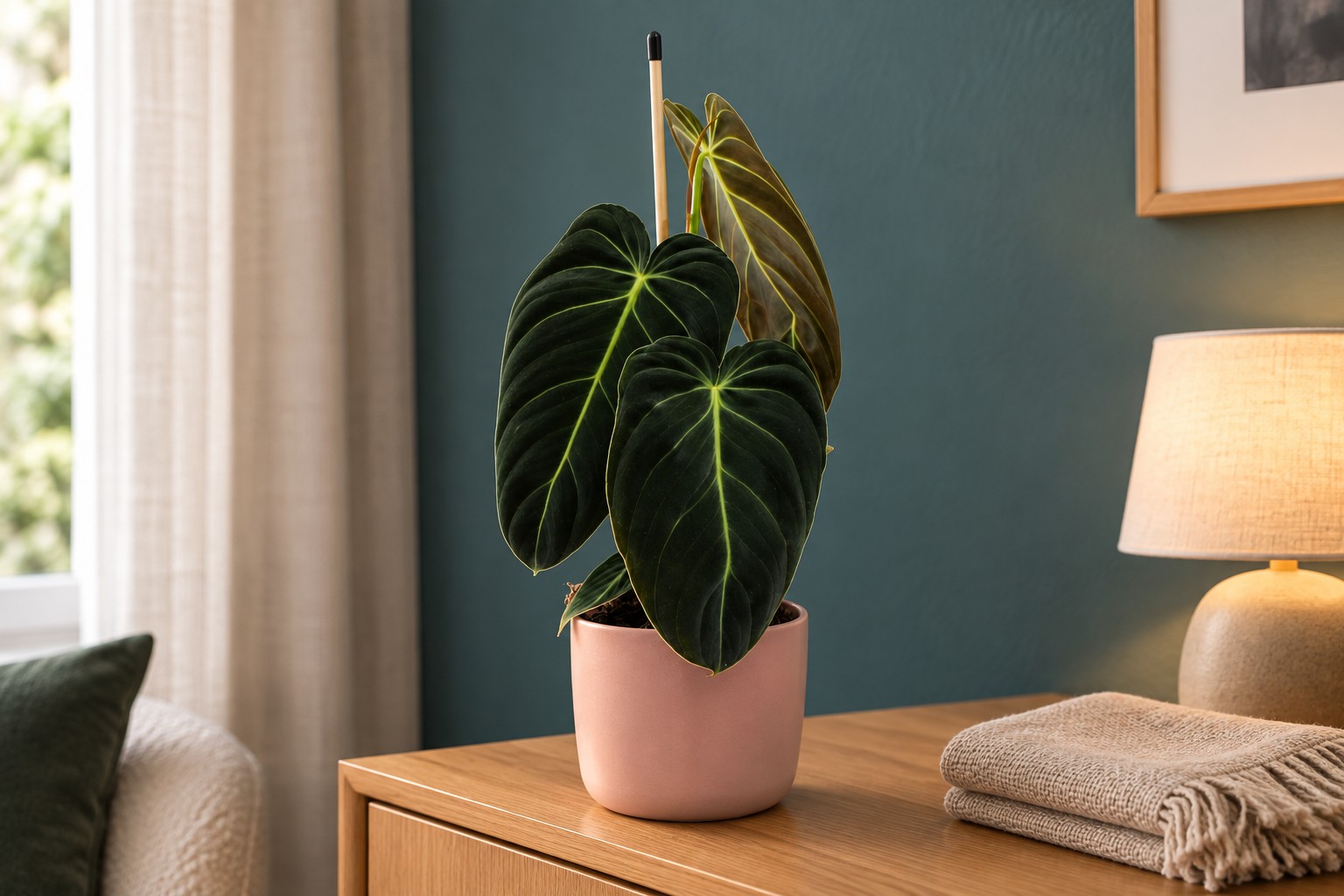
This plant at Exotenherz
Check the shop offer for current availability, price and what is included.
Link to the offer in German. Check the shop for the current price, availability and delivery contents.
Your care table
| Topic | What to do | Why it helps |
|---|---|---|
| Position | Bright and filtered, without hot direct midday sun. | Velvet sheen remains visible and sensitive foliage is protected. |
| Water | Let the surface dry slightly, then water evenly. | Moist does not mean persistently wet; remove remaining water. |
| Compost | Airy mix with coarse structural components and drainage. | Climbing aroids need oxygen in the root space. |
| Nutrients | Feed weakly during active growth according to product instructions. | Too much salt burdens roots and leaf edges. |
| Temperature | Keep warm, preferably consistently above 18 °C. | Avoid cold window positions and draughts. |
| Humidity | Combine higher air humidity with gentle air exchange. | Persistently wet leaves are not a substitute for suitable indoor conditions. |
| Training | Support the main shoot loosely and let new leaves unfold freely. | Do not pull rolled leaves or fasten leaf stalks tightly. |
| Checking | Check new growth and undersides for speckles, deposits and webbing. | Handle velvet leaves carefully and do not use shine products. |
Check the compost and pot weight. The care table explains how far the compost may dry.
Water only when needed. The water should reach the root ball without spilling over the rim.
Remove surplus water from the saucer or cachepot. Then return the plant to a suitable position.
Velvet here is a leaf surface
Philodendron melanochrysum fascinates with long, heart-shaped leaves featuring a dark background and prominent pale veins. Depending on the light, foliage looks almost black or warmly shimmering. Young leaves may initially appear bronze and change as they harden. The species comes from Colombia and Panama and belongs to the aroid family. Its climbing habit explains why suitable support becomes as important as the right position over time.
The young delivery form remains the basis
The offer in a 12 cm pot is described as about 35–40 cm tall overall. Very large leaves of older climbing plants are therefore not automatically included in delivery. The scene follows the existing young leaves and does not depict an artificially enlarged specimen. A bright position on stable furniture displays its markings well. Also allow upward space: new leaves need clearance from walls, curtains and other objects as they unfold.
Combine warmth with gentle light
Bright, filtered light suits it better than hot midday sun. Keep the philodendron warm and avoid prolonged periods below about 18 °C; the specialist source states 15 °C as the lower cultivation limit. A thermometer at the actual pot position is more informative than room temperature at the other end of the room. Higher air humidity helps leaf development. Frequently wet leaves do not replace a suitable indoor climate, however. Even in humid air, provide gentle air exchange without cold draughts.
Moist roots still need oxygen
The shop wording about even moisture must not be taken as an instruction to keep compost constantly wet. Let the top layer dry somewhat and check the root ball before watering again. A loose mix with coarse structural components lets water drain and preserves air pores. Remove the inner pot for watering or check the decorative pot afterwards. In a small 12 cm container, position, root development and compost composition matter more than a fixed number of watering days.
Let leaves unfold and guide shoots
Fasten the main shoot loosely to a suitable support; leaf stalks must remain free to move. Do not pull a still-rolled leaf apart with your fingers. Its sensitive tissue can tear permanently. When repotting in spring or summer, the next suitable container size is usually sufficient. Feed weakly during active growth. Fresh compost and healthy root growth take priority over trying to produce particularly large leaves quickly through extra nutrients.
Take damage on velvet surfaces seriously
Dry edges may relate to unfavourable humidity, water stress or salt build-up. Pale speckles, silvery areas or fine webbing call for checks for sap-sucking pests. Examine leaf undersides and young growth particularly closely. Do not treat the velvety surface with leaf shine or rub it vigorously. Initially observing a new plant separately makes checks easier. Like other aroids, this philodendron belongs out of reach of nibbling pets or small children.
One plant, several views

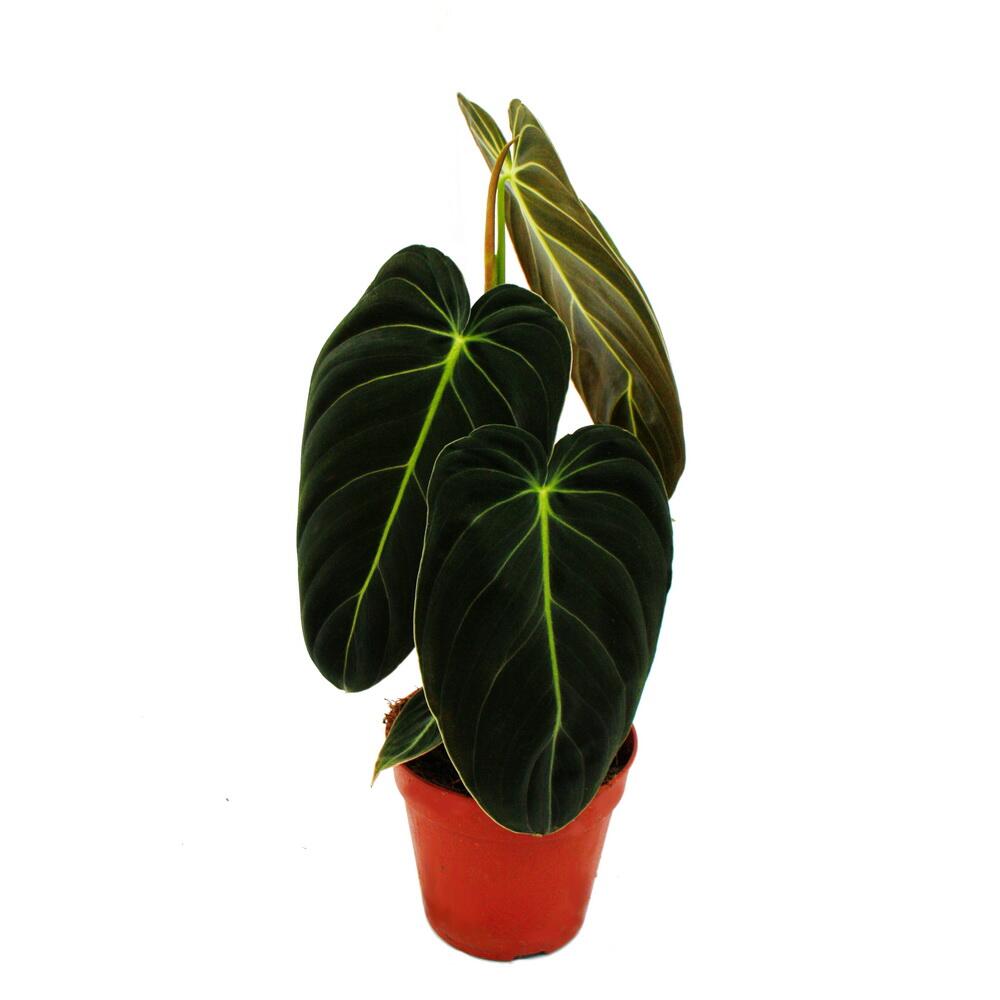
Good to know
Are leaves already 60 cm long at delivery?
No, such measurements describe possible older leaves. The linked offer is a young plant about 35–40 cm tall overall.
Why is the new leaf bronze rather than dark green?
Its colour changes while hardening. Do not judge a fresh leaf like a fully developed one.
Should I pull open a stuck leaf?
Not by force. Check warmth, humidity and water supply; its sensitive tissue tears easily.
Must the compost always be wet?
No. Even supply and an airy mix are important, but excess water must drain away.
Sources and editorial note
- Product and delivery contents: Exotenherz
- Royal Horticultural Society: plant and care knowledge
- Royal Horticultural Society: plant and care knowledge
Sources checked: 15 September 2026. Product information and delivery contents follow the linked shop offer. Care has been checked against the stated specialist sources and remains subject to plant condition, position and season.