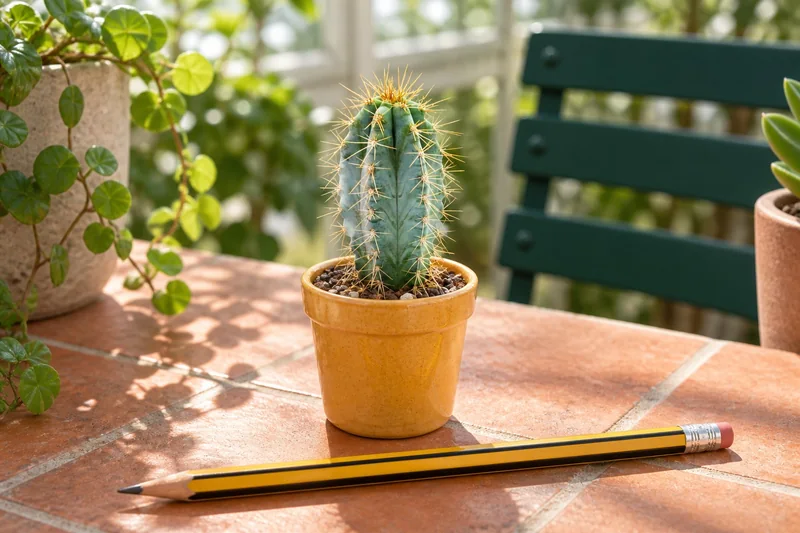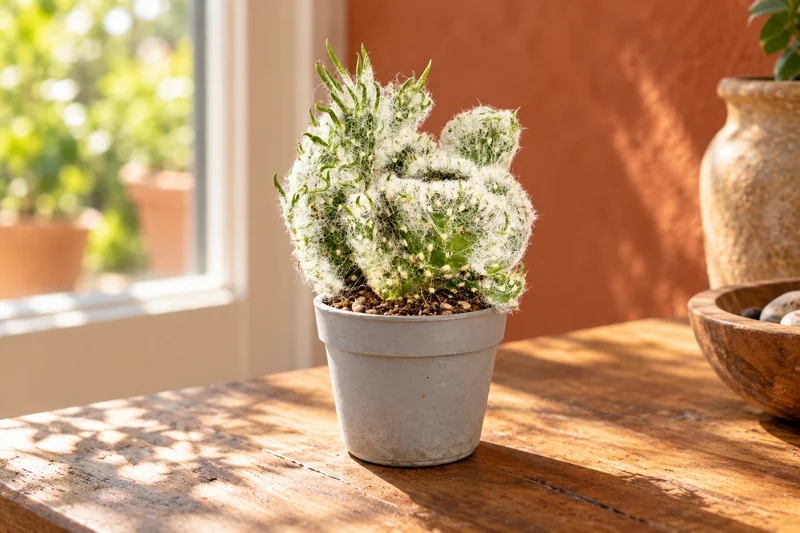
This plant at Exotenherz
Check the shop offer for current availability, price and what is included.
Check the selected shop offer for price, availability and delivery contents.
Your care table
| Topic | What to do | Why it helps |
|---|---|---|
| Light | Position very brightly, increase sun gradually. | Watch tip and lateral start. |
| Water | Let the root ball dry well between supplies. | Column height does not show soil moisture. |
| Watering point | Pour directly onto soil, then drain. | No reserve in the outer pot. |
| Soil | Permeable cactus soil with mineral structure. | Keep air around roots. |
| Stability | Secure the pot, leave space from fabrics. | Long fine spines need room. |
| Repotting | When space is needed, handle carefully using suitable gripping aids. | The side start is not a handle. |
| Nutrients | Feed sparingly by label during growth. | Feeding does not replace a bright position. |
| Winter | Keep bright and frost-free, adapt supply to rest. | No outdoor garden overwintering is promised. |
Check the compost and pot weight. The care table explains how far the compost may dry.
Water only when needed. The water should reach the root ball without spilling over the rim.
Remove surplus water from the saucer or cachepot. Then return the plant to a suitable position.
Golden spines against cool green
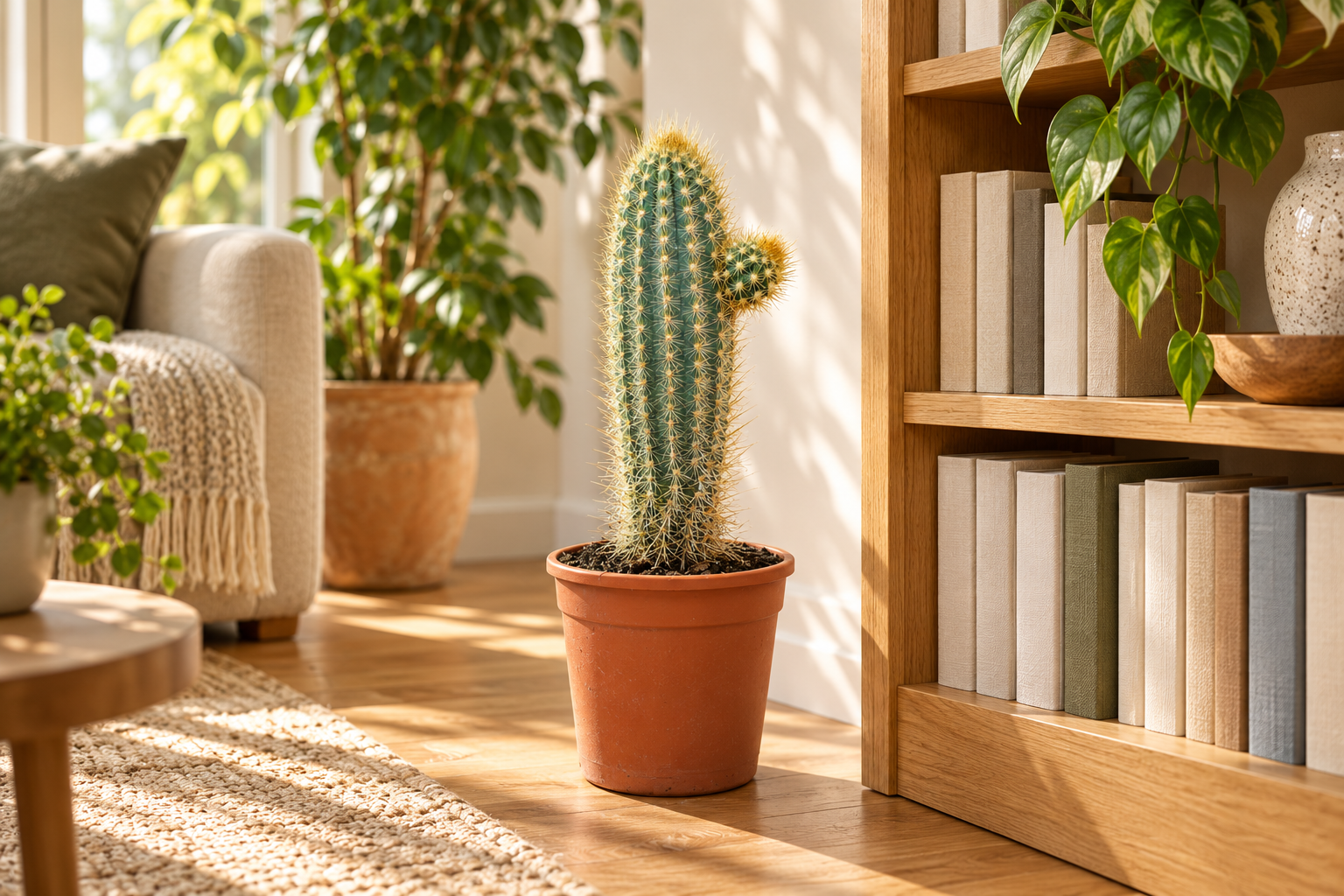
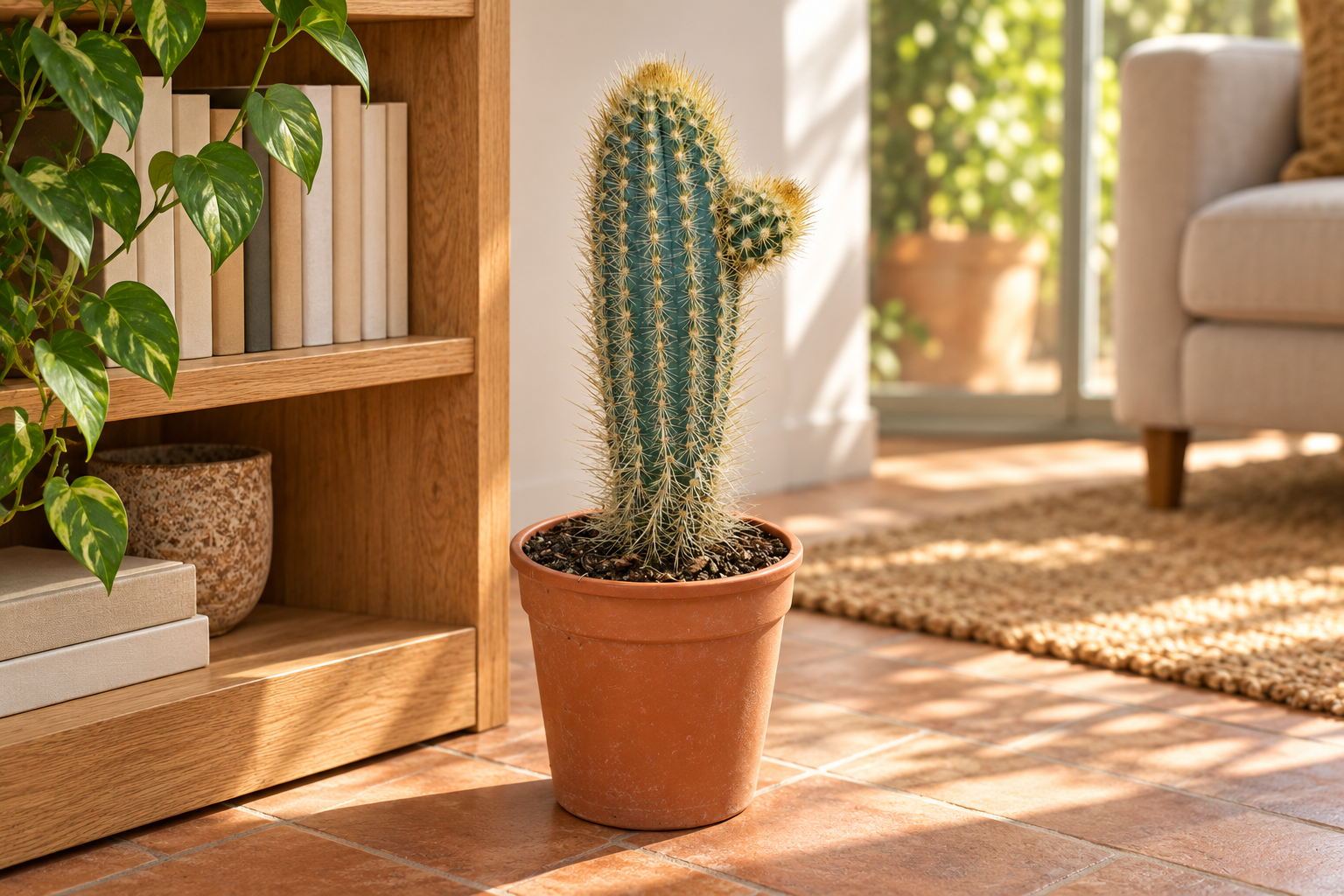
From a distance the column looks calm and straight. Up close you can see fine yellowish spines, pale areoles and blue-green between the ribs. A small lateral start breaks the silhouette without already making it a large branched cactus. The shop calls the plant Pilosocereus braunii. Kew lists that name as a synonym of Xiquexique gounellei subsp. braunii. The portrait keeps both descriptions clear and stays with the young offer actually shown, rather than deducing another unconfirmed species from its colour.
One container defines the size reference
The offered individual plant is in a 17 cm pot, about forty-five to fifty centimetres in total height including the container. The slender column can look attractive beside low pale furniture, but leave room around it so spines do not continually touch fabrics or other plants. Support the pot when carrying it. Even a small lateral start is not a handle. A stable outer pot remains removable or accessible so excess water cannot stand unnoticed at its base.
Give the column a real light position
A very bright position is the starting point. Increase stronger direct sun gradually after shipping; warmth at that particular position matters as well as brightness. Behind strongly heated glass, do not simply push the plant ever further into the sun. Watch tip and lateral start. Fresh growth should develop under suitable conditions, not be forced by extra feeding in a position that is too dark. Preserve the natural blue-green surface rather than rubbing supposed dust to a polished shine.
Even a large column has a limited root ball
Let the root ball dry noticeably between supplies. Before watering, check soil and pot weight even when the surface has long looked dry. During active growth, pour slowly onto soil and let excess drain. Body height does not say how much remains stored inside the pot. A heavy wet root ball therefore needs different treatment from a light dry one. When the plant slows in winter, adapt supply. A warm calendar date alone is no reason to refill the pot.
Keep roots airy and the plant stable
Mineral-structured permeable cactus soil and open pot holes support care. With real space needs, preferably repot at growth onset. Suitable gripping aids support the body while the root ball is gently released. The new pot must suit roots and stability; a huge reserve of wet new soil is no advantage. Feed sparingly by cactus-fertiliser label during growth. Regularly view areoles, column base and the lateral bud start from different angles. Changes should be visible early without continually reaching through spines.
Observe the later shape
In winter keep the plant bright and frost-free. Adapt watering to little growth and keep checking the shoot. Neither a present bloom nor a particular future branching plan is promised for this young article. An overall photograph can sit beside a view of golden spines in the plant book. Note how the small lateral start develops and whether the position changed. That personal care history explains more than a generic photograph of a metre-high cactus at an entirely different life stage.
One plant, several views

Good to know
Why does the name Xiquexique appear?
Kew assigns Pilosocereus braunii to Xiquexique gounellei subsp. braunii. The shop name is retained for the offer.
Does solitary mean a large mature plant?
Here it means one potted plant with the stated young delivery dimensions.
May I hold the lateral start?
Support the container when handling and protect spines and young starts.
Should the blue surface be polished?
Do not rub the natural surface to a shine.
Is a flower present?
The original shows a young body without a guaranteed present bloom.
Sources and editorial note
- Exotenherz – offer and original pictures, 03.10.2026
- RHS – potted cactus cultivation, root space and seasonal rhythm, 03.10.2026
- Kew – Pilosocereus braunii and accepted assignment, 03.10.2026
Shop offer, article number, GTIN, availability and original images checked directly on 02.10.2026; specialist acceptance on 03.10.2026. Specialist sources read directly. SKU, original pictures, dimensions and orderability checked directly in the shop on 03.10.2026. Relevant specialist passages read. Shop name and botanical reference remain distinguishable. Images compared with the original photographs; no Wawi, server or tool changes. Currently not orderable: knowledge portrait without a purchase link; social drafts not cleared for sending.