
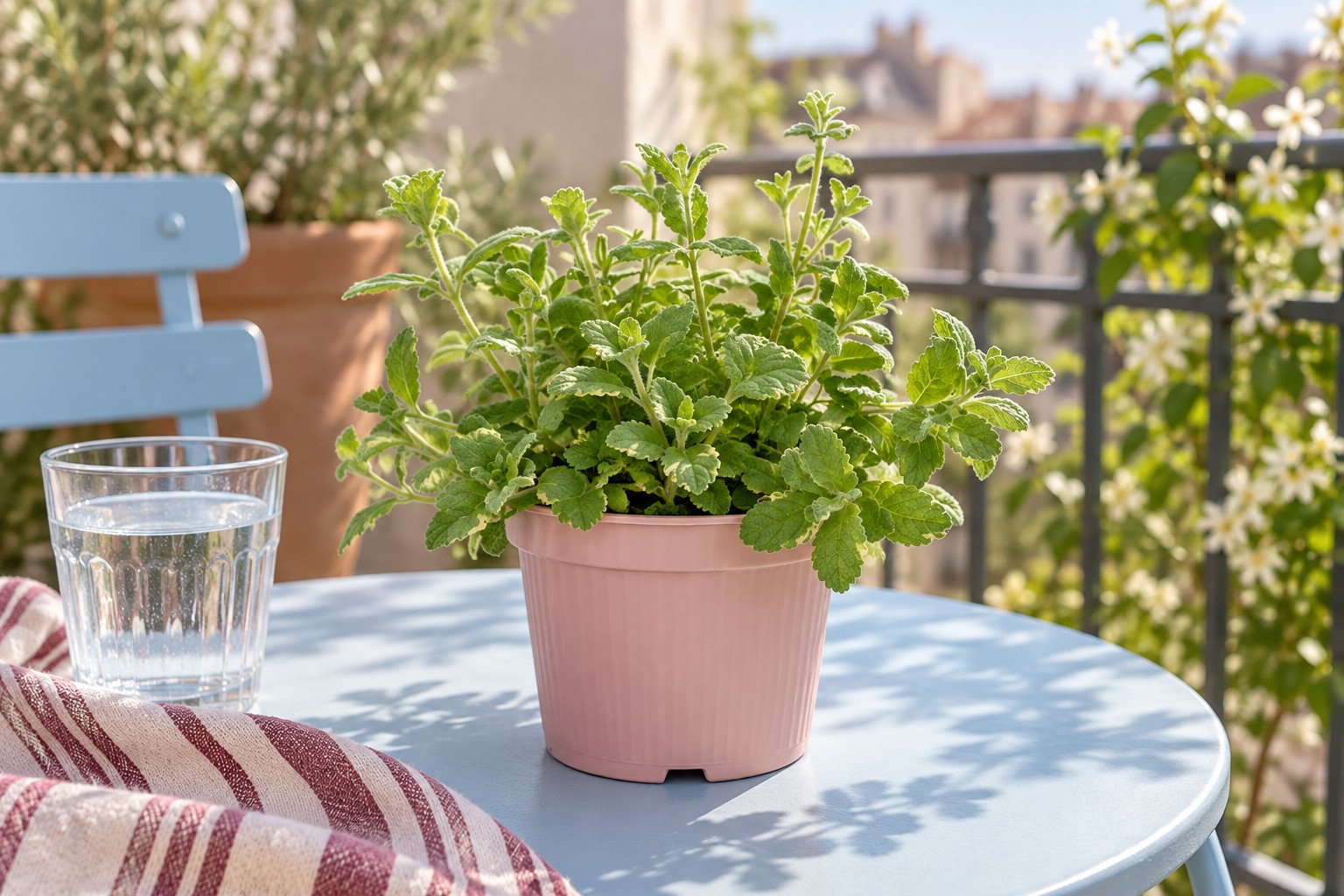
This plant at Exotenherz
Check the shop offer for current availability, price and what is included.
The linked shop is in German. Product details, availability and delivery information are provided in that shop.
Your care table
| Topic | What to do | Why it helps |
|---|---|---|
| Position | Keep outdoors in sunshine to light partial shade. | Sufficient light supports strong shoots for harvesting. |
| Water | Keep evenly moist, allowing the surface to dry only slightly. | Mint needs more moisture than Mediterranean herbs adapted to dry conditions. |
| Drainage | Let rainwater and irrigation water drain away. | Moist compost must not remain waterlogged. |
| Pot | Preferably use a sufficiently large pot of its own. | Runners can crowd neighbouring plants. |
| Harvesting | Take healthy tips and leave enough foliage. | Small, regular harvests support regeneration. |
| Feeding | During vigorous growth, feed moderately according to a suitable product label. | Frequent new growth needs nutrients. |
| Winter | Protect small pots and check moisture on frost-free days. | The roots remain alive even with little foliage. |
| Rejuvenation | Divide older, dense clumps in spring when needed. | Young divisions regain space. |
Check the compost and pot weight. The care table explains how far the compost may dry.
Water only when needed. The water should reach the root ball without spilling over the rim.
Remove surplus water from the saucer or cachepot. Then return the plant to a suitable position.
A mint with a fruity note
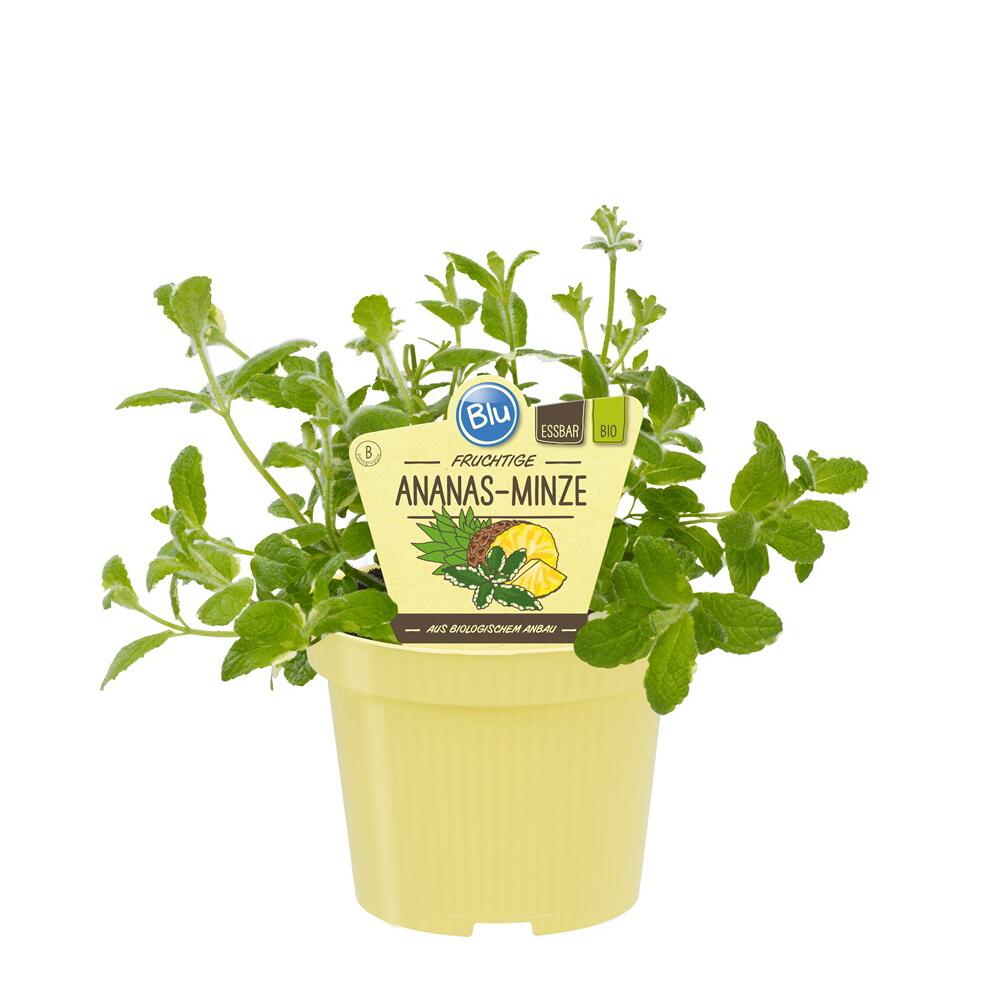
Mentha suaveolens Variegata is offered as pineapple mint. Its scent seems fruitier and milder than that of peppermint with a strong menthol character. The soft leaves may have pale edges, whose prominence varies. Like other mints, it forms underground runners and can spread considerably in good conditions. Small flowers are possible and are part of the annual cycle. It remains a culinary herb; no medicinal effects or health promises are derived from it here.
A pot of its own is a good choice
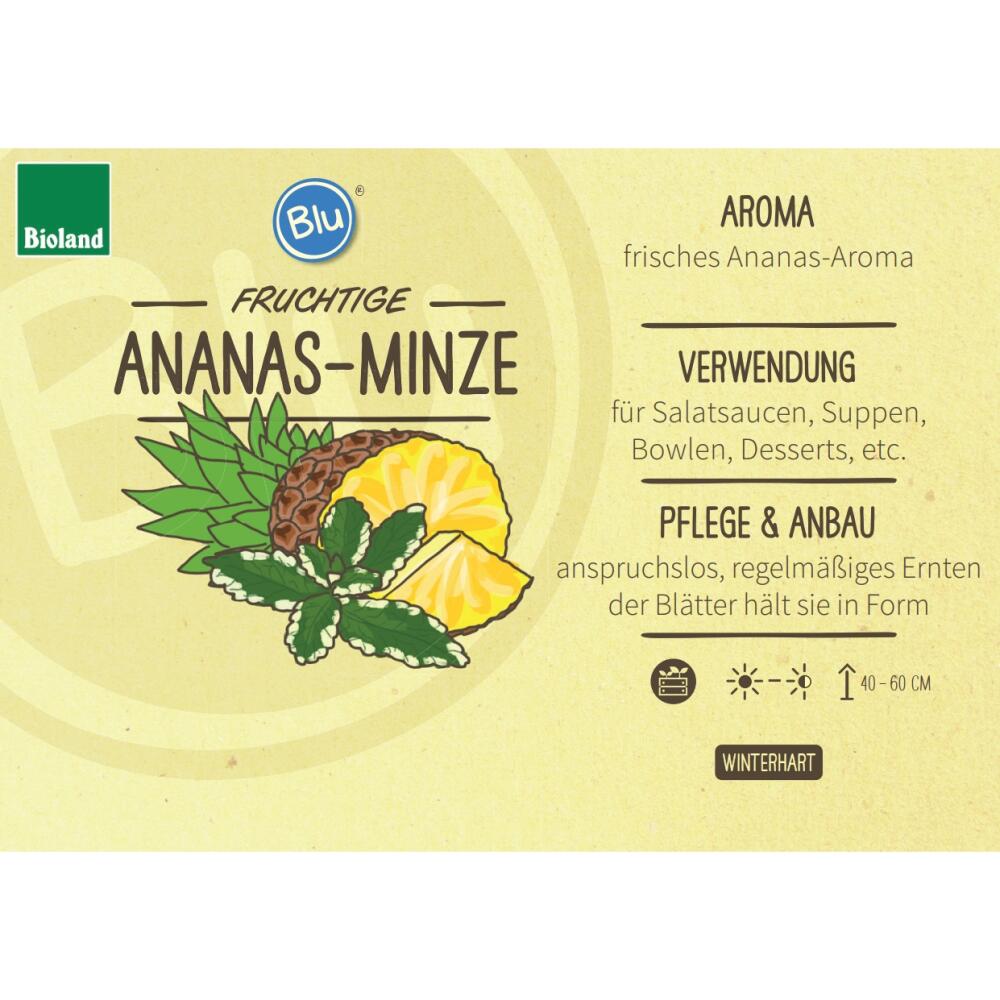
The linked offer lists pineapple mint with BIO organic quality in a 12 cm pot. A reliable total height is not stated, so the original photo remains the size reference for the scene. As it grows, a larger individual container is often sensible. In a mixed bed, runners could otherwise crowd other herbs. The BIO designation relates to this specific shop offer and is not automatically carried over to later, different variants. Decoration is not included unless expressly stated.
Combining light with sufficient water
A sunny position to light partial shade is suitable. Check the compost particularly carefully in hot positions. A dark interior is not a suitable long-term growing environment for a vigorous harvesting plant. Acclimatise gradually to outdoor light after transport. Air between shoots helps leaves dry after rain. Mint needs a moist root zone and should not be treated like Mediterranean thyme in permanently dry soil.
Evenly moist, not swampy
Water when the surface compost begins to dry slightly. The root ball should not repeatedly dry out completely. A well-rooted pot may use water quickly in summer. Even so, excess water and rain must be able to drain. Assess limp leaves together with the soil first. Constant wetness can cause problems just as dryness can. Requirements fall in winter, but check the roots occasionally on frost-free days.
Harvesting as gentle maintenance pruning
Take healthy young shoot tips and leave enough green leaves for new growth. Regular small harvests maintain the shape better than completely stripping a young plant. Use only positively identified leaves suitable according to product and treatment instructions, and clean them before use. During vigorous growth, a moderate nutrient supply according to a suitable product label may be helpful. When repotting, choose loose, humus-rich compost and ensure clear drainage holes.
Managing runners and winter rest
Even in a pot, check whether shoots or roots are growing into neighbouring containers. A vigorous older plant can be divided and rejuvenated in spring. Above-ground greenery may diminish in winter; this perennial grows again under suitable conditions. Shelter small pots and protect them from prolonged wetness. Inspect spotted or unusually damaged foliage carefully, particularly where growth is dense and damp.
One plant, several views
Good to know
Does it taste exactly like pineapple?
The name describes a fruity direction in scent and aroma. Perception and expression may vary.
Can it share a small pot with other herbs?
A pot of its own is usually better because its runners can take up considerable space.
Does it need as little water as thyme?
No. Mint prefers much more consistent soil moisture.
Does brown foliage in winter always mean the plant has died?
Not necessarily. Above-ground greenery can die back; healthy roots may produce new growth in spring.
Sources and editorial note
Sources checked: 15 September 2026. Product information and the contents of delivery follow the linked shop offer. Care advice was checked against the cited specialist sources and should still be adapted to the plant’s condition, position and season.