
This plant at Exotenherz
Check the shop offer for current availability, price and what is included.
The linked shop is in German. Product details, availability and delivery information are provided in that shop.
Your care table
| Topic | What to do | Why it helps |
|---|---|---|
| Light | Bright to sunny, warm and sheltered from wind; acclimatise gradually outdoors. | Light and warmth support new flowering shoots. |
| Summer water | Check the root ball regularly and water according to need. | A small pot and warm weather change consumption quickly. |
| Drainage | Allow water to drain and check closed cachepots. | Moist compost must also retain enough air around the roots. |
| Feeding | During growth, provide a suitable liquid fertiliser according to the label. | The listing mentions monthly feeding; concentration and compost are taken into account. |
| Support | Guide the pyramid form loosely and check its support and ties. | New shoots may grow beyond the small framework. |
| Pruning | Selectively thin or shape, particularly in spring; wear gloves. | The milky sap can irritate, and flowering shoots should be consciously retained or renewed. |
| Winter | Bright and frost-free; about 10–15 °C is a guide for container culture. | Species and variety affect cold tolerance; frost hardiness is not assumed. |
| Winter water | Water sparingly after checking, without letting the root ball dry out completely. | With little growth, consumption is much lower than in summer. |
Check the compost and pot weight. The care table explains how far the compost may dry.
Water only when needed. The water should reach the root ball without spilling over the rim.
Remove surplus water from the saucer or cachepot. Then return the plant to a suitable position.
Dipladenia and mandevilla belong together
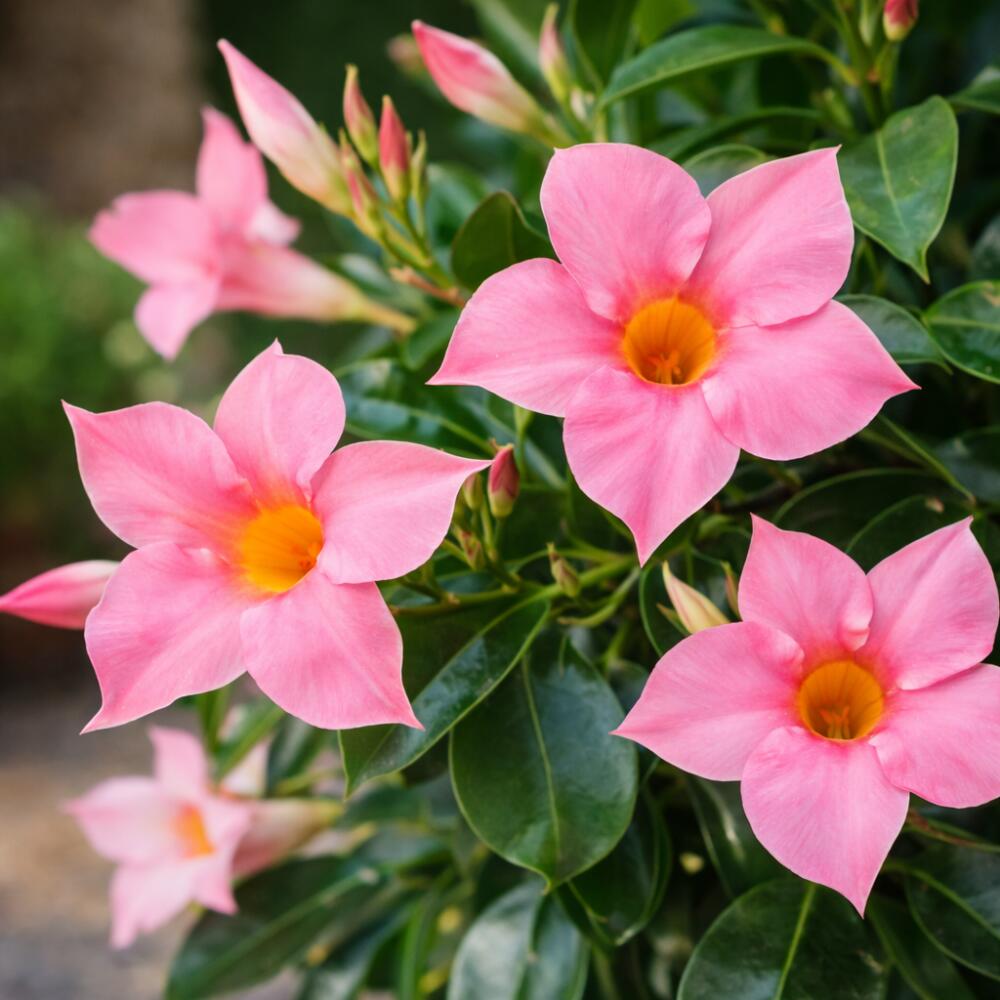
Dipladenia is a common trade name for plants in the genus Mandevilla. The pink pyramid form offered here is not assigned to an invented variety. Its glossy leaves and trumpet-shaped flowers give it a distinctive character. Unlike a bougainvillea’s papery bracts, the pink trumpets are true flowers. Mandevillas belong to the dogbane family and come from tropical America. Many plants offered commercially have been shaped by breeding. General descriptions of wild species with metre-long growth therefore do not automatically describe the habit of a specific potted presentation.
Assess the small pyramid correctly
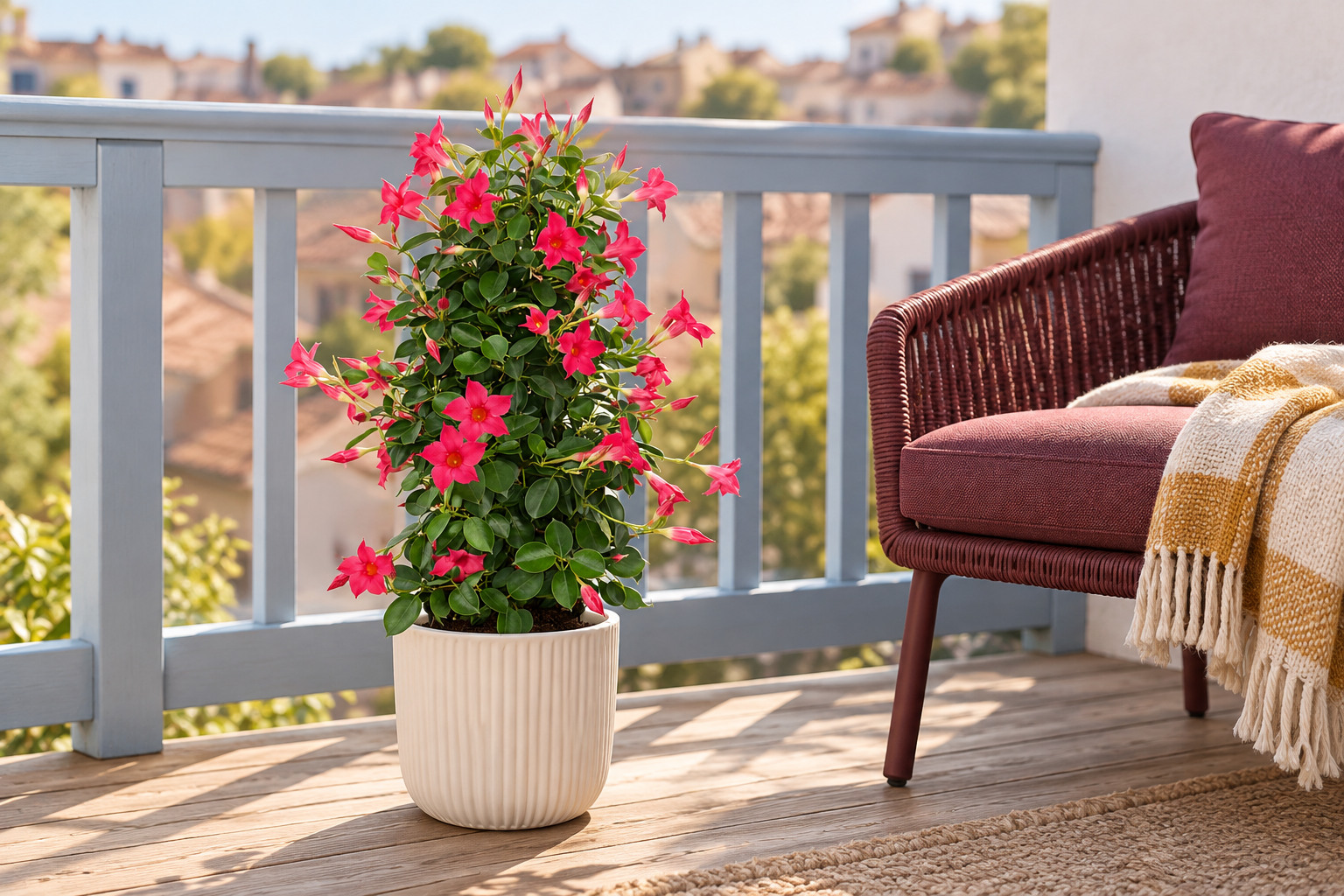
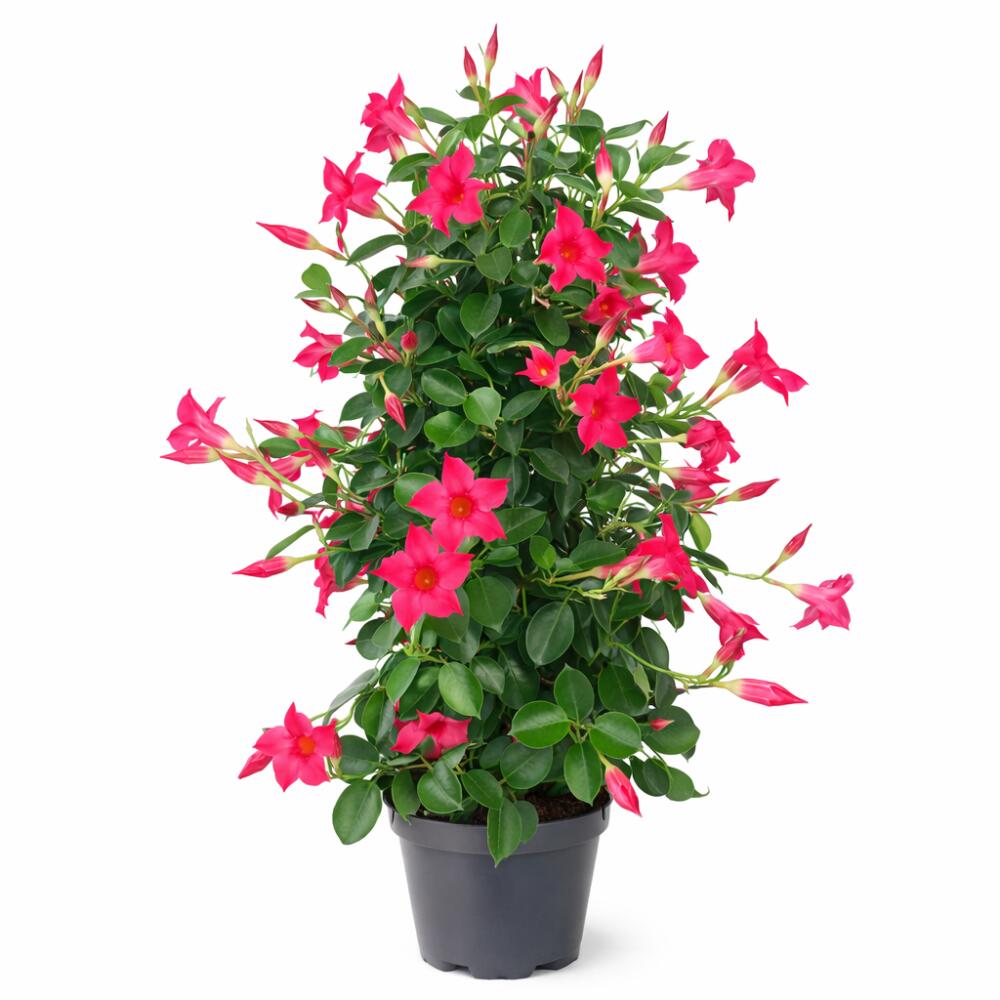
The shop listing states a 17 cm pot and about 65 to 70 cm total height. This size is the reference for our balcony scene. The white cachepot and seating are decoration. The plant should be clearly visible without looking like a person-height climber. Its pyramid form initially guides shoots upwards; over the season, new growth may extend beyond the framework. Leave a little space beside the pot so flowers do not continually rub against furniture. The original photograph shows the offered form independently of the styled setting.
A summer position with warmth and some protection
A bright to sunny balcony or sheltered terrace can work well. Introduce the plant slowly to sun and wind after time in the house. Behind glass, heat and very intense sunlight need to be assessed differently from outdoor conditions; light shading may be needed there. On cold nights, protect the plant or bring it in in good time. A position is well chosen when warmth, light and accessibility come together. A cramped, draughty balcony corner is of little help despite attractive decoration. After a move, watch young leaves and buds in particular.
Read water needs from the plant
Check compost and pot weight before watering. During growth, supply the root ball reliably without leaving it constantly standing in water. Allow excess to drain and check the cachepot after rain. Some specimens withstand brief dry periods better than others; that is no reason to leave a flowering plant regularly thirsty. Drooping leaves can occur with dry roots as well as wet, damaged roots. Therefore, reach for the watering can only after checking the root ball. An accessible pot rim makes this small but decisive routine easier.
Nutrients and suitable root space
The specific listing recommends monthly liquid feeding during the growing season. Check the appropriate concentration on the label; fresh or pre-fertilised compost counts too. Do not apply highly concentrated fertiliser solution to a dried-out root ball. When roots clearly fill the pot, move it in spring into a moderately larger container with free-draining compost. An oversized container is not automatically better, because wet, unrooted compost stays moist for a long time. Maintain the previous planting level and avoid levering the climbing support out of the root ball while working.
Guide shoots and wear gloves when pruning
Check how the shoots are attached to the pyramid. Ties remain loose enough for continued growth. Young climbing shoots can be gently guided so leaves do not shade each other too strongly. If needed, selectively shorten weak or intrusive shoots in spring. Milky sap released during pruning can irritate skin, so gloves are useful. Keep the plant away from children and pets tempted to nibble, and do not place it among edible flowers for the kitchen. Clean tools after the work. A small shaping cut should keep the plant manageable, not immediately remove every new shoot.
Prepare winter care in good time
The Thuringian agricultural authority gives about 10 to 15 °C for overwintering Mandevilla hybrids. The RHS describes warmer conditions for some more strongly tropical mandevillas. Without an exact variety name, we therefore choose a bright, frost-free position within this range and avoid experiments with very cool conditions. Bring the plant in as nights become noticeably colder. In winter, water sparingly, do not feed while growth is resting, and check regularly for pests. A dark cellar is unsuitable for a leafy plant. If leaves fall, assess light, temperature and moisture together.
New flowers need time and suitable conditions
After overwintering, it can take time for vigorous flowering shoots to develop again. As light increases, give the plant time and adapt water and nutrients to its actual new growth. More fertiliser cannot compensate for a spring position that is still cool. With yellow leaves, first check root space and moisture; with speckled leaves or webs, inspect leaf undersides too. Record winter temperature and the date of moving outdoors in the plant book. This helps plan the transition better next year. Enjoyment of the plant also comes from healthy new growth between two flowering phases.
One plant, several views
Good to know
Are dipladenia and mandevilla different plants?
Dipladenia is a common trade name within the Mandevilla group. The specific listing is identified by form, colour and article number.
How large is the plant shown?
The linked pyramid form has a 17 cm pot and about 65–70 cm total height including the pot.
Can it stay outside when it freezes?
No. Frost hardiness is not established for this presentation. It is brought into a bright, frost-free place in good time.
Why wear gloves when pruning?
The released milky sap can irritate. The ornamental plant also remains out of reach of children and pets tempted to nibble.
Why has the overwintered plant not flowered yet?
New growth and flowers need sufficient light and warmth. Check position and care rather than increasing fertiliser on suspicion.
Sources and editorial note
- Product and delivery size: Exotenherz
- RHS: growing mandevillas
- NC State Extension: Mandevilla
- Thuringian State Office: Mandevilla hybrids in containers
- Bavarian Garden Academy: preparing winter quarters
Sources checked: 14 September 2026. The specific plant presentation follows the shop listing; care follows the linked specialist sources. The plant’s condition, position and season determine the appropriate action.