
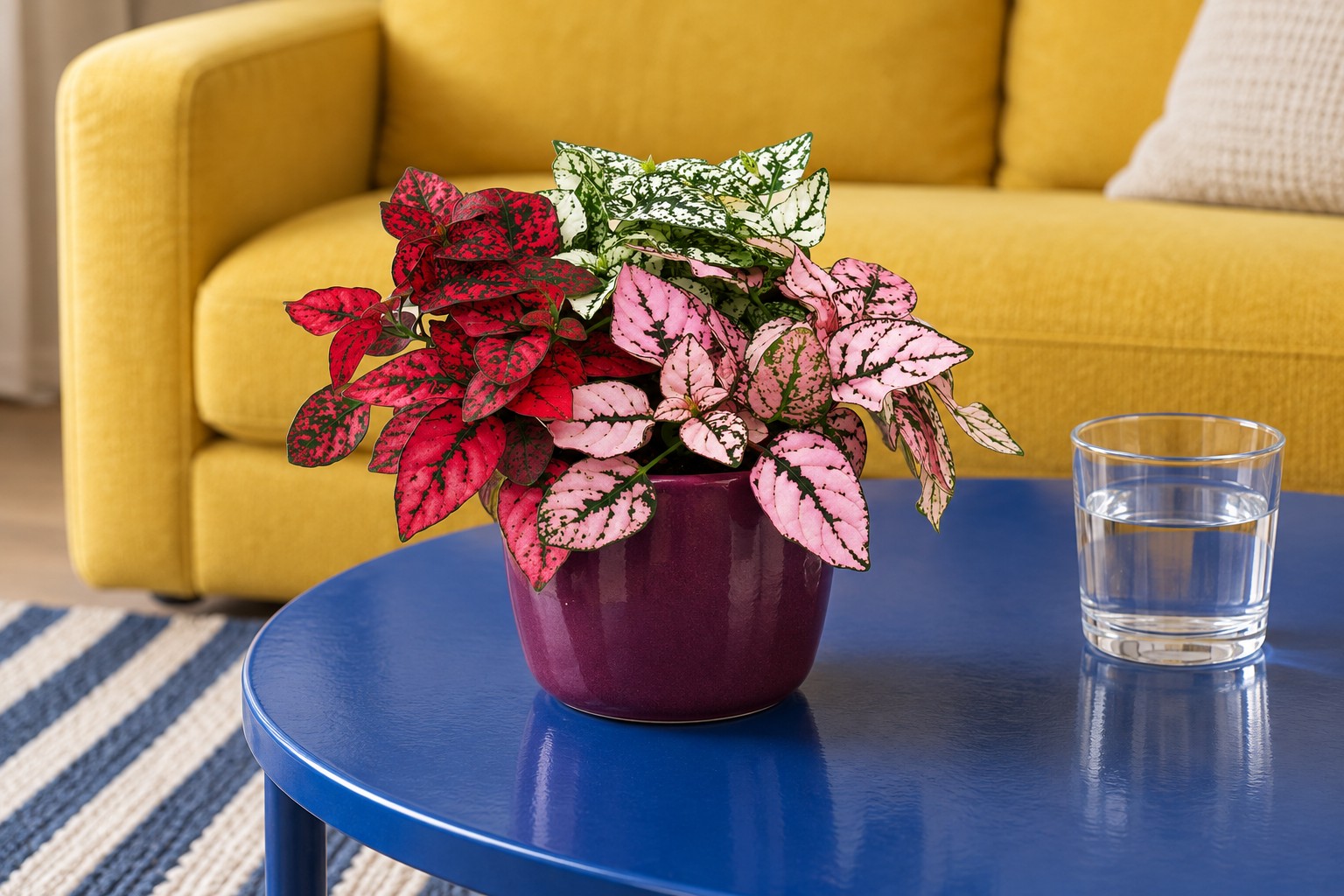
This plant at Exotenherz
Check the shop offer for current availability, price and what is included.
The linked shop is in German. Product details, availability and delivery information are provided in that shop.
Your care table
| Topic | What to do | Why it helps |
|---|---|---|
| Light | Place in bright conditions without harsh midday sun. | Markings remain clearer in good light. |
| Water | Let the surface dry slightly and keep the root ball evenly moist. | Soft shoots react to severe dry periods. |
| Drainage | Empty the cachepot after watering. | Persistent wetness deprives roots of air. |
| Warmth | Keep warm and protected from cold draughts. | The tropical plant does not tolerate frost. |
| Compost | Use loose houseplant compost. | Moisture should be retained without compacting the root ball. |
| Feeding | Feed sparingly during growth according to the label. | Too much fertiliser does not replace appropriate light. |
| Pruning | Shorten long tips above a pair of leaves. | Side shoots make the plant denser. |
| Winter | Keep bright and water according to actual consumption. | Shorter days often reduce water demand. |
Check the compost and pot weight. The care table explains how far the compost may dry.
Water only when needed. The water should reach the root ball without spilling over the rim.
Remove surplus water from the saucer or cachepot. Then return the plant to a suitable position.
One pot with several worlds of colour
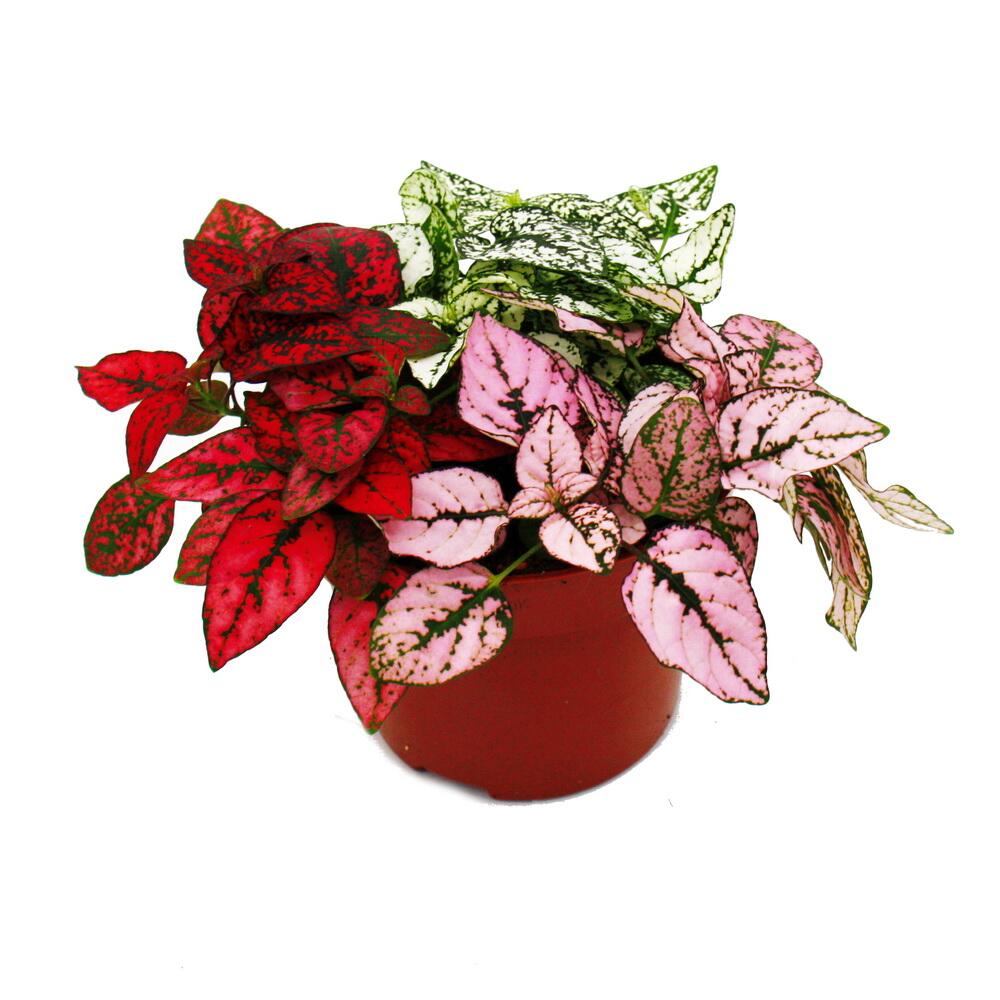
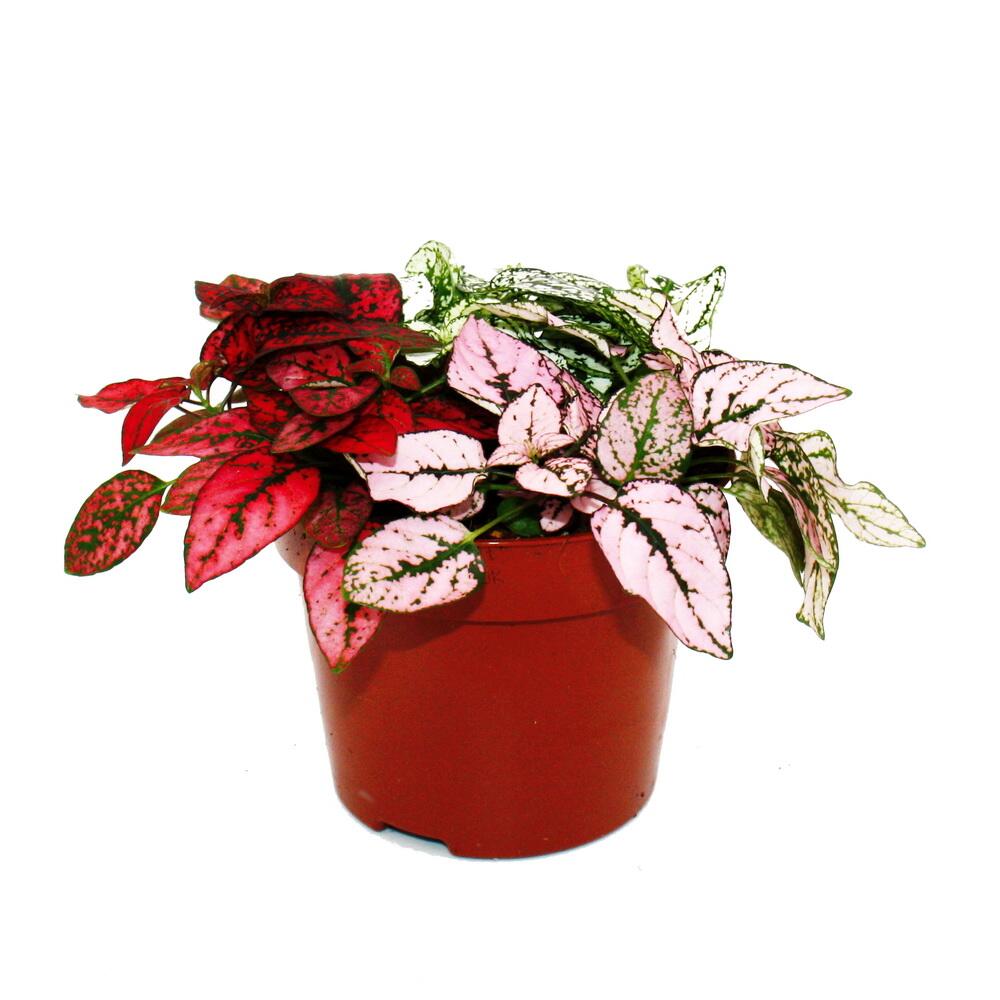
The polka dot plant carries its colour in its foliage. Pale, pink or reddish areas lie between green veins. The shop listing combines three colours in one pot; it is therefore not a single shoot freely changing its colour. Hypoestes phyllostachya belongs to the acanthus family. Its soft shoots grow quickly under good conditions. Small flowers may appear, but the lively markings are the main attraction. Individual leaves and the distribution of colours naturally vary from plant to plant.
Splashes of colour with manageable space needs
In a 12 cm pot, this presentation is about 12–15 cm tall. A well-lit side table brings foliage to eye level; a dark decorative corner gradually weakens it. Leave some air between neighbouring plants. A colourful container initially looks very dense, but compost must remain accessible for checking and watering. The cachepot and home accessories in the scene are styling ideas. The plant will continue growing and occasionally needs maintenance pruning.
Colour needs brightness, not heat
Choose plenty of indirect daylight. Strong summer sun behind glass can damage the tender leaves; any acclimatisation after a darker position is gradual. Long gaps between leaves and fading markings are reasons to check brightness. A warm, draught-free spot is better than a cold hallway. The small root ball dries quickly directly above heating. Misting compensates for neither poor light nor dry roots.
Water evenly while still allowing air
Check the surface frequently and water once it has dried slightly. The entire root ball should not repeatedly become hard and dry. Water thoroughly as needed and allow excess to drain. Limp foliage can occur both with dryness and with damaged, wet roots, so always feel before watering again. With less light in winter, water is used more slowly. A calendar does not replace this check.
Small cuts maintain a dense bush
Shorten overlong shoot tips with clean tools just above a pair of leaves. Buds below can then continue growing. Several gentle corrections are preferable to cutting a weakened plant back severely all at once. Flowering shoots may be removed if compact foliage growth is the priority. Feed moderately during active growth according to the fertiliser label. A weak, wet root ball first receives better conditions, not extra fertiliser.
Compost, young plants and regular observation
Loose houseplant compost in a pot with holes is sufficient. Move into a slightly larger pot only when roots have filled the root ball well. Healthy shoot tips can root in a small propagation pot; moist compost, warmth and air exchange matter more than a large container. Check young tips and leaf undersides for aphids or other sap-sucking pests. Individual old leaves may age naturally. If many turn yellow, assess light, moisture and roots together.
One plant, several views
Good to know
Are the three colours a single variety?
The listing contains three colour forms in one pot. Their distribution differs in each plant.
Why is the polka dot plant growing long and thin?
Light and timely tip pruning are often lacking. Improve the position and gently shorten healthy shoots.
Why does it droop despite watering?
Check whether the root ball is dry or permanently wet. Both can affect the leaves’ water supply.
Can it stay outside?
It is not frost-hardy. A summer position makes sense only in warm, sheltered conditions after gradual acclimatisation.
Sources and editorial note
Sources checked: 15 September 2026. Product details and delivery contents follow the linked shop listing. Care has been checked against the specialist sources cited and must be adapted to the plant’s condition, position and season.