
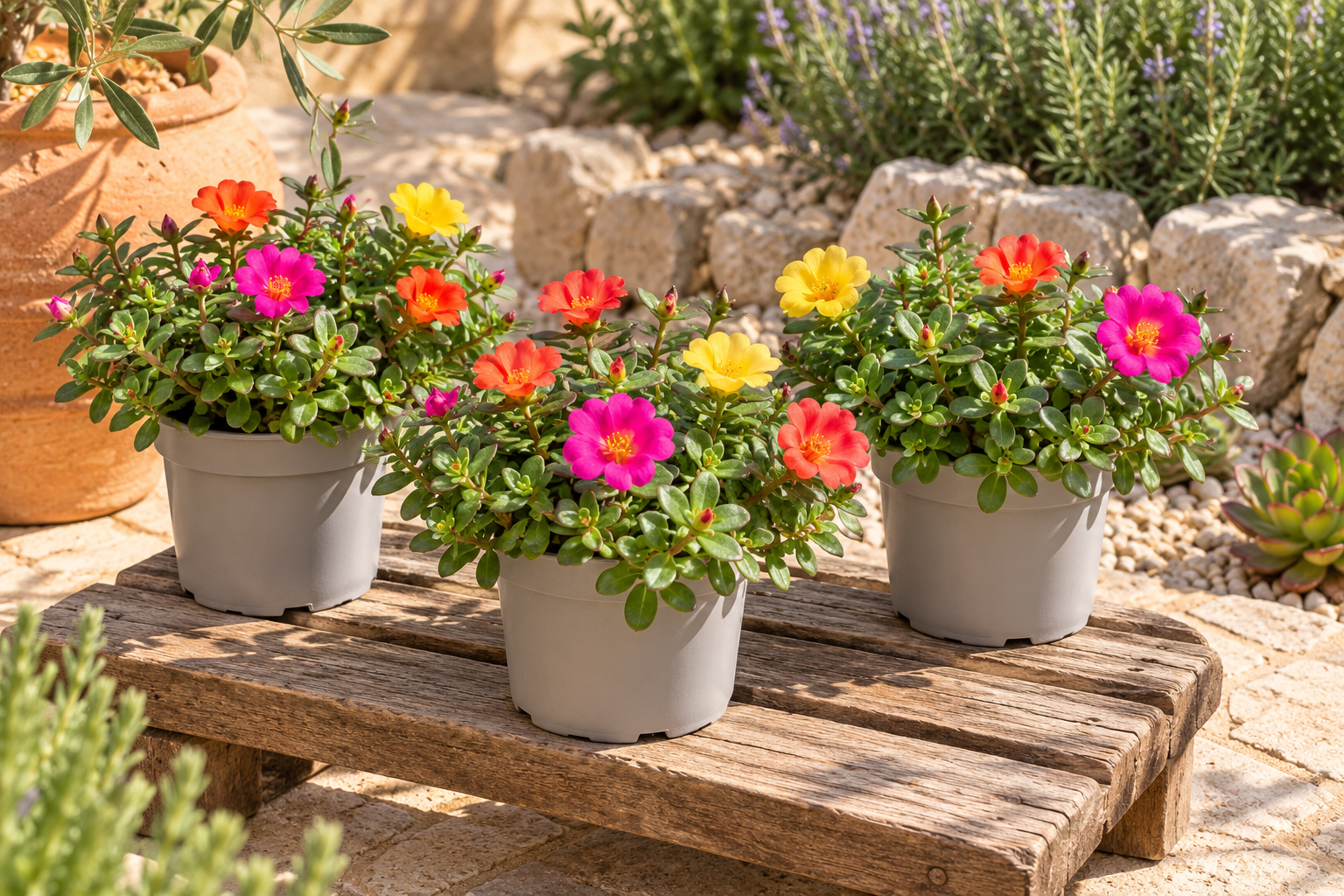
This plant at Exotenherz
Check the shop offer for current availability, price and what is included.
Check the selected shop offer for price, availability and delivery contents.
Your care table
| Topic | What to do | Why it helps |
|---|---|---|
| Light | Warm and sunny, acclimatise slowly. | Appearance also depends on time of day and weather. |
| Planting | After frost risk in warm weather. | A cold summer start strains the young root ball. |
| Water | After some drying check roots and supply as needed. | Fleshy foliage is not a watering prohibition. |
| Drainage | Let excess drain. | Lasting wetness may harm stems and roots. |
| Soil | Permeable structurally stable mix. | Root zone stays ventilated. |
| Nutrients | During growth by label, accounting for initial fertiliser. | A closed flower does not prove deficiency. |
| Shape | Remove only damaged parts selectively. | Low lateral branching belongs to the plant. |
| Use | Ornamental plant; protect from nibbling. | No food or harvest assurance. |
Check the compost and pot weight. The care table explains how far the compost may dry.
Water only when needed. The water should reach the root ball without spilling over the rim.
Remove surplus water from the saucer or cachepot. Then return the plant to a suitable position.
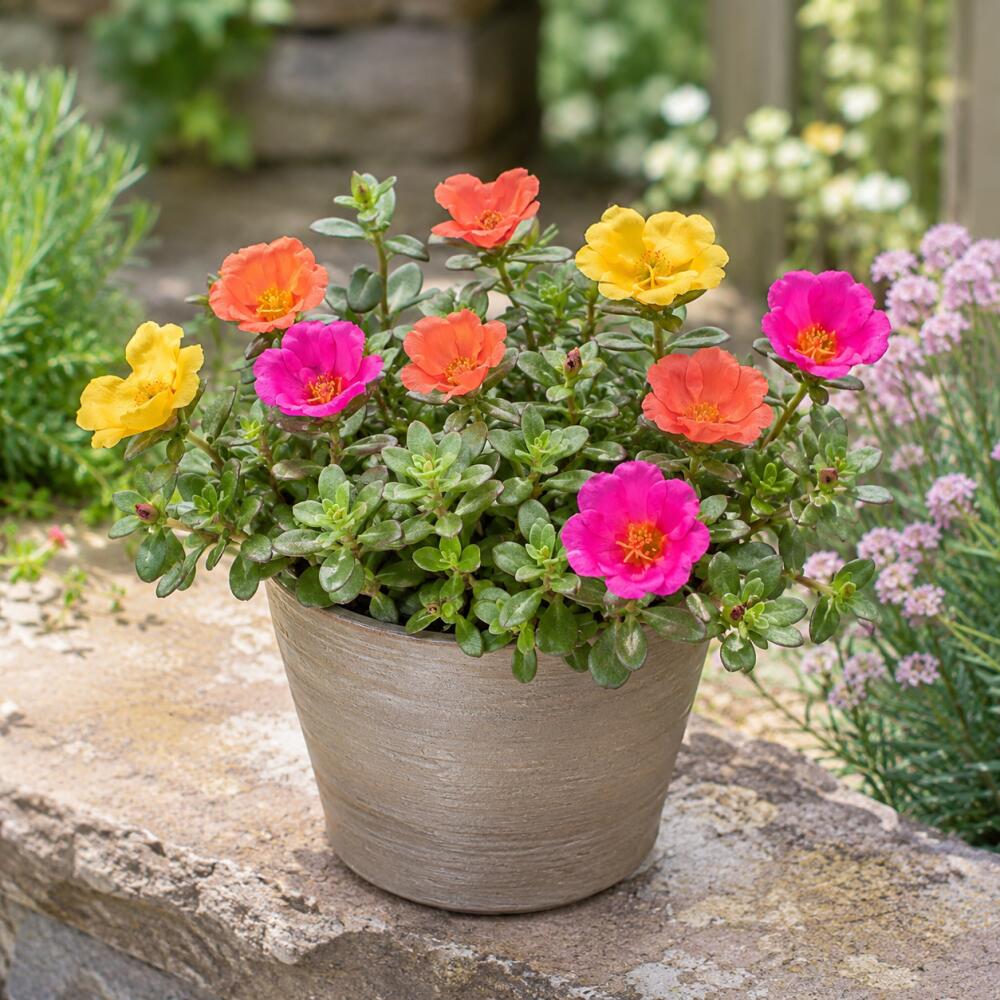
Small flower cups bring strong colours
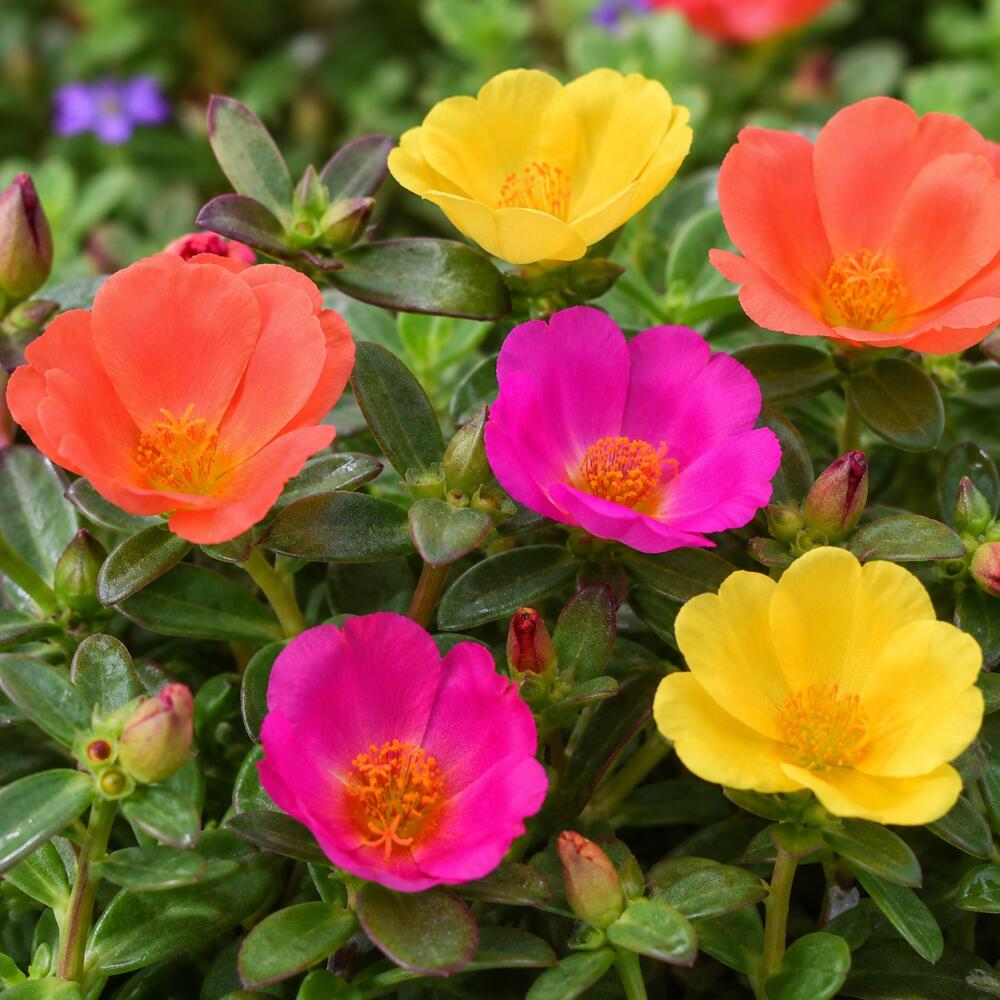
Yellow, coral orange and pink stand above small fleshy leaves. Simple flower cups look sunny and clear without needing a tall flower stem. Konfetti here describes a multicoloured ornamental purslane selection from the shop. The original shows broad spoon-shaped leaves, not the fine needle-like leaves of another flowering-purslane type. The offer names Portulaca oleracea. This portrait retains the shop name while distinguishing the striking ornamental selection from the ordinary small yellow-flowered form in general species descriptions.
Three young plants with a clear size reference
The set lists three plants, each in a 13 cm pot, at about twenty centimetres total height including pot. Picture colours help imagine a combination but do not add a promise about the allocation of each individual shade. Arrange crowns loosely before planting and consider lateral growth. A low terrace table or sunny container edge shows flat flowers clearly. Keep all three root balls accessible so care does not supply only the front plant.
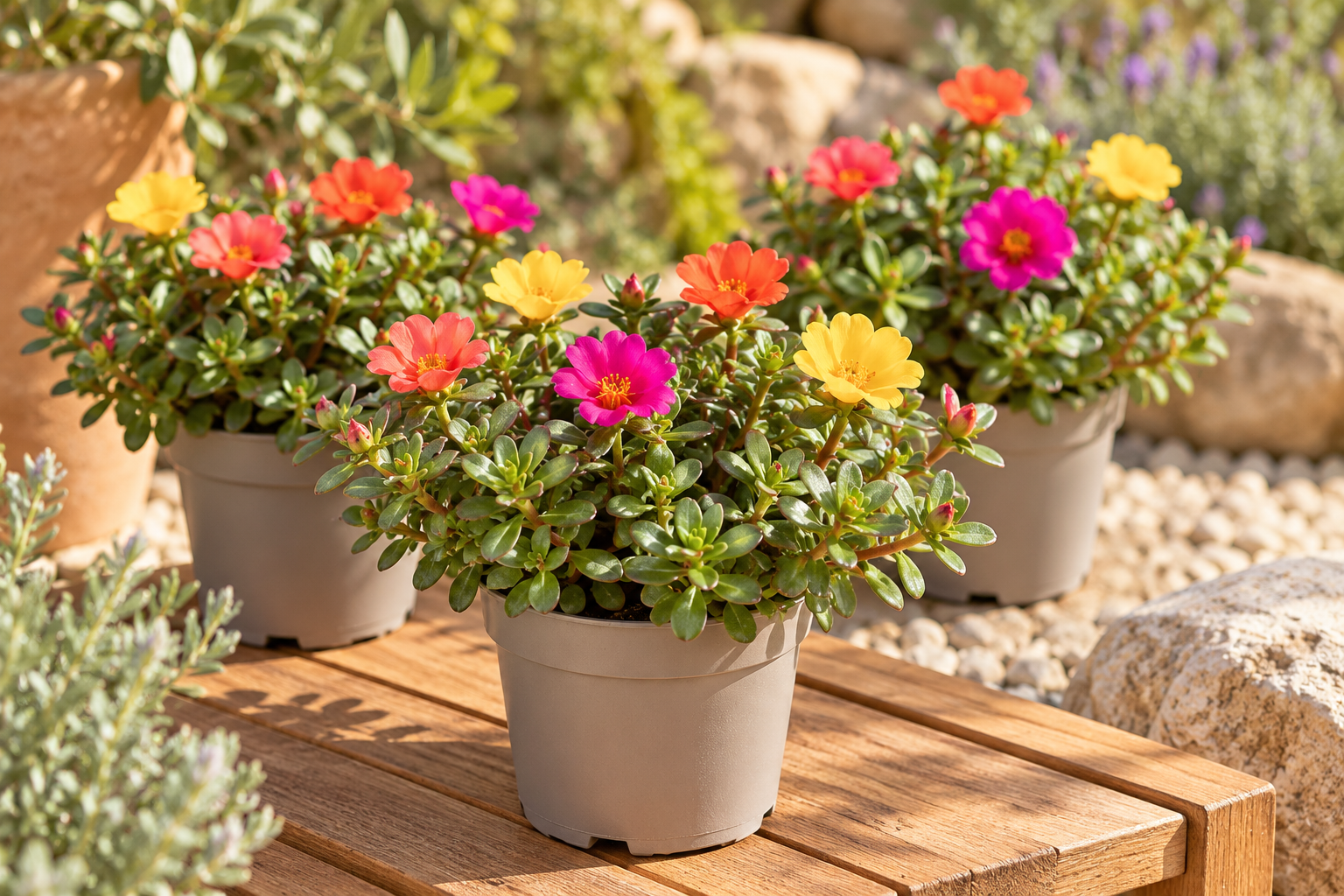
A warm sunny summer position
Sun and well-drained soil suit cultivation. Acclimatise young plants gradually to stronger light after transport. Plant outdoors only after frost risk and in warm weather. A sunny rock-garden edge is an option if water does not accumulate. Under a cold damp shelter, a decorative pot alone does not give suitable conditions. Open flowers may change during the day; a fully open crown photograph does not promise that appearance at every hour.
Fleshy leaves need suitable root space
After establishment the species can tolerate drier conditions. Keep checking young root balls and water selectively as needed. After partial drying, check soil and pot weight instead of giving the same quantity daily. Excess water must drain completely. Soft stems over permanently wet soil call for a root and drainage check. Spraying flowers alone does not reliably supply dry roots. Watch containers during lasting rain as well as on hot sunny days.
A low crown without needless interference
Permeable structurally stable soil helps avoid wetness and air shortage. Feed sparingly by label during growth, allowing for initial fertilisation. Remove damaged stems selectively. Do not turn natural low branching into an upright tied flower bouquet. Look between fleshy leaves for aphids or other visible problems. One closed flower does not justify pruning or extra feeding. Light, time of day, weather and actual roots together give the better assessment.
A summer colour spot, not a kitchen promise
The selection is described as a summer ornamental, not eating purslane for harvest. Although the botanical species occurs as food in other contexts, that gives no food assurance for these offered ornamentals. Protect from pet nibbling. No safe outdoor overwintering is promised at the warm season’s end. A close view of broad leaves and an overall trio photograph fit together in the plant book. Record the sunny position and when flowers opened. Actual behaviour remains as visible as strong colour.
One plant, several views
Good to know
Do all flowering purslanes have needle-like leaves?
No. These original plants show broad fleshy leaves.
Does 20 cm exclude the pot?
No. The offer states total height.
Are flowers always open?
Appearance may change with time of day and weather.
May I eat the plants?
The offer is described as ornamental without food assurance.
Can soil stay permanently wet?
No. Free drainage is part of care.
Sources and editorial note
- Exotenherz – offer and original pictures, 03.10.2026
- NC State Extension – Portulaca oleracea, species and root care, 03.10.2026
- RHS – Portulaca oleracea, genus and classification, 03.10.2026
Shop offer, article number, GTIN, availability and original images directly checked on 02.10.2026; specialist acceptance on 03.10.2026. Specialist sources directly read. Specific SKU, dimensions, original images and orderability directly checked in the shop on 03.10.2026. Sources fully read; shop name and botanical synonyms remain distinct. Currently not orderable: knowledge portrait without purchase link, social drafts without send clearance. No Wawi, server or tool changes. Currently not orderable: knowledge portrait without purchase link; social drafts not cleared for sending.