
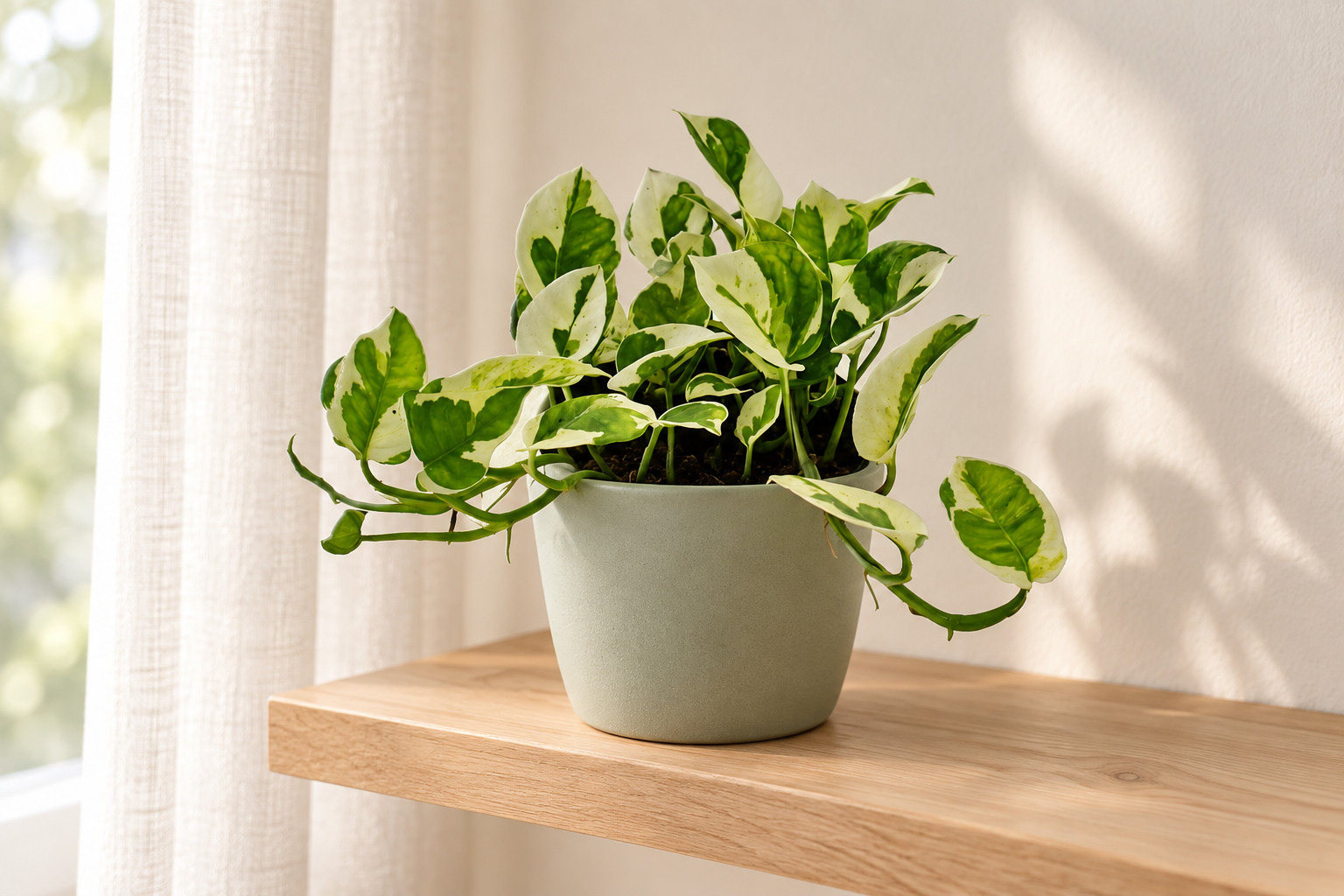
This plant at Exotenherz
Check the shop offer for current availability, price and what is included.
Link to the offer in German. Check the shop for the current price, availability and delivery contents.
Your care table
| Topic | What to do | Why it helps |
|---|---|---|
| Light | Place in bright, filtered daylight; shield from intense summer sun. | The white markings need a well-chosen position without scorch. |
| Water | After the upper compost has dried, check root-ball moisture and water if needed. | Constantly moist roots are sensitive; complete drying out is unfavourable too. |
| Temperature | Keep warm; avoid cold draughts and direct radiator airflow. | The tropical climber likes a steady position. |
| Compost | Use loose houseplant compost with good water movement and a draining pot. | Water should reach the root ball and any excess should drain again. |
| Fertiliser | During active growth, use foliage-plant fertiliser according to its label. | In low light or with root problems, improve conditions first. |
| Climbing shoots | Guide shoots loosely along suitable support or let them trail freely. | Tight ties can cut into growing shoots. |
| Pruning | Shorten overly long shoots above a leaf node; wear gloves. | Targeted pruning can encourage side shoots; sap can irritate. |
| Checks | Regularly inspect leaf undersides, shoot joints and the decorative pot. | Mealybugs, scale insects and wetness are easier to notice with early checking. |
Check the compost and pot weight. The care table explains how far the compost may dry.
Water only when needed. The water should reach the root ball without spilling over the rim.
Remove surplus water from the saucer or cachepot. Then return the plant to a suitable position.
What makes N’Joy special
N’Joy is a white-variegated pothos variety. Its small leaves have irregular green and creamy-white areas. The shop offers it here in a 12 cm pot; individual shoots are approximately 10 to 15 cm long. This is a compact young plant, not yet a metre-long curtain. It can therefore find a place on a small shelf. The variety’s markings naturally vary from leaf to leaf. One particular pattern in a photograph is not a promise for every delivered leaf.
Trailing or climbing: both are possible
Pothos can let their shoots trail or climb a suitable support with aerial roots. Before placing it, consider where its future growth may go. A pot at the edge of a shelf needs stability and an accessible watering position. A support should be easy to check without pulling the plant from the shelf each time. N’Joy is a distinct variety; green-yellow pothos and silver-spotted Scindapsus may be grouped similarly in the shop, but they are not simply other sizes of this offer.
Pale foliage deserves a bright position
Choose a place with plenty of indirect light. A bright window position protected from sharp summer sun is more helpful than a deep corner of the room. Very dark conditions can affect growth and leaf markings. Occasionally turn the plant gently if it grows strongly in one direction. Do not look only at the prettiest old leaf: the new shoot is a better sign of how current conditions suit it. Move gently between a dark shelf and a sunny windowsill.
Water without overlooking the root ball
Feel the compost and check the pot’s weight. Once the upper layer has dried, remaining root-ball moisture determines the next watering. Allow the pot to drain well after watering and then check the decorative pot. A plant with limp leaves may be dry, but may also be suffering from damaged wet roots. That is exactly why checking comes before the watering can. Where possible, put the small plant on a water-resistant surface to water it; this protects shelves and furniture from escaping water.
A pot that suits the plant
An airy, well-drained houseplant mix suits N’Joy. What matters is not a rigid mixing recipe, but how it works with your pot and watering habits. Repotting makes sense when the root ball becomes cramped, preferably in spring. Go up only one size. A large reserve of wet compost around a small plant makes care harder. Feed when it grows, following the product instructions. In dark winter days, respond with closer moisture checks and adjusted care.
Read the leaves rather than treating too quickly
A dry brown patch will not turn green again. Check sun, root-ball moisture and surroundings first before changing several things at once. A photo and a short note help distinguish new damage from old. Also watch for sticky areas and unusual coatings on shoots. A few older yellow leaves need a different assessment from the sudden yellowing of many leaves. Gently wipe dust away with a soft, damp cloth, supporting the small leaves from underneath.
Prune safely and continue caring
If a shoot becomes too long, shorten it above a leaf node. The plant can produce new growth from the remaining nodes. Wear gloves when cutting and keep cut material away from children and pets. Pothos contains irritating substances and should not be within nibbling reach. For your own care record, note the position and recent actions. Your personal plant book provides information to look up, while direct observation of your plant remains decisive.
One plant, several views

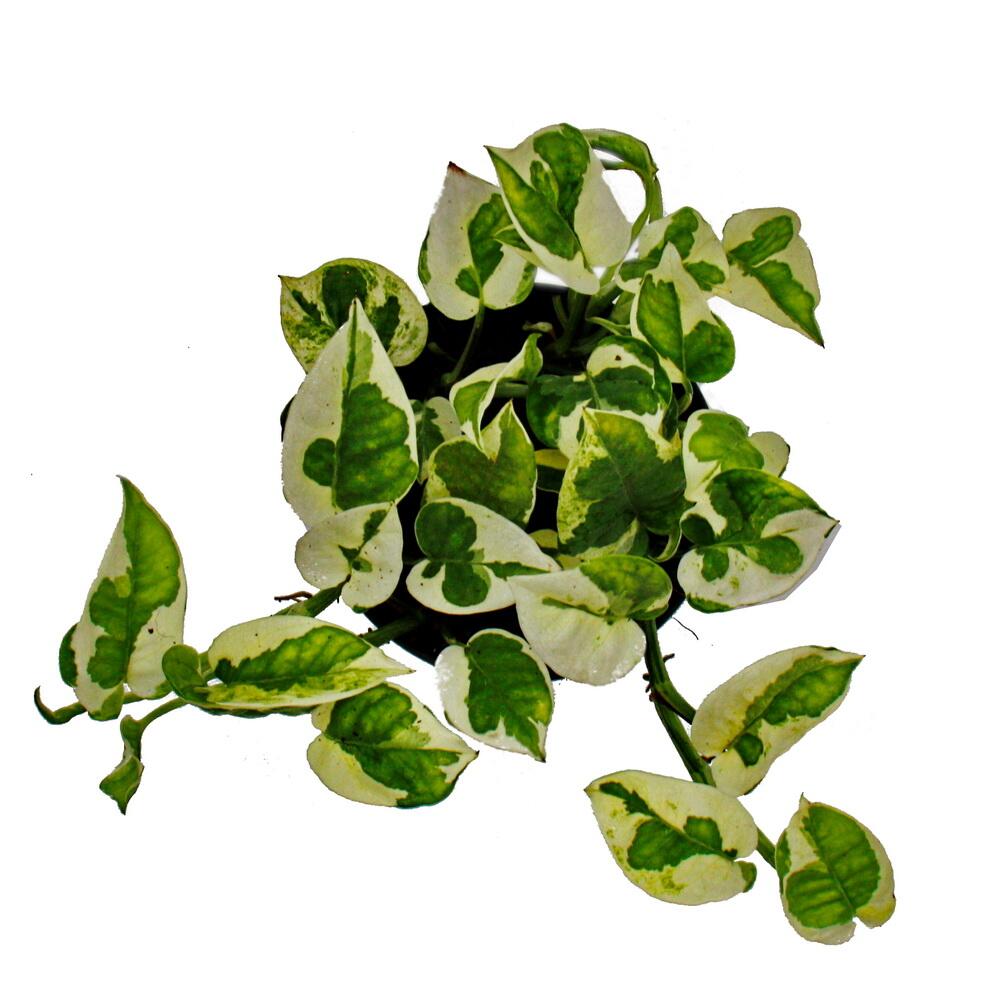
Good to know
Is N’Joy a plant for a dark bathroom?
Only if enough daylight reaches its position. A windowless bathroom is not a suitable permanent place without appropriate plant lighting.
Why does my pothos grow in only one direction?
It directs shoots towards light and available support. Check its position and guide shoots loosely onto a support if needed.
Is it suitable for cats?
Keep it out of reach of cats and other nibbling pets. The plant is not suitable for eating and can irritate mucous membranes.
Sources and editorial note
- Product and delivery size: Exotenherz
- NC State Extension: Epipremnum aureum
- RHS: caring for pothos
- Wisconsin Extension: Pothos
Sources checked: 14 September 2026. Variety and size information comes from the shop; care has been assessed for the species using the linked specialist sources. Adapt care to the plant’s condition, position and season.