
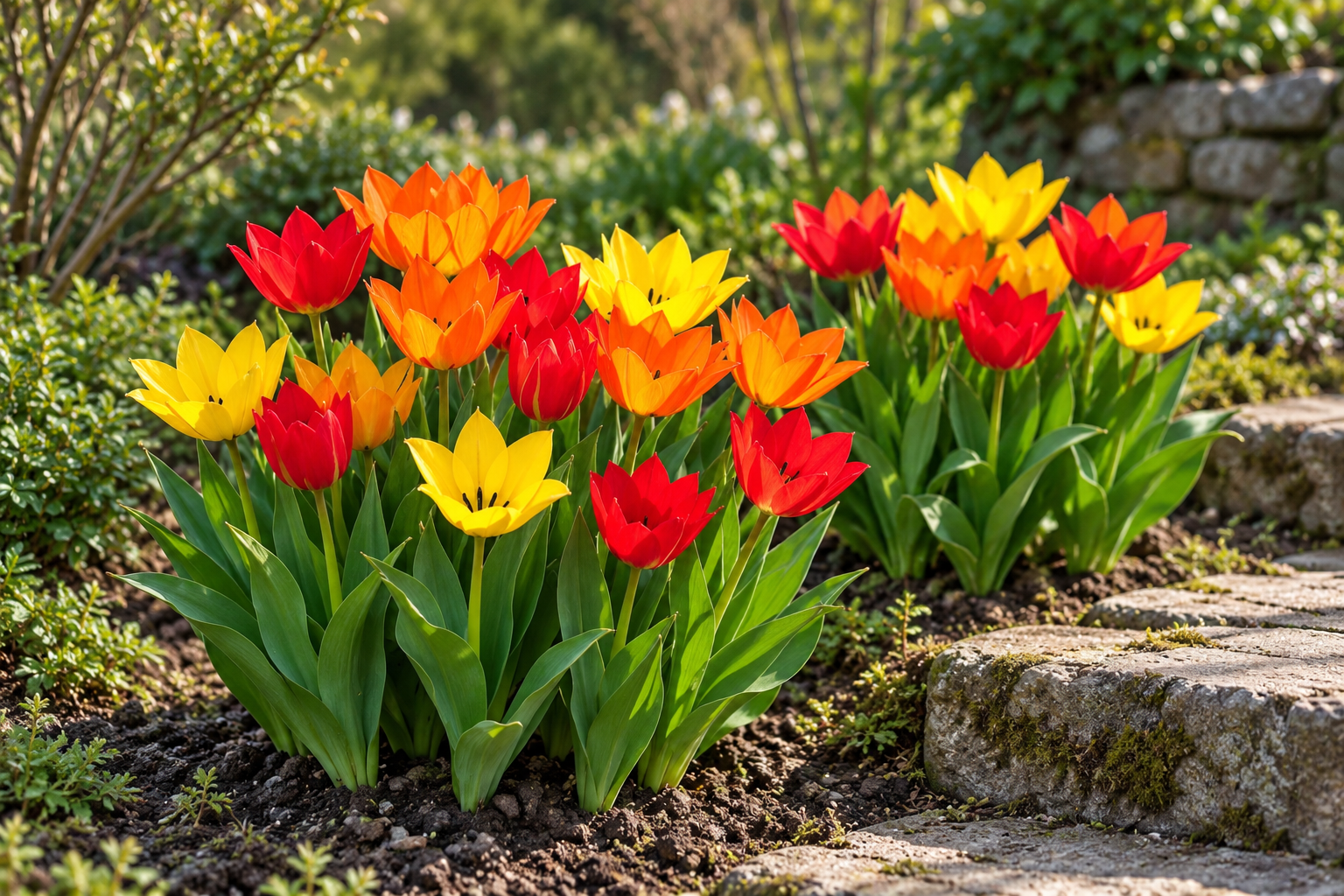
This plant at Exotenherz
Check the shop offer for current availability, price and what is included.
Check the shop for the current price, availability and offer contents.
Your care table
| Topic | What to do | Why it helps |
|---|---|---|
| Position | Choose a sunny place in a small bed, rock garden or outdoor container. | The low mixture is easy to admire along a nearby bed edge. |
| Drainage | Avoid hollows in beds and keep container drainage holes clear. | Standing water encourages bulb and root damage. |
| Planting time | Plant in autumn when soil can be worked. | Shoots and flowers develop from dormant bulbs only the following spring. |
| Planting depth | Use two to three actual bulb heights as a guide. | Size 8/9 describes circumference and does not replace measured bulb height. |
| Spacing | Allow at least about two bulb widths; also consult the packaging. | Even a multi-flowered plant needs room for leaves and roots. |
| Watering | Add water during growth if soil is dry; check containers more often. | Rain in beds and limited pot soil supply plants differently. |
| Feeding | For continued cultivation, feed during growth according to the label and existing reserves. | Nutrients accompany the leaf phase; stop feeding when leaves yellow. |
| After flowering | Remove faded heads if needed and leave green leaves. | Leaves continue feeding the bulb. |
| Summer dormancy | When lifting, wait for dieback and store healthy material dry and airy. | Dormant bulbs need different care from emerging shoots. |
For young plants, feel the soil directly at the root ball. The surface and deeper soil may have different moisture levels.
Water thoroughly after planting; later, water according to the soil, weather and establishment rather than a fixed calendar.
Avoid standing water. For plants in containers, also check that water runs out of the drainage hole.
Small cups in vivid spring colours
Red, orange and yellow flowers sit close above broad green leaves in the Praestans illustration. The simple flowers open into clear cups; their petals taper gently to a point. Seen from above, the dark anthers stand out especially against yellow. This mixture has a different effect from a large double tulip: its simple flower form and strong colour patches do the talking. At a low bed edge, you can admire it as you pass. Add a quiet background of foliage or stone so that each cup remains visible. The mixture need not follow a strictly regular colour pattern. Small repeated groups can accompany a path without scattering every bulb individually among other plants.
A botanical tulip with several flowers
Tulipa praestans belongs to the lily family and is a distinct bulb species. Its natural range extends from Tajikistan to north-eastern Afghanistan. The garden offer is called Praestans Mix; that does not provide a complete list of named cultivars. The bulb supplier describes this mixture as low-growing and multi-flowered. A well-developed plant may produce several flowers, but a fixed count per bulb would promise too much. About 35 centimetres in flower and April provide guidance for the mixture. Weather and location also determine the actual course. Record the shoots emerging and the first open flower in your own group.
Twenty-five bulbs need a planting plan
The delivery contains 25 dormant bulbs for planting. Flowering beds and terrace containers show later possibilities. The number of red, yellow or orange flowers in a picture does not fix the later colour proportions either. Trade size 8/9 describes the bulb circumference in centimetres; it does not mean a bulb body eight centimetres wide. Keep the bulbs dry and airy until planting. Check each for firmness and unusually soft patches. A partly loose papery outer skin alone does not indicate damage. Mentally allocate the quantity to beds or containers before opening planting holes. This leaves enough room for later leaves.
A sunny edge with free drainage
The Praestans mixture suits small beds, rock-garden areas and containers on a balcony or terrace. A sunny place and permeable soil are good starting points. The crucial thing is that rainwater does not remain around the bulbs for long. Observe a hollow in the bed after a wet day rather than choosing solely by the prettiest spring view. A container needs drainage holes and sufficient soil beneath the planting. A pot on an elevated terrace receives different care from garden soil. Plan clear access for watering and a place where leaves may continue growing undisturbed after flowering. Low neighbours should not shade them completely too early.
Autumn planting follows the actual bulb
Plant this mixture in autumn while soil is unfrozen and easy to work. The supplier’s September-to-December guidance is not an instruction to break up frozen ground. Set the tip upwards and close the soil gently. A general tulip rule is a planting depth of two to three actual bulb heights and spacing of at least two bulb widths. Packaging and soil conditions add to this guidance. Do not confuse circumference size with width. In containers, also leave substrate below the bulbs and a small watering margin at the top. Mark the group discreetly: during summer dormancy there will later be little visible above ground. Gloves help sensitive skin when handling planting material.
From emerging shoots to the last green leaf
During growth, check the soil before watering. Spring rain may suffice in a bed; add water during longer dry spells. Moisture needs checking more often in a limited container. Soil may stay moist but should not remain constantly wet. For continued cultivation, provide nutrients according to the fertiliser label and existing soil supply. Stop feeding when yellowing begins. Remove faded heads if you do not wish to follow seed development. Green leaves remain until they yellow naturally. Especially in a low-growing group, this easily overlooked foliage continues feeding the bulb after flowering.
Summer belongs to the bulb
Praestans is perennial, but flower count and colour effect may change from year to year. A suitable summer position and retaining the leaf phase support continued cultivation. If you wish to lift bulbs, wait for them to die back and keep healthy material dry and airy until autumn. Small daughter bulbs are not yet certain flowering bulbs for the following spring. If a group remains weak, check light, drainage and bulb condition first. Slugs may damage young shoots; examine visibly damaged plants more closely. Keep ornamental bulbs separate from food. A photograph of flowering and the leaf phase helps planning without expecting the same finished picture every spring.
One plant, several views

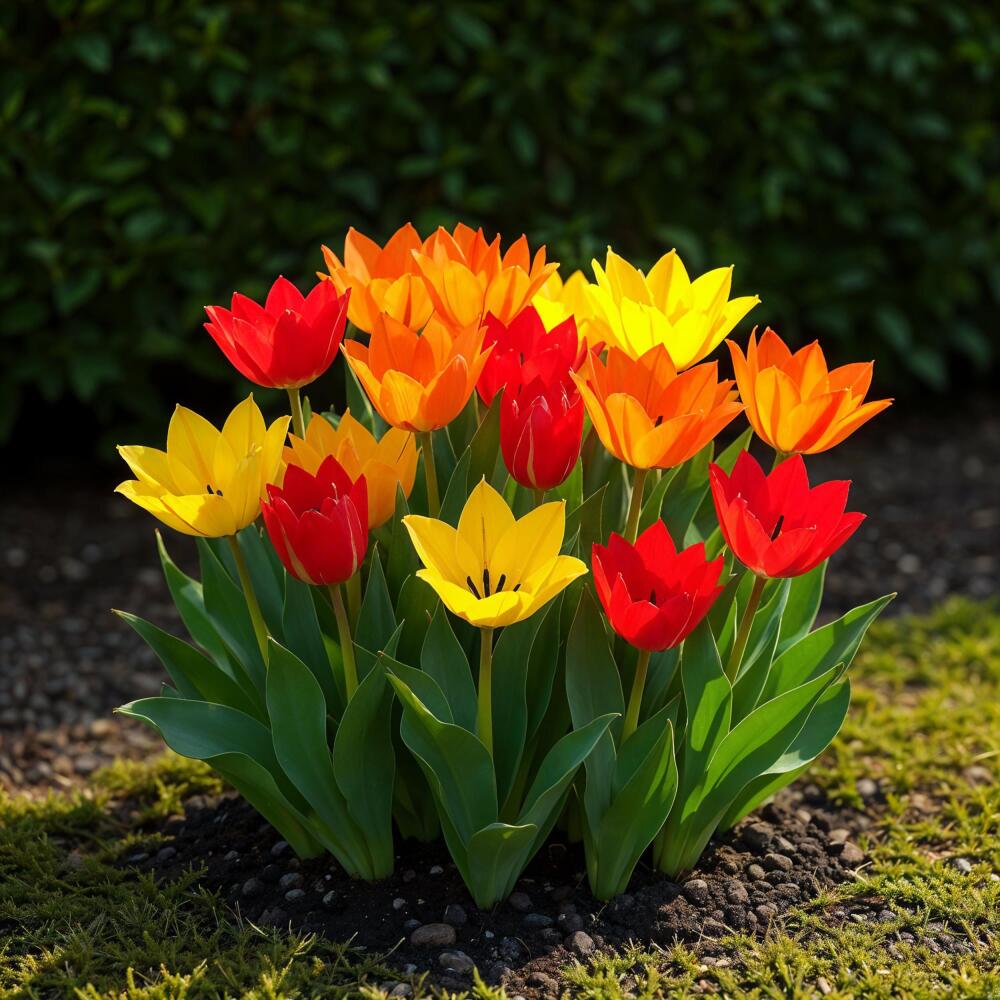
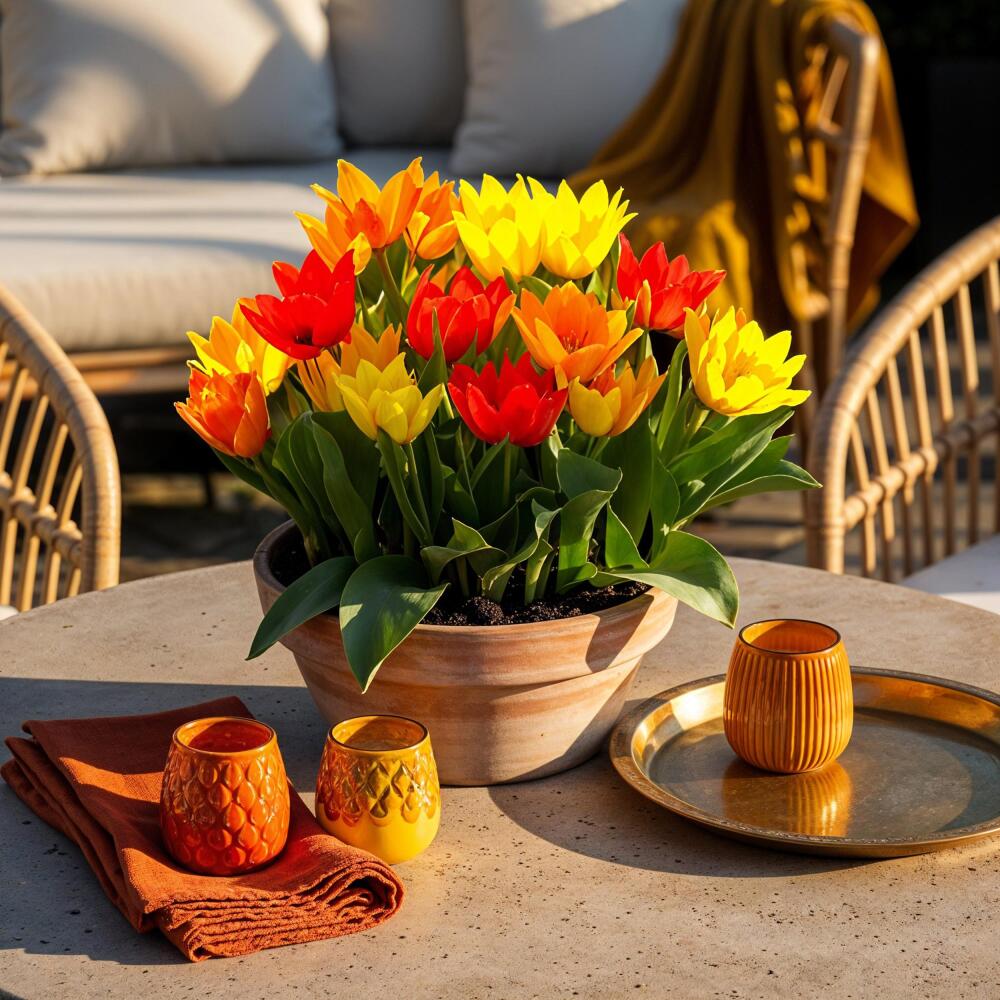
Good to know
How many bulbs are delivered?
The exact offer contains 25 dormant bulbs for planting. Containers and flowering displays are examples.
Is Praestans Mix one named cultivar?
Praestans denotes the botanical species. Mix is the trade mixture; an exact cultivar list is not promised.
Does every bulb have several flowers?
The mixture is described as multi-flowered. Actual numbers depend on development and cultivation; there is no fixed count per bulb.
Are red, orange and yellow flowers equally distributed?
No specific colour proportions are stated. Plan the effect as a mixture.
Does 8/9 mean a diameter of eight to nine centimetres?
No. It is a bulb circumference size, not a delivery height or measured diameter.
Can I grow the mixture on a balcony?
Yes, in a suitable outdoor container with sun, drainage and sufficient root space. Pay particular attention to moisture and winter wetness.
When may I cut the leaves?
Only when they have yellowed or died back naturally. Green leaves remain important even after flowering.
Sources and editorial note
- Exotenherz: Praestans Mix, 25-bulb offer and originals (04.10.2026)
- JUB: Praestans Mix, multi-flowered habit and development guidance (04.10.2026)
- Kew: accepted species Tulipa praestans and natural distribution (04.10.2026)
- RHS: planting tulips and caring for them through the year (04.10.2026)
- NC Extension: Tulipa, family, perennial bulb plant and cultivation (04.10.2026)
- University of Maryland: multiple flowering and bulb circumference (04.10.2026)
Exact available shop offer SKU1513730102025/GTIN4019515932757 and clean originals bound to the current Root direct retrieval on 04.10.2026; HTML copied byte-exactly; personal source/native acceptance on 04.10.2026. Root14403 exclusively taken over. Kew accepts praestans; primary JUB page for the same Praestans Mix directly read; no private cultivar list or fixed colour count. 25 dormant bulbs, circumference size 8/9, JUB 35 cm/April development guidance. Two already generated Root native files reused after actual personal native review, no regeneration. Source/original/deduplication proof local.