
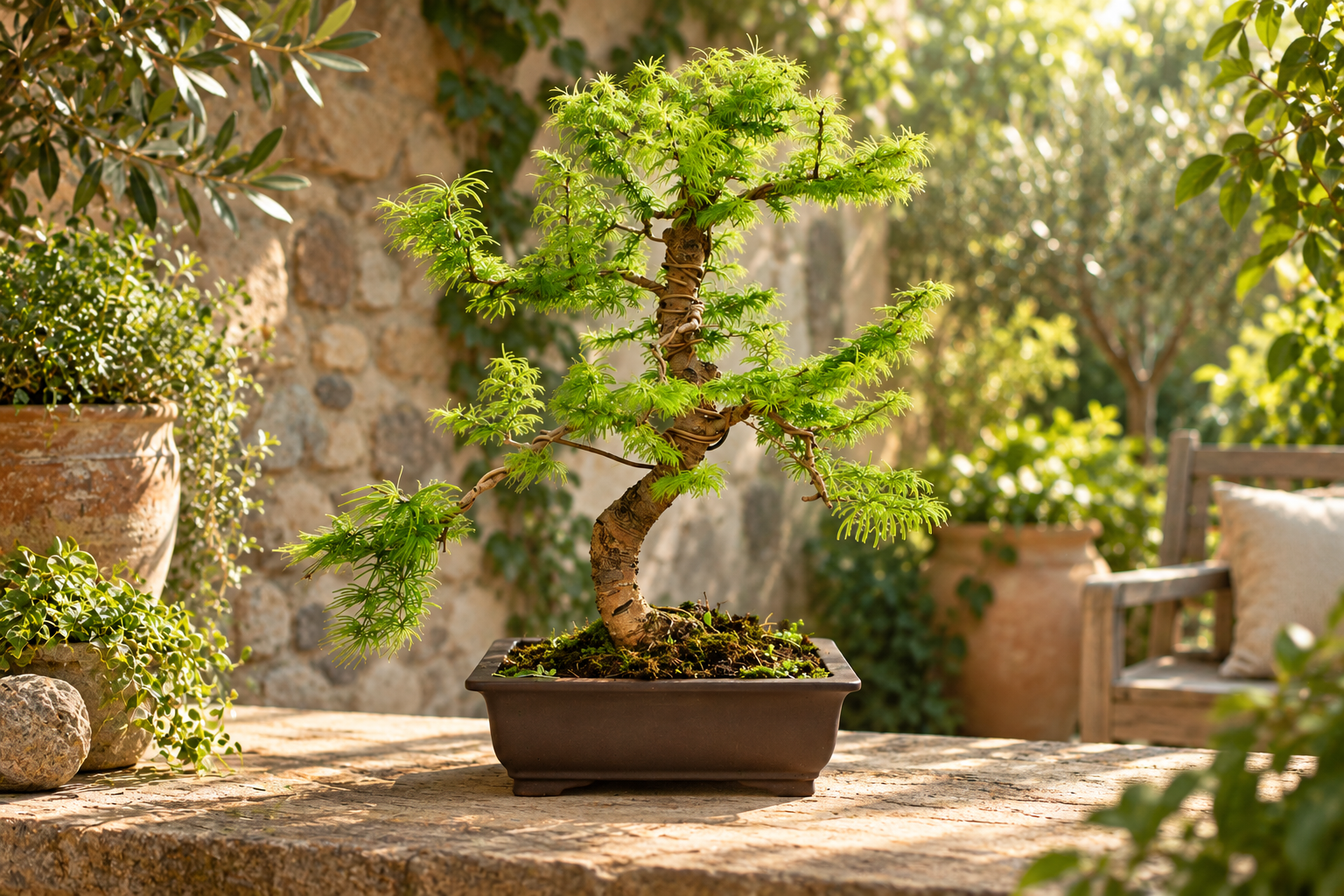
This plant at Exotenherz
Check the shop offer for current availability, price and what is included.
Check the selected shop offer for price, availability and delivery contents.
Your care table
| Topic | What to do | Why it helps |
|---|---|---|
| Position | Bright outdoors during growth. | Golden larch experiences its seasonal cycle. |
| Heat | Protect from hottest midday sun and drying wind. | The bowl has limited water reserves. |
| Root ball | Water thoroughly before complete dryness. | Pour slowly across the whole soil surface. |
| Water | Use low-lime water where possible. | Care for roots to suit the species. |
| Drainage | Keep outlets free, remove excess. | Moisture also needs air. |
| Nutrients | Feed by label during healthy growth. | Winter rest does not need summer doses. |
| Training | Check wires and young extensions. | Do not force old branches to bend. |
| Winter | Cool and sheltered, frost-free in severe frost. | Do not use garden hardiness as the bowl frost limit. |
Check the compost and pot weight. The care table explains how far the compost may dry.
Water only when needed. The water should reach the root ball without spilling over the rim.
Remove surplus water from the saucer or cachepot. Then return the plant to a suitable position.
A conifer with a light crown
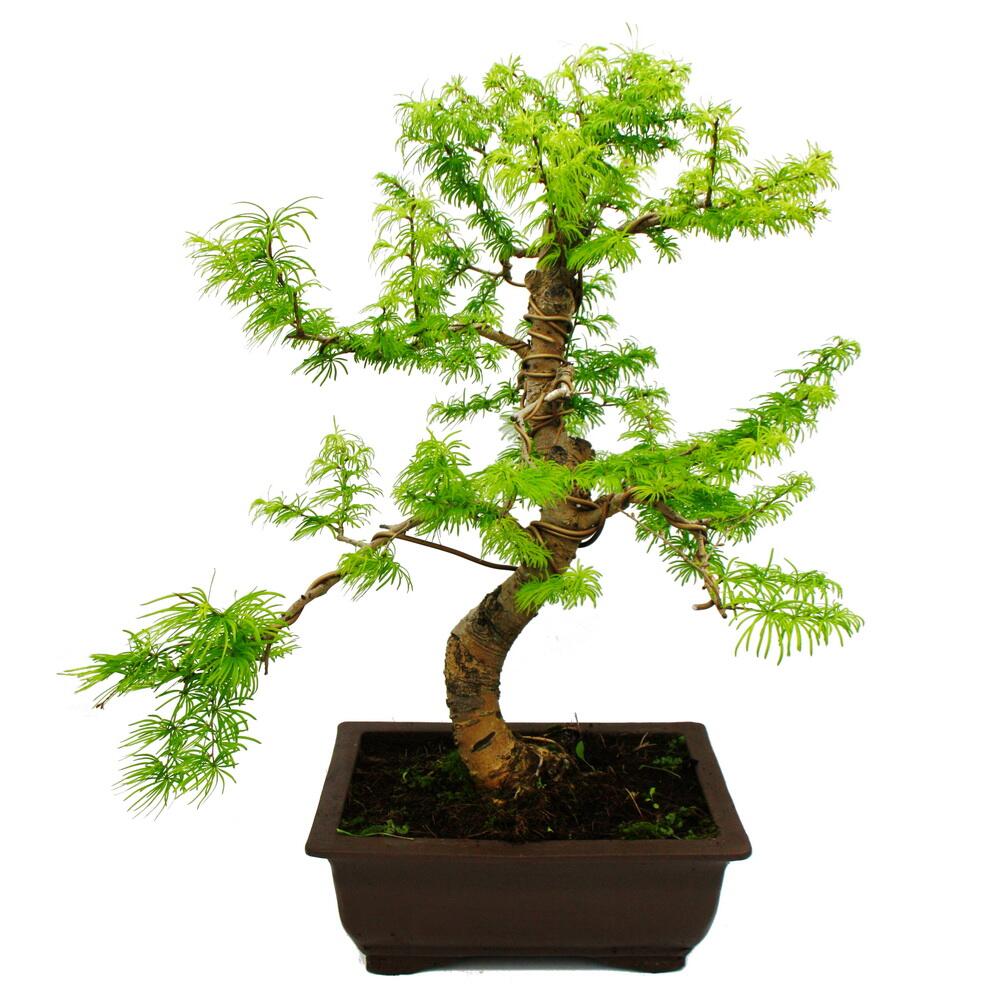
Pale green needle tufts sit on laterally guided branches. The strong curved trunk remains visible between the tiers. This golden larch looks both old and surprisingly light. Its appearance changes in autumn: needles may yellow and eventually drop. A bare winter crown is not proof that this deciduous bonsai has died. Pseudolarix amabilis belongs to the pine family but is not an ordinary Larix. The similar-sounding German name alone does not justify taking its frost advice unchanged.
A bowl-grown tree needs room and a secure base
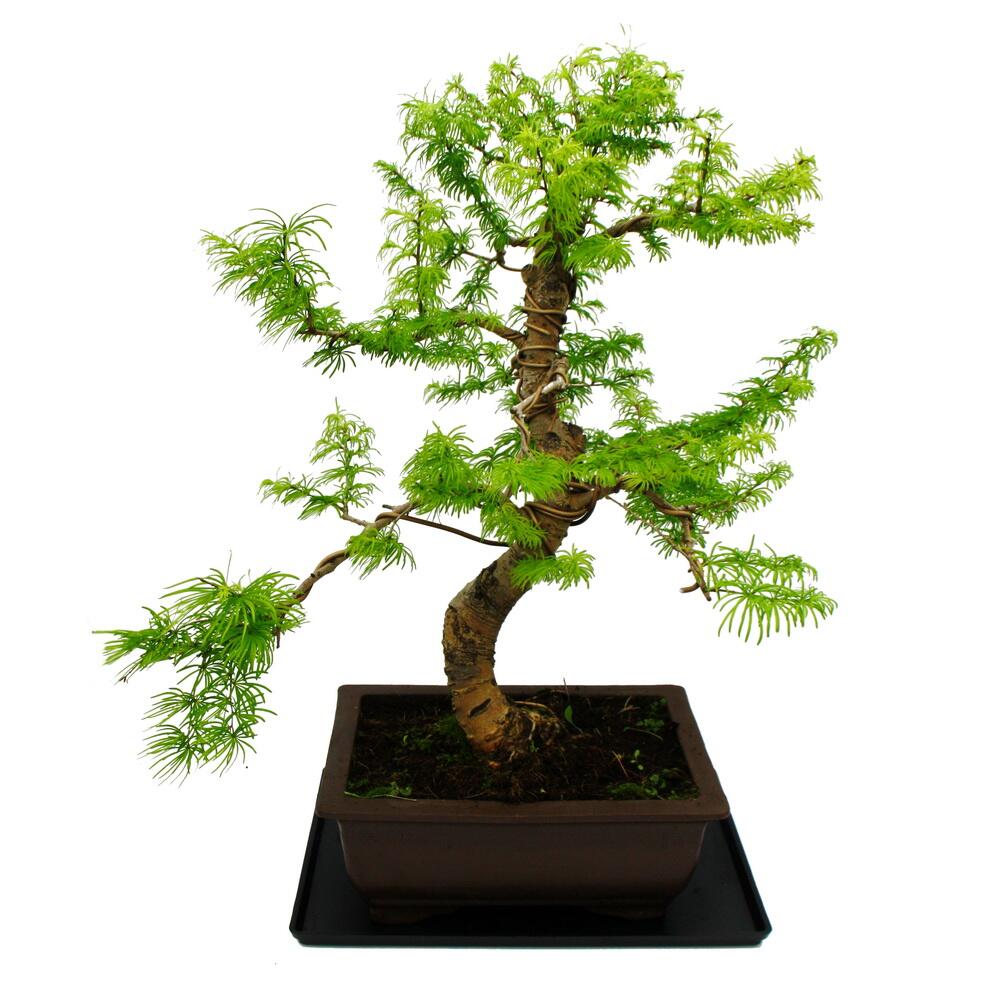
The shop describes about twenty years of age, a bowl about 32 by 24 by 13 centimetres and roughly seventy centimetres total height. It is already a substantial tree object, carried with both hands at the container. Consider standing area, drainage holes and soil access. A stable garden table shows branch tiers clearly. Size of the freely growing species describes neither its next development in this bowl nor an easy way to turn it immediately into a garden tree.
Light, with drying summer heat considered
A bright outdoor position accompanies growth. In strong heat, protection from sharpest midday sun and drying wind helps. Acclimatise new needles gently outdoors after transport. A south-facing wall corner may heat roots more than the green crown suggests. Check soil even on sunny days when branches receive some shade. A suitable position allows quick checks of roots and new shoots without carrying the large tree around daily.
Water reaches every part of the root ball
Do not let bowl roots dry completely. When water is needed, pour slowly over all soil and let excess drain. The relatively large bowl does not replace a check: densely rooted space can distribute water differently from newly loosened soil. Low-lime water supports cultivation. Do not add water to wet soil just because needles feel softer in heat. At first yellow needles, assess season, moisture and position together. Distinguish normal autumn change from sudden change during growth.
Maintain the existing branch order
A structurally stable permeable bonsai mix combines water supply with air at roots. Feed according to healthy growth and the product label. Plan larger root or shaping work rather than combining it with every small care problem. Soft needles reveal branch lines without everything remaining dense. Remove clearly dead material and deliberately inspect young extensions. Check existing wires regularly so they do not grow into branches. Do not force old branches into a new favourite shape.
A cool winter pause with protected roots
Prepare a cool sheltered winter position for bowl cultivation, frost-free during severe frost. It serves rest and is not a warm living room. Hardiness of an established garden tree is not a safe frost limit for this exposed root ball. After needle fall keep checking soil; lower consumption does not mean completely dry roots. Place the same front view in summer beside the bare winter tree in the plant book. Needle tufts, trunk and branch tiers become different chapters of one living design.
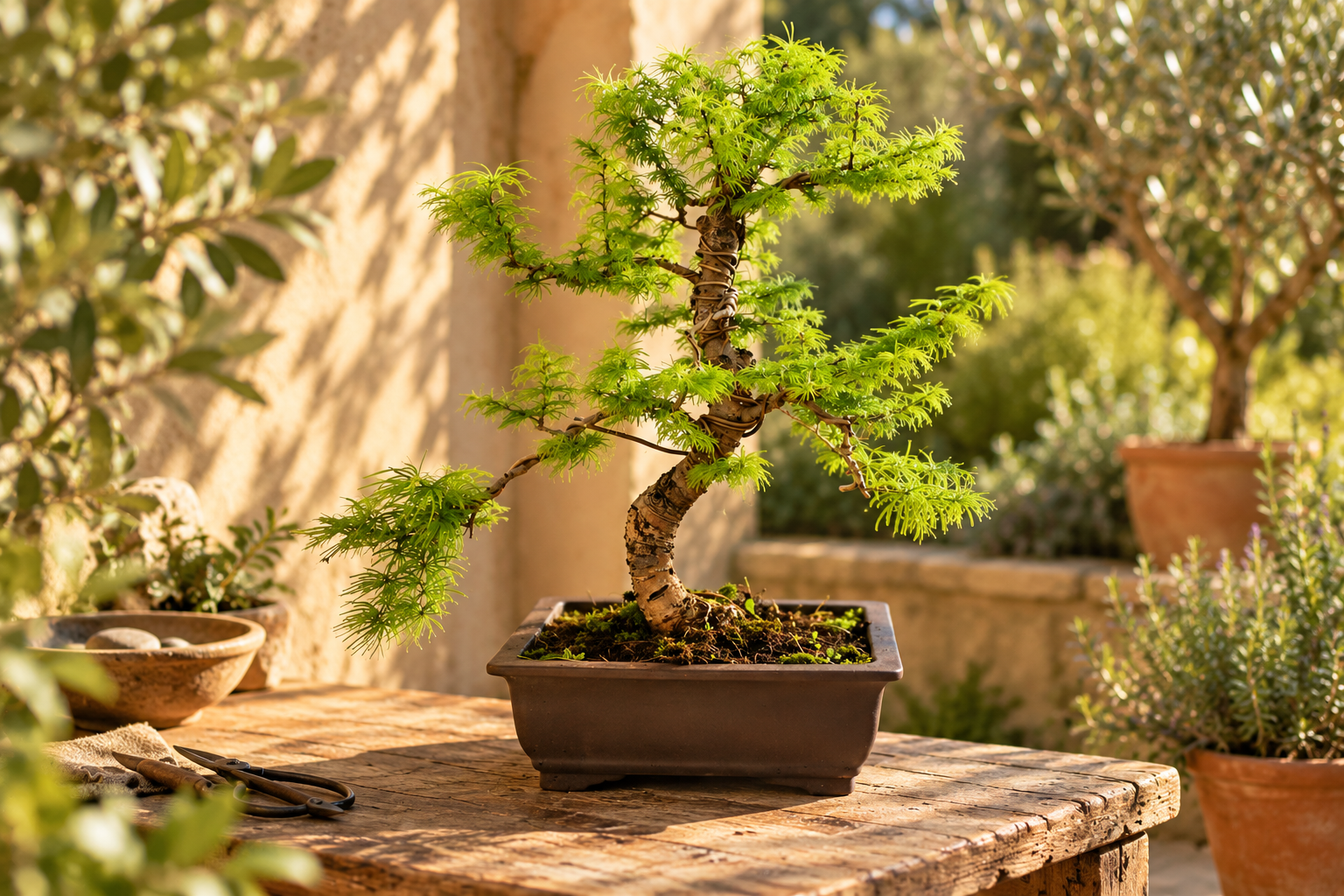
One plant, several views
Good to know
Is golden larch an ordinary larch?
No. Pseudolarix is a separate genus whose bowl cultivation is considered separately.
Why does it lose needles?
It is deciduous. Autumn colour and subsequent needle fall belong to its seasonal cycle.
Does garden hardiness also apply to the exposed bowl?
Small exposed root space needs its own winter protection.
Is seventy centimetres its final height?
That is stated total range-plant height, not later species size.
Does the bare tree need winter watering?
Continue checking root moisture and supply as needed, with reduced consumption.
Sources and editorial note
- Exotenherz – offer and original pictures, 03.10.2026
- RHS – Pseudolarix amabilis, deciduous seasonal cycle, 03.10.2026
- Bonsai Empire – larches and differing Pseudolarix bowl overwintering, 03.10.2026
Shop offer, article number, GTIN, availability and original images directly checked on 02.10.2026; specialist acceptance on 03.10.2026. Specialist sources directly read. SKU, original images, dimensions and orderability directly checked in the shop on 03.10.2026. Relevant passages read and compared with the specific range plant. Knowledge portrait without a purchase link. No Wawi, server or tool changes. Currently not orderable: knowledge portrait without purchase link; social drafts not cleared for sending.