

This plant at Exotenherz
Check the shop offer for current availability, price and what is included.
Link to the offer in German. Check the shop for the current price, availability and delivery contents.
Your care table
| Topic | What to do | Why it helps |
|---|---|---|
| Light | Keep very bright, gradually acclimatising to direct sun. | Light supports strong purple tones and short growth. |
| Water | Let the upper compost dry somewhat, then water thoroughly. | Fleshy shoots do not need persistent wetness. |
| Drainage | Remove remaining water from the decorative pot. | Wet bases and roots can rot. |
| Compost | Use loose houseplant compost in a pot with holes. | Air and moisture should reach the root ball evenly. |
| Fertiliser | Feed moderately during growth according to the label. | Fertiliser cannot compensate for low light. |
| Pruning | Carefully shorten long shoots above a node. | Side shoots can make the plant denser. |
| Winter | Keep bright and frost-free, watering according to actual consumption. | Darker months often slow growth. |
| Safety | Avoid sap contact and do not eat plant parts. | Tradescantia can cause skin irritation. |
Colour throughout the shoot
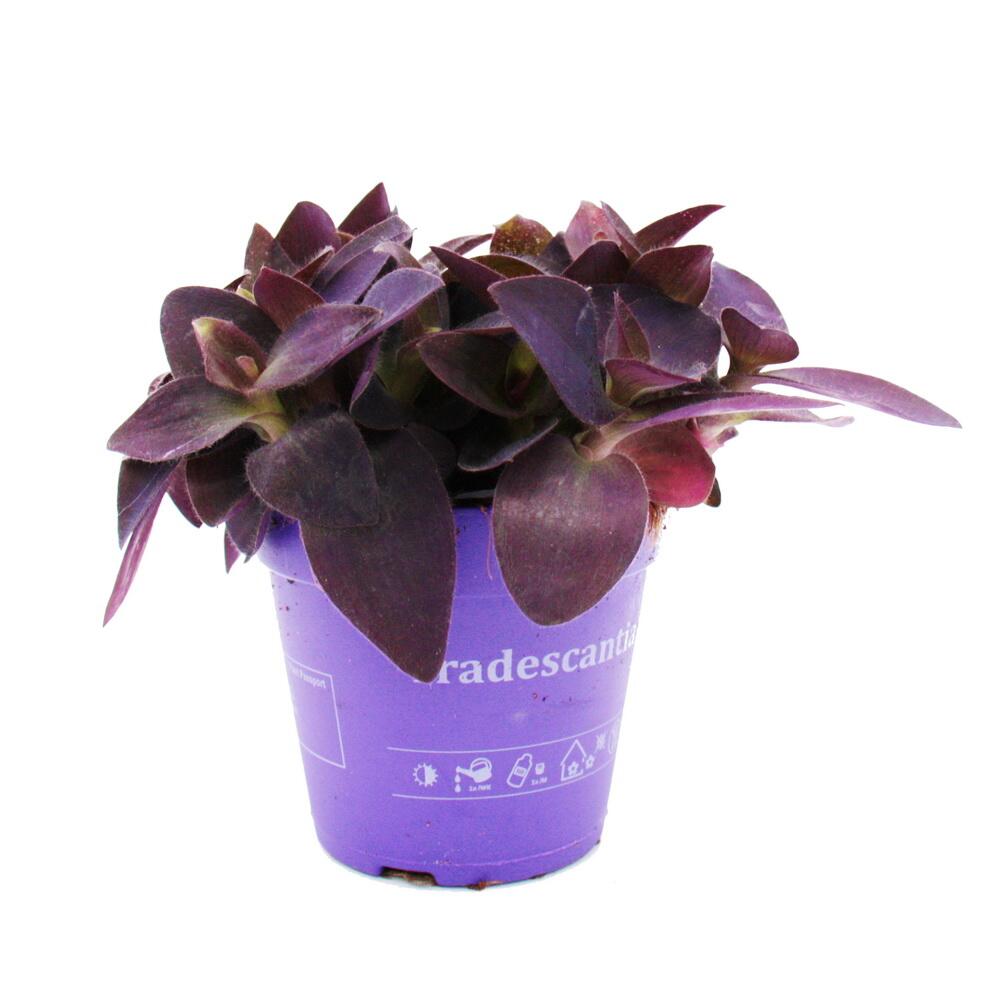
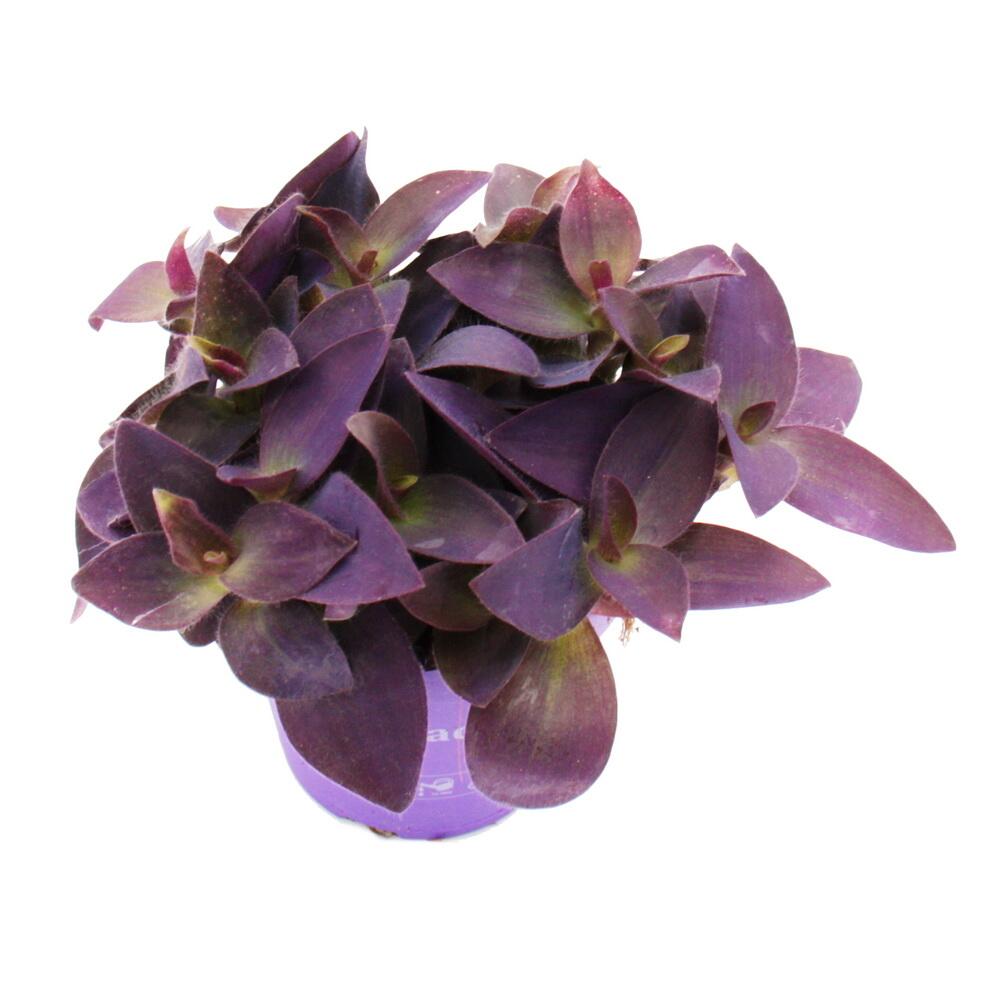
Tradescantia pallida carries elongated fleshy leaves in violet to purple tones. Shoots may also be coloured. Small three-part flowers appear under suitable conditions, but foliage remains the main feature. The species belongs to the Commelinaceae. It differs from silver-striped tradescantias in its largely uniform darker colour effect. The intensity depends on light and development, among other things.
The young delivery form and its possibilities
The offer states a 12 cm pot but no confirmed overall height. The scene therefore follows the compact plant in the original image. It shows no long invented hanging shoots. Later, shoots may fall over the pot edge or be kept more compact through pruning. A bright furniture position with side space suits it. Decorative pot and decoration are examples, not automatically included. The more sensitive shoots should not be constantly bumped.
Plenty of light preserves purple
A very bright position matters. After acclimatisation, direct sun can support strong colour; avoid sudden hot sun after dark conditions. In low light, shoots often lengthen and colour may appear weaker. A sheltered outdoor summer position is possible with gradual adjustment and bringing back in before frost. Tropical-subtropical origin is no basis for safe overwintering outdoors in Germany.
Water with a dry pause at the surface
Let the upper compost dry somewhat, then water thoroughly when needed. Remove excess. Fleshy shoots tolerate short drier phases better than persistent wetness. Still check a small well-rooted pot regularly in warm sun. Soft dark bases with a wet root ball are a warning sign. In winter, water less with reduced growth. Water onto compost if possible rather than continually over dense foliage.
Encourage branching with small cuts
Long shoots can be shortened above a node with clean tools. New side shoots may emerge below. Healthy sections can be rooted if needed for private propagation while the mother keeps enough foliage. Use loose houseplant compost and a pot with drainage holes. Pot on slightly larger when clearly well-rooted. Feed moderately according to the label during active growth; do not force additional feeding in weak light.
Consider sap and leaf bases
Sap can irritate skin. Wear gloves when cutting if contact is expected, and do not leave trimmings within reach of children or pets. The plant is not edible. Check leaf bases for mealybugs and other sap-sucking pests. Remove fully dead parts, but do not constantly polish healthy leaves. Regular light shaping maintains an attractive structure better than infrequent radical corrections.
One plant, several views
Good to know
Why is the colour fading?
Light influences purple tones. Check the position and improve it gradually without exposing it immediately to hot sun.
Can it stand outside in summer?
Yes, sheltered and after gradual acclimatisation. Bring it in before frost.
How does it stay compact?
Enough light and carefully shortening long shoots above a node support branching.
Is its sap harmless?
It can irritate skin. Work with appropriate care when cutting and do not consume the plant.
Sources and editorial note
Sources checked: 15 September 2026. Product information and delivery contents follow the linked shop offer. Care has been checked against the stated specialist sources and remains subject to plant condition, position and season.