
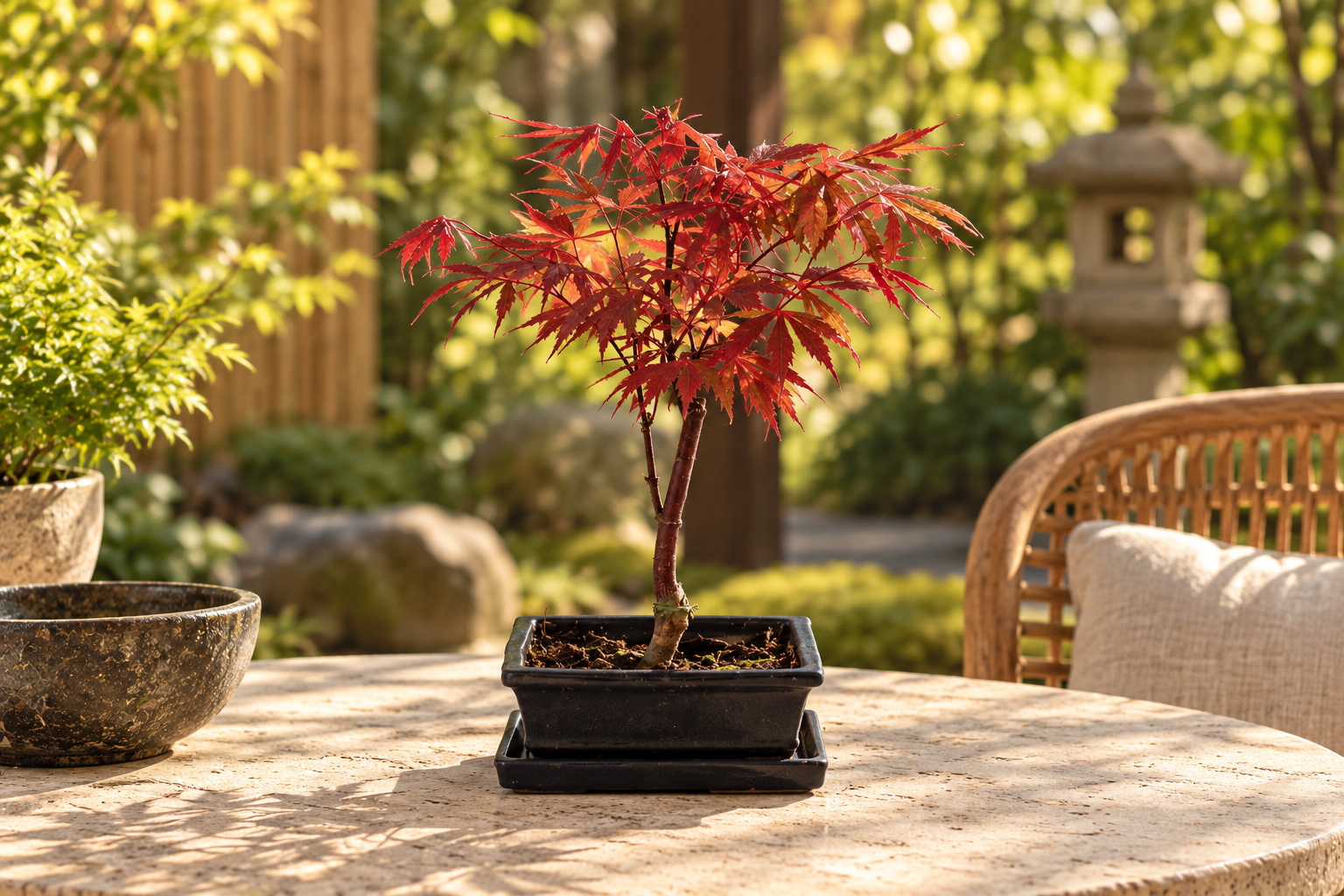
This plant at Exotenherz
Check the shop offer for current availability, price and what is included.
Check the selected shop offer for price, availability and delivery contents.
Your care table
| Topic | What to do | Why it helps |
|---|---|---|
| Light | Place bright and airy outdoors. | The crown needs a real cultivation position. |
| Summer | Limit hot sun and drying wind. | Fine new foliage is particularly sensitive. |
| Water | Supply carefully when the surface begins drying. | The entire small root ball should not dry out. |
| Quality | Suitable water with as little lime as possible. | Water appropriately for the bonsai mix. |
| Drainage | Remove excess and keep holes clear. | No persistent saturation. |
| Nutrients | According to label during healthy growth. | Strong doses do not replace good conditions. |
| Pruning | Small steps on healthy shoots. | Plan larger interventions according to condition and season. |
| Winter | Cool protected, continue checking root-ball moisture. | Leafless dormancy belongs to deciduous maple. |
Check the compost and pot weight. The care table explains how far the compost may dry.
Water only when needed. The water should reach the root ball without spilling over the rim.
Remove surplus water from the saucer or cachepot. Then return the plant to a suitable position.
Red fingers draw a light crown
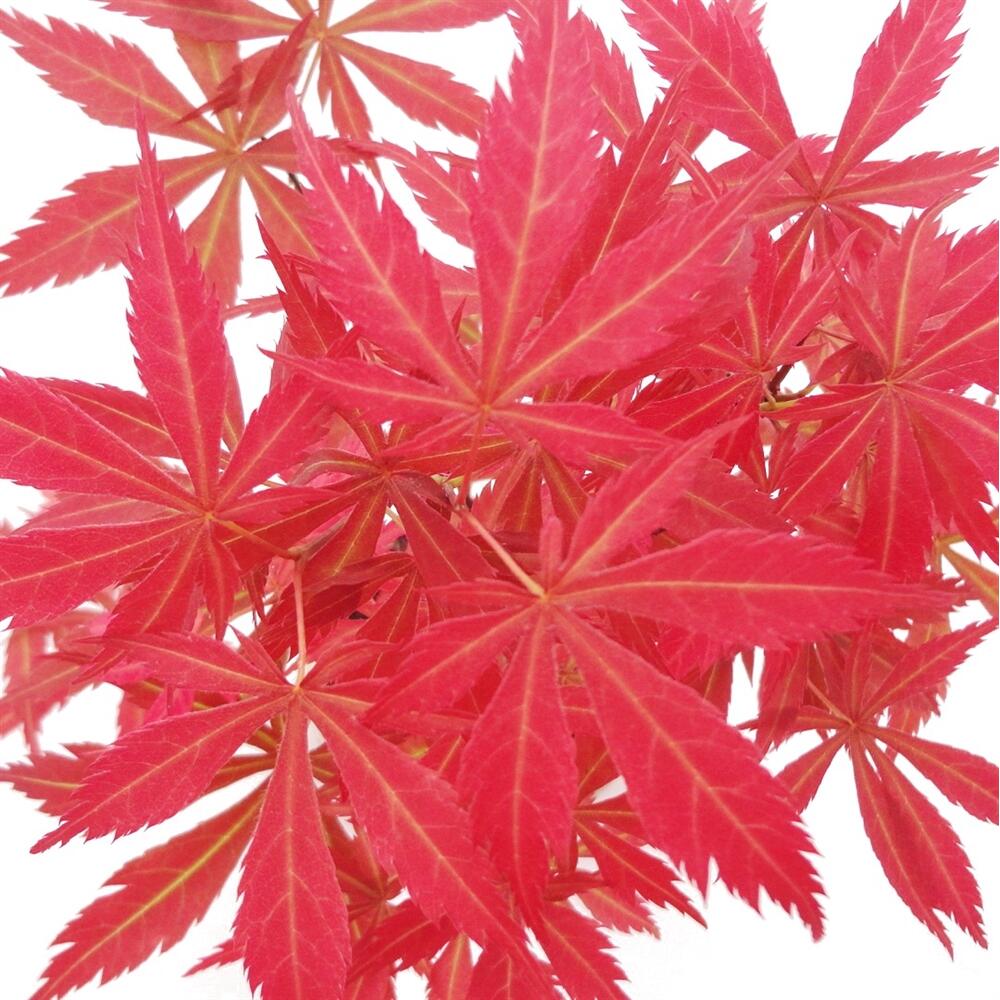
The narrow pointed leaf lobes spread like little hands. Above two slender trunk sections, an airy red crown develops that you can still see through. This young Japanese maple therefore differs from an old bonsai with a massive trunk base. Atropurpureum describes the red leaf character of the offered form. Depending on season, light and development, colour tones may change. A photograph shows a moment, not an unchanging red colour in every individual leaf. The combination of fine foliage and restrained trunk gives the little tree its charm.
Position the young form safely first
The offer states an approximate age of four to five years, an angular bowl about fifteen centimetres across and thirty to forty centimetres overall height. These details describe the young bonsai, not the final size of a planted-out maple. Support the bowl when unpacking. Thin trunks and petioles are not handles. On a bright garden table, the see-through crown is easy to view. Choose a safe place away from frequent contact, because fine new foliage can also be stressed by passing clothing and strong wind gusts.
Brightness without the toughest summer hours
For cultivation, we choose a bright airy outdoor position. In strong summer heat and drying wind, the fine crown needs protection, especially in the small bowl. After transport, acclimatise gradually to stronger sun. Red foliage does not mean hot glass or every midday heat is well tolerated. Look at the position in the morning and afternoon. A wall may reflect sun warmth while a roof edge shades only part of the crown. The Japanese maple should be able to grow rather than merely stand against a pretty garden background.
The root ball must not dry unnoticed
Check soil regularly and supply it when the upper zone begins drying, before the entire root ball dries out. Water gently over the bowl and let excess drain. Suitable water with as little lime as possible suits cultivation. A warm windy week can change needs markedly; a rigid weekly plan is insufficient. Assess dry leaf edges together with heat, wind and root-ball moisture. A wet root ball does not automatically need another watering. Particularly freshly unfolded foliage deserves a calm checking look after a move.
Shaping starts with healthy branches
Airy permeable bonsai mix and clear drains support the small root space. Feed healthy growth according to the label of a suitable fertiliser. Unnecessarily strong doses are no sensible route to a finer crown. Extended young shoots may be shortened deliberately; before major branch or root work, assess condition and season. Protect the slender original trunks. A freshly transported tree is not heavily pruned, strongly fed and comprehensively repotted all at once. Small documented steps make it easier to see its response to care and which branch lines develop.
A bare winter crown is not the end
Acer palmatum is deciduous. Autumn colour change and subsequent leaf loss belong to the annual cycle and do not automatically make it sick. The bonsai overwinters cool and protected, with particular attention to the bowl’s root ball. Permanent living-room warmth does not replace this dormancy. Check soil in frost-free dry winter periods too. In the plant book, a picture of winter branch structure beside the leafy summer tree is worthwhile. It shows crown construction otherwise hidden under red leaf fingers. In spring, actual new growth is then observed.
One plant, several views


Good to know
Are the red leaves present all year?
No. Japanese maple is deciduous and loses its foliage in winter.
Must every leaf always have the same red shade?
Light, season and development can change colour tones.
Is forty centimetres the final garden height?
The figure describes overall height of the offered young bonsai.
Why do leaf edges dry?
Check root-ball moisture, heat and wind together; do not automatically water more.
Is a warm winter home suitable?
Outdoor cultivation requires a cool protected winter position and dormancy.
Sources and editorial note
- Exotenherz: offer and original images (03.10.2026)
- RHS – bonsai, bowl cultivation and seasons (03.10.2026)
- Bonsai Empire – Acer palmatum in bowl cultivation (03.10.2026)
Shop offer, article number, GTIN, availability and original images checked directly on 02.10.2026; specialist acceptance 03.10.2026. Specialist sources read directly. SKU, original images, dimensions and orderability checked directly in shop on 03.10.2026. Relevant specialist sections read; species profile distinguished from specific bonsai-bowl cultivation. Knowledge portrait without purchase link. No Wawi, server or tool changes. Currently not orderable: knowledge portrait without purchase link; social drafts not approved for sending.