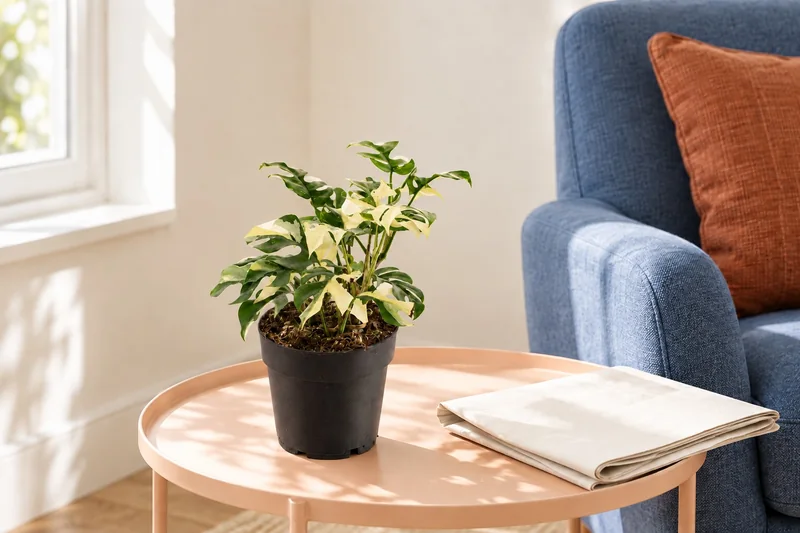
This plant at Exotenherz
Check the shop offer for current availability, price and what is included.
Check the selected shop offer for price, availability and delivery contents.
Your care table
| Topic | What to do | Why it helps |
|---|---|---|
| Light | Bright indirect daylight over entire upper crown/shoots. | A high or deep position may leave crown dark. |
| Water | Let upper soil dry somewhat, then moisten root ball evenly. | Drought and constantly wet soil stress roots. |
| Kokodama | Take down, catch water and check before hanging again. | Coconut fibre and inner cardboard are not watertight. |
| Soil | Humus-rich, durably airy and draining. | Retain moisture without closing air pores. |
| Temperature | Warm indoors, away cold draughts/heaters. | Leaves/roots dislike abrupt conditions. |
| Feed | In growth, labelled dose on already moist soil; less in slow growth. | Match supply to activity. |
| Shoots | Let trail freely or give stable support in suitable pot. | Long growth needs space and secure attachment. |
| Safety | Do not eat; gloves and keep away from small children and chewing pets. | Oxalates can irritate mouth/skin. |
Check the compost and pot weight. The care table explains how far the compost may dry.
Water only when needed. The water should reach the root ball without spilling over the rim.
Remove surplus water from the saucer or cachepot. Then return the plant to a suitable position.
A canopy that lets light through
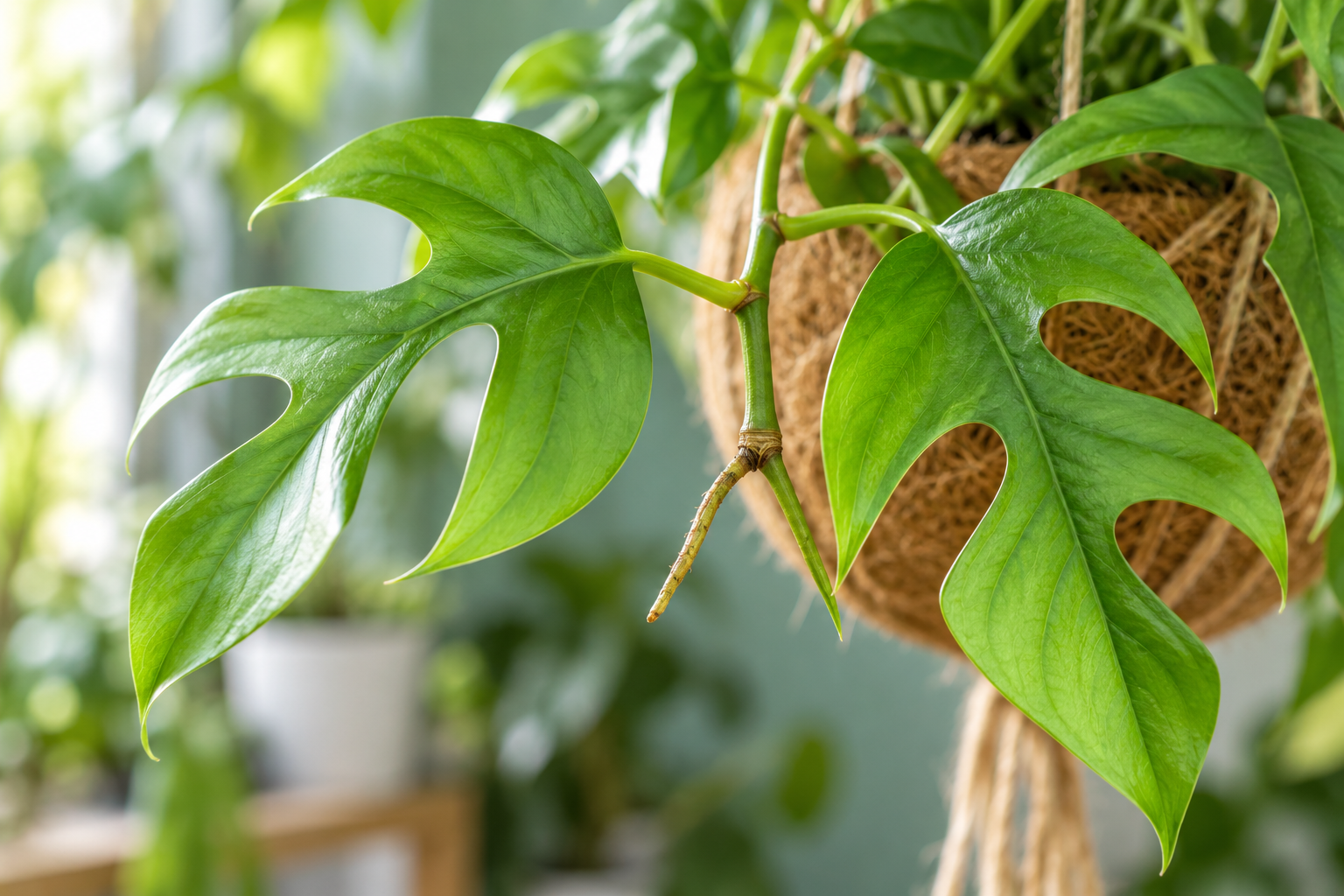
One leaf extends sideways, another drapes over the rim. Deep cuts let daylight between lobes; slender staggered shoots add movement. Rhaphidophora tetrasperma comes from Thailand to the Malay Peninsula and belongs to Araceae. Mini Monstera/Monstera minima trade names here do not mean small Monstera deliciosa. Young leaves can already be divided, with variation. This form stays green without white sectors. Flowers are rare indoors.
Container size before plant height
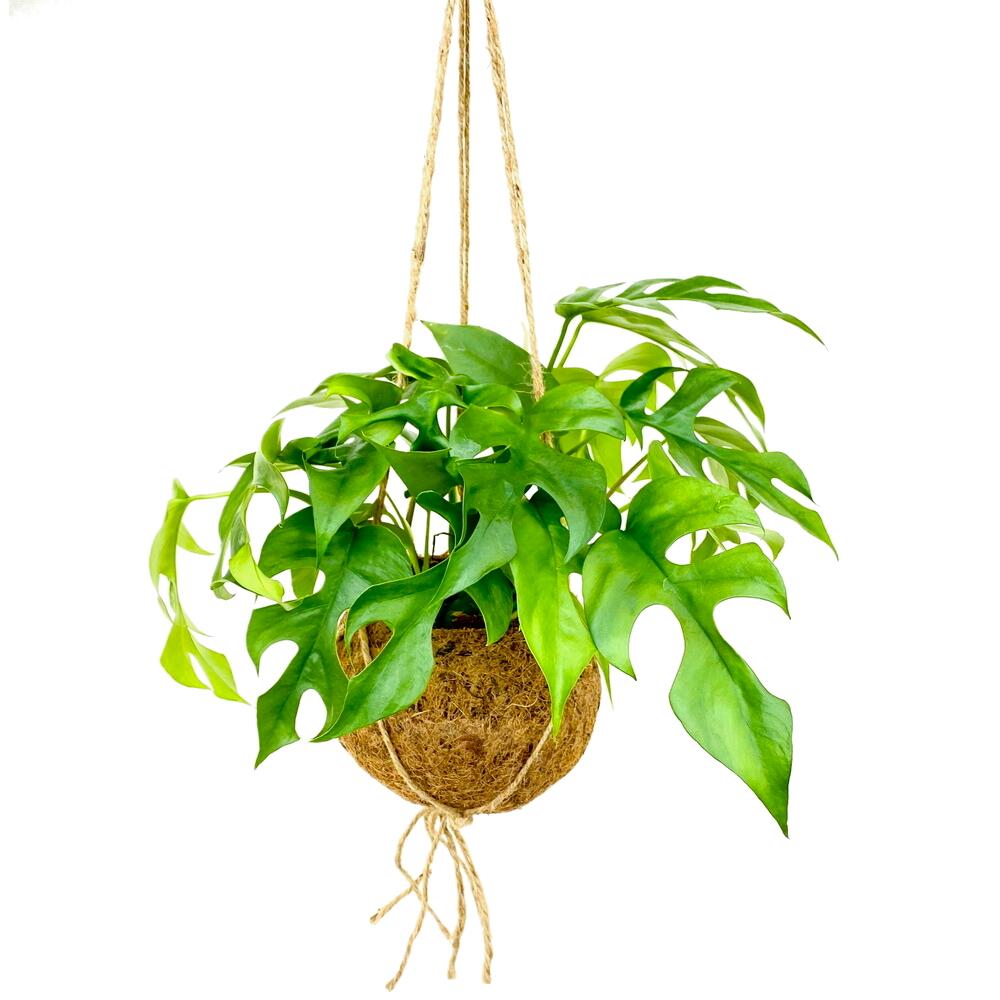
About 17 cm outside and 15 cm inside refer to Kokodama, not total plant height. Check hanger and choose accessible soil height. Keep tips away wall/frequently opened door. Unwrap gently and inspect between shoots. Coconut fibre/inner cardboard are not watertight: avoid fragile wood, books or electrics below. Compact delivered plant can later make long shoots.
The entire crown needs daylight
Bright room can have dark ceiling; check light at actual shoot height. Bright indirect daylight supports balanced growth. Hot midday sun through glass may burn. Near big living/dining-room window can suit if no heater beneath. Warmth without cold draught, protect during winter ventilation. Air humidity and movement both matter: hot dry heater air is poor, but permanently wet leaves in stagnant air also.
Water the rootball, do not judge fibre alone
Check soil, not dry coconut wrapping. When upper few centimetres dry somewhat, take pot down to safe water-catching area. Room-temperature water slowly in several small evenly distributed portions; watch absorption. Moisten root ball beyond only surface but leave no pooling. Check drips before rehanging. Fibre is neither reservoir nor instruction to dunk whole container routinely. Damp fibre does not show root state. Wilting leaves: inspect root ball before adding water.
Soil and nutrients need air
Humus-rich draining mix holds moisture and air. Future repot uses structurally lasting tropical mix. Very dense roots, very fast drying or compact soil may signal need. Early active growth helps establishment. Loosen gently without forcing inner pot. Holed nursery pot makes watering manageable; fit roots rather than oversize. Green-plant feed according to label on moist mix, reduce in dark winter when growth slows.
Trailing now, climbing later
Young shoots can trail loosely. Later stable support in suitable pot permits climbing; aerial roots help attachment. Tie loosely, keep leaf stalks/soft tips free: no tight string round stalks. Cut overlong growth cleanly. Healthy shoot cutting needs at least one node for roots/growth; lone leaf without node cannot make complete climber. Gloves against sap, away small children/chewing animals.
Read several signs together
One old yellow leaf is not diagnosis. Multiple yellow/wilting leaves with wet soil: check light/roots. Dry ball needs suitable water, permanently wet first needs stagnation correction. Brown margins may reflect dry roots or dry air, pale scorched areas strong sun. Site/timing matter, not spot colour alone. Undersides/axils for mites/scale. Soft damp dusting while supporting lobes. Summer check more; winter rootball drying may slow while heater air worsens leaf edges.
One plant, several views

Good to know
A true Monstera minima?
No, Rhaphidophora tetrasperma here; misapplied trade name, not true Monstera.
Does17 cm mean height?
No,17 outside/15 inside describe container. Longer shoots may develop later.
Water over wooden furniture?
Take down/catch water; not watertight, check drips before returning.
Need pole immediately?
Not necessarily: young hanging plant; stable support in suitable pot when shoots climb.
Wilt while soil wet: more water?
Not automatically, damaged roots can struggle to deliver water. Check ball/outlet.
Sources and editorial note
- Exotenherz: exact Kokodama offer SKU191708072021
- NC State: Rhaphidophora tetrasperma botany/culture
- RHS: Rhaphidophora and misapplied Monstera minima trade name
- RHS: general houseplant growing
- RHS: causes of houseplant problems
Direct sources/shop read04.10.2026. Monstera minima is a misapplied trade name here according to RHS, not a true Monstera. Botanical origin from primary sources. Container dimensions do not establish delivery plant height. Care follows actual root site/growth.