
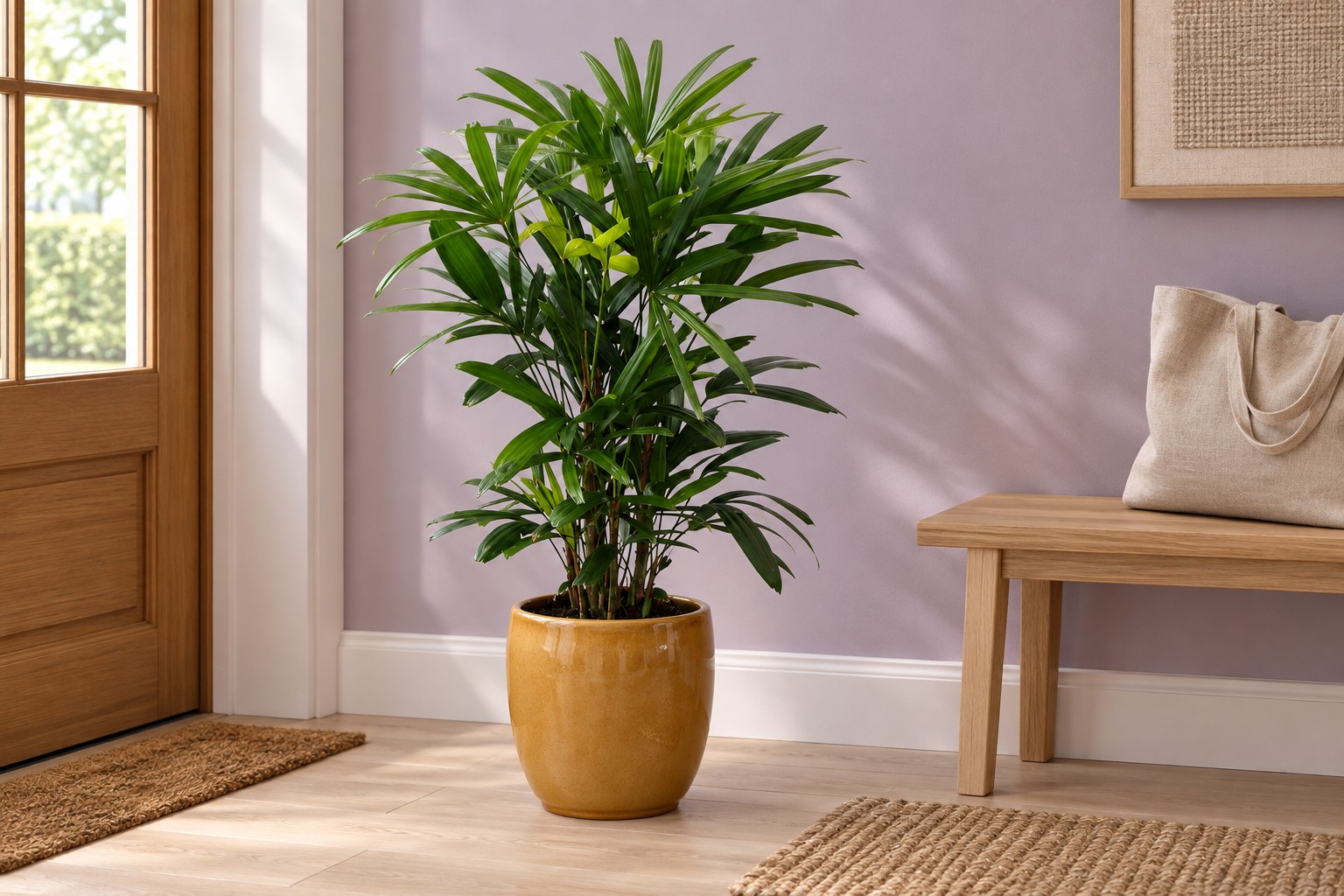
This plant at Exotenherz
Check the shop offer for current availability, price and what is included.
The linked shop is in German. Product details, availability and delivery information are provided in that shop.
Your care table
| Topic | What to do | Why it helps |
|---|---|---|
| Light | Bright to partial shade, without hot midday sun. | Even shade-tolerant palms need useful daylight. |
| Water | Keep slightly moist, allowing the surface to dry a little. | Moisten evenly throughout and drain leftover water. |
| Compost | Use a humus-rich, well-drained mix. | Do not let the root zone stay compacted or waterlogged. |
| Feeding | During growth, feed moderately according to product instructions. | Reduce accordingly with low activity. |
| Temperature | A cool to warm interior; the shop recommends about 18–20 °C. | Avoid persistent cold draughts. |
| Summer and winter | Sheltered shade outdoors in summer; frost-free in winter. | Bring indoors before critically cold nights. |
| Leaves | Let young fans unfold themselves and remove only dead foliage. | Protect each stem’s growing point. |
| Monitoring | Look at undersides and narrow gaps between stems. | Pests hide easily in the dense clump. |
Check the compost and pot weight. The care table explains how far the compost may dry.
Water only when needed. The water should reach the root ball without spilling over the rim.
Remove surplus water from the saucer or cachepot. Then return the plant to a suitable position.
Small fans above fibrous stems
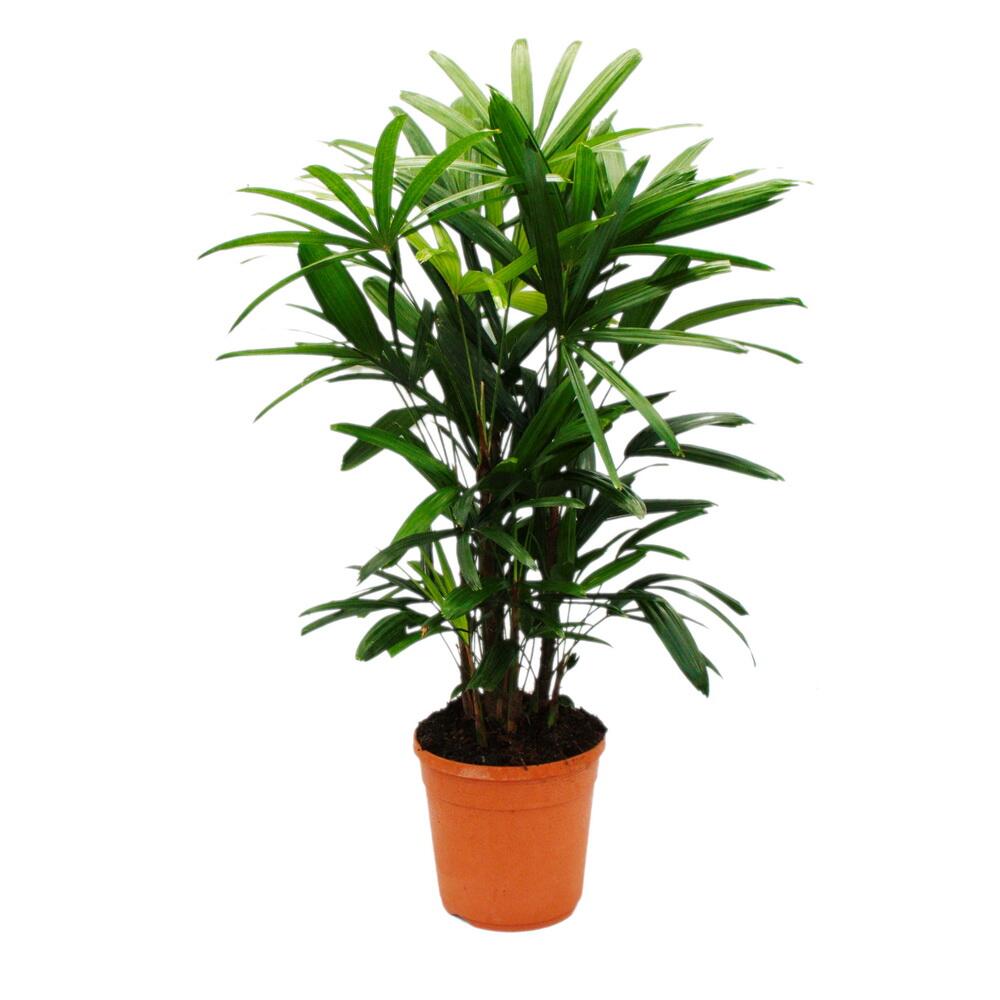
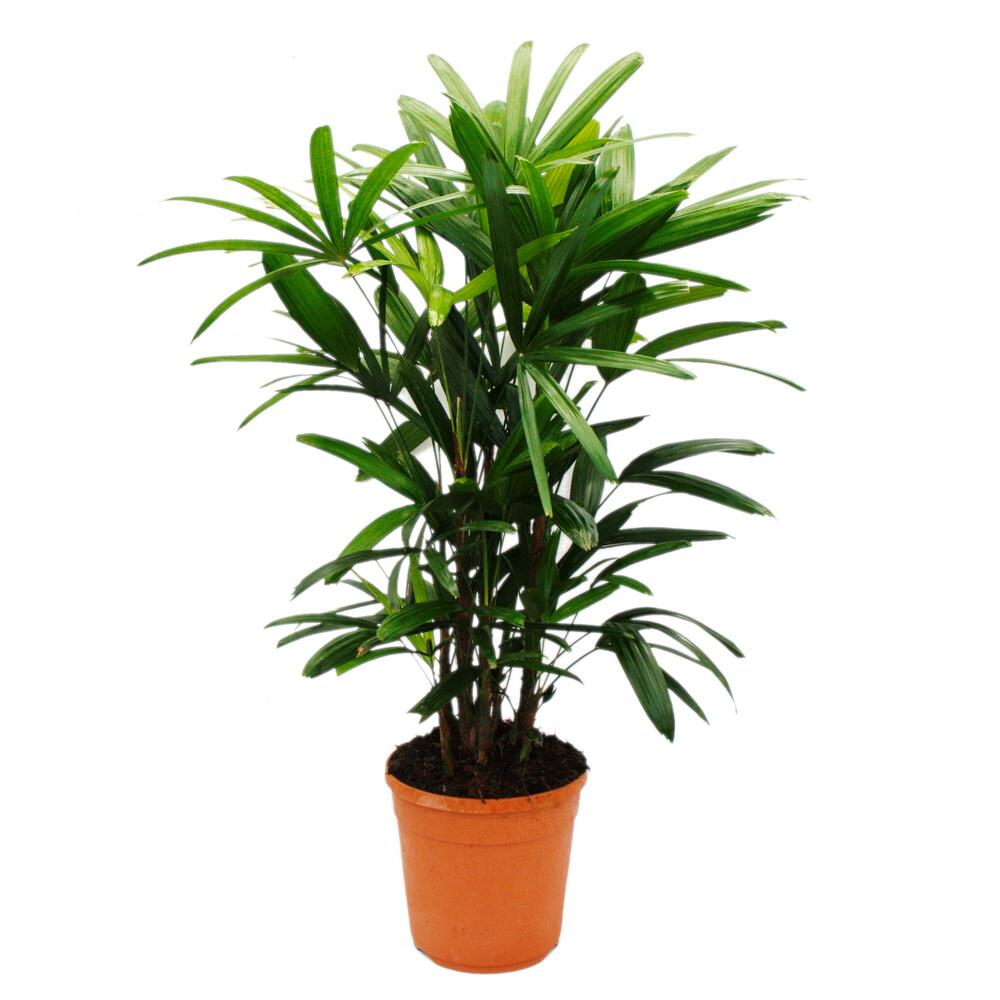
Rhapis excelsa belongs to the palm family and grows several slender stems from underground stem areas. Brown fibres wrap older stem sections. Its leaves are divided into fans; the individual segments appear strongly pleated and often end bluntly or with irregular divisions. The trade name bamboo palm describes only the stems’ appearance. Rhapis excelsa is not bamboo. Foliage and growth are the focus indoors, where flowers are rare and inconspicuous.
A dense companion without enormous leaf surfaces
The selected offer states 80–100 cm total height in a 21 cm pot. The dense crown can enliven a bright entrance or quiet corner. Unlike a large-leaved strelitzia, the greenery is distributed across many smaller fans. Still allow space for lateral leaves. A bench provides an understandable size reference in the scene. Natural form remains individual, and a much larger rhapis later should not be confused with its current delivery height.
Combining indirect light with a suitable room
A bright to partially shaded position without hot midday sun suits it well. The species tolerates less light than some other palms, but that does not automatically make a windowless room suitable. The shop recommends around 18–20 °C as a comfortable range. A sheltered, shady summer position is possible after slow acclimatisation. Bring it indoors before cool nights. Although rhapis may tolerate brief draughts relatively well, it should not stand permanently in a cold airflow from a doorway.
Checking in summer and reassessing in winter
Keep the root ball evenly slightly moist and let the surface dry a little. Then water slowly as needed and allow drainage. Densely rooted palm pots can be damp around the outside yet unevenly supplied inside, so careful watering is useful. Excess does not remain in the outer pot. Winter consumption is usually lower. Frequency follows position and root ball, not season alone. Avoid both complete drying and constantly wet roots.
Respecting palm structure
A humus-rich, well-drained mix suits container growing. Repot when clearly well rooted, disturbing roots as little as possible. Feed moderately during growth according to product instructions. Remove fully dead fronds but do not cut into the growing point of a healthy stem. Young leaf fans should open by themselves. Dividing strong clumps is possible in principle, but involves root disturbance and should not be casually performed on a newly delivered or already weakened plant.
Noticing fine changes in dense foliage
Regularly check fan undersides and gaps between stems for scale insects, mealybugs and spider mites. A soft, damp cloth can remove dust from accessible leaf segments. Brown tips call for assessing moisture, air and roots; they do not clearly identify a particular cause. Dead tissue will not turn green again. A well-cared-for rhapis is attractive through its quiet structure and varied green tones. Health promises about indoor air are neither necessary nor inferable from the individual houseplant.
One plant, several views
Good to know
Is bamboo palm a bamboo?
No. The name refers to the slender stems; Rhapis excelsa is a fan palm.
Can it manage with little light?
It tolerates partial shade quite well. A completely dark room still does not provide a sufficient foundation.
May I shorten the fans to keep it narrow?
Preserve healthy leaf fans. Choose a sufficiently wide position and remove only dead foliage.
How large is the delivery form?
Approximately 80–100 cm total height in a 21 cm pot, with natural variation in fan and stem count.
Sources and editorial note
Sources checked: 15 September 2026. Product information and the contents of delivery follow the linked shop offer. Care advice was checked against the cited specialist sources and should still be adapted to the plant’s condition, position and season.