
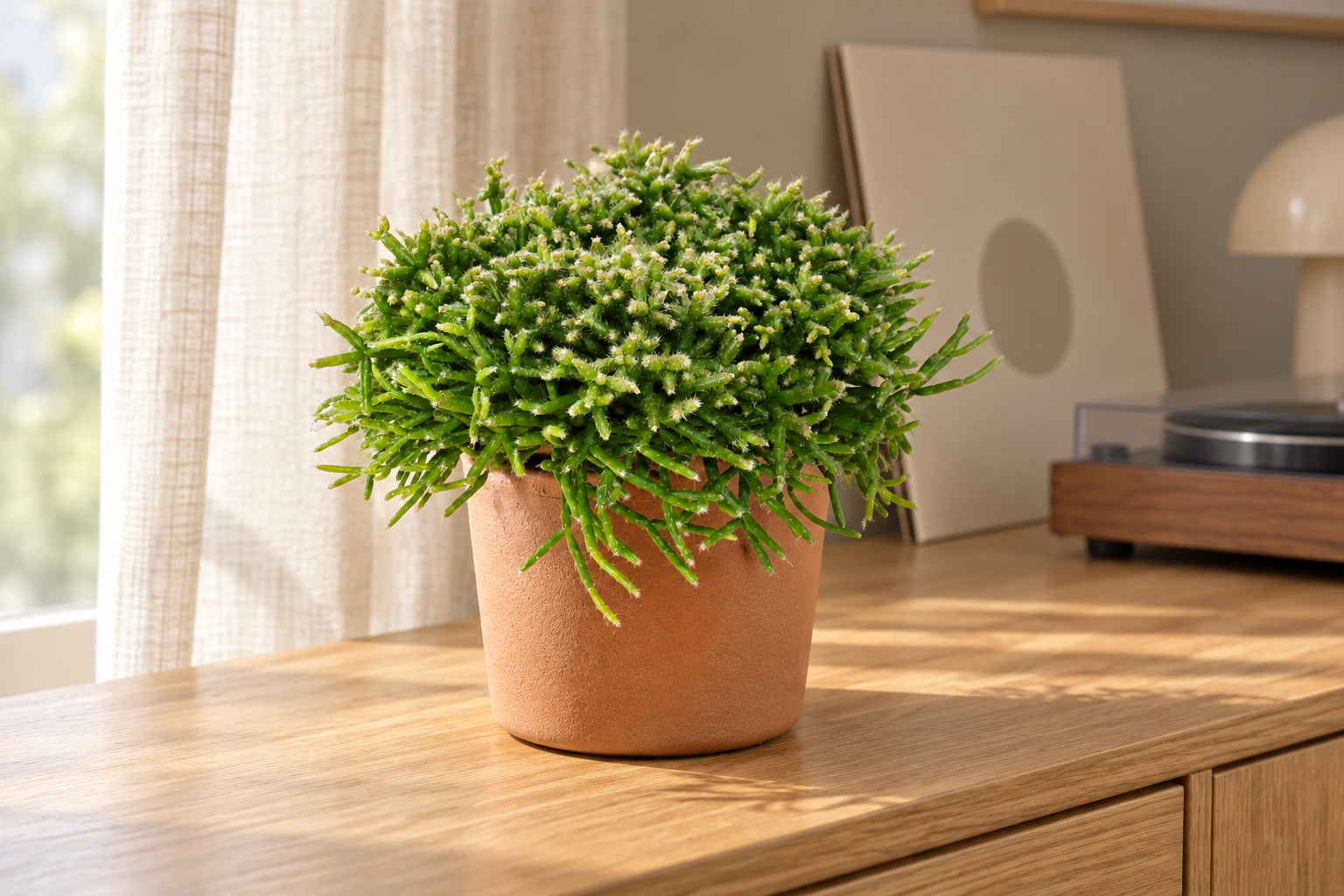
This plant at Exotenherz
Check the shop offer for current availability, price and what is included.
Check the selected shop offer for price, availability and delivery contents.
Your care table
| Topic | What to do | Why it helps |
|---|---|---|
| Light | Bright and indirect; avoid hot midday sun. | Forest origin requires another position than a desert cactus. |
| Water | Check after slight drying and water evenly. | Fine shoots need supply, but roots must not stay constantly wet. |
| Drainage | Completely remove excess from the outer pot. | Even a small outer pot can hold water unnoticed. |
| Substrate | Use a loose mix for epiphytic cacti. | Humus and coarse components combine moisture and ventilation. |
| Nutrients | Feed sparingly by label during new growth. | High concentration is unnecessary in small root space. |
| Repotting | Give only a little more room when densely rooted. | Rest branched shoots gently while working. |
| Winter | Keep bright and frost-free; water by root consumption. | Forced months-long dry rest does not suit this forest cactus. |
| Check | Carefully inspect branch junctions and pot rim. | Distinguish cottony deposits from natural fine hairs. |
Check the compost and pot weight. The care table explains how far the compost may dry.
Water only when needed. The water should reach the root ball without spilling over the rim.
Remove surplus water from the saucer or cachepot. Then return the plant to a suitable position.
Small branches deserve a close look
In the original many short green sections form a dense slightly irregular crown. Fine pale hairs sit on young shoot parts and tips. This looks different from a long smooth Rhipsalis cascade. The shop offer is called Rhipsalis burchelli; botanical spelling is Rhipsalis burchellii. Its green lines are succulent shoots, not ordinary leaves. View the small plant somewhere you occasionally come genuinely close, such as a bright sideboard beside your favourite chair.
A small pot with room to grow
The offered plant is in a 12 cm pot and about 15–20 cm in total height. Its young compact crown may branch further and later grow over the rim. Do not place between two close objects that push each new shoot aside. The nursery pot should lift easily from an outer pot. Handle the pot while unpacking and do not drag tips through a narrow cardboard edge. Our scene shows a possible plant position; outer container and furniture are not included.
Bright light instead of a hot sill
Rhipsalis burchellii is an epiphytic cactus from Brazil. In nature it grows perched in different light and root conditions from a desert cactus. Bright indirect daylight suits indoors. At a south window especially, check whether afternoon sun directly hits the small pot. A slightly set-back position can avoid sharp radiation without losing the plant in the room. Between dark shelf and hot sill often lies the suitable bright ledge.
The answer lies beneath the dense crown
Carefully hold one shoot aside and check upper soil before watering. Green plant surface alone says little about pot condition. After slight drying water evenly and drain excess. Briefly lift the pot afterwards: over time you recognise supplied versus clearly lighter roots. A narrow outer pot needs more attention than a free nursery pot. Make that small movement a habit rather than scheduling particularly long watering breaks solely because of the word cactus.
Protect the network during repotting
An airy epiphytic-cactus mix suits roots. When densely rooted, only a little extra room is initially needed. Rest overhanging shoots on a soft surface before loosening the pot, without pulling the crown. An old outer container can be removed; an accidentally torn shoot does not simply attach again in the same place. Sparing nutrients by label complement fresh-growth care. A healthy loose network need not constantly be cut into a perfect ball.
Observe winter at this position
In darker months growth may slow and soil stay moist longer. Keep bright and frost-free, rechecking before every supply. Dry heater airflow immediately nearby is unhelpful, but a move should have a specific reason. Watch whether new sections stay firm and the crown turns towards available light. The delivery plant is shown for shoot structure. Bloom or fruit set is not a promised offer component and needs no artificially forced care plan.
Pale hairs do not automatically mean trouble
The original’s fine hairs belong to its appearance. Irregular cottony nests in junctions or at the base look different; examine those for mealybugs. For soft or shrivelled sections check roots and drainage before adding water. An injured single shoot differs from several damaged areas directly above wet soil. Photograph a noticeable spot for comparison. You recognise change better than briefly scanning the whole crown each day.
One plant, several views
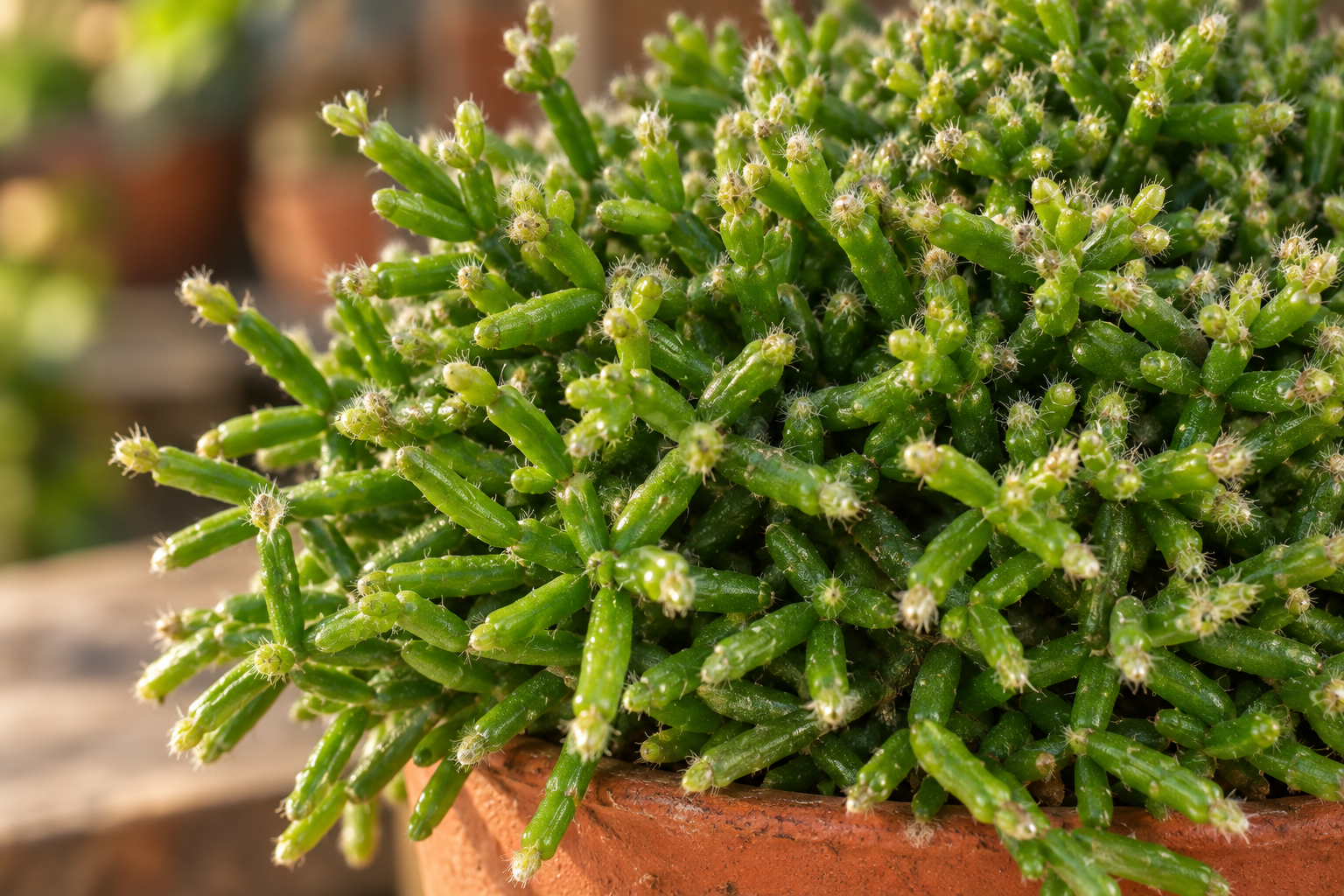
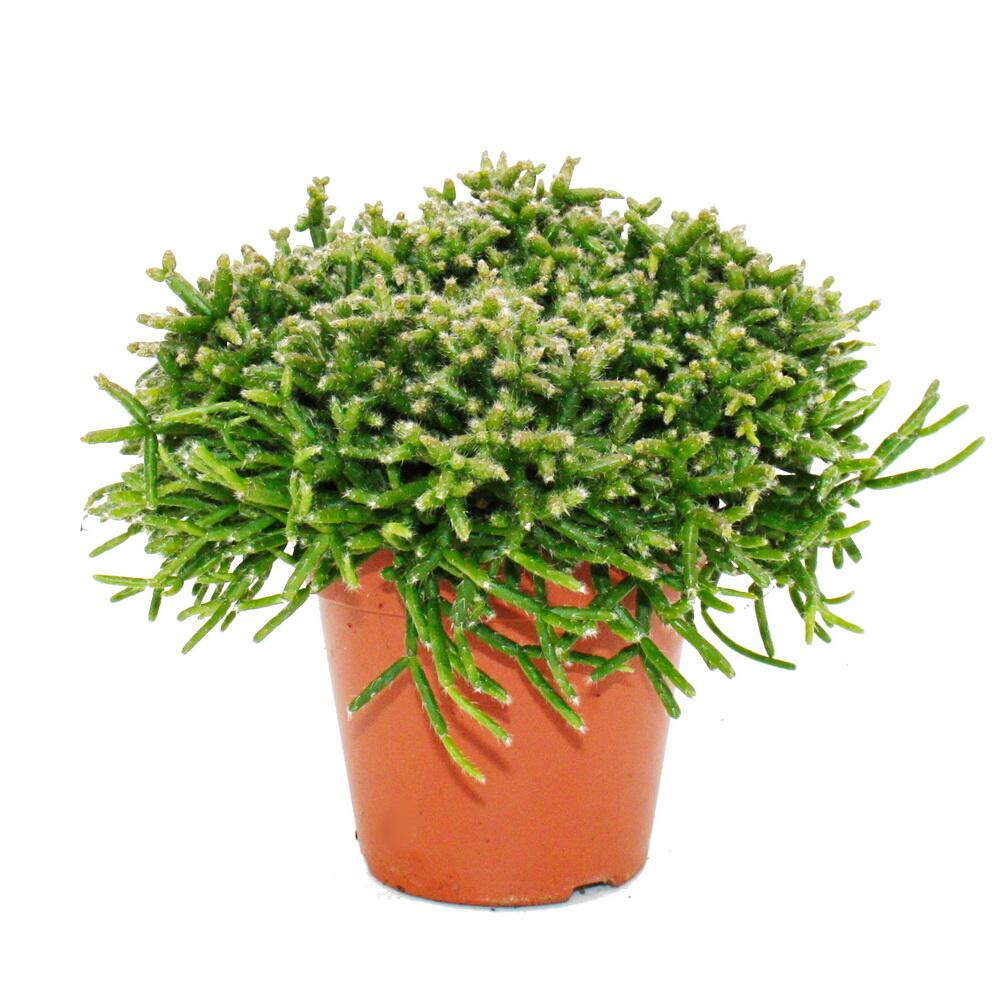
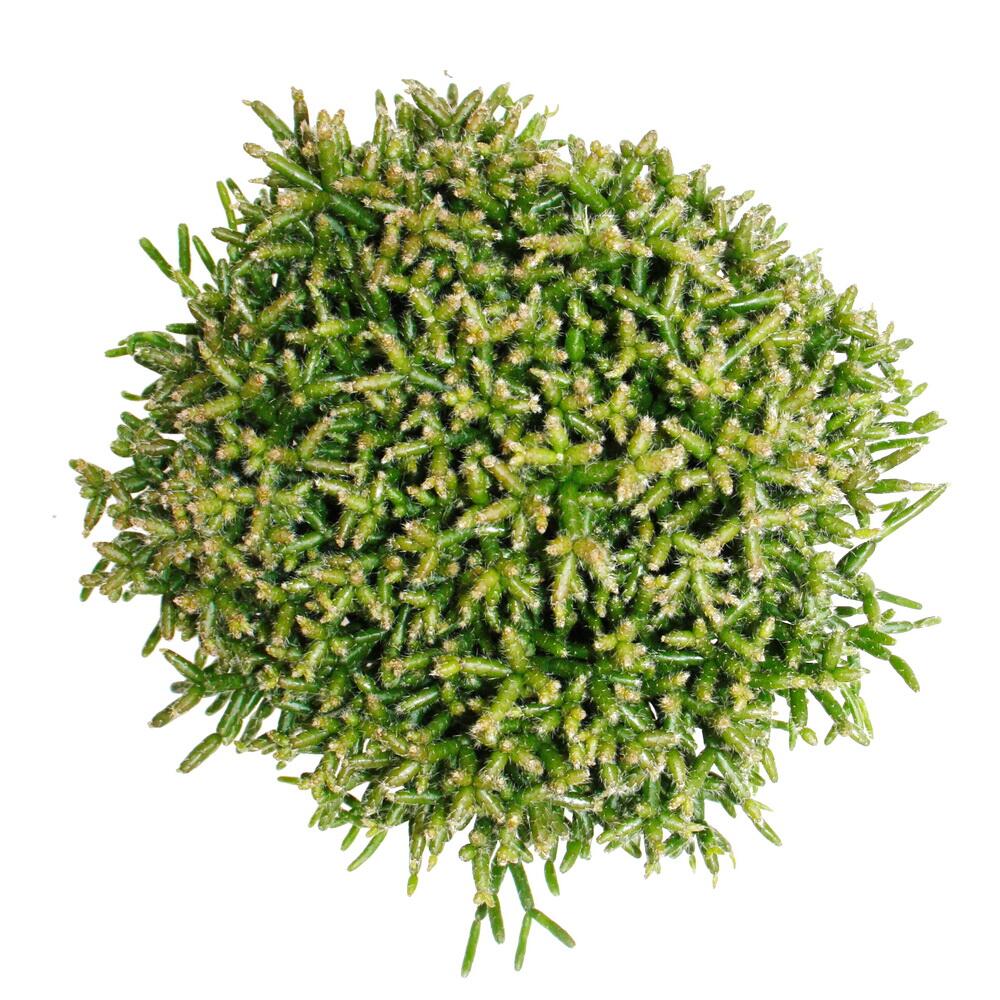
Good to know
Why burchelli in the shop and burchellii botanically?
The shop uses shortened spelling. The botanical source lists Rhipsalis burchellii; the specific offer remains linked.
Are pale hairs mould?
Fine evenly distributed hairs belong here to young shoots. Still examine irregular cottony deposits.
Will it stay a small ball?
The young delivery shape may branch and hang. 15–20 cm is not final size.
Does the cactus need full sun?
A bright indirect position suits better than hot unprotected midday sun.
Must I prune the crown regularly?
No. Treat only troublesome or damaged individual sections selectively.
Why check soil despite firm green shoots?
Succulent shoots may still look firm while an unfavourable water state develops inside the pot.
Sources and editorial note
- Exotenherz – offer and original images, 02.10.2026
- Kew POWO – accepted species Rhipsalis burchellii, 02.10.2026
- RHS – epiphytic Rhipsalis cultivation, R. baccifera profile, 02.10.2026
Shop offer, article number, GTIN, availability and original images directly checked on 02.10.2026; specialist acceptance on 03.10.2026. Sources directly read. Original variant 1260313112024-02 compared with two original views. Kew confirms species and epiphytic habit; RHS baccifera used only for shared forest-cactus culture, without taking burchellii-specific bloom, final dimensions or temperature numbers. Specialist acceptance 03.10.2026.