
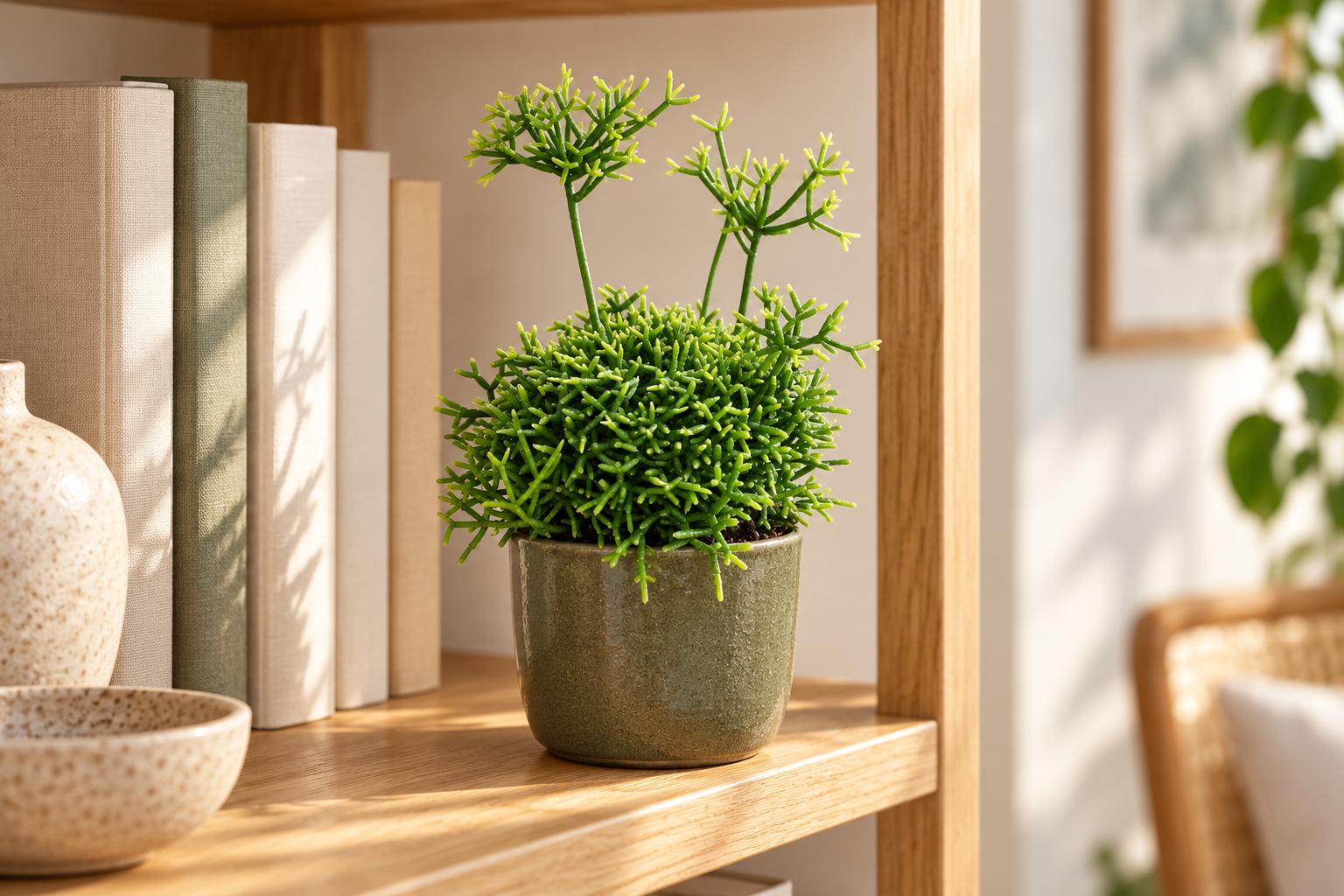
This plant at Exotenherz
Check the shop offer for current availability, price and what is included.
Check the selected shop offer for price, availability and delivery contents.
Your care table
| Topic | What to do | Why it helps |
|---|---|---|
| Light | Bright and filtered; limit harsh midday sun. | A forest cactus is not a desert cactus. |
| Moisture | Check and supply roots after some drying. | Do not deliberately dry completely for months. |
| Outer pot | Empty after watering. | Avoid hidden waterlogging. |
| Mixture | Loose humus-rich mix with coarse structure. | Fine roots need air. |
| Shoots | Support the container when carrying. | Slender tips break easily under pulling. |
| Nutrients | Sparingly by label during growth. | Do not drive resting shoots. |
| Check | Look at junctions for unusual accumulations. | Notice small changes early. |
| Winter | Bright, frost-free, water according to lower consumption. | No rigid desert-cactus dry pause. |
Check the compost and pot weight. The care table explains how far the compost may dry.
Water only when needed. The water should reach the root ball without spilling over the rim.
Remove surplus water from the saucer or cachepot. Then return the plant to a suitable position.
A green network with its own silhouette
Many fine green shoot sections initially form a dense small crown. Individual longer shoots rise above it with tufts at their ends. This irregular silhouette gives Rhipsalis teres Yellow its charm. Green threads are mostly succulent shoots, not ordinary leaves. Yellow belongs to the shop name; the original does not show an entirely yellow plant. A forest cactus need neither look like a round spiny ball nor always display a hinted name colour equally strongly. We first consider the actual branched plant.
Long tips are not unpacking handles
The offer states a twelve-centimetre pot, roughly eighteen to twenty-five centimetres total height and approximate age four to five years. Support the container while unpacking with fine shoots free. Do not pull them vigorously apart to create an artificial even ball. A bright shelf near daylight can show raised end tufts. Leave room above the pot so new shoots do not continually hit the next shelf. Delivery height is the starting point of a growing form.
Forest light instead of hot desert sun
Brightness with filtered daylight suits a forest cactus. Initially avoid strong midday sun directly behind hot glass. Acclimatise calmly after moving and observe shoot colour. Permanent deep shade is unhelpful too. An airy sheltered summer place may suit if nights stay mild and the plant does not abruptly enter full sun. The word cactus alone is insufficient for choosing a position: it groups plants from very different habitats needing different care.
Distinguish slight drying from long neglect
Upper soil may dry slightly between waterings. Check the whole root ball before the fine shoot group dries out completely for a long time. Water evenly when needed, drain and remove hidden residual water. Small shoots have reserves but no reason for deliberate months-long dryness. A bright warm position consumes differently from cool winter quarters. Assess shrivelled branches together with soil and roots. Do not rewater a long-wet root ball just because tips feel less taut.
Airy soil supports fine branching
Choose a loose humus-rich mix with coarse structure and free drainage holes. Heavy compacted roots hold moisture differently from an airy forest-cactus mix. Feed sparingly by a suitable label during visible growth. Change pots carefully and only when needed. Healthy extended branches may change its shape; do not continually cut it back to a ball. Check narrow junctions for cottony accumulations. Cleanly remove dead or damaged parts without treating every unusual new end as an error.
Calm winter care preserves movement
Keep Rhipsalis bright and frost-free. Less growth lowers consumption; reassess intervals by roots. Heater proximity, cold draughts and constant wetness do not fit balanced care. Flowers or fruits are not promised for the shown young stage. An entire silhouette photograph and one junction suit the plant book. Note development of upper tufts and lower shoots. Its characteristic form becomes a living structure rather than one that must repeat the same round starting photograph every month.
One plant, several views

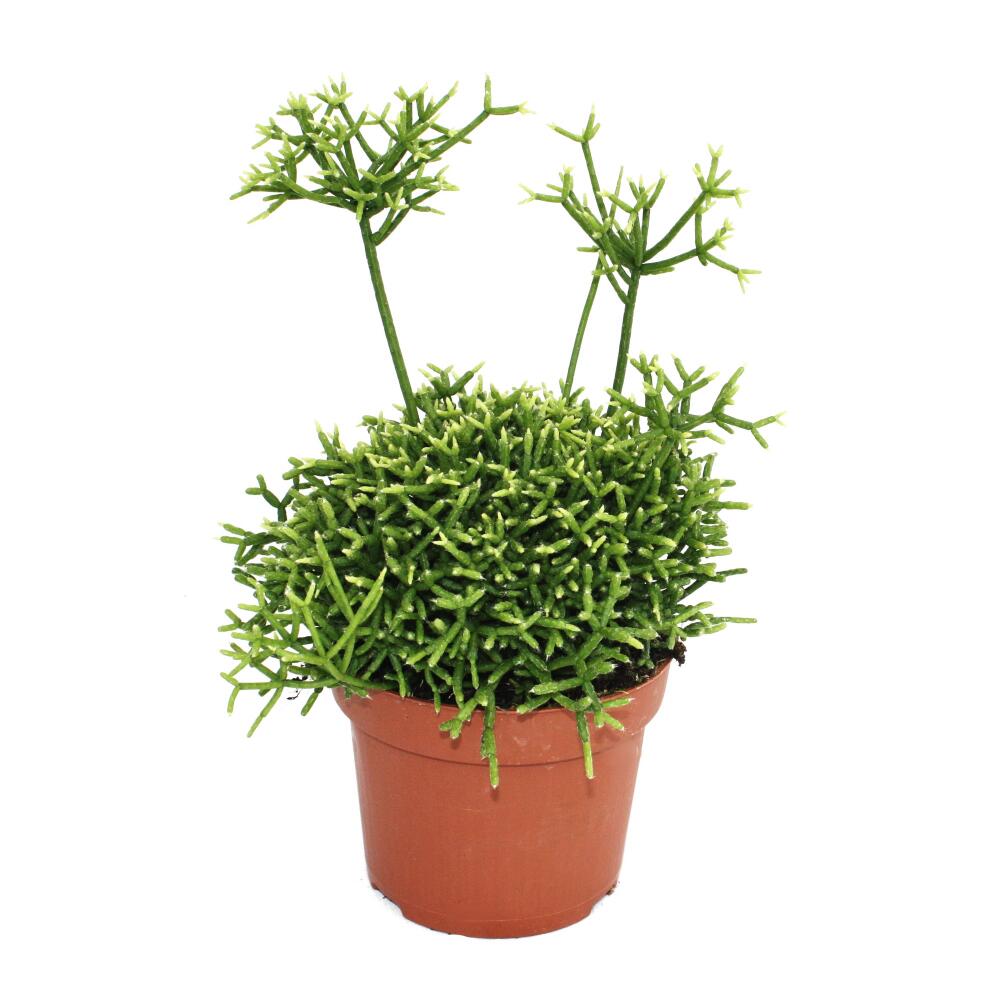
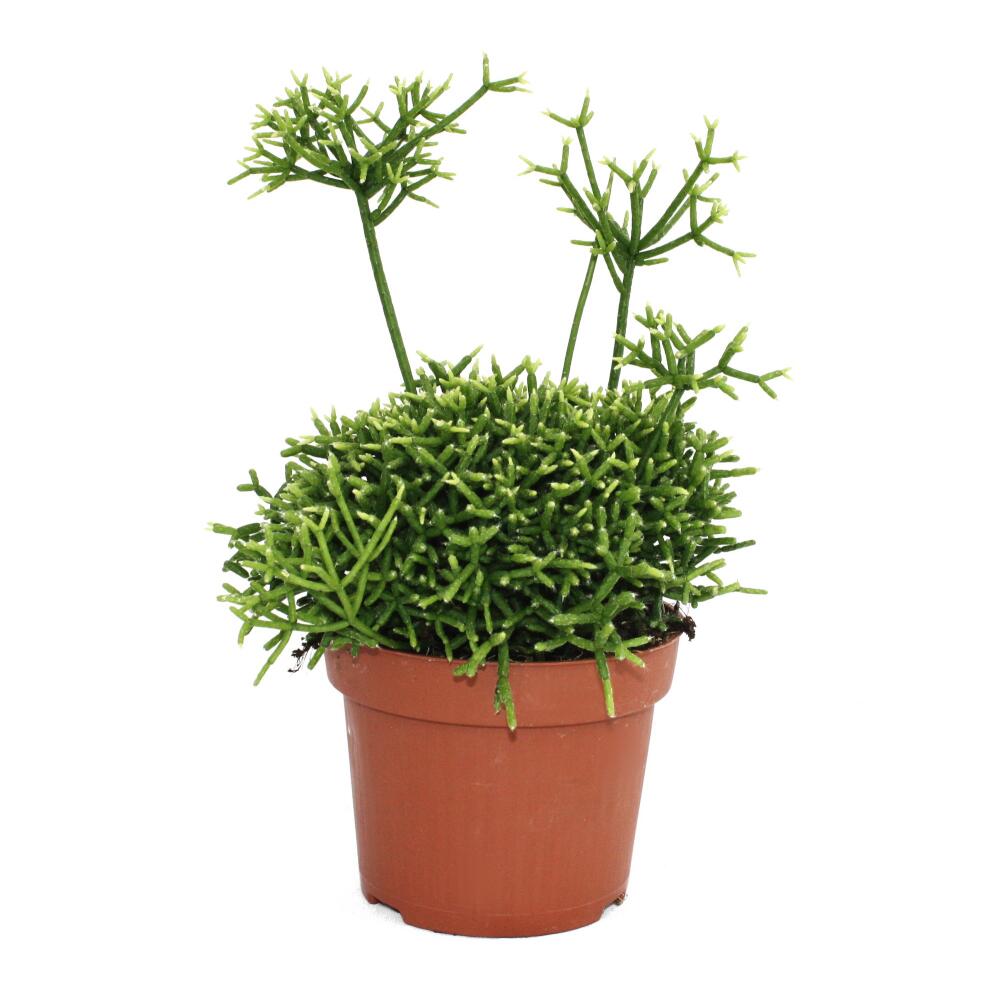
Good to know
Are the green threads leaves?
They are mostly fine succulent shoot sections.
Must Yellow be entirely yellow?
Yellow is the shop name; the checked original shows green shoots.
Why no full hot midday sun?
Forest-cactus care follows bright filtered light.
Must it remain a perfect ball?
No. Longer shoots and end tufts belong to the shown silhouette.
Should I stop all winter watering?
Actual root demand counts; prolonged complete drying is not forced.
Sources and editorial note
- Exotenherz – offer and original images, 03.10.2026
- RHS – indoor succulents, light and root space, 03.10.2026
- Rhipsalis.com – Rhipsalis teres, botanical species reference, 03.10.2026
Shop offer, article number, GTIN, availability and original images directly checked on 02.10.2026; specialist acceptance on 03.10.2026. Sources directly read. SKU, originals, dimensions and orderability directly checked in the shop on 03.10.2026. Relevant passages directly read; trade names and species references distinguished. No Wawi, server or tool changes. Currently not orderable: knowledge portrait without purchase link; social drafts not cleared for sending.