
This plant at Exotenherz
Check the shop offer for current availability, price and what is included.
Check the selected shop offer for price, availability and delivery contents.
Your care table
| Topic | What to do | Why it helps |
|---|---|---|
| Light | Choose a sunny open bed position. | Much light supports firm upright growth and flowering. |
| Planting | Moisten rootball, set at previous depth and water in. | The young plant first needs good contact with surrounding soil. |
| Spacing | Leave about 35 cm and watch thickening neighbours. | The later clump needs more room than the little nursery pot. |
| Water | Check at the rootball after planting; later water thoroughly as needed. | Established sage tolerates dry spells better than a fresh 9 cm rootball. |
| Soil | Choose well-drained moderately nourished soil. | Constant wetness and very rich feeding fit poorly with firm perennial structure. |
| Flower care | Selectively cut faded spikes above healthy foliage. | This keeps the plant tidy and may support further flowers. |
| Winter | Keep drainage free and protect containers from prolonged waterlogging. | Winter wetness may stress roots more than a single cold night. |
| Spring | Remove old dead shoots and protect new growth. | New growth starts low on the clump and should be retained during tidying. |
Check the compost and pot weight. The care table explains how far the compost may dry.
Water only when needed. The water should reach the root ball without spilling over the rim.
Remove surplus water from the saucer or cachepot. Then return the plant to a suitable position.
Dark stems draw the flowers
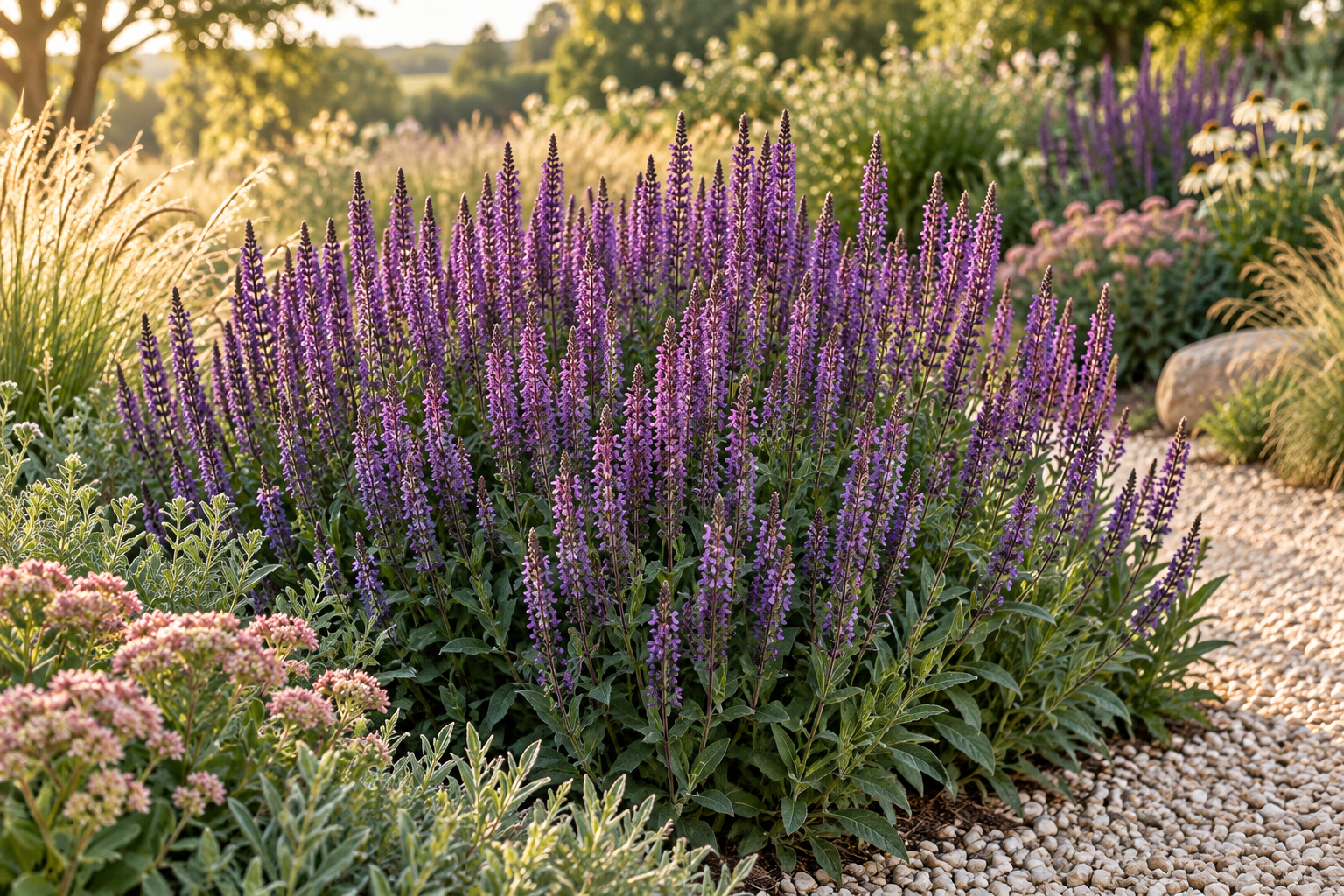
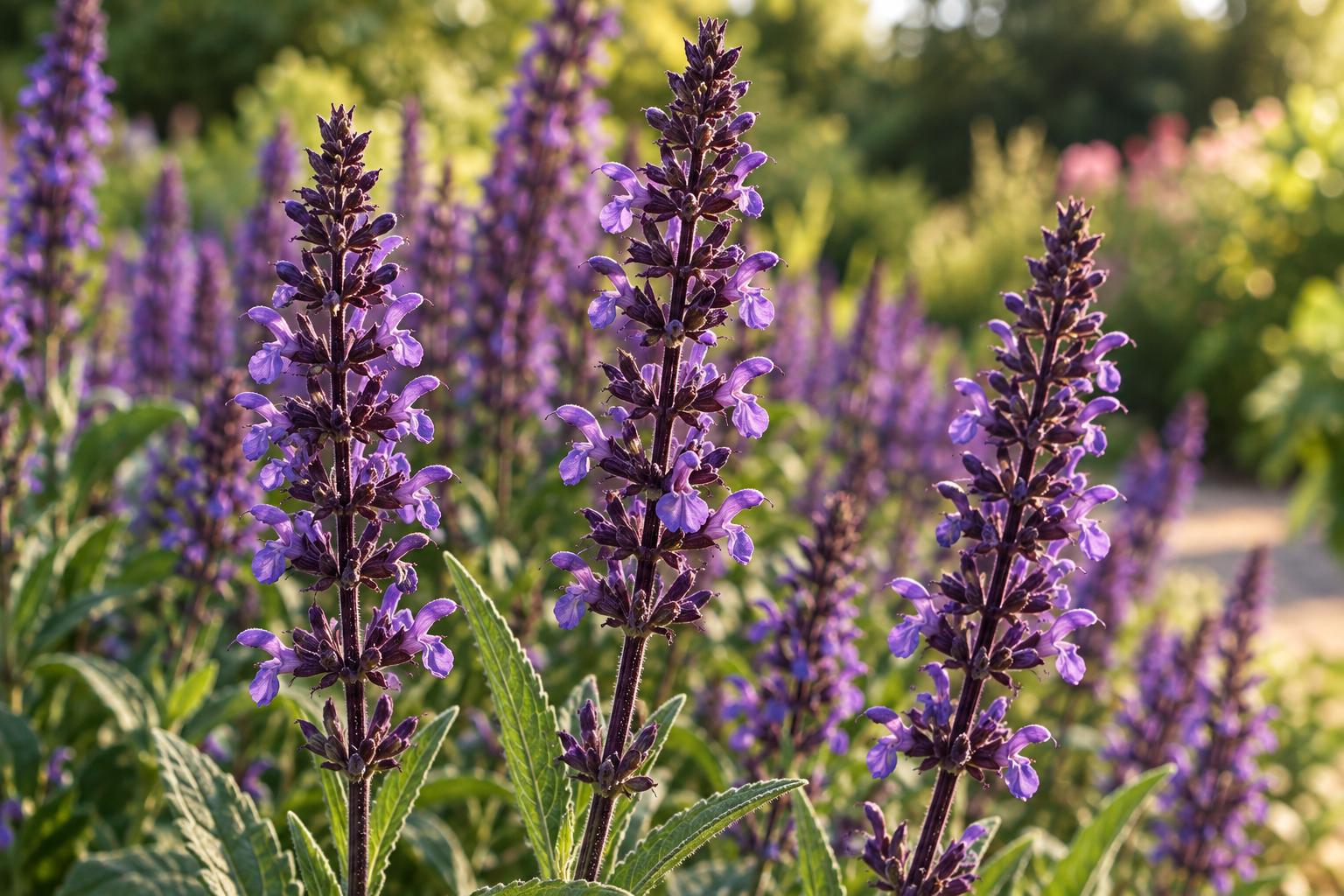
Caradonna is interesting not only for its violet flowers. Dark purple to almost black-looking stems draw slender vertical lines through the bed. Many little lipped flowers sit above in upright spikes. Aromatic grey-green foliage forms a lower level. Among round-leaved perennials or beside a pale garden path this contrast shows beautifully. Salvia nemorosa 'Caradonna' is a perennial ornamental. Its name and leaf scent do not automatically make it a kitchen product: the portrait concerns garden appearance and care.
The young delivery plant and later clump
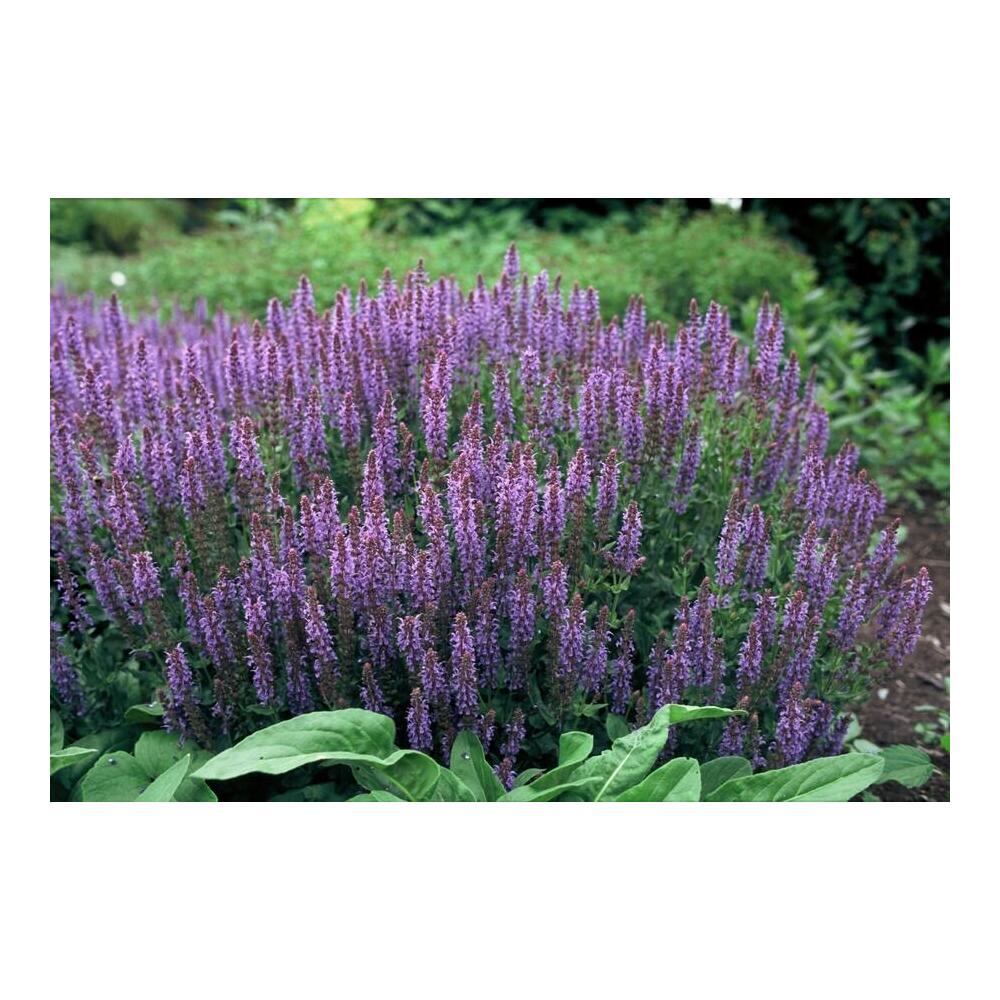
You start with a 9 cm pot and approximately 10 to 25 cm total height including pot. The later flowering plant may grow about 40 to 50 cm tall. The shop recommends around 35 cm spacing or about eight plants per square metre. These details help plan a bed but promise neither immediate flowers nor unchanging final height. A dense young planting needs room for its clumps over time. Leave some air beside vigorous neighbours so lower sage leaves remain accessible and upright growth is not hidden.
A sunny position with usable soil
Choose an open sunny place. Some partial shade may work, but the clear form generally shows better in much light. Soil should supply moisture and drain surplus. Before planting particularly check compacted edges: a small loose planting hole in otherwise impermeable ground can act like a wet hollow. Improve surroundings appropriately rather than just wrapping the rootball in very rich soil. A moderately nourished site is easier to manage than a constantly heavily fed corner whose soft shoots repeatedly need support.
The little rootball matters during establishment
In spring or early autumn mild frost-free planting dates are often useful. Moisten a dry rootball slowly, remove the pot and plant at previous depth. Firm and water thoroughly. During the first weeks check directly at this root zone. The surrounding bed may look damp while the small former pot rootball is already drying. Better drought tolerance of established sage develops only with its root system. Water thoroughly as needed and then let air return to soil. Frequent little surface sips do not replace this process.
Manage faded spikes selectively
The main effect lies in summer flowering. Once spikes fade you may cut them back above healthy foliage. This tidies the perennial and may support more flowers. Whether and how strongly repeat flowering appears depends on development, weather and supply. Do not remove all healthy lower leaves simultaneously. Check rootball moisture after cutting and water only for actual need. Much extra fertiliser is no sure way to a second flower round. Caradonna should keep its firm structure while new growth and possible fresh spikes develop.
Containers also need a seasonal cycle
A sufficiently large container with drainage holes is possible on a sunny terrace. Choose stable well-drained soil and check the pot more often than an established bed planting. Surplus must drain; a constantly filled saucer keeps roots unnecessarily wet. Shelter the container for winter and particularly avoid prolonged waterlogging. Above-ground growth may decline seasonally. In spring look for young shoots at the base while removing old ones. A bare winter clump does not demand the same water as a flowering perennial in warm summer.
Read leaf changes with the position
A whitish coating, damaged young leaves or limp shoots call for close observation. Check moisture, air between plants and possible feeding marks before increasing several care steps simultaneously. Slugs may find young shoots interesting; wet roots may contribute to weak structure. Remove troublesome dead parts and address a recognisable cause first. Development of new foliage tells more than trying to make every older patch flawless immediately. Thus the sage stays a clear summer line in the bed rather than a daily repair task.
One plant, several views
Good to know
Is Caradonna culinary sage?
This offer is a garden ornamental perennial. Aromatic foliage is no recommendation for eating.
Is it already 50 cm tall at delivery?
No. Delivery information is about 10–25 cm total height including 9 cm pot. The 40–50 cm describes later growth.
Does it always flower again after cutting?
Removing faded spikes may support more flowers. Weather and development also decide; a second round is not guaranteed.
Must young plants be watered in dry weather?
Yes, as needed. A fresh small rootball must be supplied until roots explore the surroundings.
Can Caradonna grow in a pot?
In a sufficiently large container with free drainage and a sunny position. Water and winter wetness need more targeted checks there.
When do I remove old shoots?
When tidying in spring identify and protect lower new growth. Faded spikes may already be selectively cut during the season.
Sources and editorial note
- Exotenherz: offer and original images (03.10.2026)
- RHS: Salvia nemorosa Caradonna – cultivar profile (03.10.2026)
- Exotenherz: checked 6-plant child offer (03.10.2026)
- Exotenherz: checked 12-plant child offer (03.10.2026)
- Exotenherz: checked 20-plant child offer (03.10.2026)
- Exotenherz: checked 40-plant child offer (03.10.2026)
- Exotenherz: checked 60-plant child offer (03.10.2026)
Shop offer, article number, availability and original images checked directly on 03.10.2026. Specialist sources read directly. RHS cultivar profile read directly: dark stems, violet-purple flowers, sun, well-drained soil, flower care and possible repeat flowering. Delivery and final height and shop spacing separated. No edible sage or guaranteed repeat flowering asserted. All five child offers individually freshly read and documented with SKU, GTIN where present and availability; orderable quantities: 6, 12, 60. Scene shows one plant; count follows chosen set.