
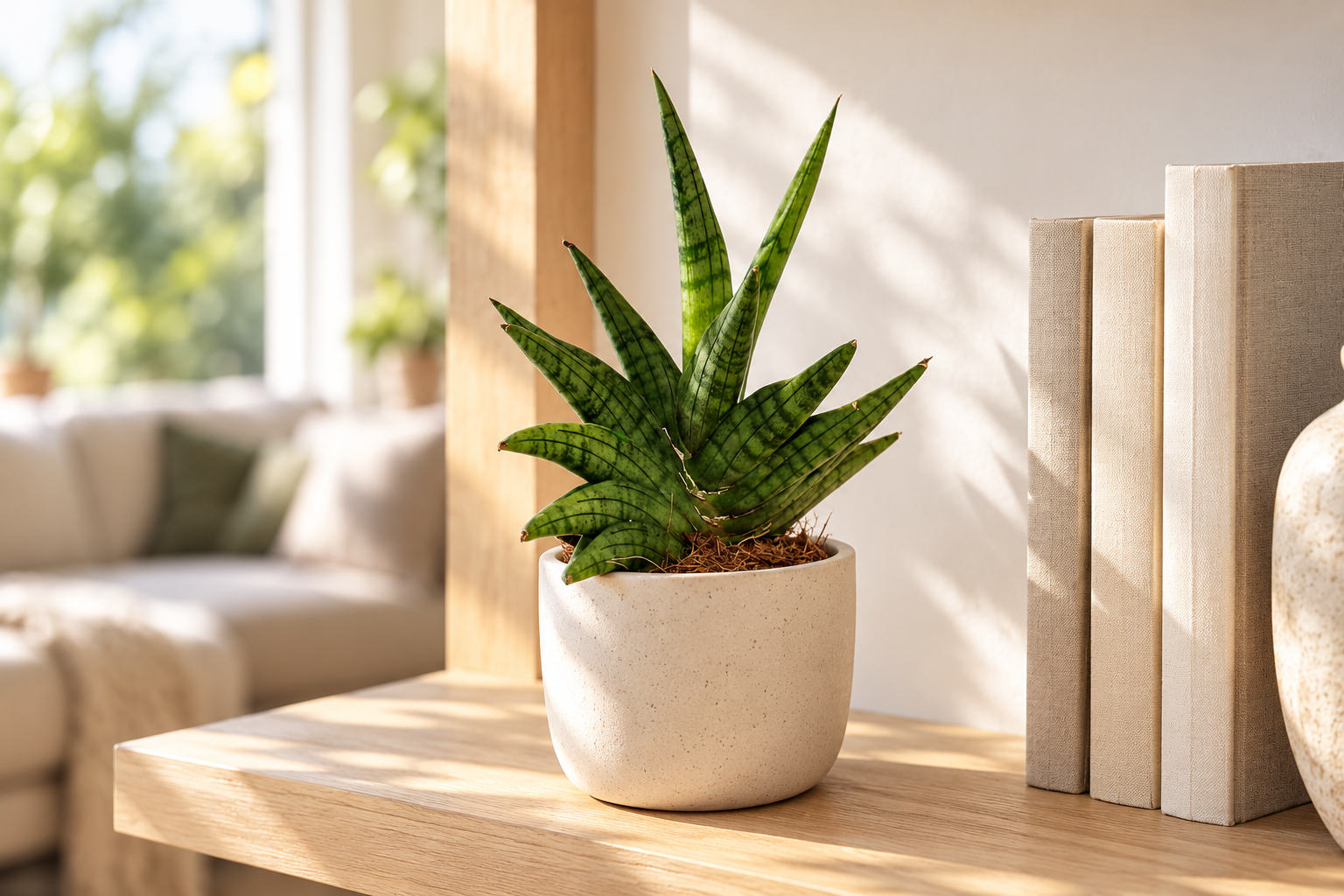
This plant at Exotenherz
Check the shop offer for current availability, price and what is included.
Product details, availability and delivery information are provided in the shop offer.
Your care table
| Topic | What to do | Why it helps |
|---|---|---|
| Light | Bright to lightly shaded; very strong summer sun behind glass only after careful acclimatisation. | Enough light supports compact stable growth; abrupt sun change can harm foliage. |
| Water | Check the root ball before every watering and water thoroughly only after clear drying. | Firm leaves store water; permanently moist roots are riskier than a brief dry phase. |
| Drainage | Remove water from decorative pot or saucer after watering. | Standing water keeps the small root space wet longer than tolerated. |
| Growing medium | Use loose free-draining succulent medium and a pot with drainage hole. | Air at roots and quick drainage help prevent rot. |
| Repotting | Only with a dense root ball, into a slightly larger pot. | In an oversized container unused growing medium stays moist too long. |
| Feeding | Feed sparingly following the label during visible growth; be restrained in dark winter. | The small slow-growing snake plant needs no heavy feeding. |
| Winter | Keep bright and frost-free; check dryness even more carefully. | With less light, water consumption drops and cool wet medium dries slowly. |
| Inspection | Occasionally inspect leaf bases and pot rim for soft patches and pests. | Early changes are easier to assess than a suddenly collapsing fan. |
Check the compost and pot weight. The care table explains how far the compost may dry.
Water only when needed. The water should reach the root ball without spilling over the rim.
Remove surplus water from the saucer or cachepot. Then return the plant to a suitable position.
A fan in no hurry to grow tall
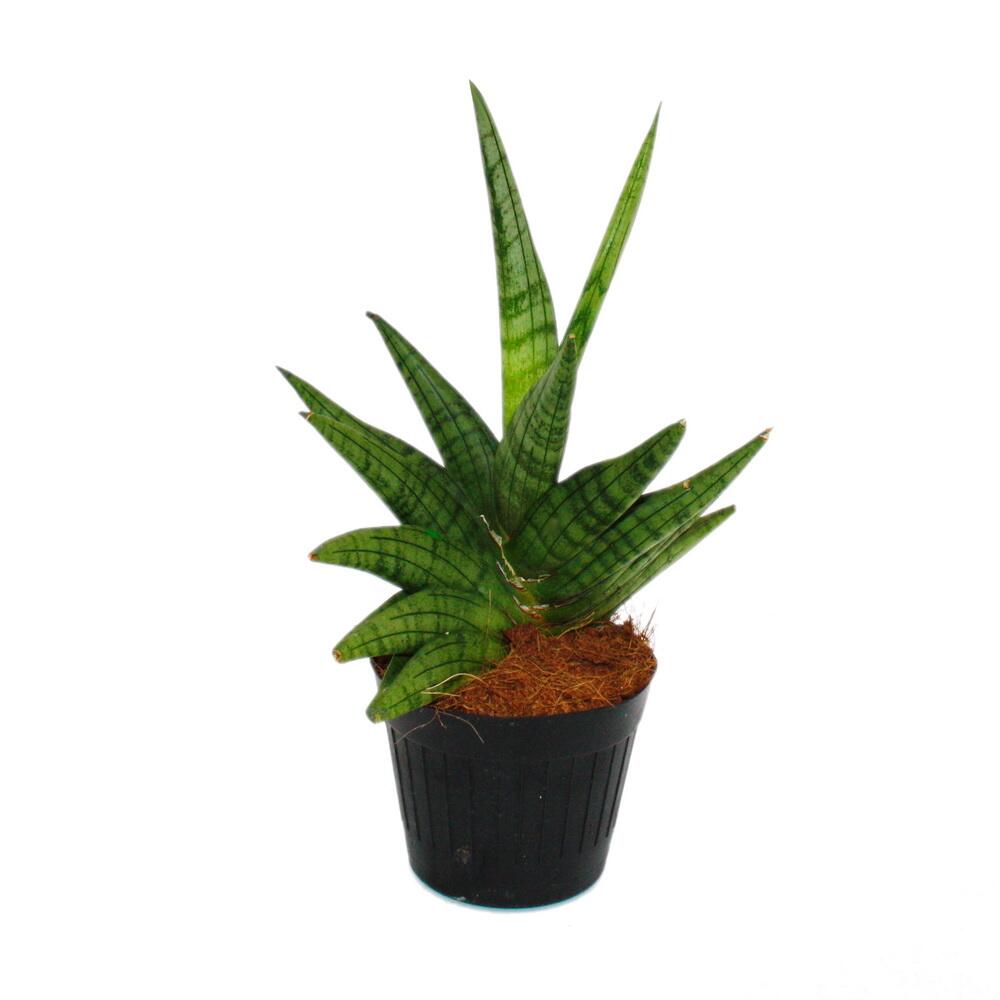
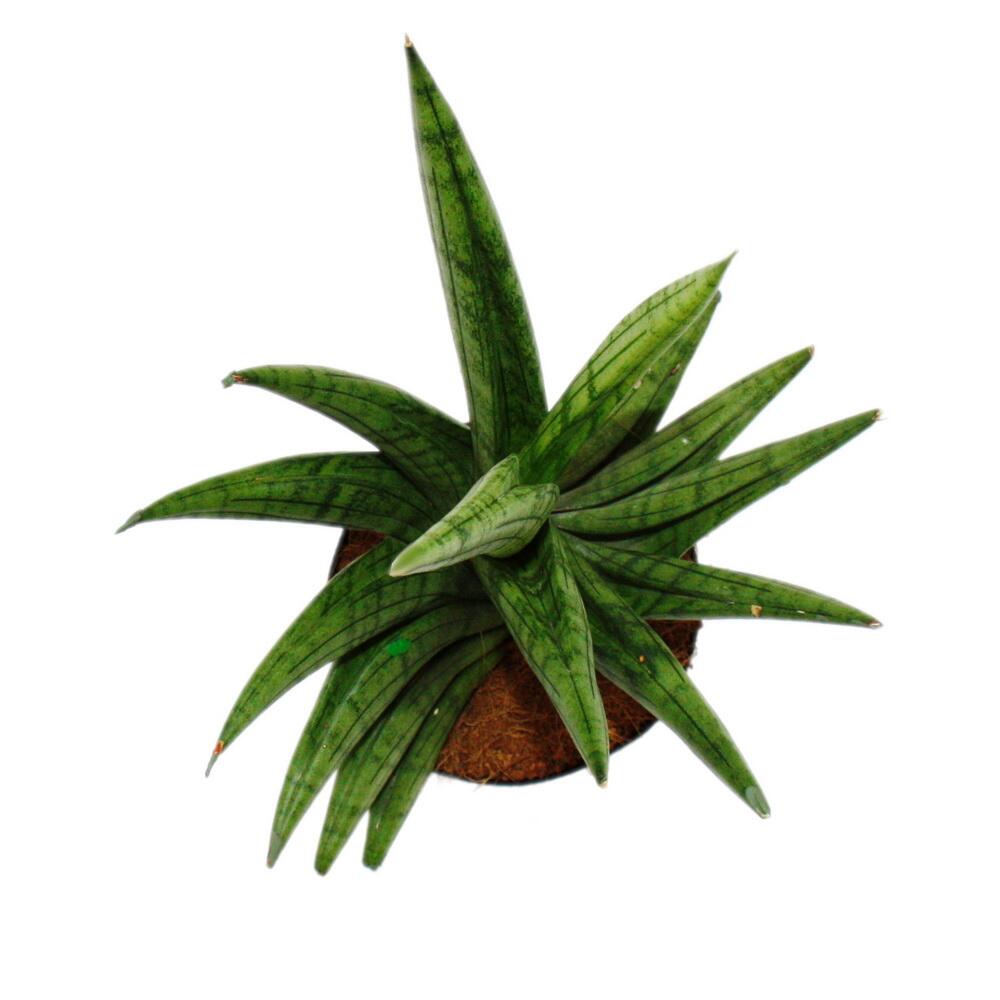
With this small snake plant we first look at form. Firm green-banded leaves stand like an open fan; some point up, others sideways. Original images show the pattern more clearly than a uniformly dark colour. The offered plant is young potted stock, not a tall specimen snake plant. Its compact shape is precisely what makes it interesting on a bright shelf. Carry it by the pot, not leaf tips: tips remain part of the silhouette and do not simply heal smoothly after injury.
Helios is a shop name, not a certain species identification
The offer calls the plant Sansevieria ‘Helios’. Snake plants are now botanically placed partly in Dracaena, but the trade name alone cannot securely establish this variety’s exact species. This does not hinder care. What matters is a small water-storing houseplant with firm foliage. It needs no humid tropical place. With another sansevieria at home, basic rules such as light and good drainage can transfer, but each plant’s size and shape should be considered separately.
A bright place without sudden heat shock
We give the fan as much pleasant room light as possible. A bright place near a window or on an open shelf suits better than a deep dark corner. It can tolerate some shade, but there its pot dries more slowly and growth is weaker. After shipping, do not put it straight into hot midday sun behind glass. Allow it to settle and gradually introduce more sun if needed. In summer a bright sheltered outdoor place may be possible as long as it returns inside before cold.
Watering starts with checking, not a calendar
Firm leaves store water. A weekly watering appointment is therefore no good rule for Helios. Lift the small pot and check soil deeper than the surface. If the root ball is largely dry, water slowly and thoroughly until water emerges underneath, then allow everything to drain. If the container remains heavy and cool, wait. Nothing may stand in the decorative pot. Wilted soft leaf bases in wet soil are a different signal from slight wrinkles in a plant long dry, so look inside the pot before watering again.
Small root space, free-draining growing medium
A young snake plant need not be repotted immediately after purchase. Only when roots clearly fill the pot or drainage becomes poor do we choose a slightly larger container with a hole. Loose succulent mix with mineral components lets excess water drain quickly. A large decorative pot without an inner container would be a trap: soil stays moist long although the visible surface looks dry. When repotting set the fan at roughly its previous height. Measured feeding suffices during visible growth; more fertiliser does not replace light.
Stay attentive through autumn and winter
When days shorten, the snake plant grows slowly or hardly at all. Keep it bright, protect from frost and cold draughts, and reassess the root ball before each watering. Especially in winter the same pot can need much longer to dry than in summer. Gently wipe leaf dust with a soft cloth so markings remain visible. Watch discoloured or soft bases carefully and inspect drainage and roots rather than reflexively watering more. This calm attention accompanies Helios through many seasons without daily intervention.
One plant, several views
Good to know
How often does Helios need water?
Check the root ball afresh each time. Water thoroughly only when largely dry, then drain completely. A fixed weekday does not suit changing light and temperature.
Can it stand in darkness?
Some shade is tolerated, but a bright place keeps growth compact and soil drying more reliable. A deep permanently dark corner is no good long-term place.
Why do leaf bases turn soft?
A soft base together with wet soil can indicate damaged roots. Check watering pause, drainage and roots; simply adding water would worsen the problem.
Must I repot the little plant immediately?
No. As long as the root ball is healthy and water drains, it may initially stay in its pot. Later choose only a small step larger.
Is Helios botanically the same as the cylindrical snake plant?
The offer names Sansevieria ‘Helios’ but proves no exact species assignment. We describe visible fan form and general culture needs without assigning an unconfirmed species.
Sources and editorial note
- Exotenherz: product, original images and availability (accessed 30 September 2026)
- Royal Horticultural Society: Sansevieria – culture, water and position
- University of Connecticut: Sensational Sansevieria – growth and care
- University of Florida IFAS: Sansevieria as a houseplant
Shop offer checked as immediately available on 30 September 2026, article number 279122112023, GTIN 4019515921690. Visible H1 and description state 9 cm pot/about 15 cm; browser page title states 11 cm pot/about 20 cm. No fixed delivery size is therefore given. ‘Helios’ is treated as a shop trade name; exact species was not independently established and is not presented as Dracaena angolensis or another species. Shape from original shop images, general Sansevieria culture checked against RHS and university sources. Shop text refers to black leaves while original images show green-banded leaves; public text follows visible originals.