
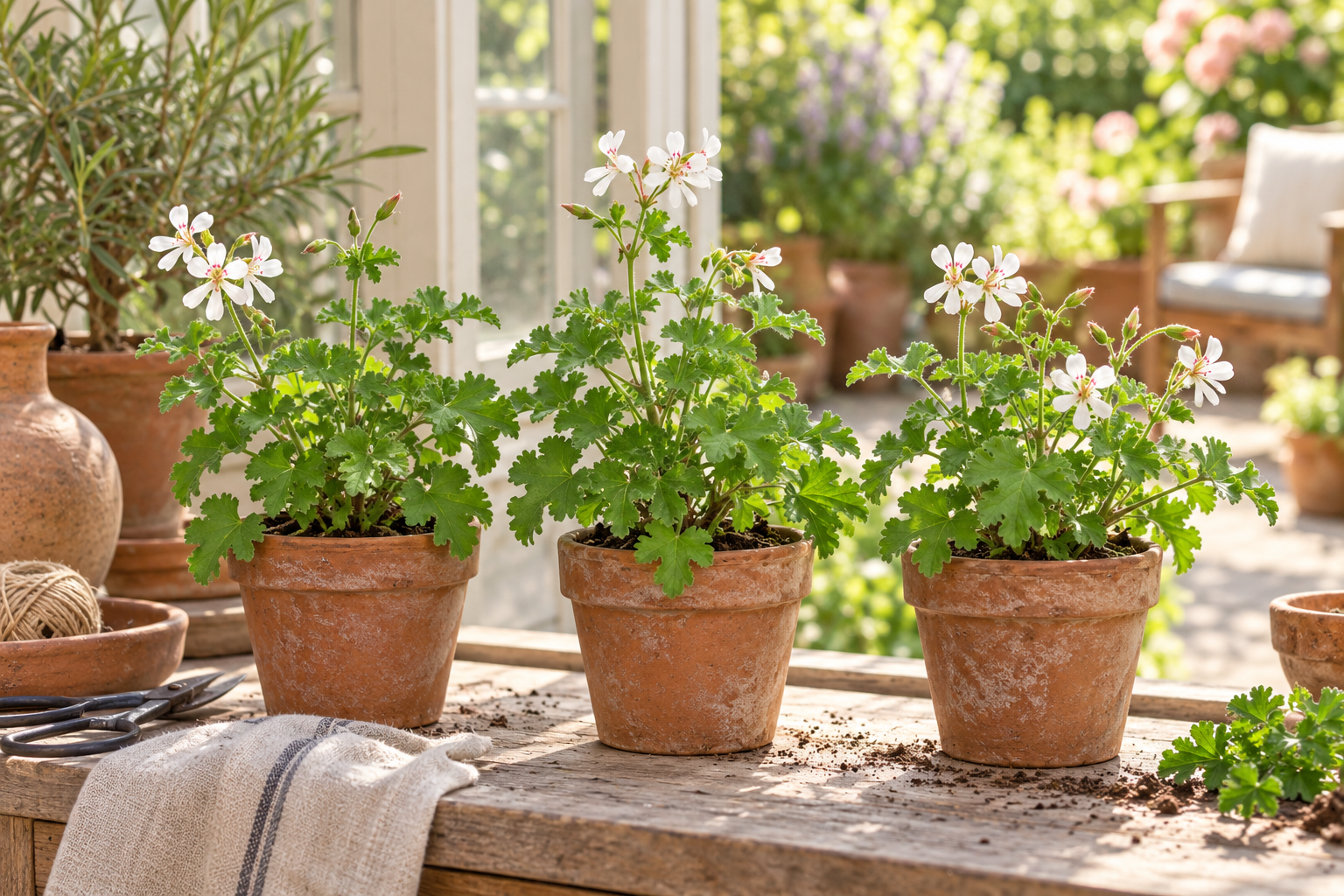
This plant at Exotenherz
Check the shop offer for current availability, price and what is included.
Check the selected shop offer for price, availability and delivery contents.
Your care table
| Topic | What to do | Why it helps |
|---|---|---|
| Place | Sunny and airy, acclimatise gradually. | Young foliage needs a transition after transport. |
| Water | Check and supply the root ball after surface drying. | Drought tolerance does not replace care. |
| Drainage | Empty covers and saucers. | Standing wet soil burdens roots. |
| Soil | Free-draining structurally stable planting soil. | Moisture and root air should fit together. |
| Nutrients | According to label during growth, account for pre-fertilisation. | The young crown needs no double dose. |
| Shape | Gently shorten tips when needed. | Branching is guided selectively. |
| Inspection | Examine leaf undersides and nodes regularly. | A problem is recognised earlier than in the whole picture. |
| Winter | Bright and frost-free, adapt supply to growth. | Scented pelargoniums are not frost-hardy garden geraniums. |
Check the compost and pot weight. The care table explains how far the compost may dry.
Water only when needed. The water should reach the root ball without spilling over the rim.
Remove surplus water from the saucer or cachepot. Then return the plant to a suitable position.
The leaf is the real star here
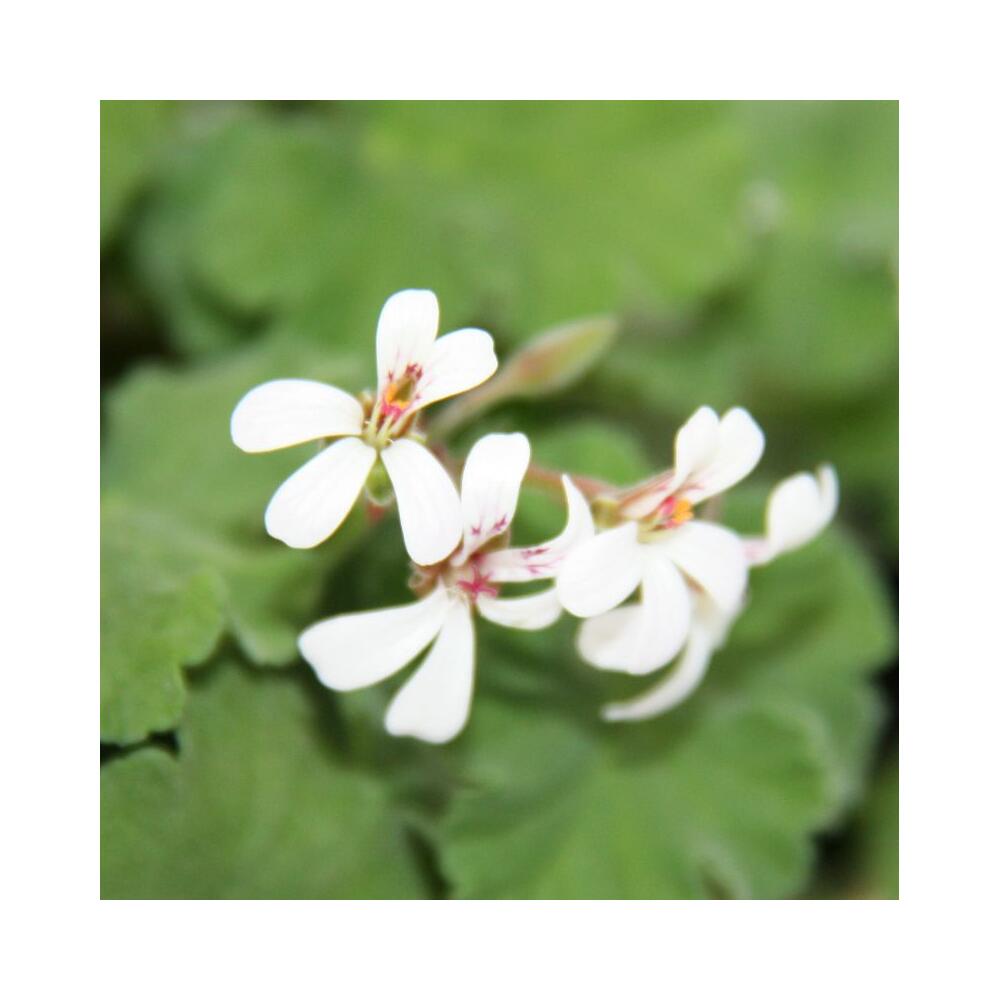
Scented pelargoniums invite a closer look at toothed and lobed foliage. Small white to pale pink flowers with fine pink markings appear among the green leaves. This is a different impression from densely double flower heads of an upright zonal pelargonium. Gentle touching can reveal leaf scent. The shop describes a scented hybrid selection without naming a single botanical species or fixed scent combination. We therefore stay with Pelargonium hybrids and promise neither a particular smell for each plant nor an effect against mosquitoes.
Three young plants, three separate crowns
Three plants are offered, each in a 12 cm pot at about 25 to 30 cm overall height. This height includes the pot and describes the young plants. Give each crown some room when arranging so leaves are not constantly squeezed between neighbours. In a shared container, stalks and soil remain reachable for care. A pure flower detail shows the beautiful pattern but does not establish the whole delivery plant or later mature size. The unnamed selection can differ in branching too.
A bright position makes leaf and form visible
Pelargoniums like a sunny airy summer position with good drainage. After transport we gradually accustom plants to stronger sun. They move permanently outdoors only after frost risk. A bright plant shelf opening onto a summer garden is possible so long as room decoration alone does not decide the position. Watch whether the crown seeks light one-sidedly or the pot heats up behind a solid railing. Leaves can be observed in a reachable position without the plant needing to be touched whenever someone passes.
Scented leaves do not replace root-ball checks
Before watering we feel soil and check pot weight. After surface drying, supply the root ball and then water drains freely. Pelargoniums are comparatively drought-tolerant, but that does not become a watering ban for a young small pot. Water must not stand permanently in a cover or saucer. With less light and warmth, demand falls. Judge limp or yellow foliage alongside actual moisture. All three plants may use water at different rates despite identical pot size if one receives more sun or wind.
Care for branching rather than shortening at random
Free-draining soil and sparing feeding during growth support crown development. Pre-fertilisation counts too. Shoot tips can be gently shortened if a denser shape is wanted. Remove damaged leaves and old flower stalks selectively without changing the entire plant strongly at once. Air movement remains important with denser foliage. Inspect leaf undersides and shoot nodes occasionally. Care follows the actual hybrid selection and growth, not a fixed pruning length derived from the general term scented pelargonium.
Summer scent needs winter quarters
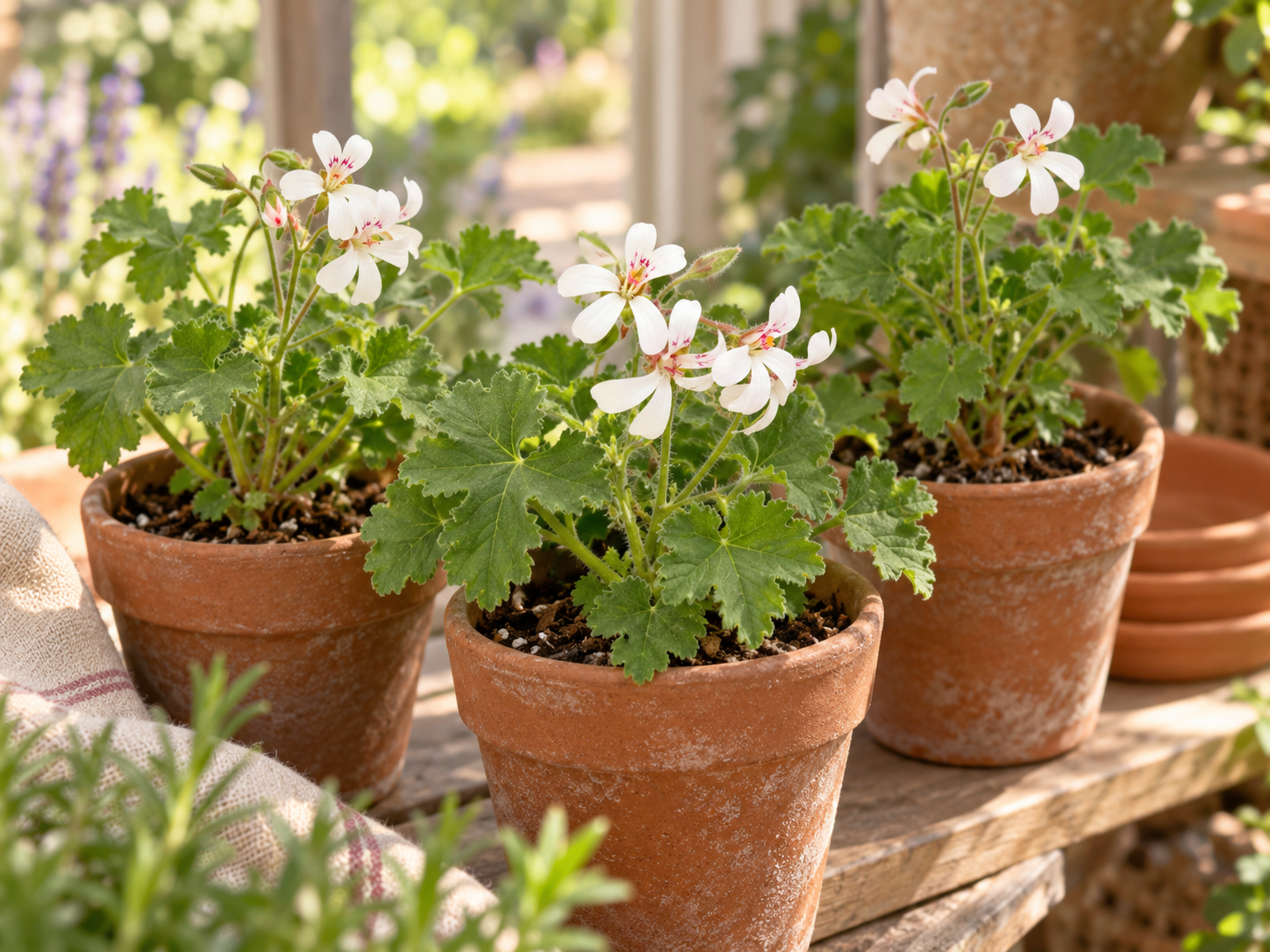
The plants are perennial but frost-sensitive. Before the first frosts, bring them into a bright frost-free position. Water less during slower growth while still observing the root ball. Leaves and flowers are not declared food merely because of a pleasant scent. A scent label does not replace reliable assurance of use either. In the plant book, each of the three plants can have its own picture. Record leaf shape, flower pattern and your impression of scent. The actual selection remains recognisable without inventing an unnamed variety afterwards.
One plant, several views
Good to know
Are these true hardy Geranium perennials?
No. Scented pelargoniums belong to Pelargonium and overwinter frost-free.
Which three scents are guaranteed?
The offer lists a hybrid selection, not a fixed combination of individual scented varieties.
Do they reliably keep mosquitoes away?
No such effect is guaranteed.
Is 30 cm the plant height without pot?
No. The offer gives overall height including pot.
Are flowers or leaves edible?
The portrait describes ornamental plants and makes no food assurance.
Sources and editorial note
- Exotenherz: offer and original images (03.10.2026)
- RHS – Scented-leaved pelargoniums, summer care and overwintering (03.10.2026)
Shop offer, article number, GTIN, availability and original images checked directly on 02.10.2026; specialist acceptance 03.10.2026. Specialist sources read directly. Specific SKU, dimensions, original images and orderability checked directly in the shop on 03.10.2026. Specialist sources read completely; shop name and botanical synonyms remain distinguishable. Currently not orderable: knowledge portrait without purchase link, social drafts without sending approval. No Wawi, server or tool changes. Currently not orderable: knowledge portrait without purchase link; social drafts not approved for sending. Original 1 with brand label internal reference only; unchanged clean flower view in gallery.