
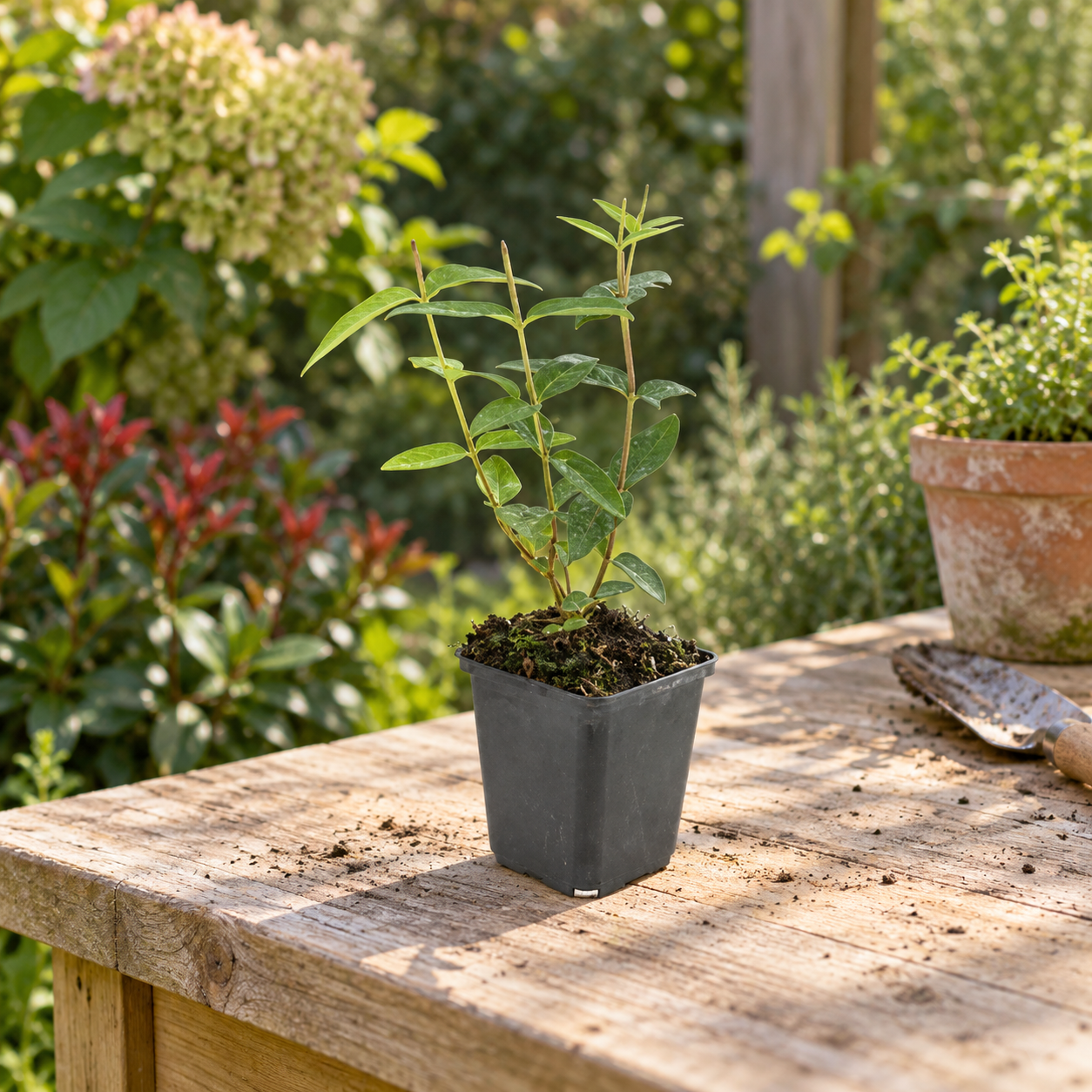
This plant at Exotenherz
Check the shop offer for current availability, price and what is included.
Check the shop for the current price, availability and offer contents.
Your care table
| Topic | What to do | Why it helps |
|---|---|---|
| Light | Choose sun to partial shade for the garden group. | Bright conditions help a clear flowering framework. |
| Soil | Prepare fresh soil with good drainage. | The shrub does not tolerate roots permanently standing in water. |
| Start | Plant the moistened ball at its old height. | Young roots must first explore garden soil. |
| Water | Check the small ball and supply thoroughly as needed. | An older shrub has different reserves from a newly planted pot specimen. |
| Space | Watch sideways growth beside paths and smaller perennials. | The low delivery plant develops into a taller shrub. |
| Pruning | Arrange old or dead shoots appropriately in spring. | Living new structure matters more than a fixed shaping date. |
| Health | Look closely at unusual leaf spots and coatings. | Rust may occur in the hybrid group; extra water does not explain these changes. |
| Winter | Protect outdoor containers, keep drainage open and check moisture. | Limited root space is more exposed to cold and changing wetness. |
Check the compost and pot weight. The care table explains how far the compost may dry.
Water only when needed. The water should reach the root ball without spilling over the rim.
Remove surplus water from the saucer or cachepot. Then return the plant to a suitable position.
A shrub with two different points of interest
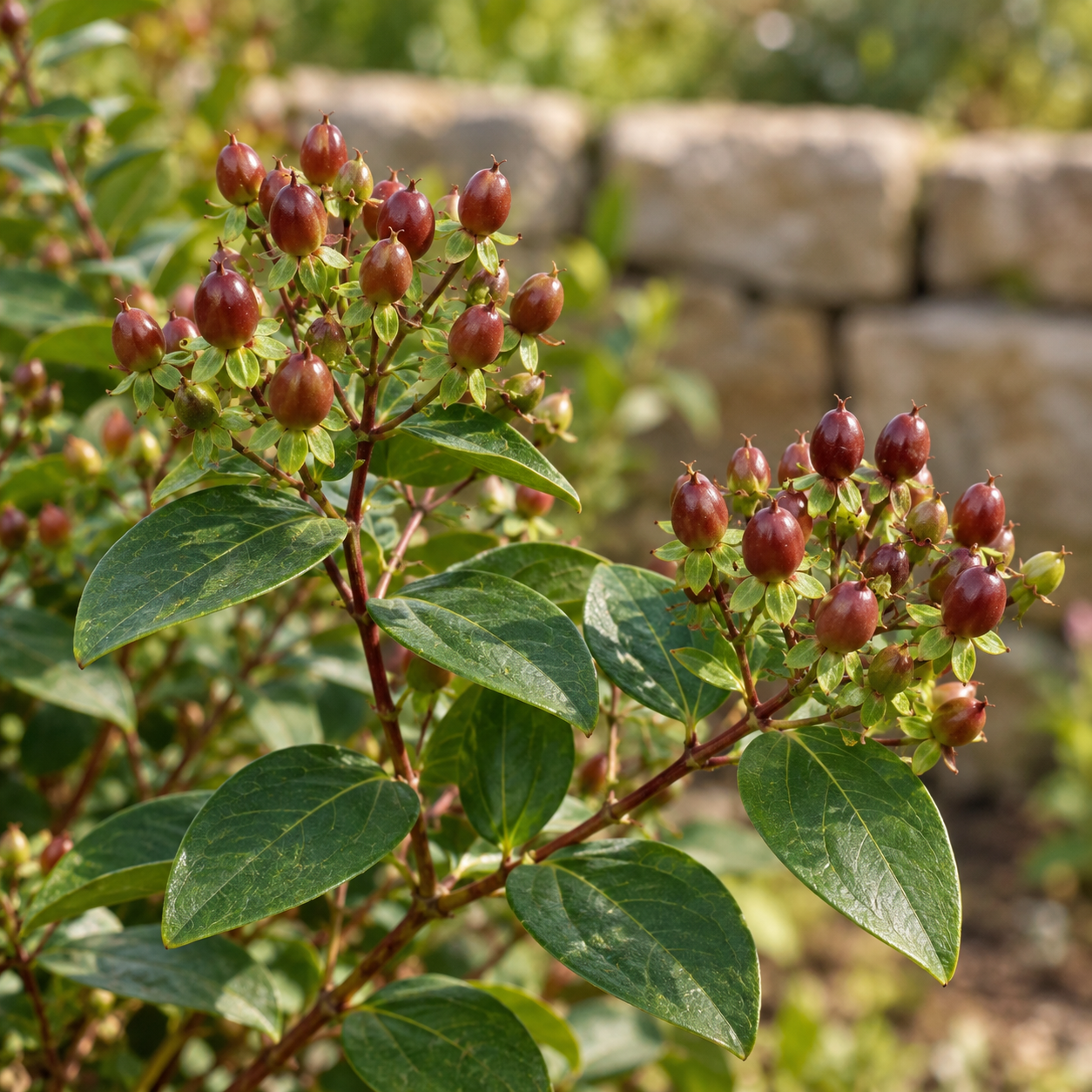
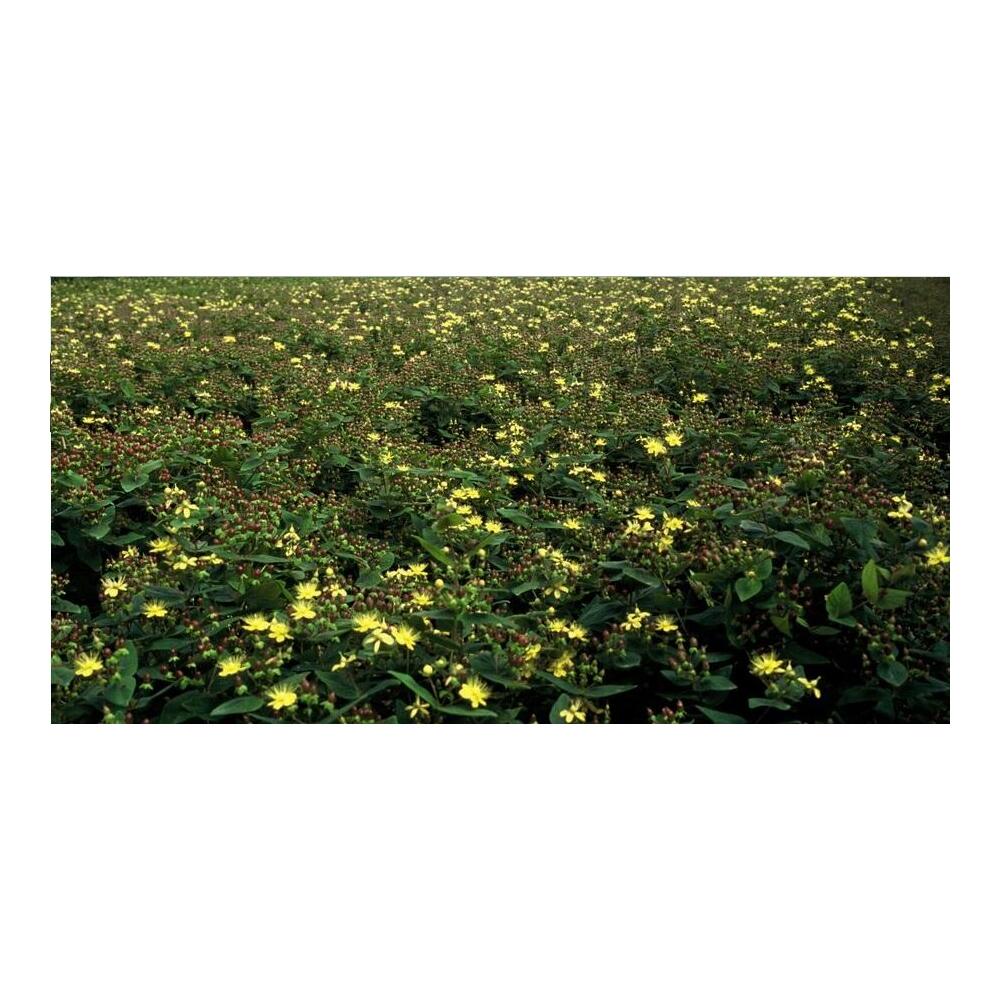
Yellow flowers catch the eye first. Their stamens project clearly while paired oval leaves make a green background. After flowering, berry-like ornamental fruit may take over. Small remaining sepals are part of the fruit view, not damaged leaves. It is a woody garden shrub even if the range offers it among groundcovers. Its own area in a mixed shrub planting therefore fits better than expecting a permanent low lawn substitute. Young pots show only the beginning of this framework and need not yet carry flowers or fruit.
Describe more precisely without a cultivar name
Hypericum × inodorum denotes a hybrid group from two St John’s wort species. The cross sign belongs to botanical classification. The offer names no cultivar, so neither an exactly fixed fruit colour nor a particular named selection’s height is assigned. Such selections may differ especially in fruit colour and shrub form. Original images show the offer’s plant assignment; later appearance depends on development and garden conditions. Scentless St John’s wort is not an instruction to use it medicinally either. This portrait accompanies the ornamental garden shrub and explains cultivation of leaves, flowers and fruit.
Separate delivery height from the later garden picture
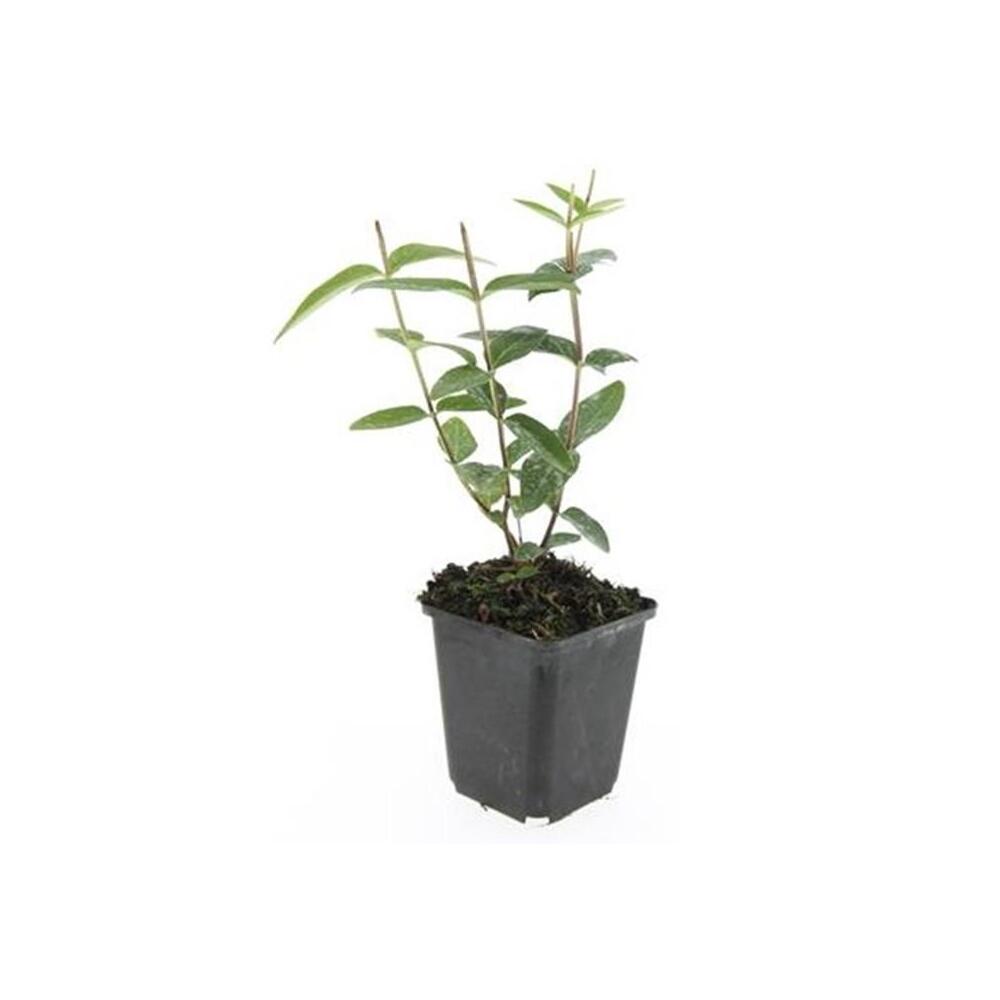
Sets contain young plants in individual 9 cm pots, about 10–25 cm total height including pot. An older shrub of the group may reach about 0.9–1.5 m tall and similarly wide. This garden guide is neither immediate delivery condition nor exact final height for every plant. The offer gives 40–50 cm spacing for groups. Planted so, shrubs later merge; distinguishable individuals require more sideways room. Lay pots out and check distance from paths and small neighbours. Initially visible soil makes sense if the later shrub area is already clear.
Fresh and well drained are not opposites
Sun to partial shade suits the planned group. Roots should have moisture available without staying permanently wet. This matters especially in heavy soils: a loose ball in a compacted hollow may still stand in water after rain. Prepare surrounding soil too and observe drainage. In a container, the plant needs stable soil structure and free drainage. Check a sunny terrace throughout the day before leaving the pot there permanently. Hot walls and wind change how quickly the small ball loses water; a simple sun description is not enough to decide.
First roots get attention of their own
Spring or suitable early autumn is a favourable start if soil is frost-free and workable. Wet plants before planting, remove the pot carefully and keep the previous ball height. Then bring soil into side contact and water thoroughly. During rooting, check moisture directly at the ball. A short shower may darken the surface without wetting the small ball adequately. Later the shrub uses more soil and different reserves. Modest feeding follows soil and development. A weak young plant does not automatically need fertiliser if soil contact or water is missing first.
Distinguish flowers, fruit and leaf problems
Yellow flowering mainly belongs to summer and early autumn. Ornamental fruit may follow, changing the plant without flowers having to continue forever. Fruit remains ornamental and is not offered for eating. Watch leaves at the same time. Individual ageing leaves differ from conspicuous spots or rust coating on many shoots. Such appearances need closer assessment and checks of conditions. Adding more water and fertiliser together is no substitute. Remove dead or clearly damaged material selectively with clean tools and keep the stand clear so changes remain visible early.
Winter shows the woody framework
Depending on location and winter, the shrub may lose leaves or retain some. A more open winter picture is therefore not automatically a plant problem. Check living shoots in spring and organise old or dead parts appropriately. For young container plants, shelter, root protection and free drainage belong together. A cover must not keep the stem base permanently wet. Check moisture on frost-free days, especially under a roof. Sideways development grows more evident with age: monitor the intended area and keep paths free. It remains a garden shrub with its own annual cycle even after beginning as a very small pot plant.
One plant, several views

Good to know
Is Hypericum inodorum a pure species?
Botanically the group is Hypericum × inodorum; the cross sign indicates its hybrid classification.
Is a particular cultivar named in the offer?
No. Cultivar-specific fruit colours or exact cultivar dimensions are therefore not transferred.
How tall does the shrub grow?
About 0.9–1.5 m as group guidance, depending on cultivation and site.
When does it flower?
Mainly summer to early autumn; about July to September in the hybrid-group description.
Can I eat the fruit?
It is treated as ornamental and not offered for consumption.
Is 40–50 cm enough for individual shrubs?
That is offer guidance for a group growing together. Older distinguishable shrubs need more room.
Sources and editorial note
- Exotenherz: currently read parent offer (3 October 2026)
- Exotenherz: currently orderable child offer (3 October 2026)
- International Dendrology Society: hybrid identity and changing ornamental fruit (accessed 3 October 2026)
- NC State Extension: hybrid group and cultivation (accessed 3 October 2026)
Identity, parent offer and selectable child offers read publicly on 3 October 2026. Specialist sources read directly; quantity variants belong to this one portrait. Unnamed × inodorum offer, no invented species. No specific cultivar colour transferred from NC cultivar images. Hybrid group 0.9–1.5 m and wide spread explained against dense shop groups.