
This plant at Exotenherz
Check the shop offer for current availability, price and what is included.
Product and delivery details are given in the individual offer.
Your care table
| Topic | What to do | Why it helps |
|---|---|---|
| Light | Choose sun to light partial shade. | Check whether enough spring light reaches ground level. |
| Soil | Maintain drainage. | A wet hollow can damage bulbs. |
| Planting | Plant in autumn with the tip upwards. | Workable ground matters more than a rigid date. |
| Depth | Allow for two to three real bulb heights. | Packaging instructions complement this guidance. |
| Water | Water as needed during the green leaf phase. | The plant remains active after flowering. |
| Foliage | Let it yellow naturally. | Premature mowing ends the leaves’ work. |
| Group | Observe spread in the intended position. | Neighbouring plantings should retain their space. |
| Division | Move offsets in summer if needed. | Mark the dormant planting beforehand. |
For young plants, feel the soil directly at the root ball. The surface and deeper soil may have different moisture levels.
Water thoroughly after planting; later, water according to the soil, weather and establishment rather than a fixed calendar.
Avoid standing water. For plants in containers, also check that water runs out of the drainage hole.
Blue discovered as you pass
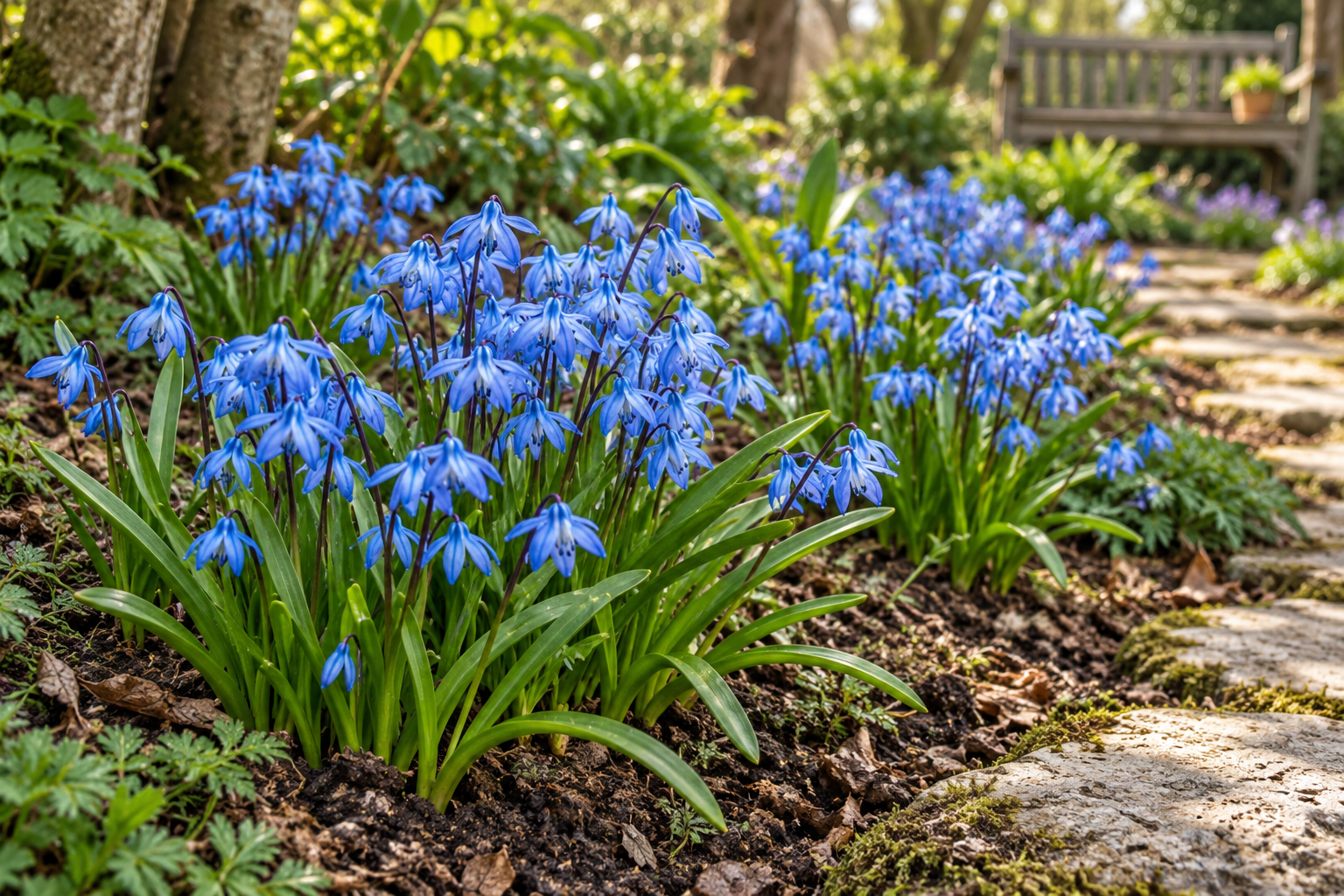
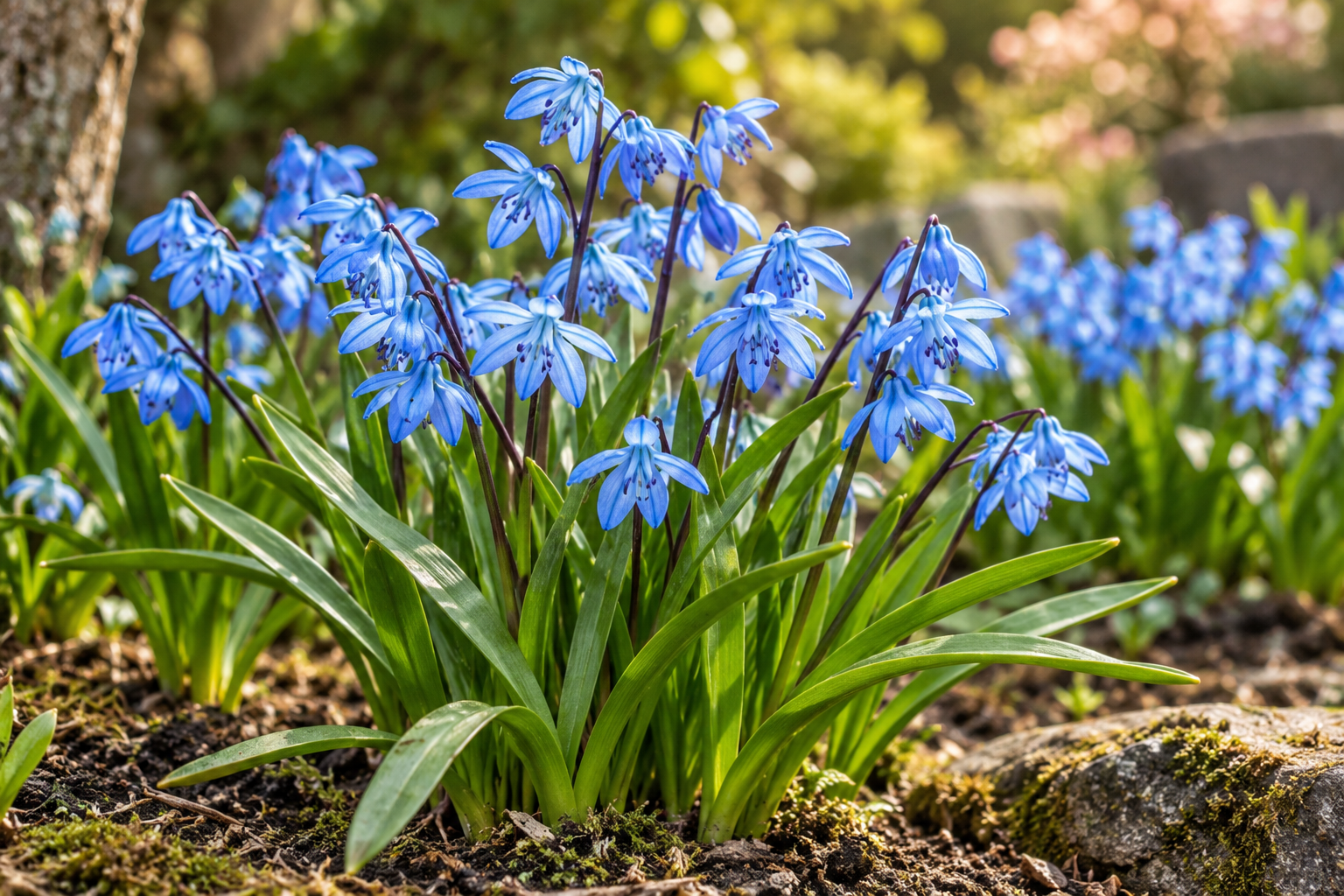
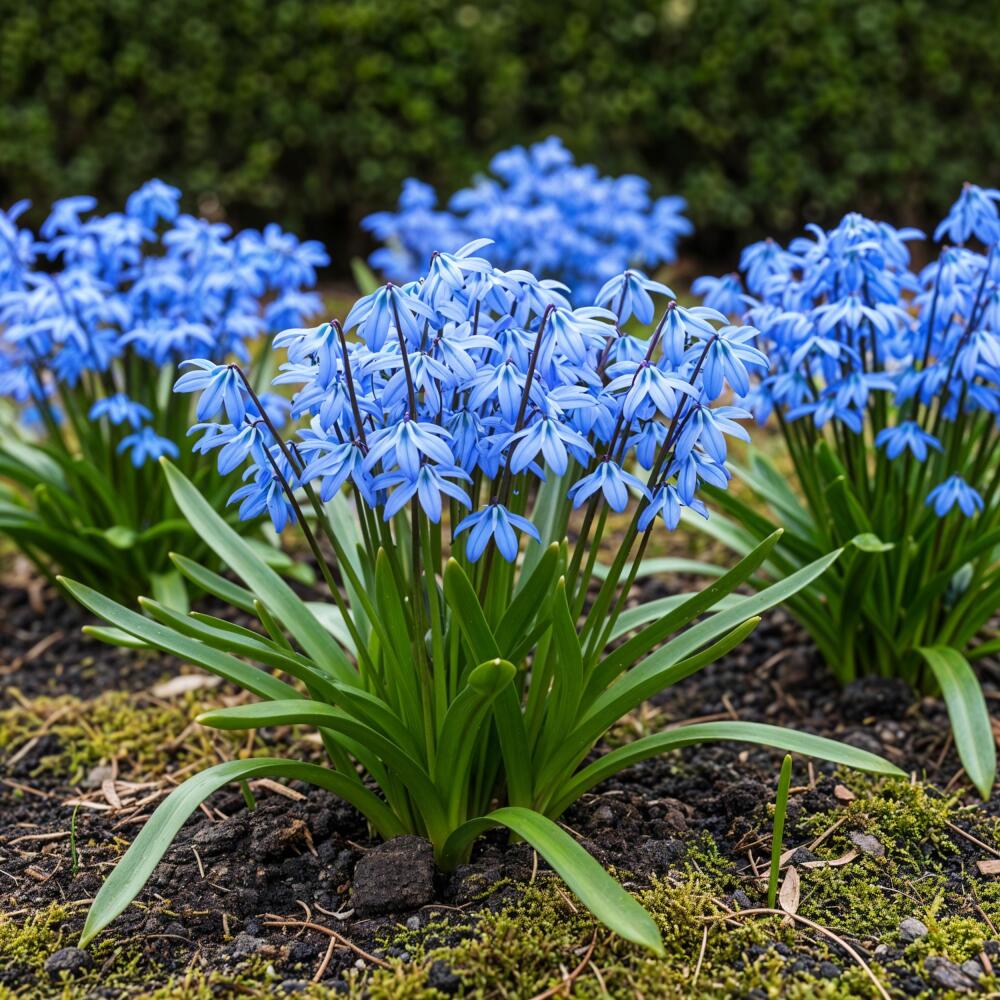
Scilla siberica brings small blue flowers beside the spring path. Flowers hang on short stalks and open to six visible flower segments. Several sit loosely on a delicate, often slightly purple stem. Narrow green leaves stand alongside from below. With flowering height up to roughly twenty centimetres, the plant stays manageable. A low edging stone offers a quiet backdrop against which blue shows clearly. A group near the path particularly invites a closer look at the little bells.
Fifty bulbs, several possible garden positions
The assortment offers 50 bulbs for planting. Images show later flowers, not a ready-planted delivery. Rather than scattering everything evenly across a large area, you can create several loose groups. Lay them out first on prepared ground and view the arrangement from the usual viewpoint. Leave some developing room beside perennials that will become vigorous. Roughly one plant width is possible initial guidance; packaging and the desired effect remain decisive. The number of flowers visible in the first spring is not a fixed delivery promise.
Light at ground level and draining soil
Sun to light partial shade suits this squill. Beneath deciduous shrubs, enough spring light may arrive before their leaves shade the ground more strongly. Check root competition and soil moisture too. A garden corner beside a dense evergreen hedge may seem bright while remaining dark at small-flower height. Prepare compacted ground over a continuous area. Water should drain after rain. A single hollow filled with loose soil in heavy ground must not become a collecting point for wetness.
Prepare later emergence in autumn
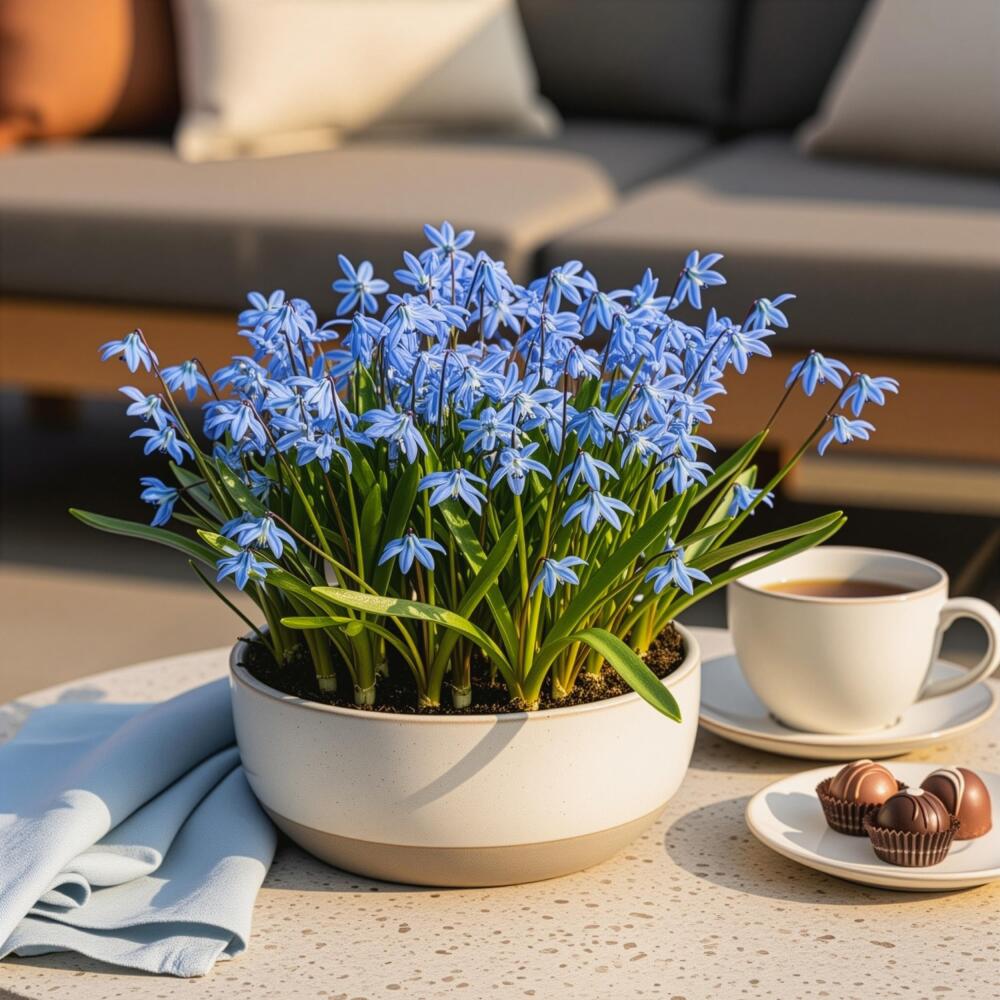
Plant bulbs in autumn when ground is workable. The RHS gives two to three actual bulb heights as guidance; instructions on the delivered package complement the decision. A trade size class is not a measured diameter and should not be converted as one. Tips point upwards. Close soil carefully and water in if dry. A small plant marker helps locate the dormant group later when putting in other plants. Containers also need enough soil and free drainage holes.
Supply follows the leaf phase
During emergence and after flowering, the plant stays active while leaves remain green. In prolonged dry weather, check soil and water as needed rather than following an unchanged weekly schedule. A small pot responds faster to sun and wind than a garden bed. Add nutrients considering existing reserves and the fertiliser label. A faded stem does not yet mean summer dormancy. Observe leaves first before greatly reducing container care or moving it elsewhere.
Lawn and squill need a shared mowing plan
Blue can look natural among loose grass. After flowering, however, the spot must remain unmown until leaves naturally die back. A small continuous island is easier to maintain than individual plants across the whole lawn. Remove dead remains later as needed. Bulbs are ornamental plants, not kitchen supplies; use gloves when handling. A note in your plant book about emergence position and leaf duration helps coordinate spring work better next year.
Observe a group before it grows everywhere
Scilla siberica is perennial and can spread in a suitable position. Check neighbouring plantings and the desired boundary of the group too. Offsets can be redistributed in summer if needed. Work carefully and mark new groups before their above-ground parts disappear again. If flowering weakens, consider shade, competition and previous leaf care together. A manageable start lets you learn the plant’s rhythm and consciously fit its development into your garden.
One plant, several views
Good to know
How tall does squill grow?
Up to roughly 20 cm when flowering; this is not delivery height.
What is delivered?
50 bulbs for planting.
Is Scilla siberica a grape hyacinth?
No. Its flowers sit more loosely and show six open flower segments.
Can I mow straight after flowering?
Only after leaves naturally yellow.
Does squill stay in the same place every year?
It can return there and also spread in suitable conditions.
How deep are bulbs planted?
Two to three actual bulb heights are guidance; follow the packaging.
Sources and editorial note
- Exotenherz: offer and original photographs (03.10.2026)
- RHS – Scilla siberica (03.10.2026)
- RHS – squills in the garden (03.10.2026)
- RHS – growing bulb plants (03.10.2026)
Shop offer, article number, GTIN, availability and original photographs checked directly on 02.10.2026; specialist acceptance 03.10.2026. Specialist sources read directly. Shop variant, quantity, SKU, current orderability and both original shop photographs checked directly. Specialist sources read on 03.10.2026. Images show later flowering, not the delivery condition. Trade size classes not adopted as measured bulb or tuber diameters. Specialist acceptance against published Pflanzenwelt portraits; no tool or Wawi changes.