This plant at Exotenherz
Check the shop offer for current availability, price and what is included.
Check the selected shop offer for price, availability and delivery contents.
Your care table
| Topic | What to do | Why it helps |
|---|---|---|
| Light | Choose a garden position with as much sun as possible. | Too much shade can produce soft long shoots and fewer flowers. |
| Soil | Prepare a well-drained planting position without excessive fertilisation. | Lasting wetness stresses roots; very rich soil encourages shoots that easily fall over. |
| Planting | Set the moist root ball at its previous pot height and water in. | Even a perennial that tolerates drought later needs good soil contact when establishing. |
| Spacing | Allow about 50 cm between plant centres. | An older clump becomes considerably wider than a single small delivery plant. |
| Water | Check new plantings during drought; water old clumps only when demand persists. | Drought tolerance develops with rooting and applies only to a limited extent in containers. |
| Fertiliser | Feed moderately only when a need is visible. | Heavy nitrogen doses can produce soft growth that does not stand firmly. |
| Cutting | Leave dry flower heads through winter if desired, then remove in spring. | They give the bed structure; new growth emerges from the plant base. |
| Division | Divide older clumps in spring using healthy rooted pieces. | Gentle rejuvenation can renew bare or spreading-apart plantings. |
For young plants, feel the soil directly at the root ball. The surface and deeper soil may have different moisture levels.
Water thoroughly after planting; later, water according to the soil, weather and establishment rather than a fixed calendar.
Avoid standing water. For plants in containers, also check that water runs out of the drainage hole.
A flower plate grows from many little stars
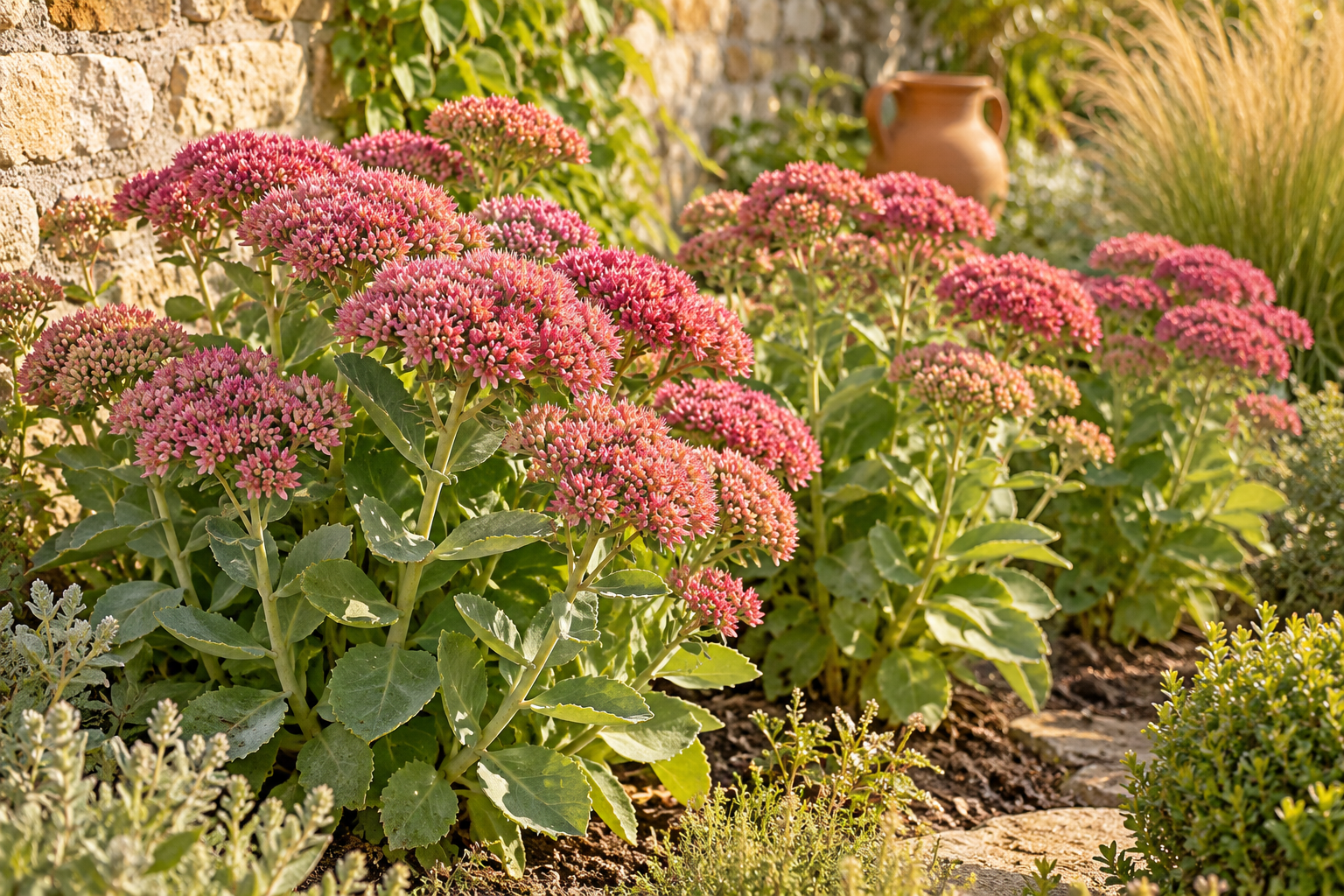
What I like about Herbstfreude is how slowly it prepares its big display. In spring and summer, fleshy green leaves first stand on firm shoots. Broad relatively flat flower heads develop above them, revealing many small star-shaped flowers only up close. The plant remains an upright clump, reaching roughly 50–70 cm with flowers. It is therefore no flat carpet for a narrow path edge. Among grasses or other finer-leaved perennials, its calm sturdy shape has an attractive counterpart. Young delivery plants still need development to make that garden picture.
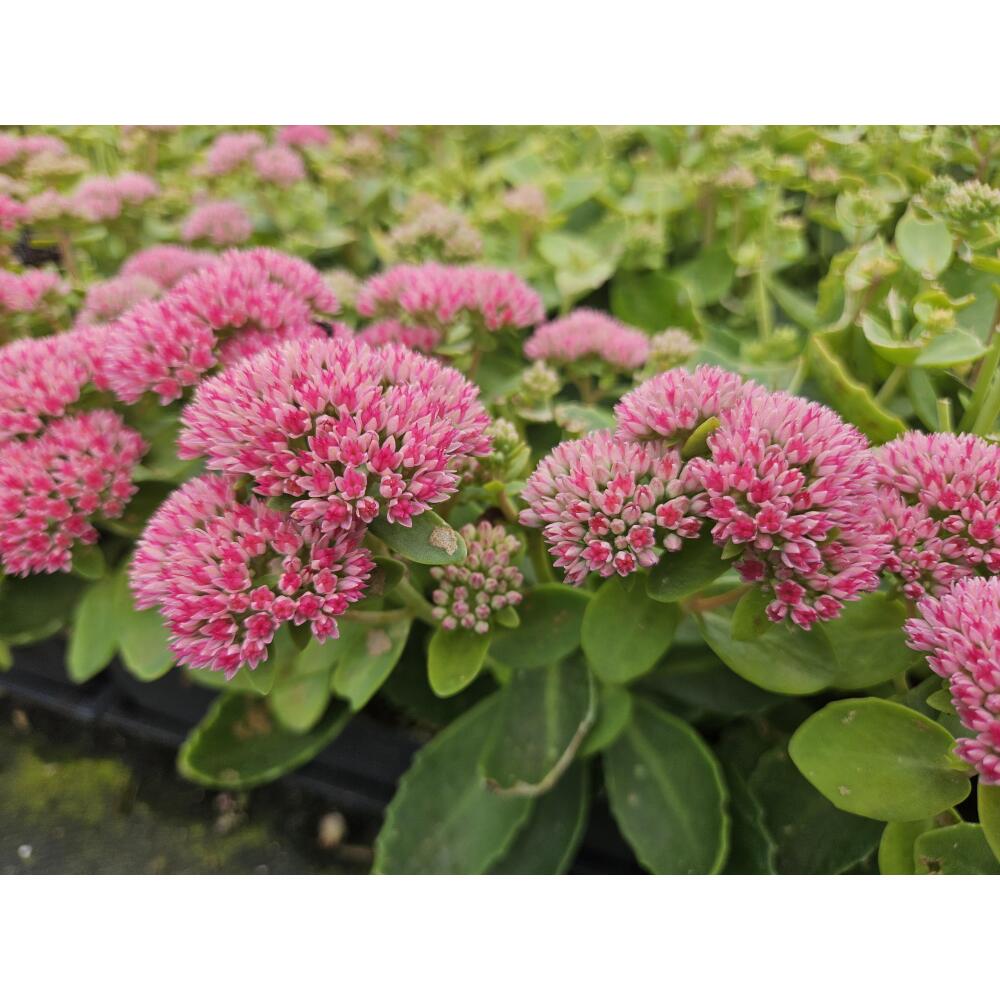
Pink can darken with the season
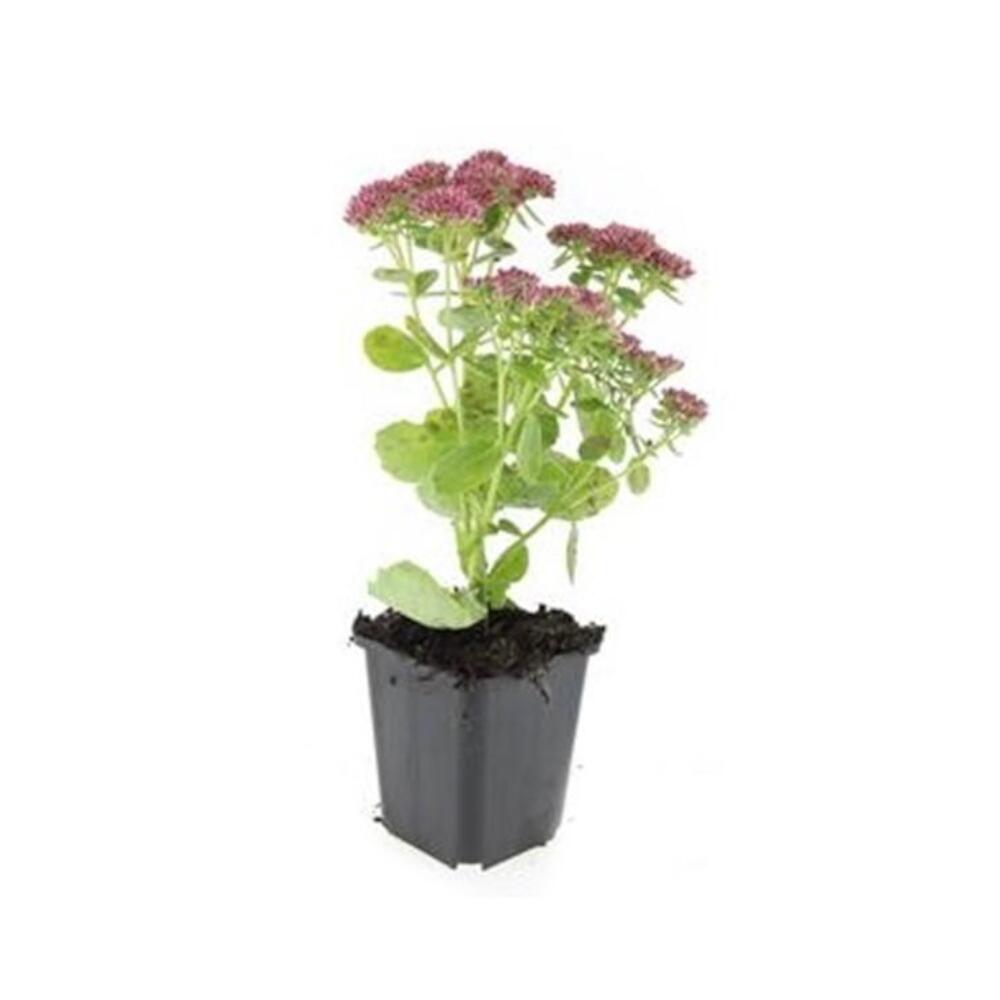
Buds first look greenish to soft pink. As they open, the flower plates become distinctly pink, then darker and finally brownish. I like this slow colour change because it keeps the plant visible beyond fresh flowering. Not every brown head is a care mistake. The transition belongs to the late garden year. Main flowering lies in late summer and autumn; timing and length shift with weather and position. A photograph of a large flowering clump therefore shows a later possibility. Neither that size nor full flowering at delivery is promised for small set plants in 9 cm pots.
Sun and sturdy shoots belong together
I give Herbstfreude as sunny a position as possible with good drainage. In deep shade or very rich moist soil, shoots can become soft and fall apart. More fertiliser often takes precisely the wrong direction then. I first look at light, soil and neighbours. If larger plants heavily shade it, a different distribution in the bed is worth considering. A moderate early summer cut can help an older clump that still spreads apart widely. That is a design option for established plants, not a necessary starting cut on every small young specimen.
The small delivery plant gets space for its later clump
Set sizes help with a larger bed planting. Around 50 cm from centre to centre is the guidance; the shop specifies approximately four plants per square metre. Before planting I spread the pots across the area and deliberately leave later width available. The moistened root ball sits at its previous height in loosened soil. Then firm and water in. Spring or early autumn often offer more pleasant starting conditions than a hot dry week. In heavy soil wet through winter, choose the planting spot particularly carefully. A small dry hole in a wet bed does not solve drainage permanently.
Drought tolerance still needs establishment
Fleshy leaves and an established root space help this perennial endure drier times. The small root ball of a freshly planted specimen does not yet have that reserve. I check it in the first weeks and water the root area thoroughly when needed. Later, an older garden clump usually needs much less additional watering. The situation remains different in a container because roots cannot reach deeper garden soil. Enough space, drainage holes and watering adjusted to actual moisture are important there. A saucer of standing water does not suit the sunny well-drained position the plant prefers.
Dry flower heads can accompany winter
Once fresh flowering is over, I do not have to cut everything immediately. Dry brown heads may remain among other perennials and look attractive with hoarfrost. Leaves and shoots die back in winter; Herbstfreude is not evergreen. In spring I look for new growth at the plant base and carefully remove old stalks without hurting young buds. I assess soft rotting plant parts differently from firm dry winter stems. Feeding damage on fresh shoots can occur too. Specific observation says more than a sweeping promise that an easy-care perennial never develops problems.
Renew an old planting instead of feeding ever more
If an older clump becomes barer in the middle, it can be divided in spring. I retain healthy pieces with roots and several young shoot bases, put them into prepared soil and water in again. A larger area can then be rearranged without crowding the plants. Feeding stays restrained: in ordinary garden soil, Herbstfreude often needs little additional nutrition. If shoots lie down, light and soil matter more than another fertiliser dose. A new botanical label Hylotelephium still means the same familiar garden plant; trade name Sedum Herbstfreude continues accompanying it.
One plant, several views
Good to know
Why do flowers turn brown?
After pink flowering, the heads age and turn brown. Firm dry heads in autumn are usually a normal seasonal state.
Why are my shoots falling apart?
Heavy shade or very rich or moist soil can encourage soft growth. First check position and soil instead of adding more fertiliser.
When should I cut old stalks?
As desired after flowering or not until spring. Dry heads may stay over winter; protect new growth when cutting in spring.
How much spacing do set plants need?
Roughly 50 cm between plant centres. This equals about four plants per square metre as broad area guidance.
Must I water young plants despite their drought tolerance?
Yes. Small root balls need water during dry establishment until roots reach the surrounding soil.
Does Herbstfreude stay green in winter?
No. It is deciduous, with above-ground parts dying back. New growth follows from the clump in spring.
What does Hylotelephium mean on the label?
It is another botanical classification for the familiar tall stonecrops. This cultivar is listed in the shop as Sedum telephium Herbstfreude.
Sources and editorial note
- Exotenherz: five checked child offers, sizes, spacing and original photos (30.09.2026)
- RHS: exact cultivar Herbstfreude, growth and colour progression (30.09.2026)
- RHS: Hylotelephium, light, growth and soil (30.09.2026)
- RHS: planting, watering, cutting and dividing tall stonecrops (30.09.2026)
- Cambridge University Botanic Garden: Herbstfreude, name forms and flowers (30.09.2026)
Shop parent 1443820032025, five child articles confirmed individually against loaded headings. 6/12 in limited stock, 24/48/60 inactive. Delivery 9 cm, 10–25 cm, spacing about 50 cm. Exact RHS Herbstfreude and Cambridge Botanic Garden confirm about 60 cm flowering height, fleshy green foliage, pink late summer/autumn flowers later darkening, and a deciduous clump. Shop name Sedum telephium retained; Hylotelephium explained as another botanical classification. Use clean original images 6/7, not the environmental or advertising prints on other photos. Scene accepted against original: upright firm shoots, fleshy grey-green toothed leaves and appropriate pink star flowers in flat heads. Later garden development clearly labelled.