
This plant at Exotenherz
Check the shop offer for current availability, price and what is included.
Link to the offer in German. Check the shop for the current price, availability and delivery contents.
Your care table
| Topic | What to do | Why it helps |
|---|---|---|
| Light | Place in bright light; acclimatise gradually to direct sun after a change of position. | Low light is tolerated but is not optimum for growth. |
| Water | Only water after good drying and allow remaining water to drain. | The fleshy leaves store water; constant wetness damages roots. |
| Winter | Check root-ball moisture and water much less often when little growth is visible. | In a low-light winter, compost can remain moist for a long time. |
| Temperature | A normally warm position around 15–24 °C is suitable; avoid frost and cold draughts. | Cold and wetness are an unfavourable combination. |
| Compost | Use free-draining succulent compost and a nursery pot with clear drainage holes. | A decorative pot is not a substitute for drainage. |
| Fertiliser | During active growth, feed sparingly according to the label of a suitable fertiliser. | Extra nutrients bring no benefit during a pause in growth. |
| Repotting | In spring, if the root ball is dense, choose only one pot size larger. | Too much unrooted compost dries more slowly. |
| Leaves | Wipe dust away carefully; do not cut healthy leaf tips to correct the shape. | The original tip cannot be restored after cutting. |
Check the compost and pot weight. The care table explains how far the compost may dry.
Water only when needed. The water should reach the root ball without spilling over the rim.
Remove surplus water from the saucer or cachepot. Then return the plant to a suitable position.
A classic with a golden outline
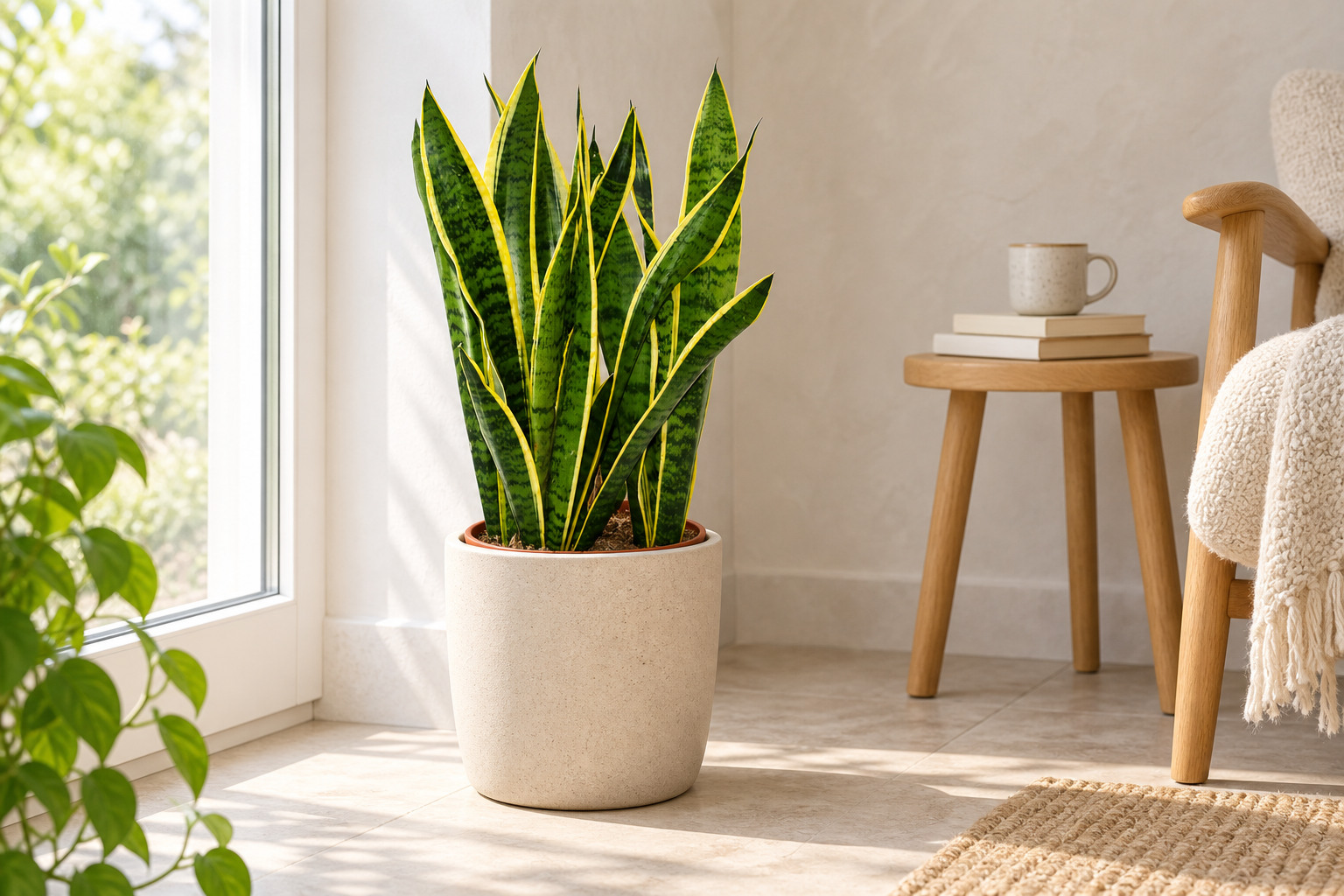
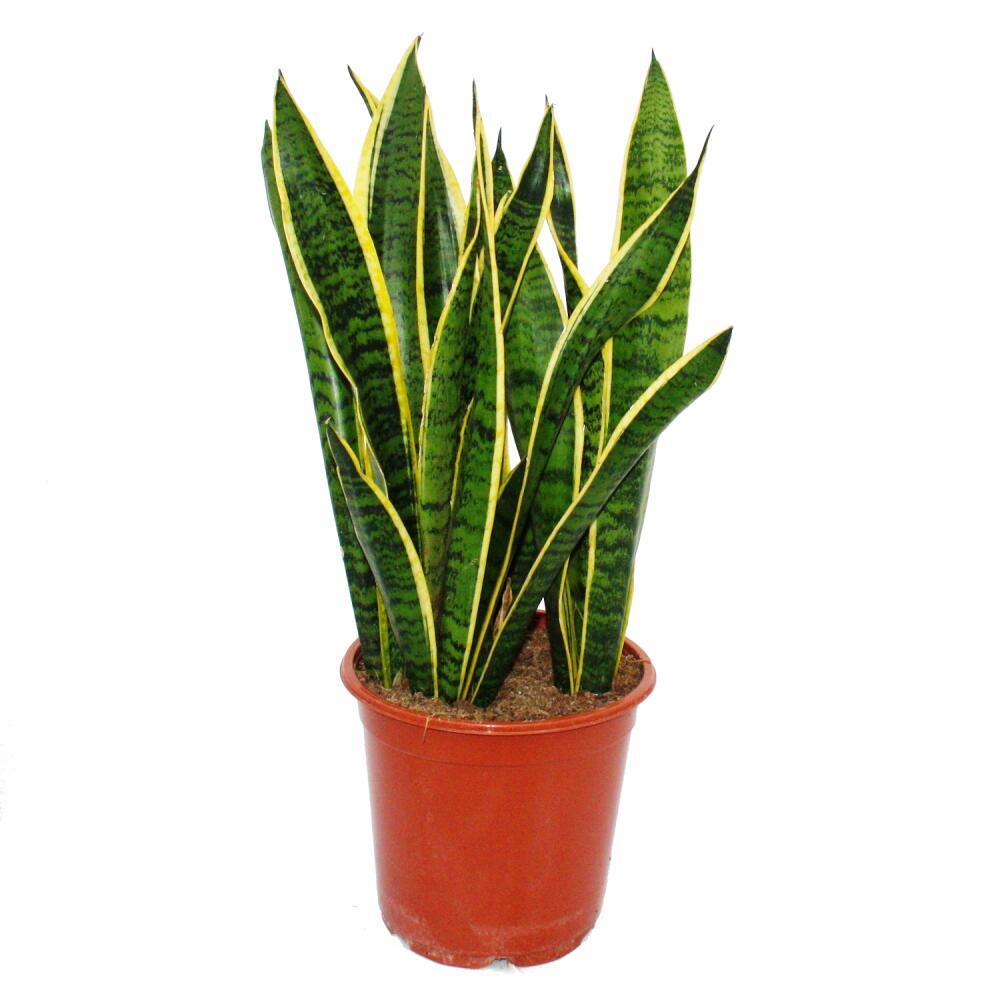
Laurentii stands out with yellow margins and horizontally patterned green leaf surfaces. Its firm leaves grow upwards in clumps. Current botanical directories place the plant in Dracaena; Sansevieria remains a familiar trade name. Both names therefore help when searching. Our linked offer is the 80 cm version. The indoor photograph shows a decorating idea at this approximate scale. For a particular position, measure height and width rather than relying only on the image’s impression.
Which position suits it?
A snake plant can stand visibly in a room but should receive enough daylight. A windowless niche does not become suitable just because the species is considered robust. Choose a bright position and observe new growth. After a darker sales or transport position, accustom the plant gently to sunlight. Its narrow outline is practical for decorating, but still allow space from curtains, walkways and the window handle so leaf tips are not repeatedly knocked.
The most important watering decision comes first
Briefly lift the pot and feel the compost below the surface too. If it is still clearly moist, leave the watering can alone. Once the root ball has dried well, water it; excess water must get out. Small daily sips are not a helpful routine. If uncertain, note the last watering day and the compost’s condition. This helps you learn your position without turning a calendar into a rigid care plan. In an office, it should be clear who is responsible.
When days grow shorter
In autumn, first check light at the actual position. A place that was bright enough in June can be much darker in November. With less growth, water needs often fall. Water less often accordingly, without prescribing a fixed dry break lasting months. A cold window position with a moist root ball is unfavourable. A room at a normal temperature suits it; before airing, briefly move the plant out of the direct cold air current.
Roots need space and air
Repotting is useful when roots densely fill the ball or the nursery pot becomes distorted. Spring is a favourable time for a healthy plant. Choose a container with drainage and only moderately more room. A loose succulent mix helps drying. When moving it, handle the plant by the root ball and pot rather than pulling individual leaves. Well-rooted side shoots can be potted separately then. Leaf cuttings from yellow-edged forms can lose the variety’s pattern; division is the more suitable choice for these.
Soft leaves call for a check
A damaged leaf and a generally unstable plant are different observations. If several leaves become soft at the base, check moisture and roots first. Do not water or feed on suspicion. Pests such as mealybugs or spider mites also belong in regular visual checks. Look at leaf bases and undersides in good light. Initially keep an unusual-looking plant separate from others and establish the cause before using a treatment.
A good companion, not a toy
The leaves are not suitable for eating. Place the plant so small children and pets cannot nibble it. Gloves protect against sap when dividing or removing damaged leaves; clean tools and hands afterwards. Its decorative effect comes from habit and markings. A healthy houseplant needs neither leaf-shine spray nor an artificially perfect surface.
One plant, several views
Good to know
How often should I water a snake plant?
According to the compost’s condition, not automatically every week. Allow it to dry well first; intervals can become much longer in low light and winter.
Is the yellow margin a deficiency?
The even yellow margin belongs to Laurentii. Newly developing soft or brown patches are different.
Does a shortened leaf keep its attractive point?
The cut edge remains visible. Do not cut healthy leaves to reduce height; choose a suitable size from the start instead.
Sources and editorial note
- Product and stated size: Exotenherz
- NC State Extension: Dracaena trifasciata
- RHS: caring for snake plants
- Wisconsin Extension: dependable houseplants
Sources checked: 14 September 2026. Variety and size information comes from the shop; care has been assessed for the species using the linked specialist sources. Adapt care to the plant’s condition, position and season.