
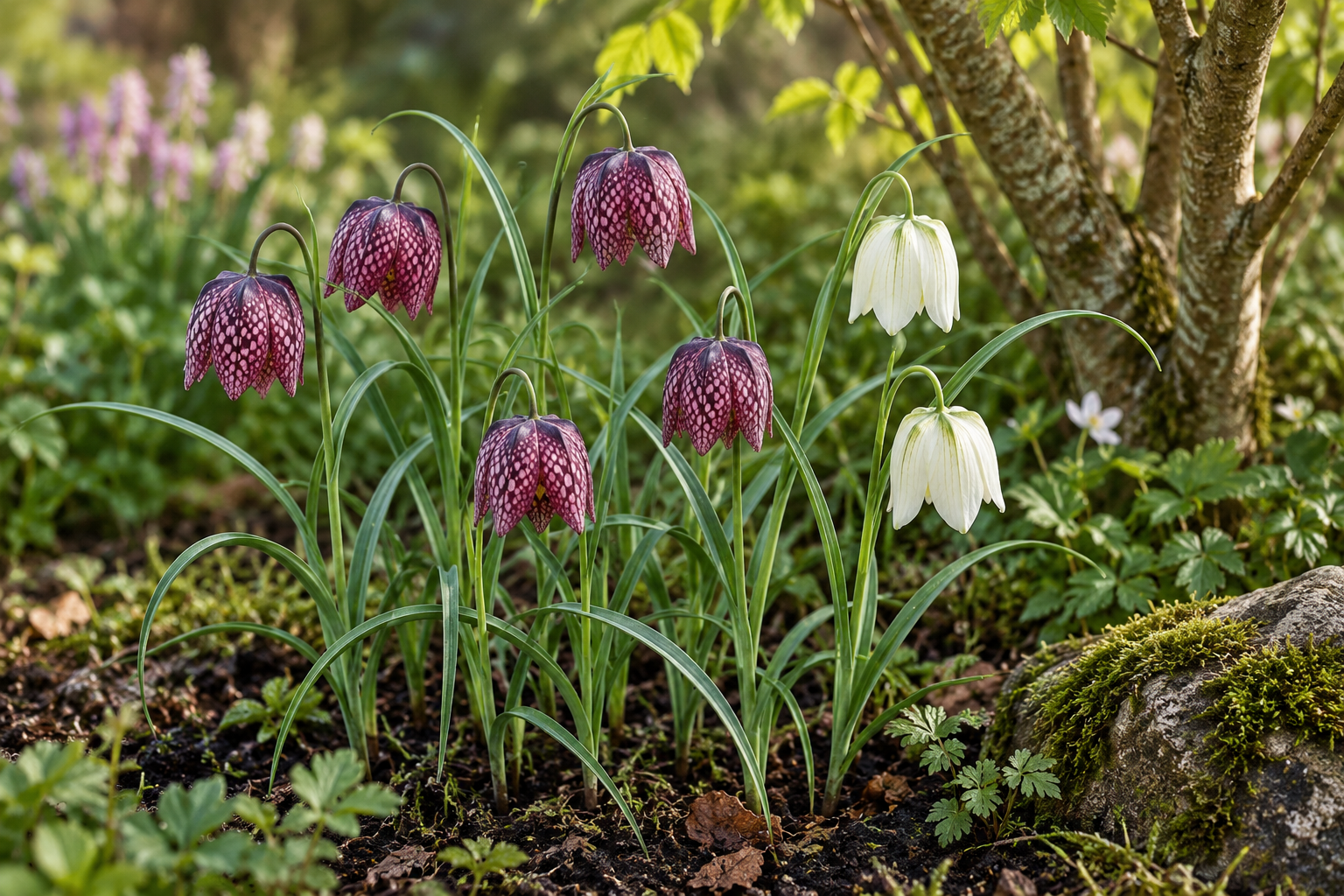
This plant at Exotenherz
Check the shop offer for current availability, price and what is included.
Check the selected shop offer for price, availability and delivery contents.
Your care table
| Topic | What to do | Why it helps |
|---|---|---|
| Position | Choose sun to light partial shade with suitable soil moisture. | A shaded site can still be dry because of shrub roots. |
| Soil | Prepare humus-rich, moisture-retentive and freely draining soil. | Cool moist summer conditions suit better than a hot dry gravel bed. |
| Planting | Plant carefully in autumn and consider packaging. | Bulbs are sensitive. |
| Depth | About four actual bulb heights as guidance. | RHS relates depth to the real bulb. |
| Spacing | Allow about one plant’s width, up to about 10 cm. | Spacing is a horticultural guide. |
| Water | Do not let dry out; retain drainage. | Moisture is not the same as waterlogging. |
| After flowering | Keep green foliage until natural yellowing. | Premature mowing ends the active leaf stage. |
| Group | Divide healthy daughter bulbs in late summer when needed. | The planting site is considered during dormancy too. |
For young plants, feel the soil directly at the root ball. The surface and deeper soil may have different moisture levels.
Water thoroughly after planting; later, water according to the soil, weather and establishment rather than a fixed calendar.
Avoid standing water. For plants in containers, also check that water runs out of the drainage hole.
A pattern to view close up
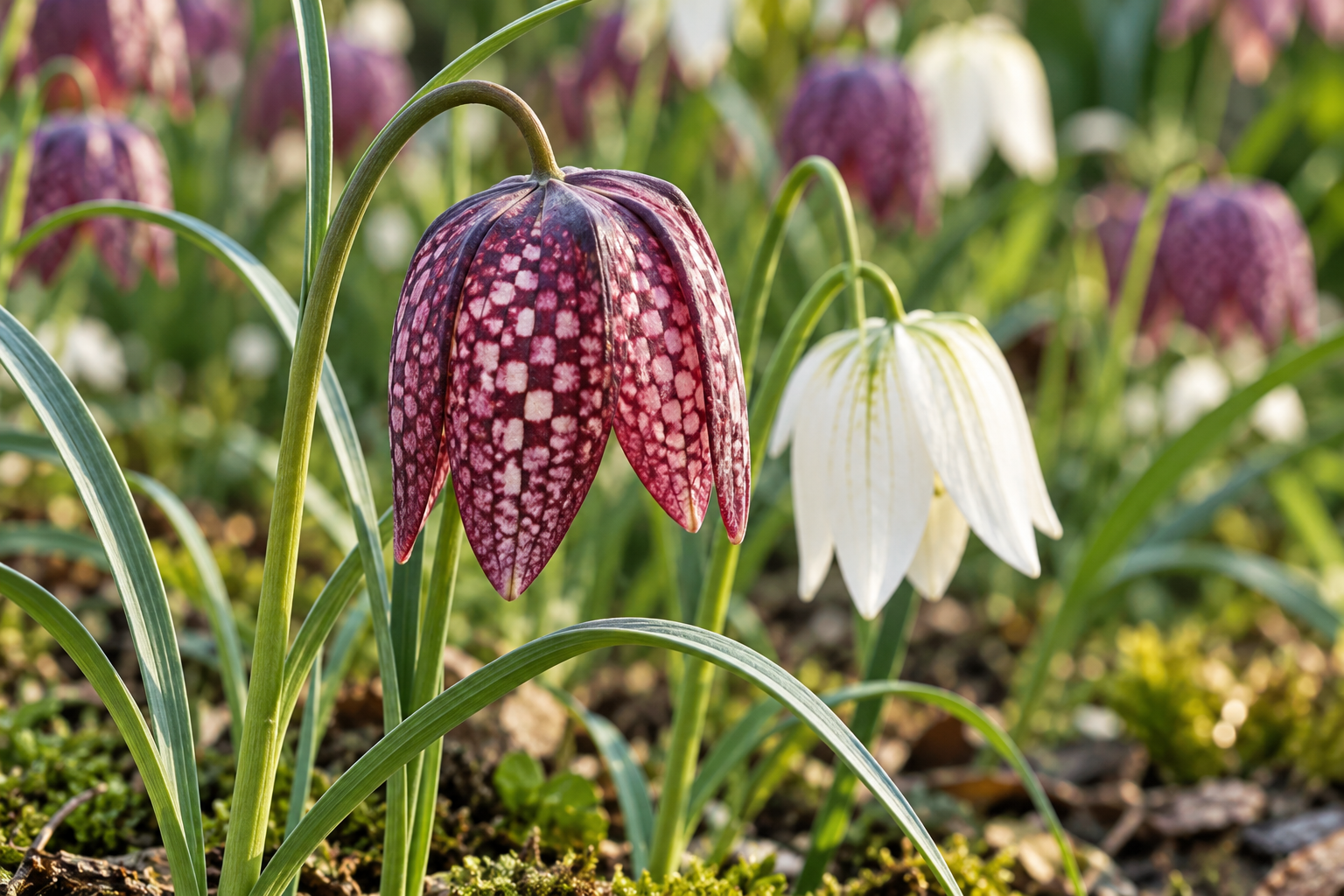
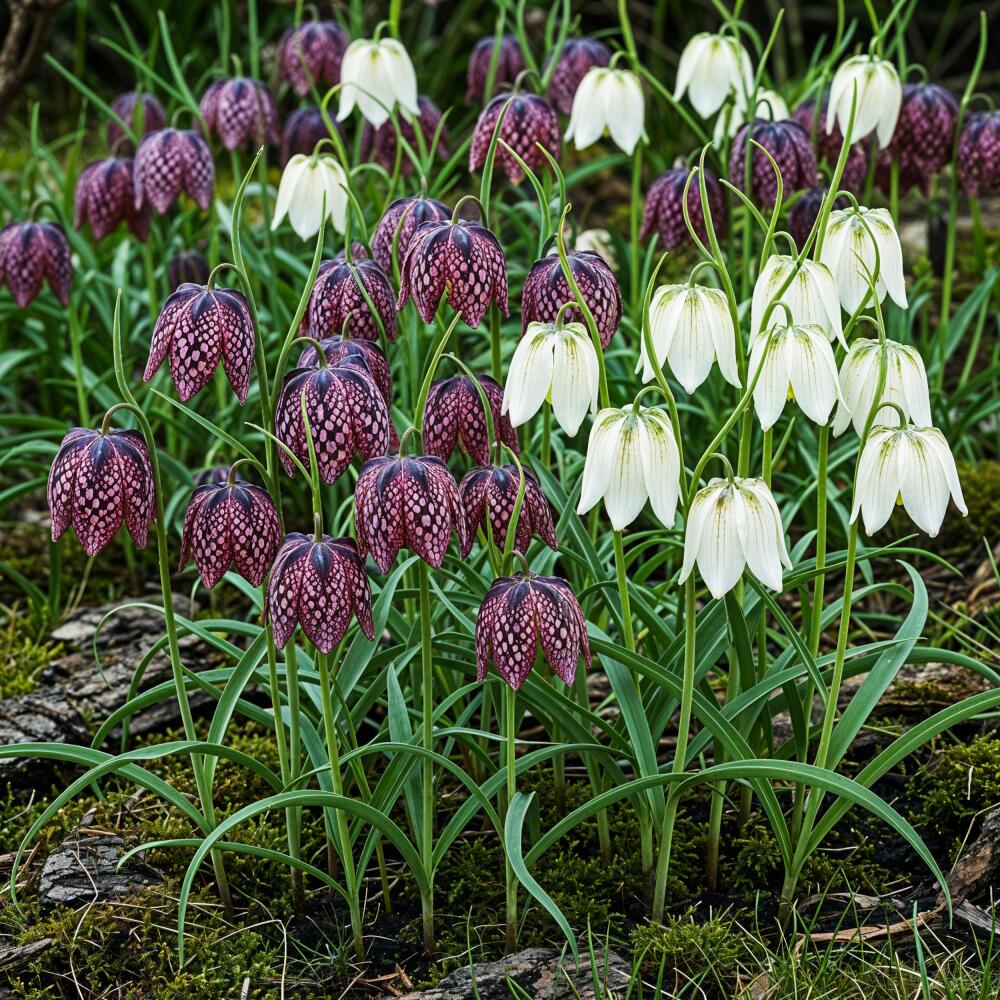
Snake’s-head fritillary bears nodding bells on slender stems. Pale and dark squares alternate on purple petals; white forms may appear beside them in the offered mix. Narrow grey-green leaves give the flowers a light appearance. At flowering the plant is about twenty to thirty centimetres tall. A low border edge beneath lightly shaded shrubs is a good place to see the pattern. From far away, mainly a delicate colour group remains visible. To get to know the plant, look beneath a tilted bell and examine its six petals individually.
Thirty bulbs, but no fixed colour distribution
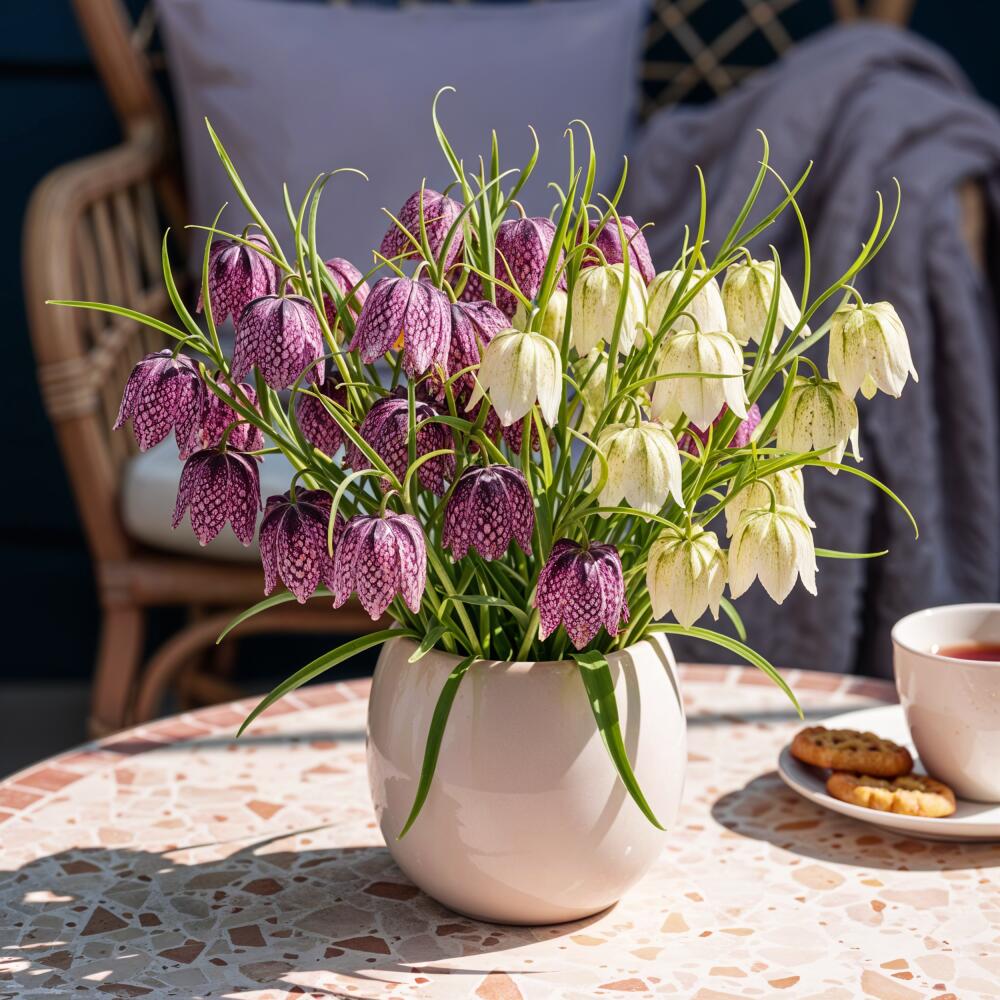
The shop offer contains thirty bulbs as a mix. This does not guarantee equal numbers of white and violet flowers. Images show a possible later flowering scene, not delivery of ready-grown garden plants. Spread bulbs in small loose groups and plan spacing according to the plant’s later space. Up to about ten centimetres, roughly a mature plant’s width, is a guide rather than a rigid planting grid. Beside a narrow path, the group should not occupy a frequently trodden area. Fine stems need somewhere to admire the flowers without constantly walking over them.
Moist soil does not mean standing water
This fritillary suits humus-rich soil that holds moisture while draining. It prefers a rather cool moist root zone even in summer. A constantly drying hot gravel bed is therefore not a suitable transfer of care from other flower bulbs. Sun is possible with suitable soil conditions; light partial shade can make cultivation easier. Beneath shrubs, check root competition and actual dryness. Shade alone does not automatically keep soil moist. Prepare a continuous area; a little hole of good soil in compacted wet ground does not reliably solve water movement.
Plant sensitive bulbs carefully
Set bulbs in autumn when soil is workable and handle carefully. RHS gives about four actual bulb heights as planting depth. Consider packaging instructions and soil too, rather than using a trade size class as measured diameter. Bring soil around gently and water a little if the ground is dry. Mark the site discreetly. During dormancy the plant will be hardly visible above ground. Deep new planting holes or vigorous hoeing in the same spot may then hit existing bulbs. A prepared position makes it easier to plant sensitive stock promptly after receipt.
Assess moisture through the garden year
The root zone must not dry out during growth. Spring rain may suffice according to the position; water during longer dry spells. Even after dieback, the position should not dry out completely. Water also needs an escape route, especially in winter. These two requirements are harder to combine in a container than a suitable border. Check moisture beneath the surface and keep drainage holes clear. Nutrients are supplemented according to soil or substrate and fertiliser label. A high dose improves neither dry soil nor a waterlogged site. A suitable soil position remains the most important basis.
Foliage stays until natural dieback
Narrow leaves keep working after flowering. Let them yellow naturally and remove only dead remains. If planted among grass, mowing time must fit the leaf stage. Allowing seed formation requires extra patience; new seedlings do not promise immediate flowering. Occasionally inspect new shoots for feeding damage before the little group is damaged unnoticed. Ornamental bulbs are not intended for eating. Store separately from food and use gloves as needed when handling. A flowering photograph in the plant book records the pattern better than merely naming a colour.
Support a quiet corner over the long term
Snake’s-head fritillary is perennial and spends part of the year dormant above ground. Its planting site remains part of garden care. For weak flowering later, first check summer dryness, competition and the previous leaf stage. Healthy daughter bulbs may be separated in late summer when needed and planted in a suitable new position. Redesign should consider this annual stage. Record which corner actually holds some moisture in your summer and when flowers appear. A beautiful spring motif then becomes a planting whose conditions fit the whole garden year.
One plant, several views
Good to know
Does the mix contain exactly equal numbers of white and violet flowers?
No fixed colour distribution is assured.
Does it suit a dry gravel bed?
Humus-rich soil with a cooler moister summer phase and good drainage is better.
What will I receive?
30 bulbs for planting, not flowering potted plants.
Why is it called a chequered flower?
The violet bells show alternating pale and dark squares.
How tall does it grow?
About 20–30 cm at flowering.
May I mow immediately after flowering?
Narrow green leaves should stay until natural yellowing.
Sources and editorial note
- Exotenherz: offer and original images (03.10.2026)
- RHS – Fritillaria meleagris: traits and soil requirements (03.10.2026)
- RHS – plant bulbs and care for leaf stages (03.10.2026)
Shop offer, article number, GTIN, availability and original images directly checked on 02.10.2026; specialist acceptance 03.10.2026. Specialist sources read directly. Shop variant, quantity, SKU, current orderability and both original shop images directly checked. Specialist sources read on 03.10.2026. Images show later flowering, not delivery condition. Trade size classes not adopted as measured bulb or tuber diameter. Specialist acceptance with published Pflanzenwelt portraits; no tool or Wawi changes.