
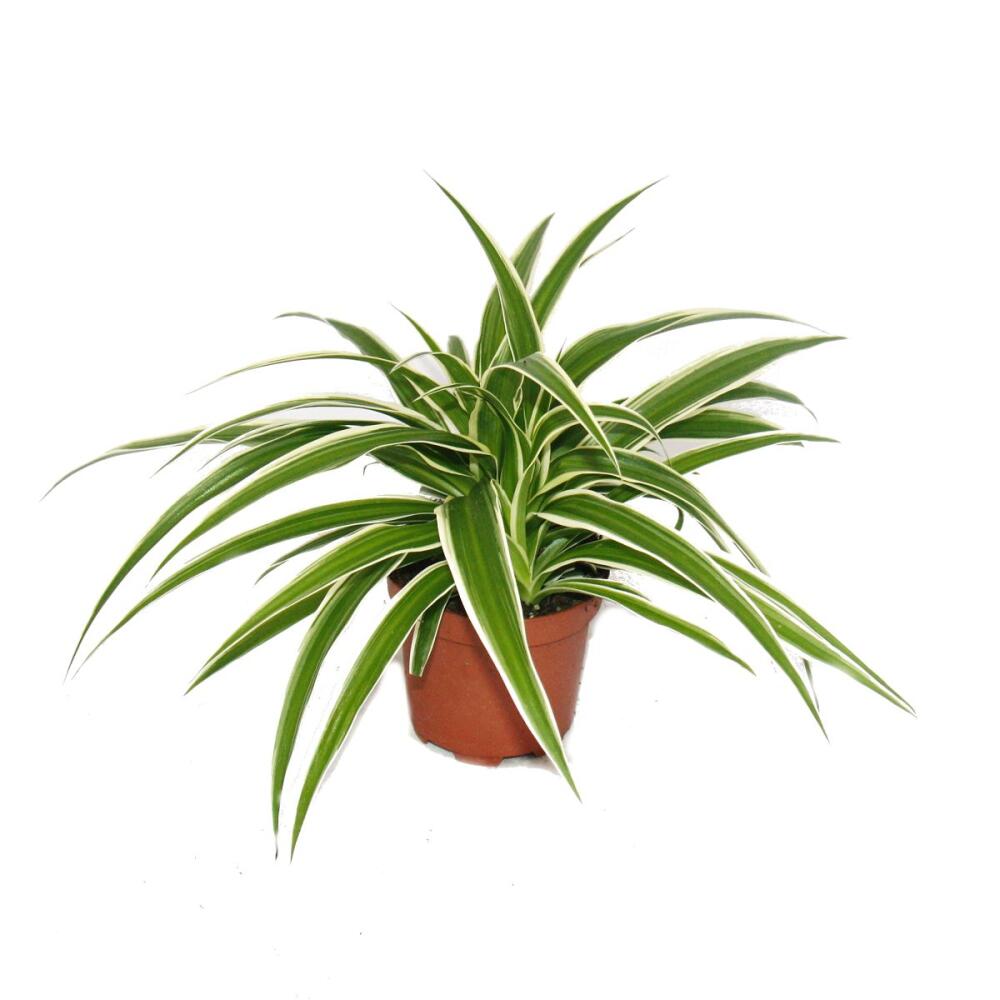
This plant at Exotenherz
Check the shop offer for current availability, price and what is included.
The linked shop is in German. Product details, availability and delivery information are provided in that shop.
Your care table
| Topic | What to do | Why it helps |
|---|---|---|
| Light | Bright and filtered; lower light is tolerated. | Light supports leaf markings and growth. |
| Water | Allow the surface compost to dry slightly, then water the root ball. | Storage roots do not tolerate permanent waterlogging. |
| Drainage | Remove leftover water from the cachepot after watering. | Roots need oxygen. |
| Compost | Use loose houseplant compost and a pot with holes. | Water should spread through it and excess drain away. |
| Feeding | Feed moderately during active growth according to the label. | Too much salt can stress leaf tips. |
| Winter | Maintain light and account for lower water consumption. | Little growth usually means less demand. |
| Repotting | If roots are very crowded, pot into a slightly larger container in spring. | The root ball gains space without an unnecessary volume of wet compost. |
| Plantlets | Separate from the parent only after they form their own roots. | The young plant starts with a reliable supply. |
Check the compost and pot weight. The care table explains how far the compost may dry.
Water only when needed. The water should reach the root ball without spilling over the rim.
Remove surplus water from the saucer or cachepot. Then return the plant to a suitable position.
A rosette that grows beyond itself
The spider plant forms narrow leaves that arch outwards. Its strong roots can store water. This explains why a well-established specimen often survives a brief dry period. Later, long runners grow with small flowers and daughter rosettes. This visible offspring is precisely what makes the plant interesting: a small rosette can develop into a living collection without the parent losing its character. The listing’s white-and-green markings follow the original photograph; each leaf develops its own striped pattern.
Small plant, good position
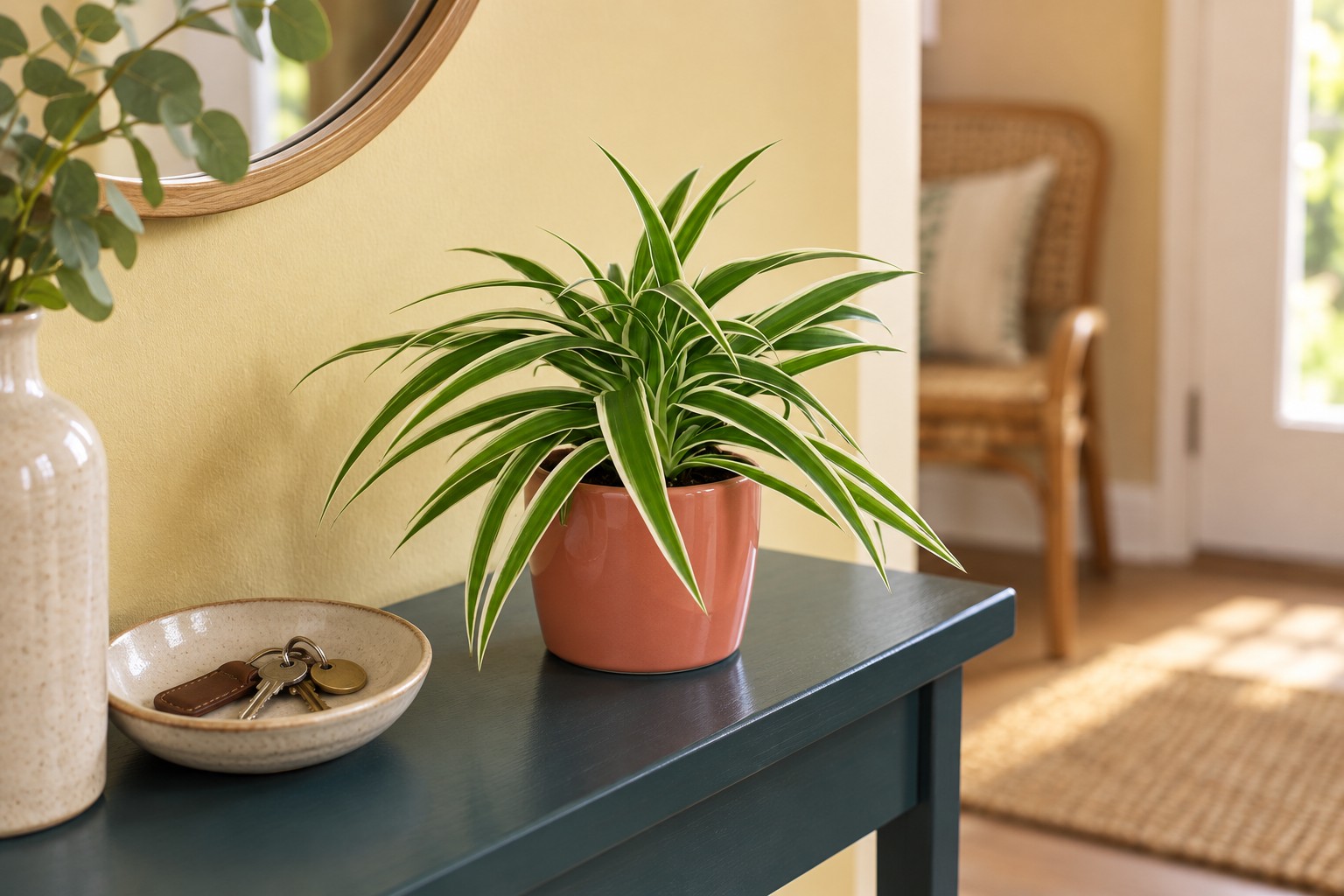
The presentation shown here is in a 9 cm pot and is about 15 cm tall. Its development is easy to follow on a narrow chest of drawers. Allow space to the sides for leaves and later for hanging plantlets. A hanging basket is practical only when it is accessible for watering and can be securely attached. The decorative scene shows a styling idea. The cachepot and furnishings are not included. The spider plant does not remain a permanent miniature; good care strengthens the rosette and root ball.
Brightness preserves the fresh markings
A bright position with filtered daylight is favourable. Spider plants also cope with less light, but grow more slowly there. A windowless corner is not a lasting solution. Harsh midday sun can cause damage after a move. Observe actual light through the day: furniture may be bright in the morning and surprisingly hot in the afternoon. Turn the pot slightly now and then if foliage leans to one side towards the light. Direct heating warmth and cold draughts are avoided.
Feel and weigh before watering
Allow the uppermost layer of compost to dry slightly. Then use your finger and lift the pot to check whether the root ball genuinely needs water. Water thoroughly when needed and allow the excess to drain. Constant small sips often wet only the surface; a full cachepot, by contrast, keeps the roots too wet. Low-lime, room-temperature water is favourable. With brown tips, check water quality and excessive feeding as well as dry periods. Leaf tips alone do not provide a reliable diagnosis.
Roots need room and air
Loose houseplant compost and a container with drainage holes form the foundation. If fleshy roots become very crowded, the small pot dries noticeably quickly or becomes distorted, a slightly larger container is useful in spring. Release the root ball gently without needlessly cutting healthy storage roots. During visible growth, moderate feeding according to the label is sufficient. Fresh, pre-fertilised compost is taken into account. In winter, consumption usually falls: checking remains important, but watering intervals often become longer.
Support plantlets with patience
A daughter rosette can first be placed in a small pot of moist compost while still connected to the parent. Once it has securely formed its own roots, the connection can be cut with a clean tool. Not every runner must be removed immediately. If growth declines, inspect leaf undersides and attachment points too: regular checks reveal mealybugs or other sap-sucking pests early. Remove dead leaves individually at the base instead of cutting healthy foliage merely for an even shape.
One plant, several views
Good to know
Why does my spider plant have brown tips?
Check root-ball moisture, water quality, dry heated air and feeding together. A brown tip does not always have the same cause.
Can it stand in a darker corner?
Less daylight may work, but without daylight it cannot grow healthily in the long term. A bright position maintains growth and markings better.
When can I remove plantlets?
Most reliably after they have formed their own roots. Small rosettes can initially remain connected to the parent.
Does it need water every week?
A fixed weekly routine is unreliable. Pot size, temperature and light determine how quickly compost dries.
Sources and editorial note
Sources checked: 15 September 2026. Product details and delivery contents follow the linked shop listing. Care has been checked against the specialist sources cited and must be adapted to the plant’s condition, position and season.