
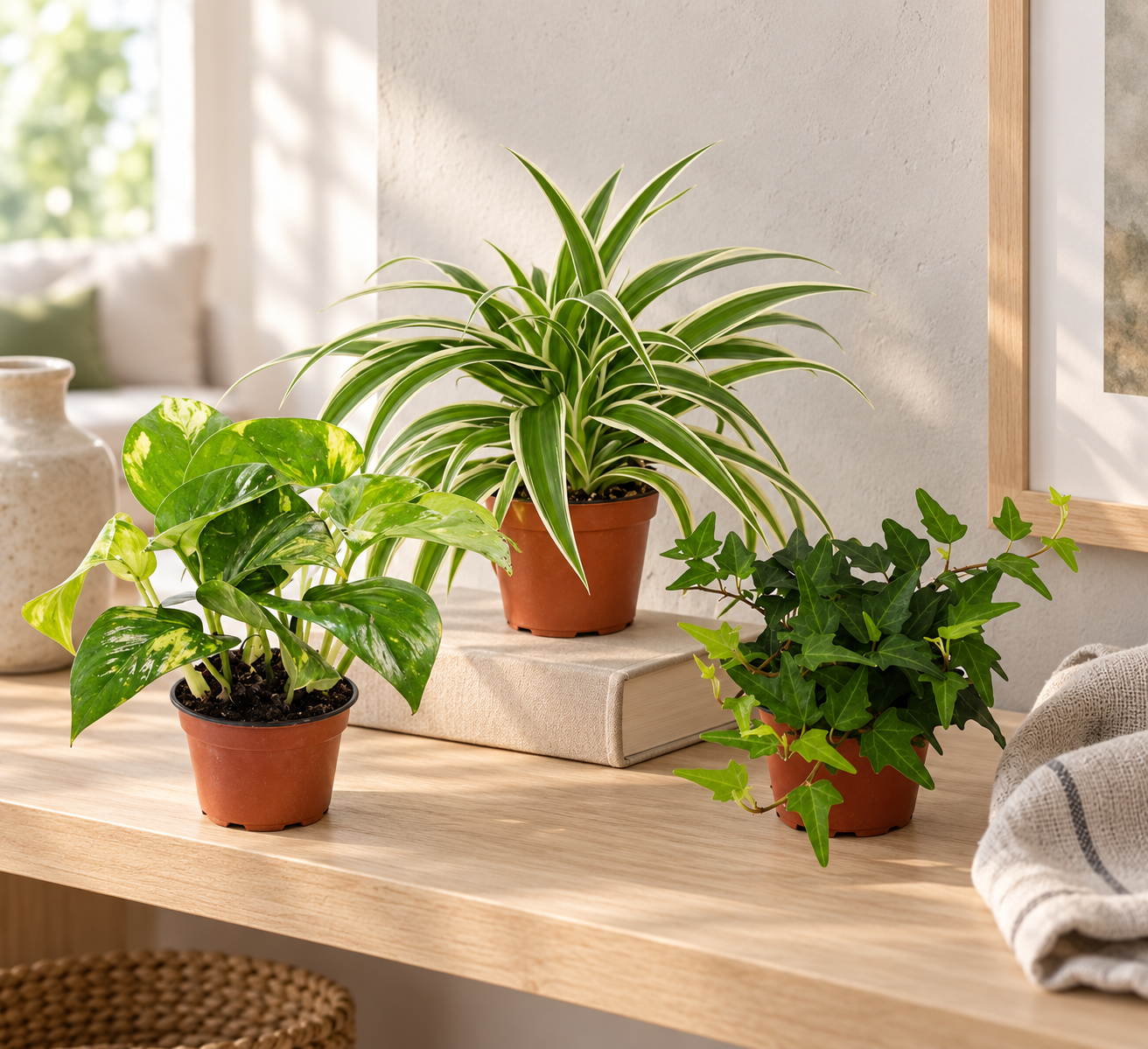
This plant at Exotenherz
Check the shop offer for current availability, price and what is included.
Check the selected shop offer for price, availability and delivery contents.
Your care table
| Topic | What to do | Why it helps |
|---|---|---|
| Light | Choose bright filtered daylight for the group. | Leaf markings and compact new growth benefit from light without hot midday sun. |
| Water | Check each root ball individually and let the surface dry lightly. | The different plants use water differently. |
| Drainage | Remove residual water from each cover. | Standing together does not mean sharing one water level. |
| Soil | Use loose humus-rich houseplant soil with free drainage. | Roots need both moisture and air. |
| Ivy | Keep somewhat cool and airy; avoid hot dry heating air. | It receives a different position in the same room from warmth-loving pothos. |
| Nutrients | During new growth, feed moderately according to the fertiliser label. | Not all three pots need an additional dose simultaneously. |
| Shoots | Give free space and guide individual long tendrils if needed. | This avoids torn petioles and trapped shoots. |
| Winter | Keep spider plant and pothos bright frost-free, ivy as cool as possible. | One uniformly warm winter position is not the best solution for this set. |
Check the compost and pot weight. The care table explains how far the compost may dry.
Water only when needed. The water should reach the root ball without spilling over the rim.
Remove surplus water from the saucer or cachepot. Then return the plant to a suitable position.
Leaf arches and tendrils need not be the same
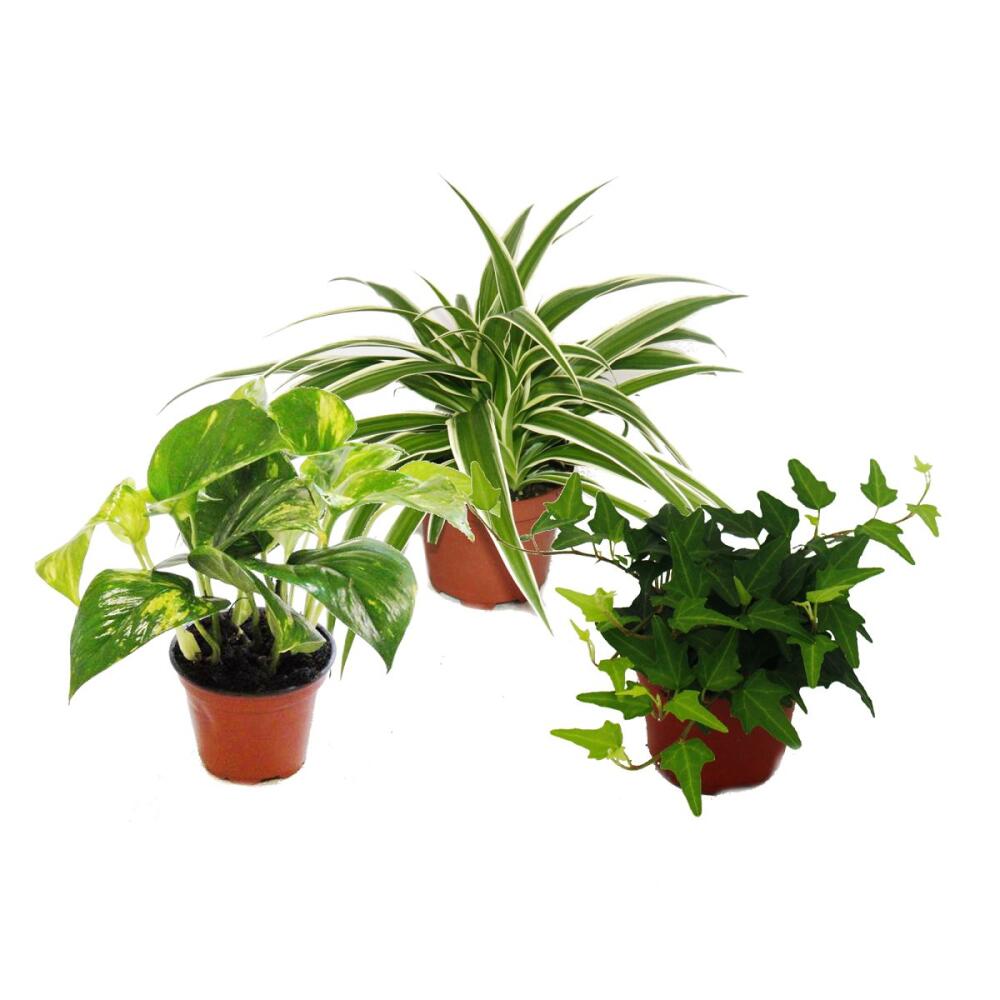
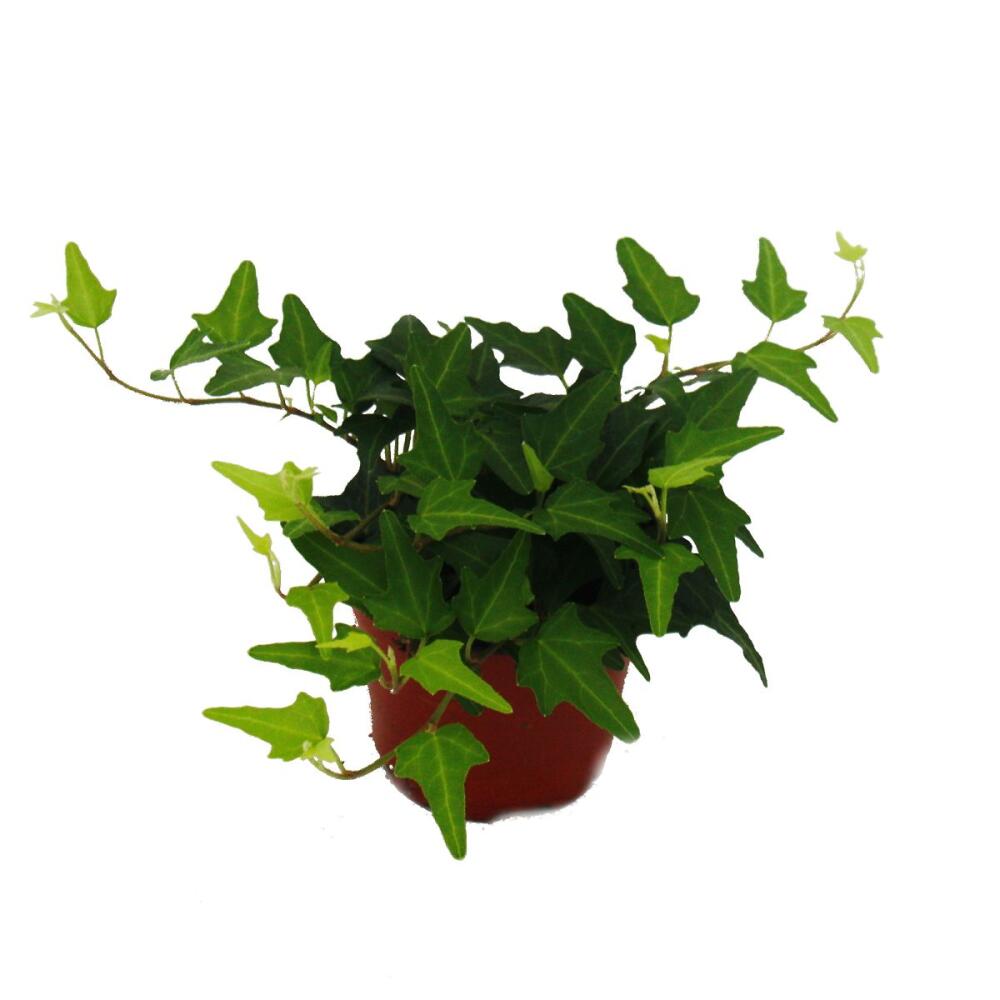
The shop offer names a climbing-plant set, yet the three plants move differently. Spider plant bears narrow leaves from a rosette and later forms runners with small daughter plants. Ivy develops lobed leaves on longer shoots. Pothos leaves look broader and heart-shaped. The name Scindapsus in the shop is treated as a trade description; it gives no additional fixed species or variety promise. These differences themselves bring life to a bright surface. We see the group as an arrangement with three individual developments, not a single plant.
Three separate pots make the start easier
Three plants are delivered, each in a nine-centimetre pot and about twelve to eighteen centimetres overall height. This describes young specimens including container, not later shoot length. The pots can stand slightly staggered on a bright shelf. Spider plant gets lateral room for its arches, while the other two may later grow over an edge. Keep access free for removal. A decorative idea quickly becomes impractical if every tendril must first be untangled to water. The covers and furniture in the scene image are not part of the set.
A shared focal point with different positions
Filtered daylight makes leaf forms clear and supports new growth. Avoid abrupt moves into fierce sun behind hot glass. In everyday life, the plants nevertheless need not always stand tightly together. Ivy suits a somewhat cooler bright position better than directly above warm heating. Pothos receives a warm frost-free position, while spider plant starts in a bright protected indoor place. You can view the group while reading and spread it out somewhat for permanent cultivation. Plant needs determine the furnishings, not an enforced shared temperature.
Each inner pot gets its own check
Before watering, briefly check the surface and pot weight. Once upper soil has dried lightly, supply the relevant root ball thoroughly and allow drainage. A still-heavy moist pot waits. Do not place one shared bowl full of water beneath all three plants. Wetness can accumulate unnoticed, especially with different root quantities. For brown spider plant tips, consider water quality and feeding alongside dry spells. With limp tendrils, inspect soil first. The leaf alone does not yet explain the cause. A small note per pot helps more than a common watering day.
Roots do not grow in step
Loose humus-rich soil and drainage holes keep root space usable. If a plant becomes densely rooted or dries unusually quickly, it can receive a suitable larger pot. The other two are not automatically repotted too. Treat strong spider plant roots gently. Carefully lay down longer pothos or ivy tendrils before moving so their weight does not pull on the stem. Additional nutrients are supplied during active growth according to the label, accounting for pre-fertilised soil. Check light, root ball and roots first in a weakly growing plant.
The group may become looser over time
As tendrils lengthen, they can be guided or selected healthy shoots shortened deliberately. Clean tools help keep pruning manageable. Daughter spider plant rosettes may initially stay connected to the mother and be separated later once reliably rooted on their own. Not every new leaf has to point the same way. While arranging, inspect leaf undersides and bases, especially ivy in dry warm indoor air. Balanced spacing makes visual checks easier. The group thus stays maintainable even when less compact than immediately after unpacking.
Winter and a safe plant position
With less daylight, growth often declines. Watering amounts still follow each root ball. Ivy can move to a suitable cooler place; spider plant and pothos stay bright and frost-free. Ensure a stable position even with long tendrils. Ivy and pothos are not edible indoor herbs and are positioned out of small children’s and pets’ reach. Wear gloves when cutting and clean hands and tools afterwards. A safe shelf suits only if it also receives enough light and stays reachable for watering. This combination makes the trio a lasting useful indoor arrangement.
One plant, several views
Good to know
Are all three true climbers?
No. Spider plant forms a rosette and later runners. Ivy and pothos develop longer tendrils.
What size is delivered?
Each plant in a 9 cm pot and about 12–18 cm overall height.
Must they share one trough?
Separate pots make differing water and position care easier.
Can ivy stand directly above heating?
A somewhat cooler, bright airy place is better than hot dry heating air.
When do I separate spider plant plantlets?
Only once reliably rooted on their own. They can initially stay on the mother plant.
Is the set suitable for pets to nibble?
No. Especially do not let ivy or pothos be consumed, and position safely.
Sources and editorial note
- Exotenherz: offer and original images (02.10.2026)
- NC State Extension: spider plant (02.10.2026)
- NC State Extension: ivy (02.10.2026)
- NC State Extension: pothos (02.10.2026)
Shop offer, article number, GTIN, availability and original images checked directly on 02.10.2026. Specialist sources read directly. No fixed pothos species inferred from the shop genus indication. Care distinguishes cooler ivy from warmer indoor companions. Scene checked directly against original image on 02.10.2026: plant quantity, leaf or head shape, growth, size proportions and identification appropriate.