This plant at Exotenherz
Check the shop offer for current availability, price and what is included.
Product and delivery details are given in the individual offer.
Your care table
| Topic | What to do | Why it helps |
|---|---|---|
| On arrival | Check root ball and loose ties, carry by the pot. | Young shoots and flower branches cannot support the root ball’s weight. |
| Position | Place warmly, sheltered, in sun to light partial shade. | Flowers and evergreen leaves need light; cold wind stresses them. |
| Support | Prepare stable wires or trellis and guide branches loosely. | Twining shoots need reachable supports. |
| Planting | Plant at the previous root-ball height in frost-free spring and water in. | Root contact helps slow establishment. |
| Container & soil | Use a large container with open drainage holes and structurally stable compost. | The perennial root space must not stay waterlogged. |
| Watering | Monitor root-ball moisture and water slowly and thoroughly when needed. | The first year, summer heat and overhead shelter change demand. |
| Nutrition | Supply garden soil according to need; dose container fertiliser according to the label. | More fertiliser does not remedy dry or wet roots. |
| Pruning | Thin in spring, guide individual intrusive tips after flowering. | A young climber does not need radical annual cutting back. |
| Winter | In cold regions, overwinter bright and frost-free; check container and moisture. | Delivery height and evergreen leaves imply no frost guarantee. |
For young plants, feel the soil directly at the root ball. The surface and deeper soil may have different moisture levels.
Water thoroughly after planting; later, water according to the soil, weather and establishment rather than a fixed calendar.
Avoid standing water. For plants in containers, also check that water runs out of the drainage hole.
White stars between glossy leaves
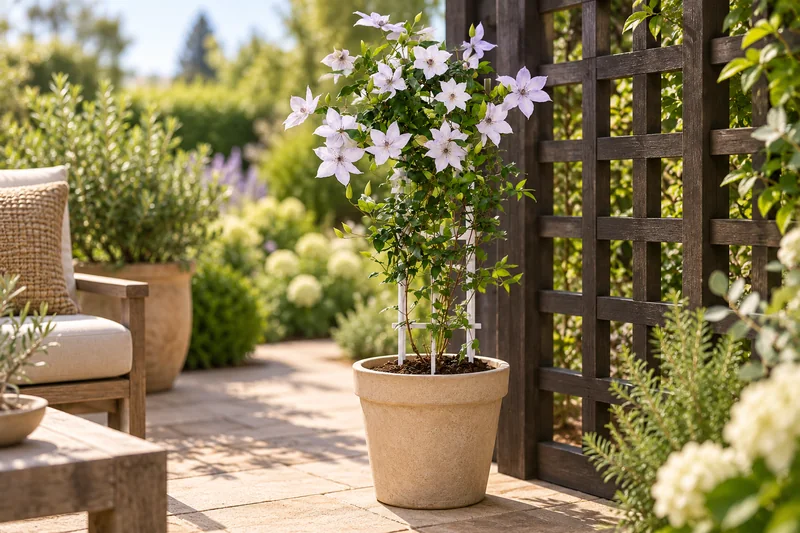
The small white flowers are the first feature noticed on Star of Venice: five narrow slightly twisted petals form a star whose centre stands out against dark foliage. Firm oval to pointed leaves stand in pairs on twining shoots. It is star jasmine, botanically Trachelospermum jasminoides, with the named cultivar Star of Venice. The jasmine-like scent explains the common name; the plant does not belong to Jasminum. This evergreen woody plant brings floral fragrance to a sheltered seating area in summer. June to August is described as the cultivar’s flowering season. Weather, development and culture determine the actual course. The flowering original shows a possible appearance, not a promise of flower cover on every later delivery.
The 70 cm includes the pot
The offer describes one plant in a 23-cm pot at about 70 cm total height including pot. A young already branched climber stands on the white trellis. When unpacking, check the root ball and carefully free shoots from packaging. Carry by the pot rather than trellis or flower branches. An initially sheltered bright position makes observation easier before longer exposure to sunshine and wind. Star jasmine establishes rather slowly. Under favourable conditions the species can later reach four metres or more on its support. This serves as a general space guide, not a fixed Star of Venice final size. A larger covered garden wall develops only over several years; the small delivery structure is its starting point.
A warm wall helps but support is still needed
Choose sun to light partial shade, shelter and soil with reliable drainage. A south- or west-facing wall can suit it if the neighbouring root ball has enough soil and moisture. Cold dry wind and frost pockets are unfavourable. Shoots twine around reachable wires or trellis; they do not stick independently to a smooth wall. Plan a stable support before planting and keep watering access clear. In a frost-prone area a movable container is often more practical than fixed planting. A bright conservatory may also suit it; under glass in summer protect from hot direct sunshine and ventilate well.
Prepare root space and support together in spring
Spring in frost-free workable soil is a good planting time. First moisten a dry root ball slowly and plant it at the previous pot level in loosened fertile free-draining soil. Watering in connects root ball and ground. A large container needs open drainage holes and structurally stable compost for perennial container plants. A decorative outer pot without drainage does not replace this preparation. For one star jasmine, no row spacing can be derived from delivery size. Leave room for later roots and sideways shoot distribution, considering neighbouring plants. Guide young branches loosely along the intended support. Check tight ties so they do not cut in as stems thicken; twining tips may keep growing.
Supply the root ball while new roots develop
After planting, the original root compost remains an important checkpoint. Particularly in the first year it can dry faster than its surroundings. Use a finger and pot weight to check whether water is needed, then water slowly and thoroughly at the base. Summer heat and a position under a roof change demand; a rigid weekly routine does not fit. Excess must drain, because constantly wet roots favour damage. A container still needs reliable checks later. Frequent blanket feeding is unnecessary in fertile garden soil. In a container plan nutrition during growth according to the fertiliser label. Loose mulch on moist garden soil can accompany the ground; leave air directly around the woody base so bark does not remain constantly damp.
Guide twining shoots and prune gently
Star jasmine need not reach a finished shape in one season. Guide individual long shoots along their support rather than continually shearing all foliage back. Spring suits necessary thinning: selectively remove weak, damaged or closely crossing branches. Restrained shaping after flowering can correct an intrusive tip. Heavy pruning changes subsequent development and flower structure; do not use it as ordinary annual routine for a young plant. For propagation, semi-ripe cuttings in summer to autumn or layering in spring are possible. The rooted plant gains its own root ball before its connection is severed. Cuttings need a controlled moist environment, air exchange and patience.
Plan winter quarters before the first cold weather
Evergreen leaves and woody shoots do not make star jasmine equally winter-suitable at every outdoor site. Young plants and container roots are more exposed than established plants in a mild sheltered garden. In cold regions move it to bright frost-free shelter in time, check water needs there and leave no constant wetness. At milder outdoor positions protect container and root space and check on frost-free days. Bronze or reddish leaves may react to cold; brown dry areas additionally call for a look at root ball and wind protection. With sticky foliage, fine webbing or unusual leaf undersides, check scale insects and spider mites too. Standing water is remedied at the site first, not with extra fertiliser or a promised frost figure.
One plant, several views


Good to know
Is 70 cm the later height?
No. Total height of the offered young plant includes the 23-cm pot. Star jasmine can develop considerably further on its support later.
Does it climb directly on a wall without trellis?
Its shoots twine around reachable supports. On a smooth wall it needs suitable wires or trellis and some initial guidance.
Can I choose a cold open garden site?
Frost pockets and cold dry wind are unfavourable. In cold regions a movable container with bright frost-free winter quarters is the safer plan.
Why does it dry despite moist neighbouring soil?
The original pot root ball may still be drier than the soil beside it. Check directly at the root ball and moisten slowly when needed; also check drainage.
When should its white flowers be expected?
The cultivar is described for June to August. Development and weather affect actual cover; the original picture guarantees no flowering on every delivery.
Must I cut it back heavily?
Usually guiding long shoots and selective thinning in spring are enough. Heavy pruning changes the young structure and is not an annual duty.
What should I do with red winter leaves in a container?
Cold can colour leaves bronze or reddish. Check wind protection, root-ball moisture and suitable winter quarters rather than inferring water or fertiliser needs solely from colour.
Sources and editorial note
- Exotenherz: offer and original photographs
- Hoogeveen Plants: cultivar, flowering and cultivation
- RHS: complete star jasmine care guide
Young delivery form, flowering and later climbing development are described separately. Check availability in the shop.