
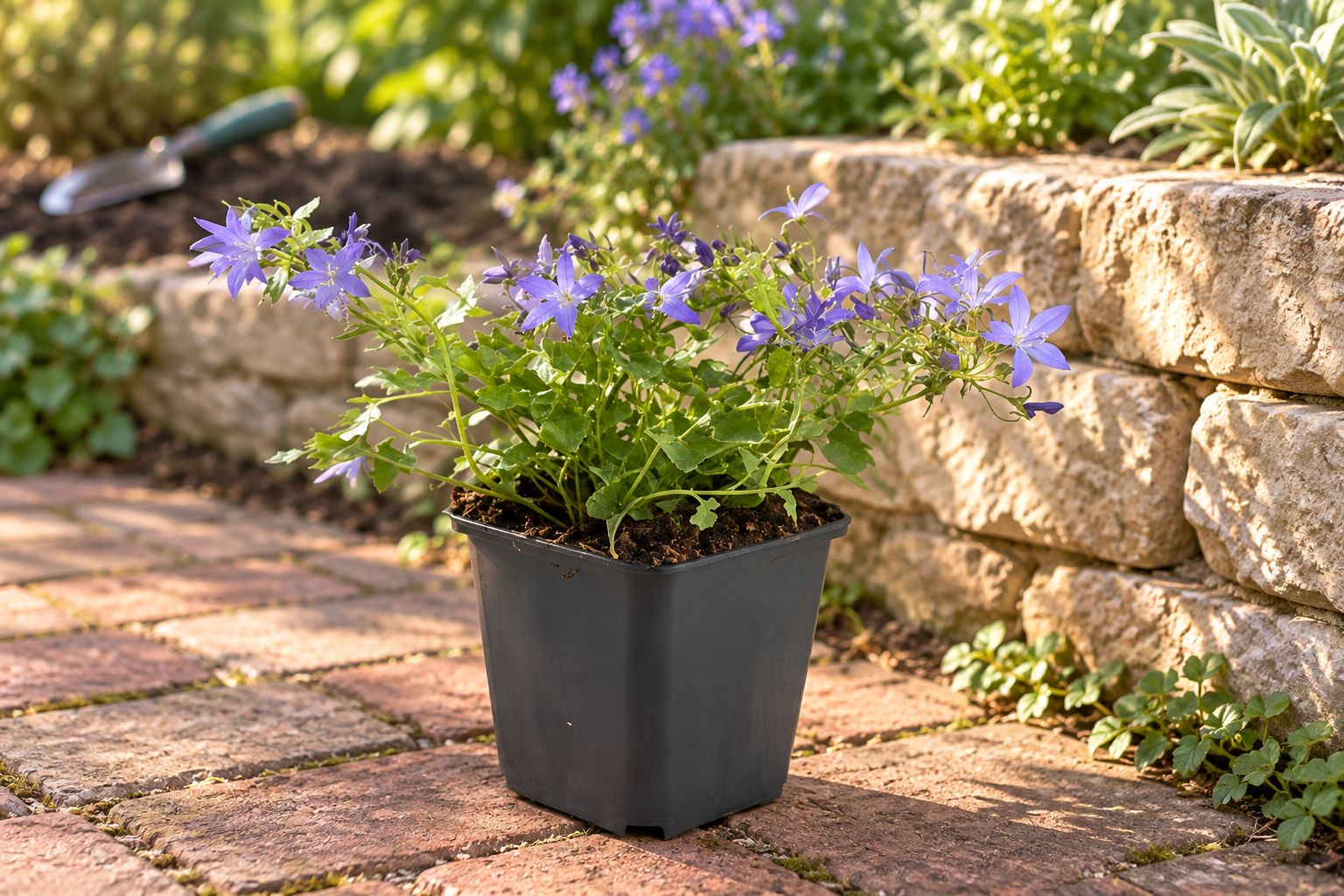
This plant at Exotenherz
Check the shop offer for current availability, price and what is included.
Check the shop for the current price, availability and offer contents.
Your care table
| Topic | What to do | Why it helps |
|---|---|---|
| Light | Choose sun to partial shade. | Dense shade is not a good starting point for abundant flowers. |
| Water | Check the young root ball and water thoroughly as needed. | Even a low perennial needs a supplied root zone. |
| Soil | Provide moisture-retentive, well-drained soil. | Rock garden does not mean a constantly dry or waterlogged planting spot. |
| Planting | Plant the moist root ball at its previous height and water in. | Good soil contact supports rooting. |
| Edge | Control spreading shoots and runners. | The plant can grow beyond its planned section. |
| Cutting | After flowering, cut back as needed for a more compact form. | Cultivar care should not be copied blindly from another Campanula type. |
| Division | Divide strong older cushions in spring or autumn. | Divisions then need renewed watering support. |
| Checking | Check young growth for slug damage and leaves for unusual coatings. | Slugs and powdery mildew are listed as possible cultivar problems. |
For young plants, feel the soil directly at the root ball. The surface and deeper soil may have different moisture levels.
Water thoroughly after planting; later, water according to the soil, weather and establishment rather than a fixed calendar.
Avoid standing water. For plants in containers, also check that water runs out of the drainage hole.
A bellflower with open stars
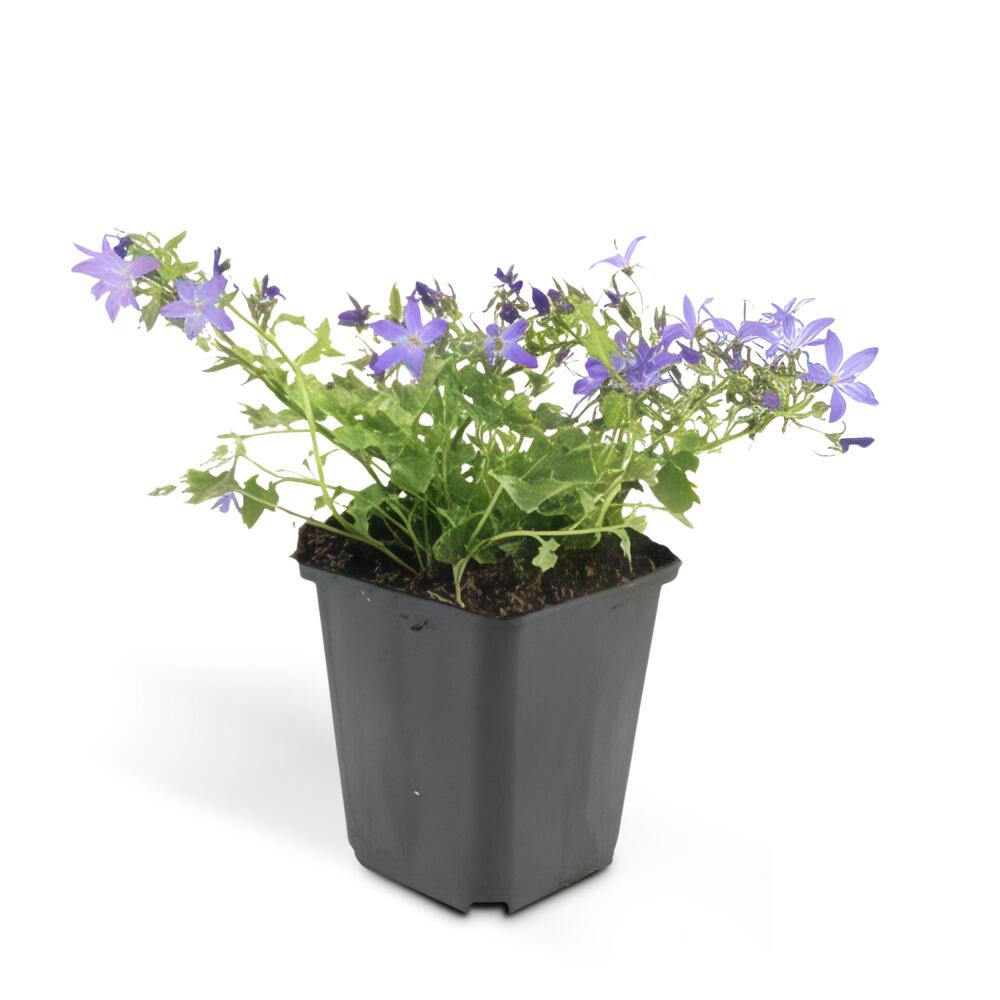
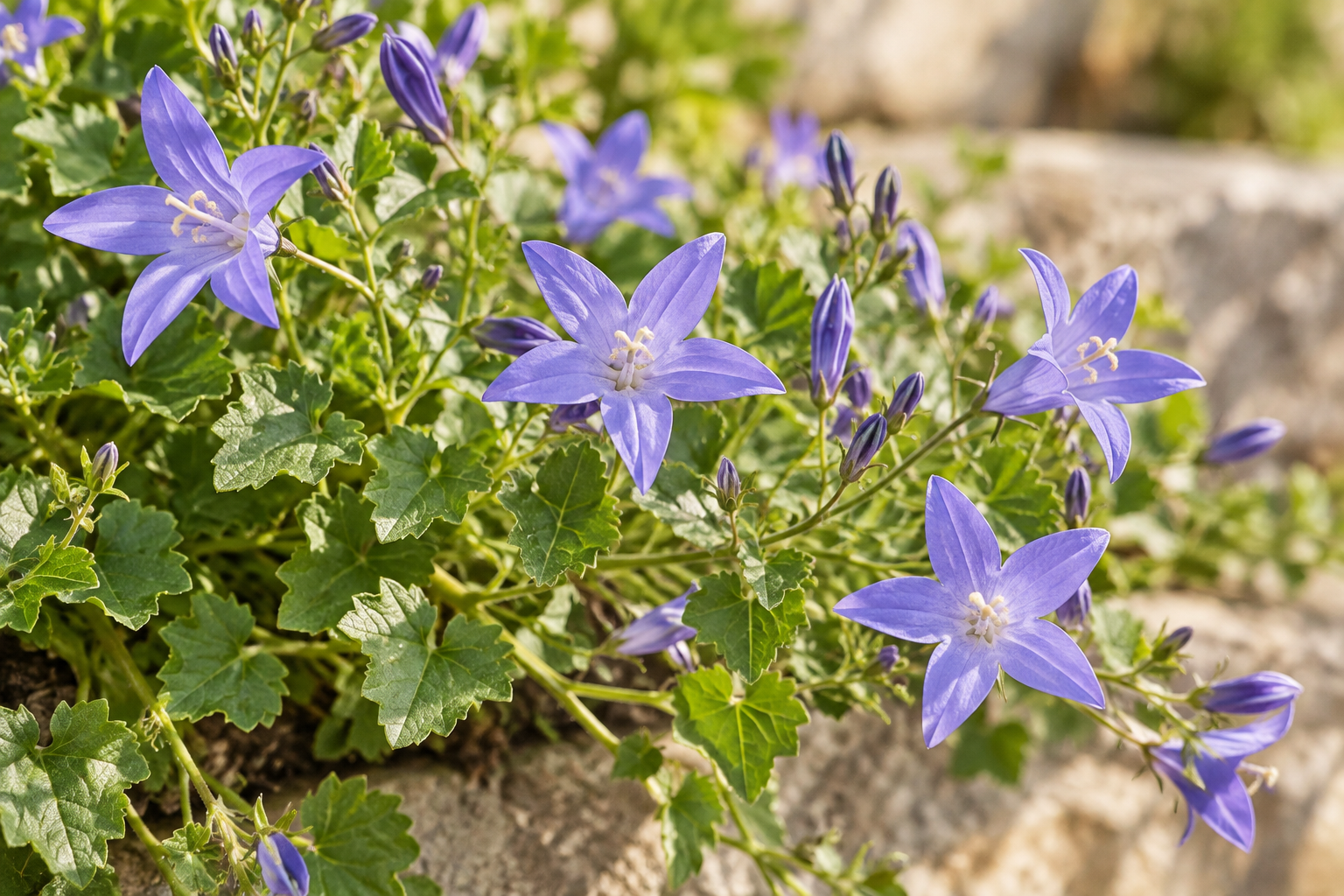
Stella shows how different bellflowers can look. Its pale violet-blue flowers do not hang down as deep cups, but open widely into stars. They sit on fine spreading shoots above toothed green leaves. The leaf base forms a low cushion; individual flowering stems add movement to the edge. This loose picture is particularly clear by old stones or a low garden border. The original shop image shows a young plant with visible flowers. That still cannot promise flowers for every delivery. To get to know it, look at leaf shape, branching shoots and the characteristic open flower together.
Separate the low cushion from pot height
The selectable sets contain plants in 9 cm pots at roughly 10 to 25 cm total height including the pot. For the garden cushion, the RHS cultivar profile gives a height up to about 10 cm. These describe different measurements: the shop gives the complete delivered plant with container, the specialist profile later garden growth. A flowering shoot may also rise above the low leaf base. Do not confuse the values or plan Stella as a tall background perennial. Sideways development matters more here. A width class of about 10 to 50 cm offers guidance, but does not promise every young pot will immediately cover that area.
Stone as a neighbour, soil for roots
A sunny to partially shaded garden edge suits Stella if its root zone remains supplied. Rock garden does not mean pushing the small root ball into a completely dry crack. Moisture-retentive, well-drained soil is the starting point. Water may run away quickly between stones; elsewhere it collects in a compacted hollow. Check both possibilities before planting. In containers, provide free drainage holes and enough root space. Comparable flowering would not be expected in deep shade. Observe real sunshine and soil moisture instead of deciding solely from a beautiful wall in the scene photograph.
Connect the small plant well to the edge
Spring or early autumn often provide milder rooting conditions. Frost-free soil that is not waterlogged is essential. The shop gives 30 to 40 cm spacing as guidance. Lay the pots out first and leave room towards the path so that later overhanging shoots do not unexpectedly narrow it. Wet the root ball thoroughly, plant at its previous height and gently bring soil into contact. Water slowly, then check directly in the original root zone. Moisture beside the ball does not prove its interior is supplied. Especially at a warm stone edge, young plants need accessible checks until new roots explore the surrounding soil.
Match spreading to the desired picture
Campanula poscharskyana Stella has spreading shoots and can travel through underground runners. This helps a loose edge but is not always wanted beside small individual plants. Keep the planned section controllable and regularly look for new shoots beyond its boundary. Move rooted parts or organise the shape specifically when needed. An older strong cushion can be divided in spring or autumn. Divisions then need to root again and receive water. Flowers at such an edge may look light and incidental while care stays clearly planned. A permanently fixed width regardless of position is not a useful promise.
Care for the shape after flowering
For Stella, the cultivar profile recommends cutting back after flowering to keep the shape more compact. First see which shoots have really faded or become too long. Not all bellflowers are cut alike; advice for a tall species or one that repeat-flowers differently must not be transferred blindly to this low cultivar. For weak growth, first check root condition, light and soil. Modest nutrient amounts depend on existing supply, especially in containers. More fertiliser compensates neither for deep shade nor persistent wetness. Clean targeted interventions and an accessible root zone maintain the plant better than a succession of unjustified care actions.
Watch young growth carefully
Slugs may eat young leaves; unusual coatings on foliage also deserve a close look. The specialist profile mentions powdery mildew as a possible problem without every pale patch automatically confirming that diagnosis. Check leaf surface, growth and position together. In winter, retention of partly evergreen foliage depends on weather and location. Put outdoor containers in a protected spot, maintain drainage and check moisture on frost-free days. Watch new growth in spring and remove dead areas specifically. Stella remains a small garden plant with understandable care, whose open violet-blue stars are not confused with big delivery or flowering promises.
One plant, several views
Good to know
Why do the flowers look more like stars?
Stella has wide-open star-shaped flowers. Not all bellflowers form deep hanging cups.
Do height up to 10 cm and delivery 10–25 cm contradict each other?
No. The shop figure includes the pot. The cultivar profile describes the low garden cushion.
Must it flower on delivery?
No. The original image shows flowers, but actual flowering depends on delivery time and development.
Does it need dry rock-garden soil?
The site should hold moisture and drain well. A completely dried-out root zone is not the care aim.
When do I cut Stella?
After flowering if needed for a more compact shape. Do not transfer advice for other Campanula types without checking.
How do I limit spreading?
Check shoots and new runners at the edge, organise them specifically when needed and divide strong older cushions appropriately.
Sources and editorial note
- Exotenherz: offer and original images (3 October 2026)
- RHS: Campanula poscharskyana Stella – cultivar profile read directly (3 October 2026)
- RHS: garden bellflowers – position and soil (3 October 2026)
- Exotenherz: checked 6-plant child offer (3 October 2026)
- Exotenherz: checked 12-plant child offer (3 October 2026)
- Exotenherz: checked 20-plant child offer (3 October 2026)
- Exotenherz: checked 40-plant child offer (3 October 2026)
- Exotenherz: checked 60-plant child offer (3 October 2026)
Shop offer, article number, availability and original images checked directly on 3 October 2026. Specialist sources read directly. Cultivar features and garden height up to 10 cm checked directly with RHS; delivery height 10–25 cm including pot explicitly separated. Summer flowering from group profile and shop image, no month promise. RHS runners, spring/autumn division and cutting after flowering read for this cultivar. Other Campanula cutting rules not transferred. All five child offers checked individually; available quantities: 6, 12, 60. Clean original view retained unchanged; young scene and leaf or flower detail labelled appropriately.