
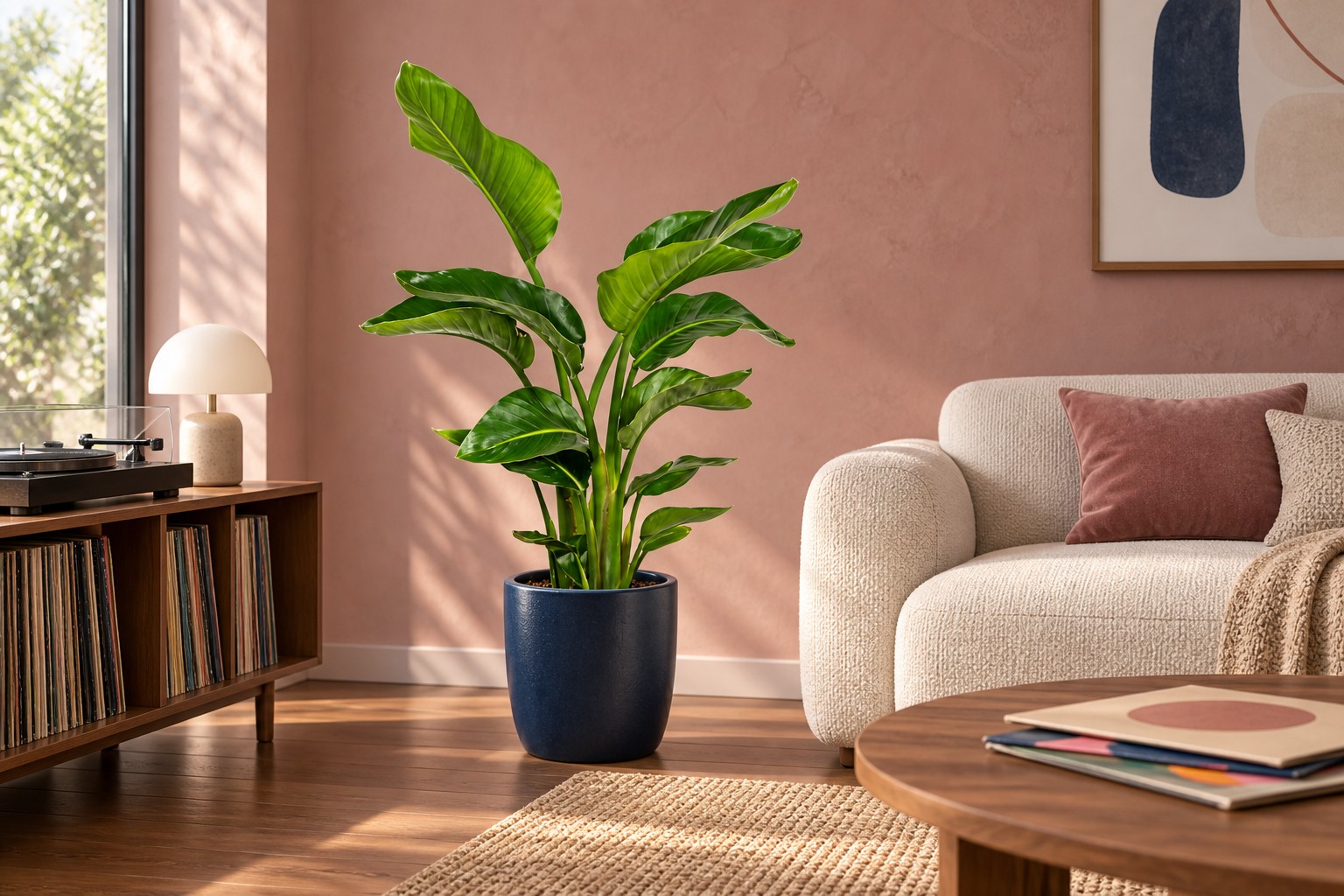
This plant at Exotenherz
Check the shop offer for current availability, price and what is included.
The linked shop is in German. Product details, availability and delivery information are provided in that shop.
Your care table
| Topic | What to do | Why it helps |
|---|---|---|
| Light | Keep very bright; introduce stronger sun gradually. | Large new leaves need sufficient light. |
| Water | Let surface compost dry slightly, then water thoroughly when needed. | Remove leftover water and assess the entire root ball. |
| Compost | Use a humus-rich, structurally stable mix with good drainage. | Strong roots need water and air. |
| Feeding | During growth, feed regularly according to product instructions. | Reduce during darker winter conditions with little activity. |
| Summer | A warm, sheltered outdoor position is possible after acclimatisation. | Wind can split the broad leaves. |
| Winter | Keep bright and frost-free, avoiding cold draughts. | It is not a hardy outdoor plant. |
| Leaves | Remove dust carefully and do not pull young rolled leaves open. | Preserve healthy leaf surfaces despite small splits. |
| Repotting | Choose a suitably larger pot when clearly well rooted. | Keep large roots intact as far as possible. |
Check the compost and pot weight. The care table explains how far the compost may dry.
Water only when needed. The water should reach the root ball without spilling over the rim.
Remove surplus water from the saucer or cachepot. Then return the plant to a suitable position.
Large foliage from a different plant family
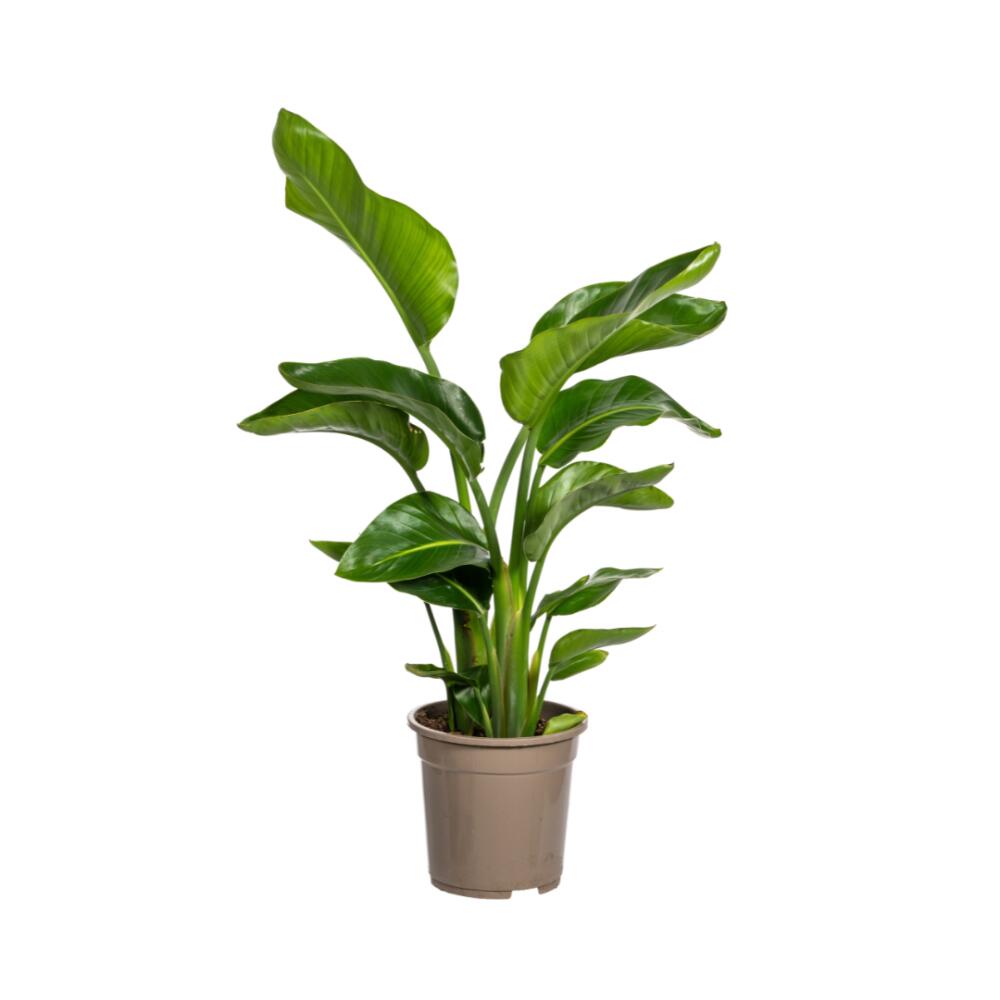
Strelitzia nicolai resembles a banana in its foliage but belongs to the Strelitziaceae. The leaf stalks grow strongly upright while the broad blades open out sideways. Older specimens can develop several shoots and a distinct stem structure. In warm native regions, the species becomes very large. As a houseplant, it is valued mainly for its foliage. The white and blue flowers of mature plants are not a reliable objective in an ordinary living-room setting.
Separating young delivery size from later development
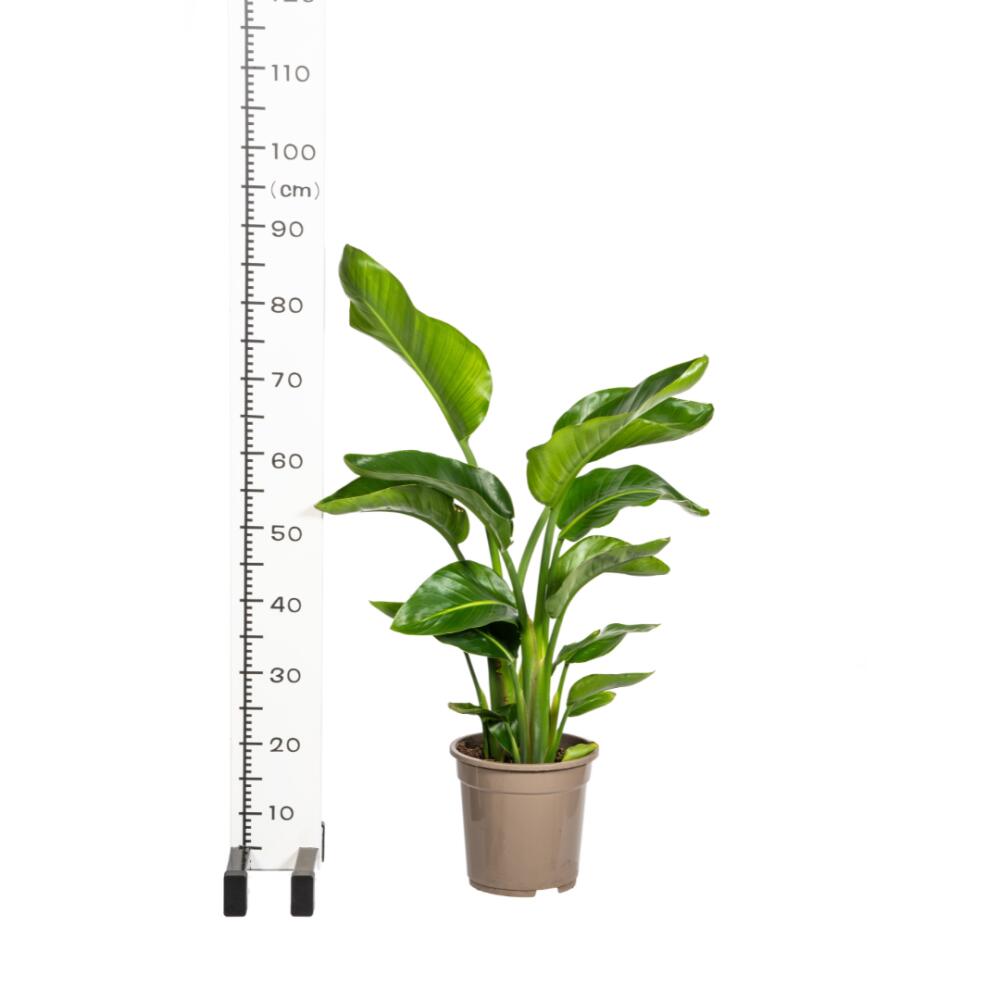
The selected offer states 90–110 cm total height in a 21 cm pot. The scene shows this young size, not a mature tropical tree. Even so, choosing a generous position from the outset is worthwhile. New leaf stalks can grow significantly beyond the previous crown. A bright area beside the seating area can work if the leaves stand freely. Frequent knocks, narrow passages and strong air movement encourage splits in the large blades.
Plenty of light, sunshine with acclimatisation
Choose a very bright position. After protected growing conditions and shipping, increase direct sun gradually so the leaves can adapt. A warm, wind-sheltered outdoor position can suit it in summer. Bring it back in before cold nights; Strelitzia nicolai is not a hardy garden perennial. Indoors, provide comfortable warmth without cold draughts. A new leaf needs time to unroll. Do not pull the rolled leaf open, even if it develops more slowly than expected.
Large leaves need water according to demand
During active growth, the plant loses water through a large leaf area. Let the upper compost layer dry slightly, check the root ball and then water thoroughly when needed. Excess drains away and does not remain in the outer pot. In winter with less light, pay closer attention to reduced consumption. A dry surface above a wet pot interior is possible in large containers. Strong roots need moisture and air at the same time; constantly swampy compost is therefore unsuitable.
Roots, nutrients and leaf care
A stable, humus-rich mix with good drainage supports the strong roots. When clearly well rooted, move into a suitable larger pot, damaging sensitive roots as little as possible. Feed regularly during growth according to product instructions, reducing when activity is low. Broad leaves can be dusted carefully with a soft, damp cloth. Small natural splits may occur. As long as large parts of the leaf remain healthy, it need not be removed merely for a cosmetic flaw.
Assessing splits and pests correctly
Wind, transport or mechanical contact can split leaf blades along the veins. Distinguish this from rotten areas or progressive discolouration. Check undersides and leaf-stalk bases in particular for scale insects, mealybugs or spider mites. With care problems, first assess light, root moisture and temperature together. Severely damaged dead foliage can be removed carefully. For an attractive structure over time, a stable position matters more than frequent moves. The plant is ornamental and should not be within reach of nibbling animals.
One plant, several views
Good to know
Will I receive a flowering strelitzia?
The offer is a young foliage plant. Indoor growing does not reliably produce flowers.
Are split leaves diseased?
Not necessarily. Wind and contact can cause splits along the veins. Also check other changes and growing conditions.
May I open a rolled leaf?
No, it should unfurl by itself. Light, warmth and appropriate supplies support development.
How large is the offered plant?
Approximately 90–110 cm total height in a 21 cm pot; it can become considerably larger later.
Sources and editorial note
Sources checked: 15 September 2026. Product information and the contents of delivery follow the linked shop offer. Care advice was checked against the cited specialist sources and should still be adapted to the plant’s condition, position and season.