
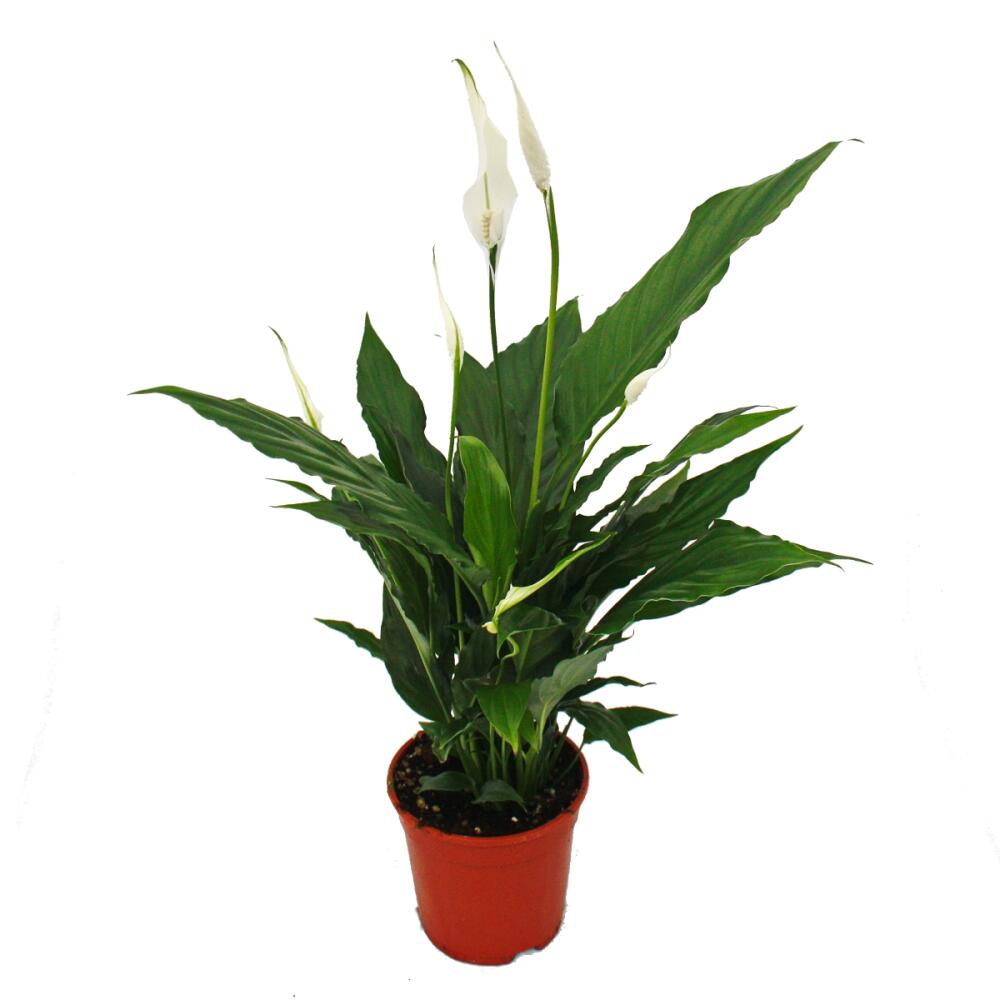
This plant at Exotenherz
Check the shop offer for current availability, price and what is included.
Link to the offer in German. Check the shop for the current price, availability and delivery contents.
Your care table
| Topic | What to do | Why it helps |
|---|---|---|
| Light | Provide bright indirect daylight and shield intense summer sun. | Good light encourages growth and flowers; harsh sun can damage leaves. |
| Water | After the upper compost dries slightly, check the root ball and water thoroughly if needed. | Peace lily likes dependable moisture without constantly wet roots. |
| Drainage | Remove remaining water from the decorative pot or saucer. | Persistent waterlogging can promote root and stem damage. |
| Temperature | Keep warm; the particular offer should not fall below about 15 °C, and avoid draughts. | This tropical plant is sensitive to cold. |
| Leaf care | Wipe dust with a damp cloth while supporting leaves from below. | Glossy leaves do not need polish; clean leaves are easier to inspect. |
| Fertiliser | During active growth, feed moderately according to the label; do not add extra for problems. | Excess salts can stress leaf tips and roots. |
| Repotting | Move a dense root ball to a slightly larger pot in spring. | Extra wet compost raises the risk to roots. |
| Spent flowers | Cut spent stems close to the base with clean tools and wear gloves. | Targeted removal keeps the plant tidy; sap can irritate. |
Check the compost and pot weight. The care table explains how far the compost may dry.
Water only when needed. The water should reach the root ball without spilling over the rim.
Remove surplus water from the saucer or cachepot. Then return the plant to a suitable position.
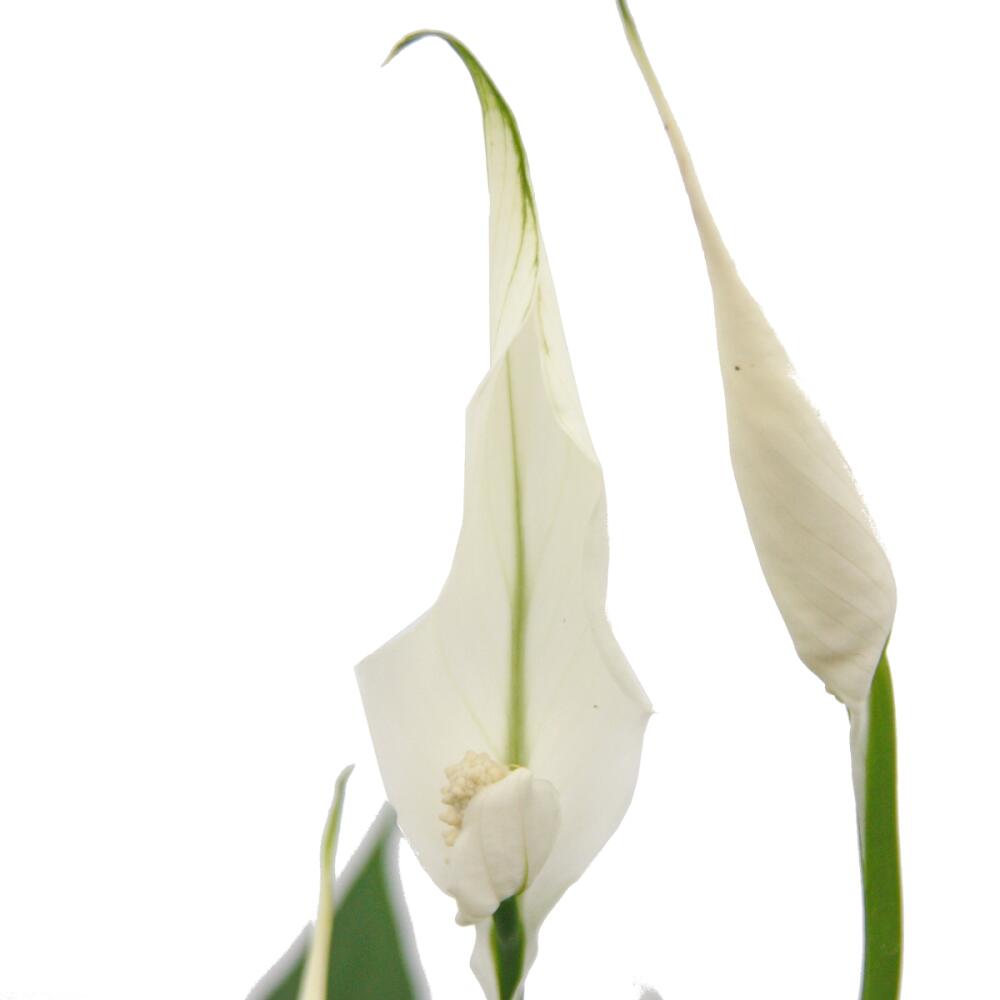
The real flowers sit in the middle
What looks like a large white petal on a peace lily is a bract, botanically called a spathe. It surrounds a spike, or spadix, carrying many tiny true flowers. This special form connects Spathiphyllum with other members of the arum family. Long green leaves emerge closely from the base and form an attractive clump even outside flowering periods. Sweet Chico is offered as a compact houseplant. Individual bracts may turn greenish as they age; this does not automatically mean a care mistake.
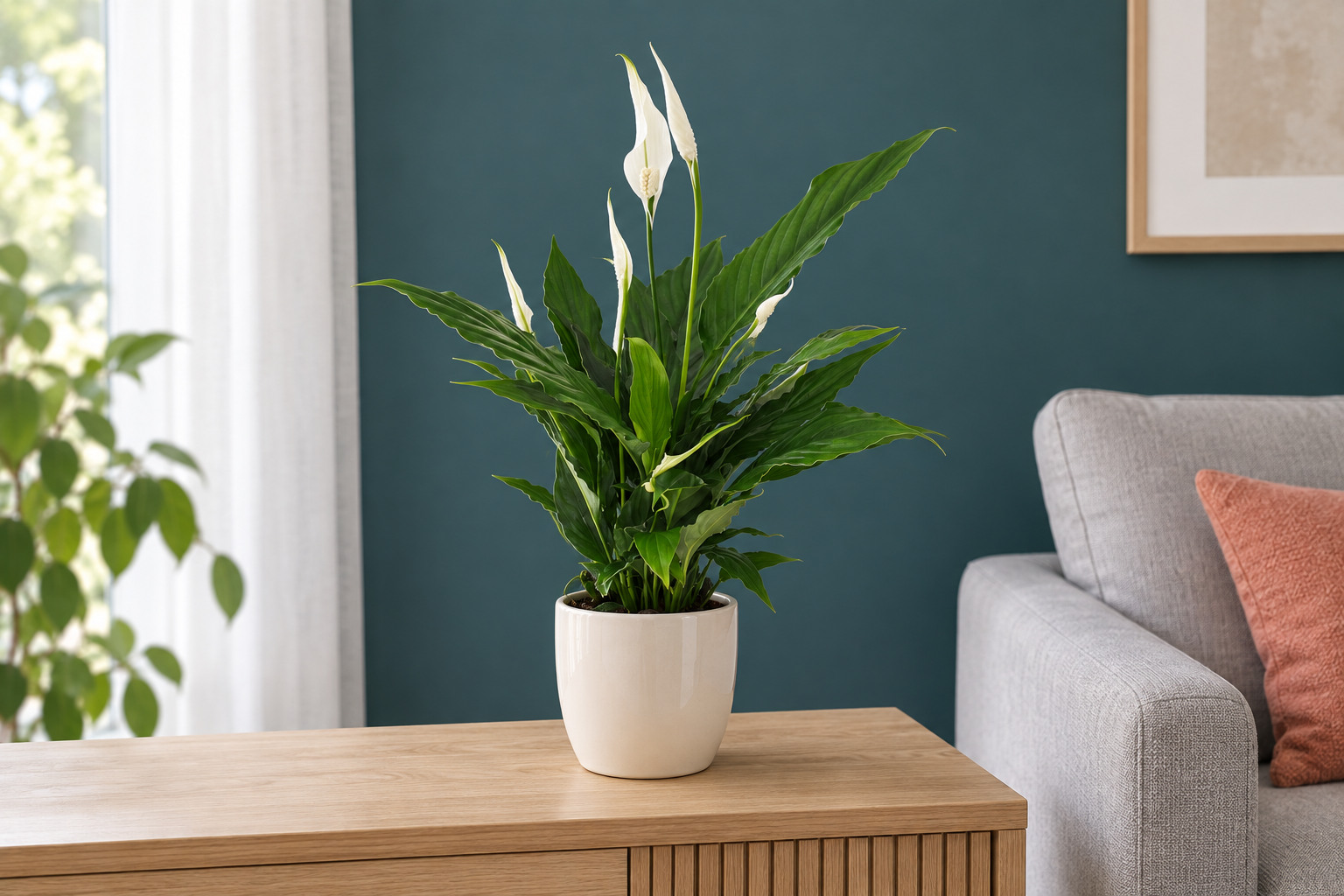
A portrait for Sweet Chico
The linked shop offer states a 13 cm pot and approximately 40 to 50 cm overall height. The scene follows this size and the original plant image. The number and development stage of flower spikes may vary in living plants. A very large peace lily or a variegated variety is not simply listed as another size of Sweet Chico. When choosing its position, allow for spreading leaves as well as height. A low console can show it well if it receives enough light and remains easy to reach for watering.
Brightness matters for flowering too
Peace lilies tolerate sheltered light conditions but grow and flower better in good indirect daylight. Do not permanently keep one in a dark corner merely because its rich foliage looks attractive there. A bright area near a window, protected from intense summer sun, suits it; the pot need not stand on the windowsill. Avoid direct airflow from a heater or air conditioner. After a move, give the plant time to adjust. A leaf turning more strongly towards the light is not an immediate reason to repot.
Drooping leaves: check before acting
A thirsty peace lily can become noticeably limp. This is a visible signal, but not a recommended way of repeatedly delaying watering until the last moment. Severe repeated wilting puts the plant under strain. Feel the root ball and check pot weight. If the compost is dry, water slowly and thoroughly, then let excess water drain. If it is wet, limp leaves can also be linked to impaired roots. Do not automatically add more water then. This distinction turns a blanket care rule into a useful decision for the particular pot.
Consistency without constant wetness
Let the upper compost dry slightly while preventing the whole root ball from drying out. The speed depends on warmth, light, leaf mass and pot. Check the decorative pot after every watering. Room-temperature water avoids an unnecessary temperature jump at the roots. If brown tips recur, consider water quality and feeding as well as watering. Cleanly collected rainwater can be an option. A layer of stones in the container does not replace free drainage, however. A peace lily remains a potted plant whose roots need air.
Keep leaves clean and consider airflow
Large leaf surfaces collect dust over time. Wipe gently with a soft damp cloth, supporting the leaf from below. Leaf-shine products are unnecessary for an attractive peace lily. Very dry heated air can make care harder; a better position usually helps more reliably than constantly wet leaf surfaces. The plant may form a group with other houseplants but should remain easily accessible. Check leaf undersides, the base and pot edge in good light. Investigate sticky areas, webbing or unusual deposits specifically.
Repot when the root ball needs it
Changing the pot is useful when roots tightly fill it and the compost dries unusually quickly after watering. Spring or an active growth period helps the plant establish roots. Choose a pot only slightly larger and loose, well-drained houseplant compost. Release the root ball carefully. Large healthy clumps can be divided at this point if each section retains enough roots and its own shoots. Gloves protect against sap. After division, keep the plant bright and sheltered; strong feeding or direct sun is not a sensible fresh start.
What white bracts reveal over time
An older flower spike changes colour and eventually becomes unattractive. Remove its stem close to the base with clean tools without injuring neighbouring young shoots. A period with few flowers does not automatically mean nutrient deficiency. First check light and general condition. Different growing conditions influence when new flower spikes appear; at home, the plant does not necessarily follow its sale date. More fertiliser is no guarantee of flowers. A well-developed new leaf also shows that care is heading in a good direction.
Quieter care in winter
Sweet Chico also needs a bright, warm place in winter. Protect it from cold draughts when ventilating; the particular shop offer states at least approximately 15 °C. With little growth, water needs usually decrease. Still check regularly, because warm heating can dry the root ball faster at a particular position. Reduce feeding or suspend it during a growth pause. The following spring starts with renewed observation rather than a large extra helping of water: how quickly does a leaf develop, and how fast does the compost dry now?
Attractive to look at, safely positioned
Peace lily is an ornamental plant and not intended to be eaten. Irritating calcium oxalate crystals make it unsuitable where children or animals can nibble it. Clear away cut leaves and flower stems too. Wear gloves when dividing or pruning, then clean tools and hands. A brief regular check is enough in daily care. Care should not mean constant intervention: a stable position, suitable watering and attention to changes give this plant the calm in which its lovely foliage shows well.
One plant, several views
Good to know
Why do the leaves droop despite moist compost?
Root problems may be involved. Check moisture, drainage and root condition. A wet root ball does not automatically need more water.
Is a green bract a problem?
An older bract can naturally turn green. Assess the whole plant and the flower spike’s development.
How can I get flowers again?
Good indirect light and consistent care help. Age and growing conditions also matter; fertiliser alone does not guarantee flowers.
Does Sweet Chico suit a bathroom?
Yes, if there is enough daylight and a suitable temperature. A windowless room without plant lighting is unsuitable.
Can a peace lily stand within reach of cats?
No. Keep it out of reach: it contains irritating substances and is not food.
Sources and editorial note
- Product and delivery size: Exotenherz
- RHS: caring for peace lilies
- Clemson Extension: Peace Lily
- NC State Extension: Spathiphyllum
Sources checked: 14 September 2026. The specific version is described from the shop offer and care assessed using the linked specialist sources. Plant condition, position and season remain decisive for every action.