
This plant at Exotenherz
Check the shop offer for current availability, price and what is included.
The linked shop is in German. Product details, availability and delivery information are provided in that shop.
Your care table
| Topic | What to do | Why it helps |
|---|---|---|
| Light | Partial shade to shade outdoors. | Its woodland character does not suit constant hot sun. |
| Water | Keep soil evenly moist and compensate for dry periods. | Even under trees, strong root competition can cause drying. |
| Soil | Humus-rich, loose and well drained. | Roots need moisture without lasting wetness. |
| Feed | Feed sparingly on good humus-rich soil. | Excessive supplies are not needed for a healthy carpet. |
| Spring | Carefully remove old foliage between new shoots. | Young shoots break easily with rough handling. |
| Spread | Observe underground runners and neighbouring plants. | Sweet woodruff can gain considerable ground in suitable places. |
| Winter | Place small pots in shelter and check moisture. | Hardiness does not prevent the container drying out. |
| Kitchen | Consider coumarin and flavour sparingly. | For drinks, the BZfE states a maximum of 3 g fresh herb per litre. |
Check the compost and pot weight. The care table explains how far the compost may dry.
Water only when needed. The water should reach the root ball without spilling over the rim.
Remove surplus water from the saucer or cachepot. Then return the plant to a suitable position.
Little leaf stars under a light canopy
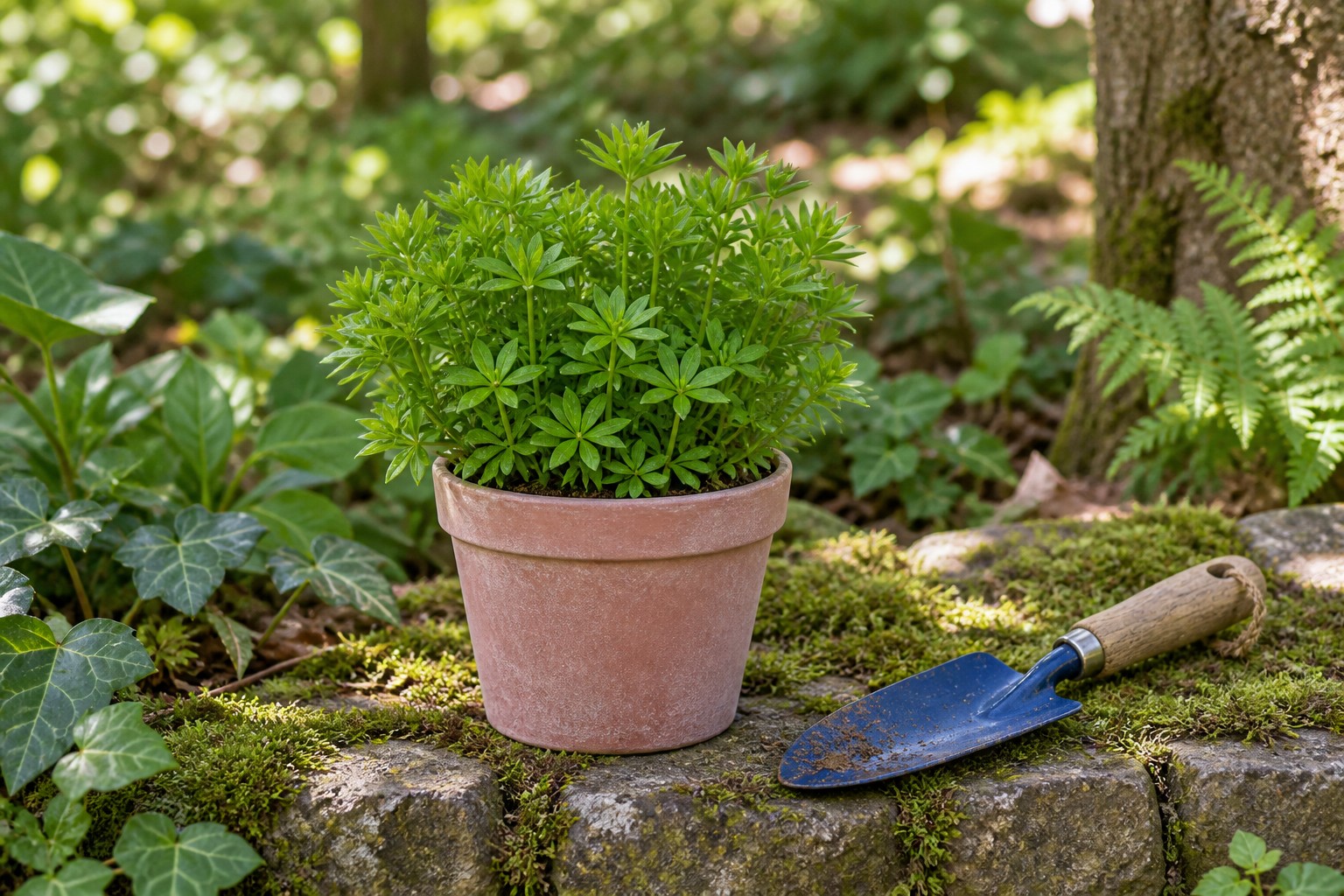
Galium odoratum belongs to the Rubiaceae family. Several elongated leaves form striking whorls around its fine stems. Small white flowers open above them in spring. A healthy patch can join through underground shoots into a green carpet. Its familiar scent becomes especially noticeable during wilting and drying. In the garden, sweet woodruff therefore works on two levels: its regular leaf structure organises shady areas and brings a characteristic scent close to a path or seating place.
A small potted plant for a larger carpet
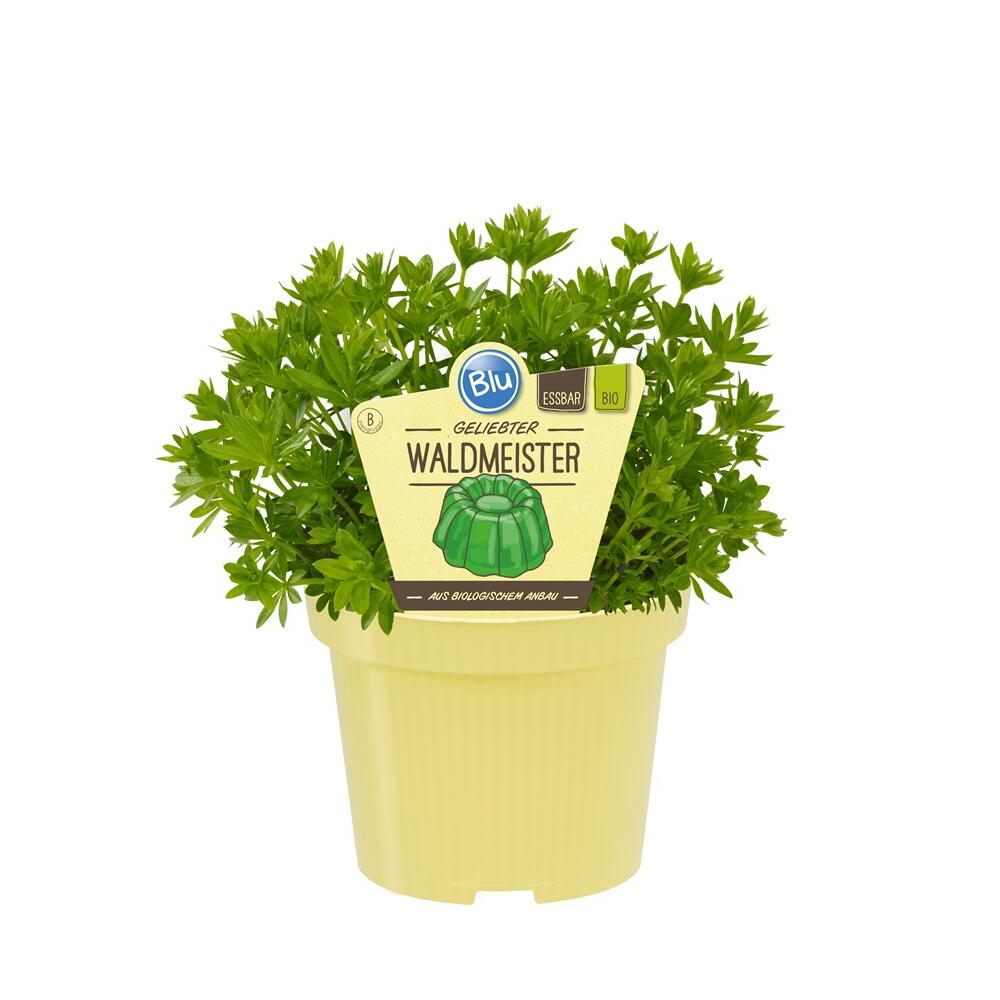
The offer contains an organically grown plant in a 12 cm pot. The 15 to 20 cm stated in the shop describes growth rather than a specific delivery-height promise. The original photograph shows a young green patch without open flowers. Under suitable conditions, it can later spread. Plan its position according to more than the delivery pot. Sweet woodruff can fill gaps between strong shade perennials, while sensitive very small neighbours may be crowded during favourable development. Growing it in a container makes its spread easier to control.
Woodland-like soil matters more than strong sun
Choose a partially shaded to shaded outdoor position with humus-rich loose soil. Deciduous trees and shrubs often provide suitable light, but their roots can draw much water from the ground in summer. Check actual moisture there too. A sunny hot herb pot with constantly dry soil does not suit this woodland perennial. Thoroughly wet the young root ball at planting and set it no deeper than before. A loose organic surface covering can balance moisture, but should not bury young shoots under a heavy wet layer.
Watch the establishment period carefully
Keep the soil evenly moist and water slowly and thoroughly during dryness. Excess must drain from containers. If the patch no longer stays fresh green in summer drought, inspect the root zone first; sweet woodruff can temporarily die back in unfavourable conditions. Heavy feeding is usually unnecessary in a good humus-rich position. In spring, carefully remove old dead foliage once new shoots are visible. Do not work rough tools through young growth. After division, newly planted sections initially need particularly careful supplies again.
Use the scent sparingly in the kitchen
Sweet woodruff is traditionally used for flavouring. Coumarin plays an important role in its typical scent; larger quantities are not harmless. The German Federal Centre for Nutrition recommends no more than three grams of fresh herb per litre of liquid for drinks. This quantity is not an invitation to regular high consumption. Use only confidently identified clean plants, follow a tried recipe and flavour sparingly. Concentrated homemade extracts or applications to treat ailments are not recommended by this plant portrait.
A long-lived patch occasionally needs limits
Sweet woodruff is hardy and can regrow after rest. Small pots remain more exposed to frost and drying in winter; place them in shelter, ensure drainage and check on dry frost-free days. Occasionally assess spread in beds and selectively lift sections that have travelled too far. Healthy rooted pieces can continue growing elsewhere in a suitable place in spring or autumn. A dense carpet does not need severe cutting back every year. Good soil, some room and calm care preserve its natural woodland character.
One plant, several views

Good to know
Can sweet woodruff grow in shade?
Yes. Humus-rich evenly moist partial shade to shade suits its natural growth character well.
Why does dried sweet woodruff smell stronger?
Wilting and drying make the characteristic scent, in which coumarin plays a part, more noticeable.
Is a lot of sweet woodruff particularly healthy?
No. Its coumarin content requires restraint. This portrait recommends neither medicinal treatment nor concentrated homemade preparations.
How do I prevent excessive spread?
Check the edges of the patch and selectively lift rooted sections that have travelled too far, or grow it in a container.
Sources and editorial note
- Product and delivery contents: Exotenherz
- NC State Extension: plant profile
- German Federal Centre for Nutrition: sweet woodruff and safe culinary use
Sources checked: 15 September 2026. Product information and the contents of delivery follow the linked shop offer. Care advice was checked against the cited specialist sources and should still be adapted to the plant’s condition, position and season.