
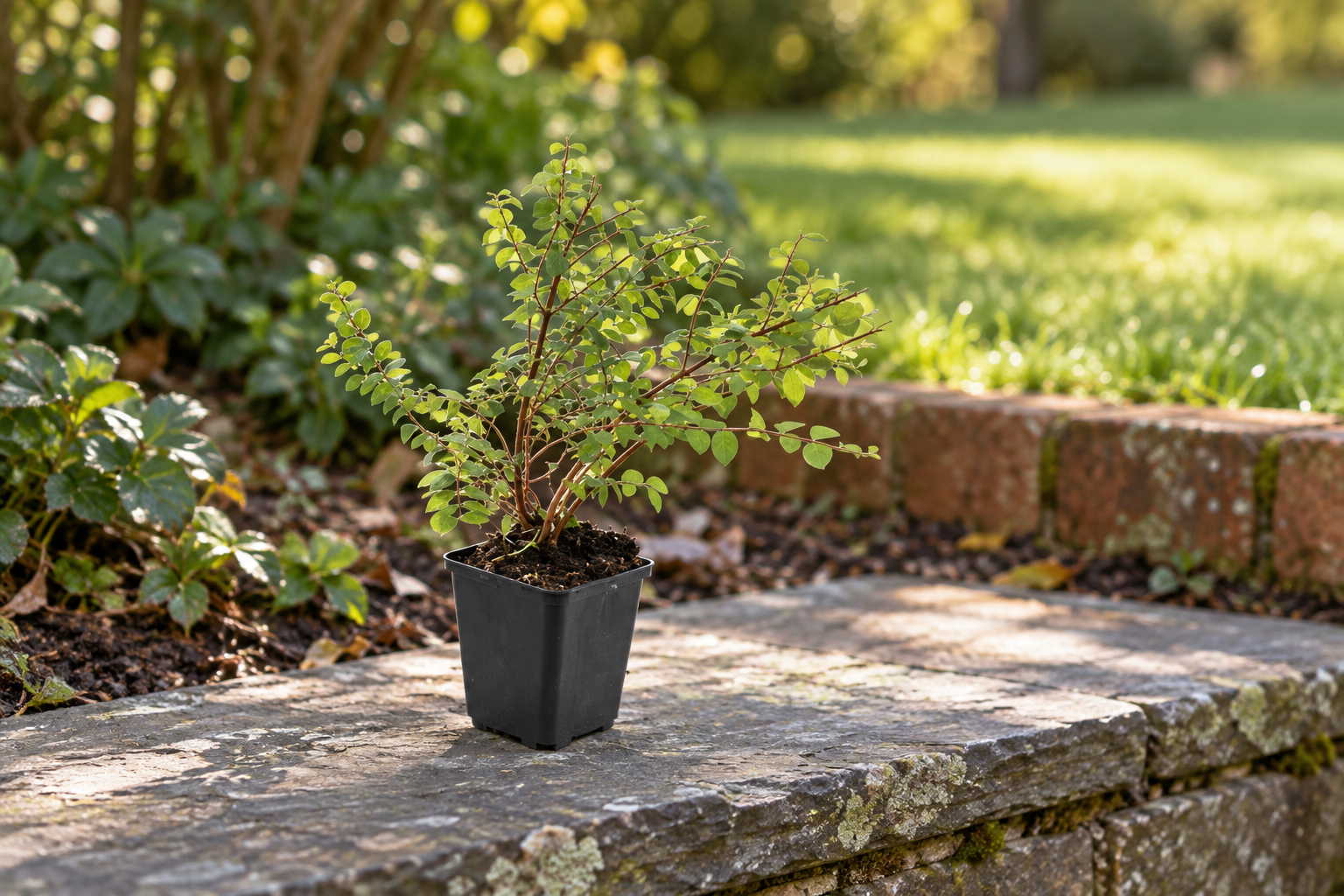
This plant at Exotenherz
Check the shop offer for current availability, price and what is included.
Check the selected shop offer for price, availability and delivery contents.
Your care table
| Topic | What to do | Why it helps |
|---|---|---|
| Light | Choose sun to shade according to garden area. | The low cultivar can also be used under light woody crowns. |
| Soil | Loosen compacted soil and avoid standing water. | A thickening shrub still needs aerated root space. |
| Establishment | Moisten the small rootball, set at previous depth and water in. | Initial supply starts at the rootball, not somewhere on the area. |
| Water | Supply new plants thoroughly as needed; later check soil and weather too. | Drought tolerance of an established planting does not immediately apply to young plants. |
| Feeding | If soil supply is weak feed moderately in spring according to label. | Overstrong growth makes the area need care sooner. |
| Pruning | Selectively remove dead, damaged and out-of-bounds branches. | Broad branching should leave paths and small neighbouring perennials free. |
| Winter | Keep garden plants outdoors; shelter containers and retain free drainage. | Small pot roots are more exposed to cold than bed roots. |
| Fruits | Treat as an ornamental shrub, not fruits for snacking. | Decorative fruit is no proof of an edible plant. |
Check the compost and pot weight. The care table explains how far the compost may dry.
Water only when needed. The water should reach the root ball without spilling over the rim.
Remove surplus water from the saucer or cachepot. Then return the plant to a suitable position.
Branches draw the area
Hancock’s effect comes from many small details. Fine brownish branches bend sideways and carry little oval green leaves. A young plant still looks open; with time branching makes a low living edge. At a broad woody border this structure can soften the transition to a path. Small flowers take a back seat. Possible later purple-red fruits add to autumn appearance, not a reason to treat the shrub as a heavily cropping berry plant. The portrait describes Hancock, whose low habit differs from taller coralberries.
Width is the main planning dimension here
Young offers each stand in a 9 cm pot and measure about 10 to 25 cm overall including pot. That is not yet a closed garden planting. Around half to one metre height is sensible guidance for the developed cultivar; sideways it may reach about one and a half metres. The shop gives around 50 cm spacing for area planting. Closely planted shrubs grow into one another later. Leave the outermost planting point sufficiently distant from small perennials and narrow paths. Before planting place pots on the area and consider spacing from later watering and pruning access too.
Even under trees care begins with soil
Hancock can grow in sun and shade. Under a tree light alone does not decide. The crown intercepts rain, existing roots take moisture and a dry surface layer may quickly stress a fresh rootball. Prepare the site gently without injuring large tree roots. Well-drained structure is better than a compacted hollow holding water. Check whether watering access exists. Soil should not disappear from view even in a later largely closed area; green leaves show no invisible water reserves.
A little rootball connects only gradually
Spring and early autumn are often pleasant planting times when soil is frost-free and sufficiently drained. Summer heat requires closer checks. Slowly moisten a dry rootball, remove the pot and set at previous depth. Gently connect soil and let water soak at the planting point. During following weeks check moisture exactly there. Moist garden soil beside a dry delivered rootball initially helps young roots little. Thorough watering as needed is better than repeated leaf wetting. New shoots show activity but do not replace root-zone checks.
Observe flowers and autumn fruits calmly
Small whitish to pink flowers can easily go unnoticed in foliage. Summer flowering from June to September is described for the species; this means no reliable continuous flower band for Hancock. Development changes with weather, position and age. Later little purple-red fruits may sit among branches. A fresh fruitless delivery does not become a care fault. Judge foliage, branch condition and new growth first. Berries here are ornamental. Do not collect them for food and place a fruiting shrub so children or pets do not learn it as a snack offer.
Keep edges open and accessible
A low shrub also needs space control. If branches extend into a path or cover weaker neighbours cut the relevant portions selectively. Remove dead and damaged branches without instantly shaping every young plant geometrically. Loose structure belongs to the effect. Assess soil supply in spring; feed restrainedly if needed according to product dosage. Strong growth is not automatically wanted in tightly sized areas. If planting stays uneven first check individual points for dryness, standing water and root competition before every shrub receives the same extra supply.
Winter changes the view
Hancock is mainly deciduous but may retain leaves longer in mild situations. A more open winter planting therefore does not automatically mean plants have died. Wait for spring growth and then selectively remove damaged portions. In containers the broad cultivar stays manageable only with enough root room and regular care. Small sales pots are no permanent standard. Root protection and free drainage ease the cold season; check moisture on frost-free days. A warm living room does not replace garden conditions. Winter particularly shows where branches may develop further next season.
One plant, several views
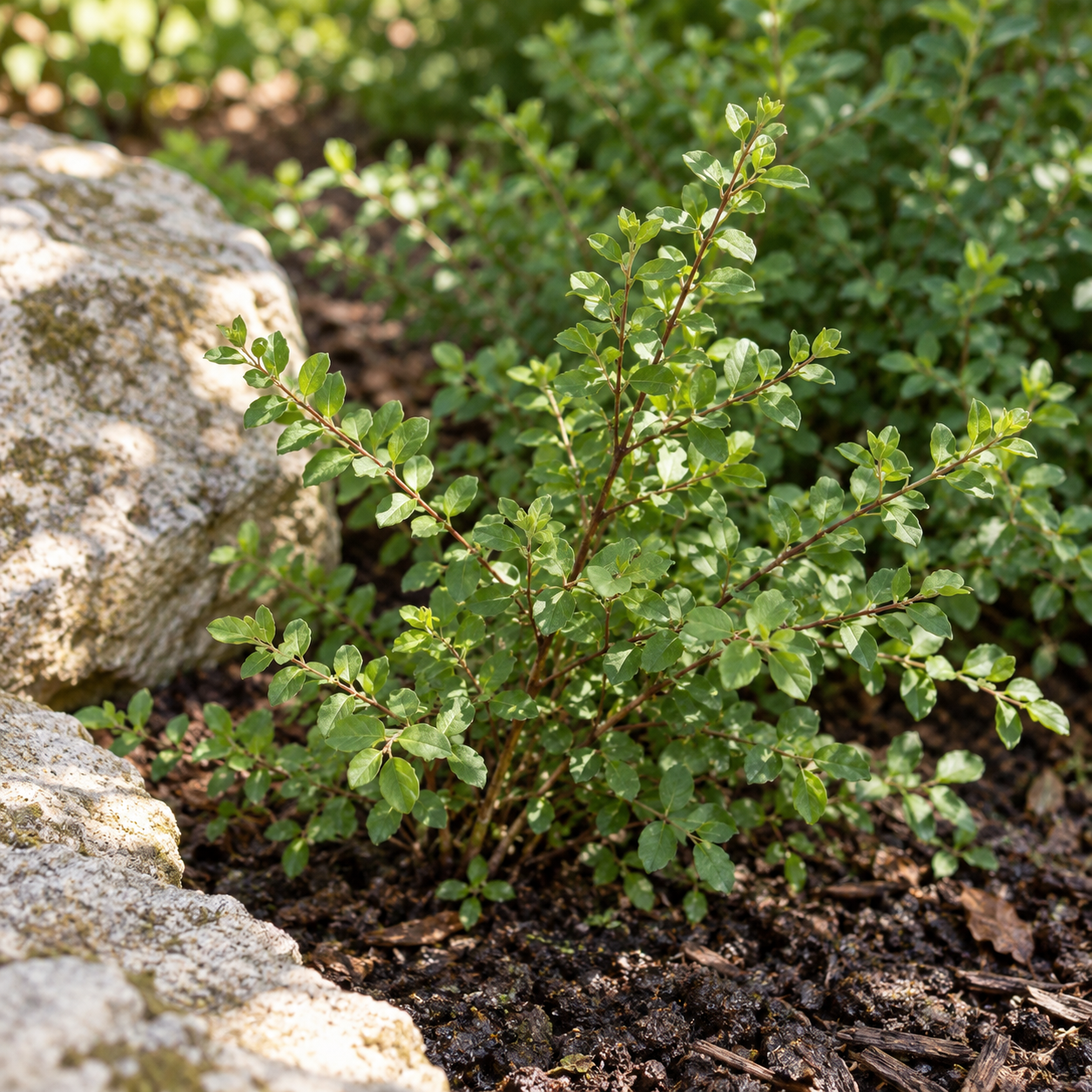
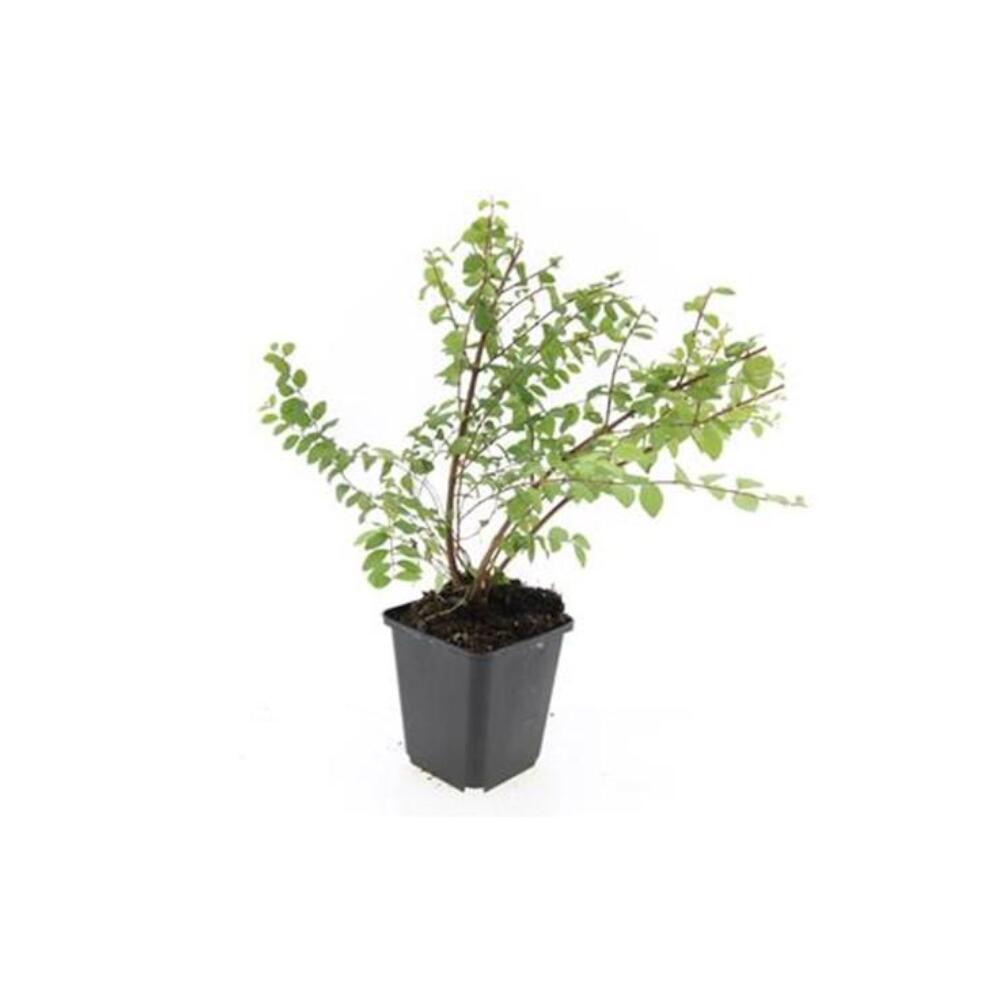
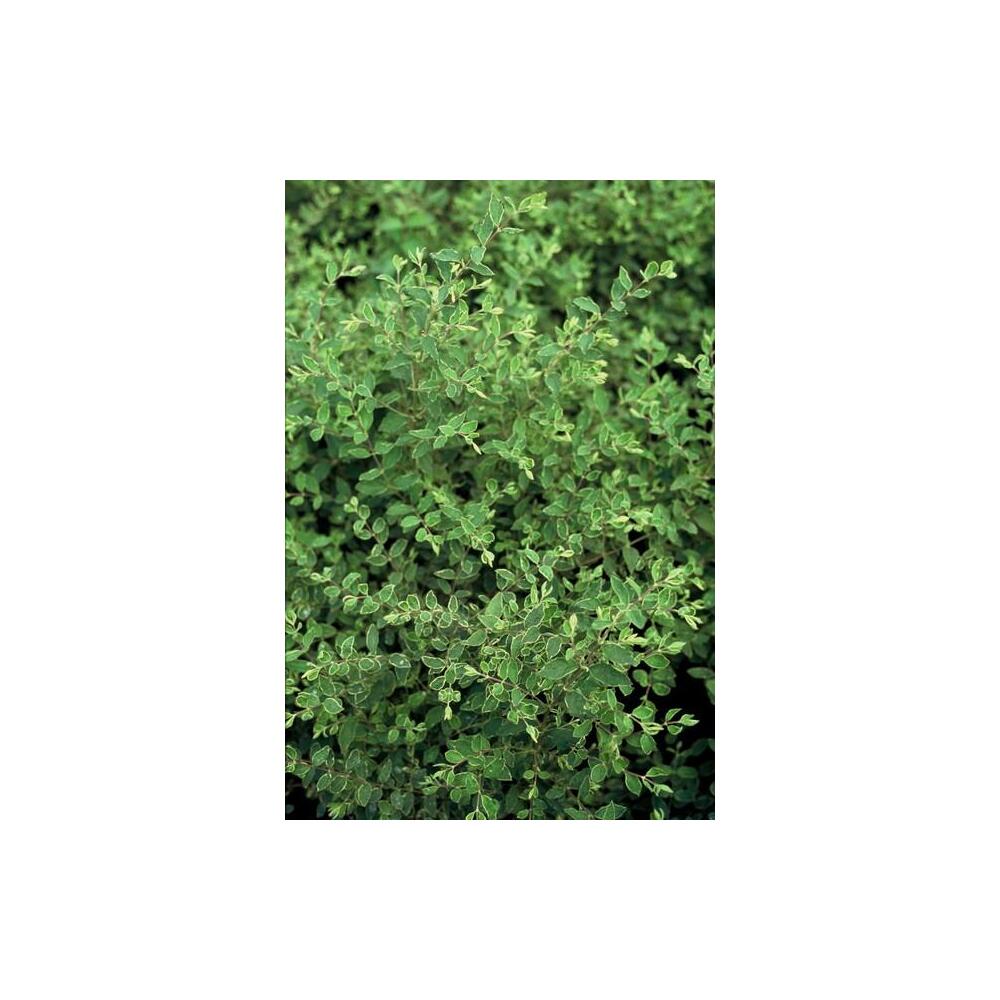
Good to know
Does Hancock stay just 25 cm tall?
No. The 10–25 cm is delivery size including pot. Developed shrubs reach around 0.5–1 m and gain substantial width.
Is coralberry evergreen?
It mainly loses foliage. Leaves may stay longer in mild situations; identical permanent winter appearance is not promised.
Does Hancock flower conspicuously?
Whitish to pink flowers are small and inconspicuous. Low broad growth and fine foliage shape the garden picture more.
Can I eat the fruits?
Treat Hancock as an ornamental shrub and fruits as decoration, not snack fruit.
How closely do I plant a set?
The shop gives about 50 cm as area guidance; later width and path distance also count.
Does a shady position need water?
Yes, especially during establishment. Soil under tree crowns may be dry despite shade.
Sources and editorial note
- Exotenherz: currently read parent offer (03.10.2026)
- Exotenherz: currently orderable child offer (03.10.2026)
- International Dendrology Society: species profile and own Hancock section (accessed 03.10.2026)
- Polish Nurserymen Association: Hancock, growth and use (accessed 03.10.2026)
Identity, parent offer and selectable child offers read publicly on 03.10.2026. Specialist sources read directly; quantity variants belong to this one portrait. Shop fruit image gallery 3 remains internal: white fruits are unsuitable for characteristic Hancock depiction.