
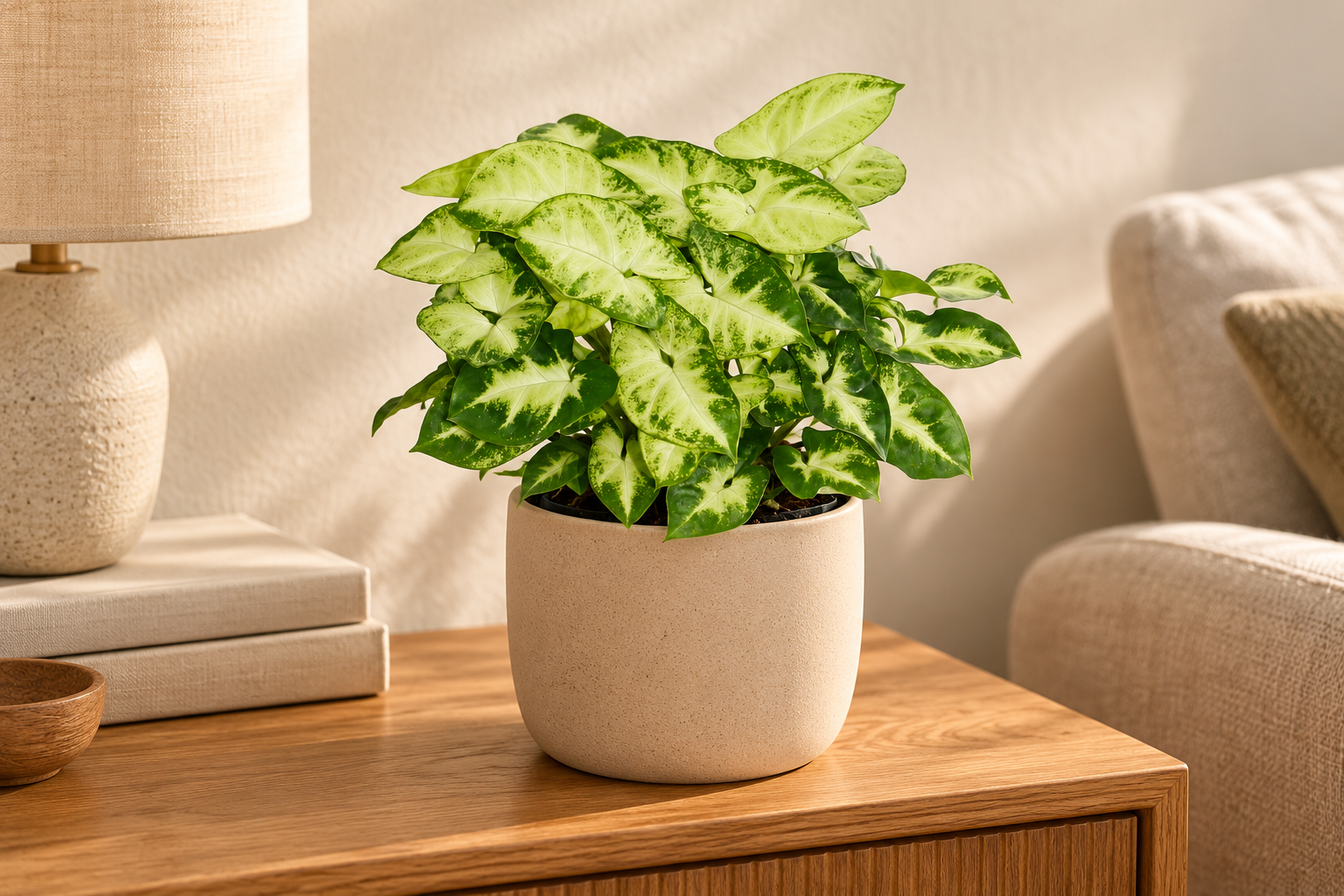
This plant at Exotenherz
Check the shop offer for current availability, price and what is included.
Check the selected shop offer for price, availability and delivery contents.
Your care table
| Topic | What to do | Why it helps |
|---|---|---|
| Light | Choose bright filtered light and avoid strong midday sun. | The soft pale leaf areas should receive light without a sudden move into fierce sun. |
| Water | Check the top soil layer and water thoroughly when it begins to dry. | The root ball should stay moderately moist without standing permanently in water. |
| Outer pot | Check after watering and empty excess water. | A decorative outer pot does not replace drainage holes in the actual planting pot. |
| Soil | Use loose houseplant soil with good drainage. | Airy soil lets water flow away and makes appropriate watering easier. |
| Climate | Place in warmth and protect from cold draughts. | In our climate the tropical arrowhead plant belongs in a sheltered indoor space. |
| Fertiliser | During active growth use a suitable houseplant fertiliser according to its label. | Small pots need moderate nutrition; fertiliser replaces neither light nor healthy roots. |
| Growth | Support lengthening shoots or shorten selectively as desired. | A bushy starting condition need not remain each plant’s permanent form. |
| Handling | Avoid sap contact when cutting and clean hands. | Arum plants can irritate through calcium oxalate; they are not edible plants. |
Check the compost and pot weight. The care table explains how far the compost may dry.
Water only when needed. The water should reach the root ball without spilling over the rim.
Remove surplus water from the saucer or cachepot. Then return the plant to a suitable position.
A pale arrow among green leaves
With Pixie, my eye first goes to the leaf centre. It is noticeably lighter than the green edge and gives the small bush a friendly lively pattern. Young leaves have a recognisable arrow shape with two small side lobes at the base. On a quiet wooden sideboard I particularly like this change between cream-green and darker veins. I need neither a giant container nor a whole plant wall for that. The offered individual plant sits in a 12 cm pot and is about 25–30 cm tall. That is delivery guidance, not a final growth height for its whole life.
Deliberately distinguish one plant from a set of three
Anyone wanting to arrange one favourite position first can begin with a single Pixie. A set of three instead suits distributing plants among several suitable positions or starting a small group together. Each pot still has its own water needs even if all three look alike. A bright spot on a chest of drawers dries differently from a slightly shadier shelf. I would therefore not water them automatically at the same time. The set offer specifies about 20–30 cm per plant; the individual offer 25–30 cm. I deliberately leave those figures side by side instead of inventing a shared size.
Bright does not mean in the middle of hot sun
I give Pixie filtered light and a warm position without draughts. On a chest of drawers or shelf, I do not judge only whether the furnishings look attractive: the plant must actually receive sufficient daylight. An attractive outer pot does not brighten a dark corner. Conversely, I would not suddenly put the delicate leaves at a sunny south-facing position. If pale dry patches appear after a move, I first check the timing and direct sun. One damaged leaf is not yet a certain diagnosis. What matters is how new leaves look in the chosen position.
Soil says more than the weekday
For watering I check the top soil layer and pot weight. When the surface begins to dry, the root ball is watered thoroughly and excess water can drain away. Soil should stay moderately moist without the pot remaining wet. I check this particularly carefully in a decorative outer pot: water can stay unnoticed between ceramic and nursery pot. If leaves droop, I therefore first look in the soil. A dry root ball and wet damaged roots can both create a limp impression but need different responses. Consumption is often slower in winter than during a bright warm growth spurt.
Keep supporting the young bush
A young arrowhead plant initially shows the attractive bushy structure in the shop image. Shoots may lengthen with time. I then let development decide whether a small support suits it or I shorten selectively. The species belongs to the climbing arum plants; young growth form is therefore not an unchanging furniture dimension. When repotting, I check root space and choose only an appropriately larger pot with drainage holes. A very large reserve of continually moist soil is no advantage for the small plant. Pale leaves remain the main attraction; indoor flowers are no reliable goal.
Observe leaves and care gently
Dust can be removed carefully with a soft damp cloth. I also look at leaf undersides and shoot bases. Unusual marks, sticky traces or fine webs deserve closer attention before I simply give more water or fertiliser. Higher humidity can suit the tropical plant but does not replace appropriate root condition or sensible ventilation. I would avoid a position directly above a hot heater. Feed moderately during visible growth following the instructions. If a plant weakens after a change, small understandable steps help more than several new care measures at once.
A favourite position with clear safety distance
As much as I enjoy showing Pixie indoors, I place it out of reach of small children and pets. Plant parts and sap can irritate and must not go in the mouth. When cutting I avoid sap contact, clean the tool and wash my hands afterwards. A shelf is a good solution only if it has enough light and animals cannot easily reach it. The attractive pattern alone is already a good reason for this arrowhead plant. I need no promise about purified indoor air. A healthy plant whose new arrow leaves I can follow over time is enough for me.
One plant, several views
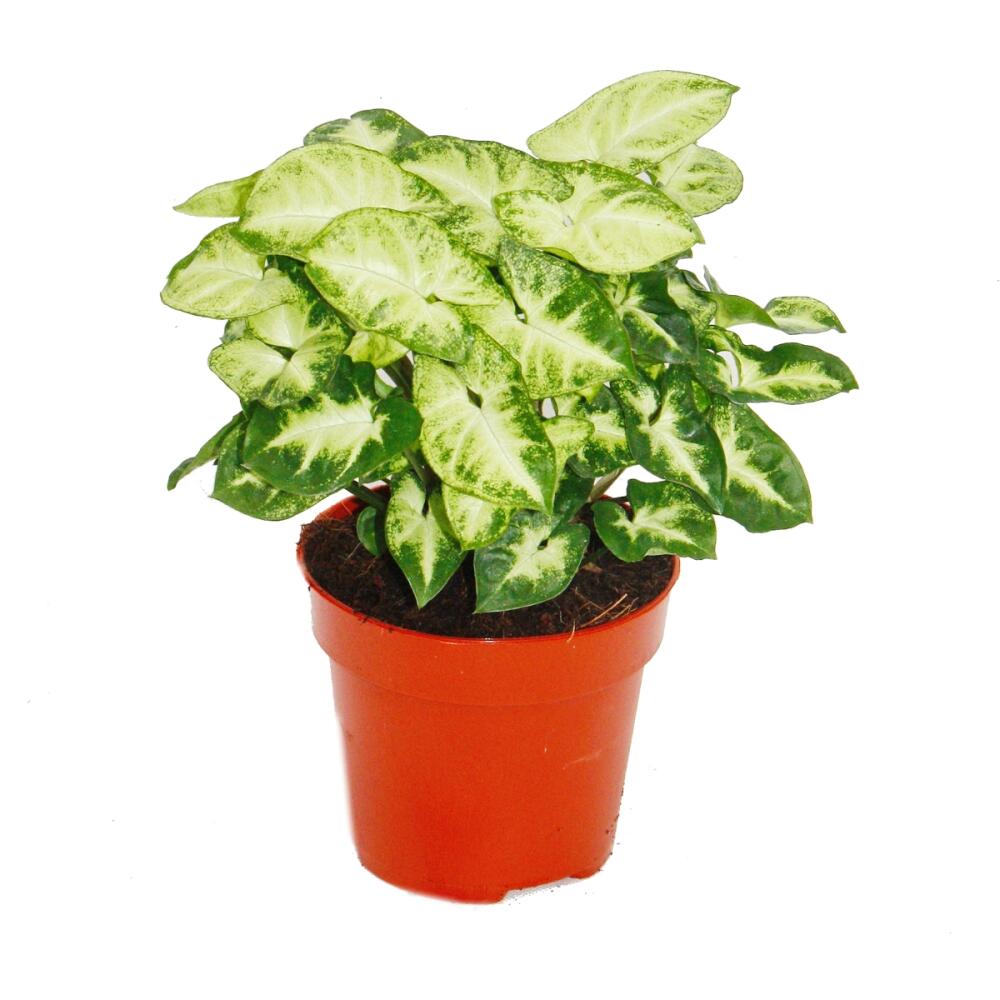
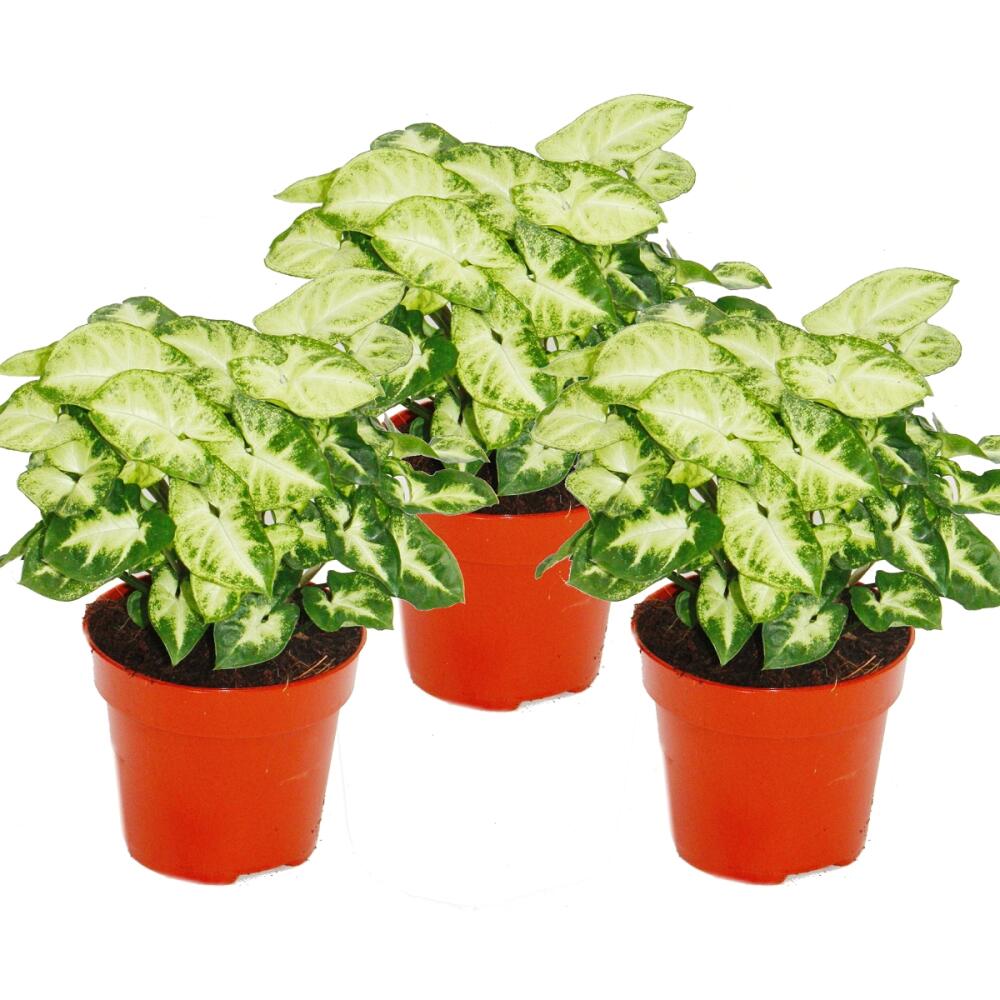
Good to know
Why are the leaves drooping?
First check moisture and water in the outer pot. Both a dried root ball and permanently wet roots can cause limp leaves.
Can Pixie go directly into sun?
Avoid strong direct midday sun. A bright position with filtered light is a good starting point.
Will it always stay as small as on delivery?
Delivery height is no permanent final size. Even Pixie may grow longer shoots over time; observe development at its position.
Must I water the three set plants simultaneously?
No. Each pot is supplied according to its own soil moisture; light, warmth and root development may differ.
Why does the set of three have a different height?
The two offers specify different size ranges. The selected offer’s figure applies to the order.
Is the arrowhead plant suitable for pets?
Not for nibbling. Calcium oxalate can irritate, and it should stand out of reach of children and pets.
Can I leave Pixie in the garden?
In our climate it is a warm houseplant. A protected stay in mild weather differs from hardy garden planting; avoid cold nights.
Sources and editorial note
- Exotenherz: individual offer, article identity and delivery size (01.10.2026)
- Exotenherz: set of three and original images (01.10.2026)
- RHS: botanical classification of cultivar Pixie (01.10.2026)
- NC State Extension: Syngonium podophyllum, leaf development and safe handling (01.10.2026)
Individual child 176319112020-22, GTIN 4019515914425, immediately available; set of three 140530112018, GTIN 4019515912674, limited availability, both shop pages read. Delivery sizes presented separately. RHS exact cultivar Pixie, NC State species profile; no general air-cleaning or environmental promises adopted from shop names. No definitive cultivar-specific maximum height inferred from general species size. Scene accepted: leaf shape, cream-green pattern, compact growth and 12 cm proportions confirmed against original; warm sideboard composition accepted.