
This plant at Exotenherz
Check the shop offer for current availability, price and what is included.
Check the selected shop offer for price, availability and delivery contents.
Your care table
| Topic | What to do | Why it helps |
|---|---|---|
| Getting acquainted | Unpack pots individually and match existing labels. | Different forms can have different care needs and later sizes. |
| Light | Position very brightly and increase sun gradually after transport. | Compact growth accustomed to sun differs from a sudden heat shock. |
| Water | During growth, water the dry root ball thoroughly, then allow free drainage. | A fixed weekly plan does not replace moisture checks. |
| Substrate | Use airy, freely draining cactus substrate and pots with holes. | Small root spaces remain moist too long in dense wet soil. |
| Feeding | During actual growth, feed sparingly according to the fertiliser label. | More fertiliser cannot compensate for insufficient light. |
| Repotting | Give a little more room when densely rooted and avoid contact with spines. | An unnecessarily large soil volume dries more slowly. |
| Handling | Work at the pot with suitable protection; do not touch flat segments with fine bristles. | Even inconspicuous fine glochids can lodge in skin. |
| Winter | Keep bright and frost-free; adjust rest, temperature and water to the plant. | An unknown set receives no general hardiness promise or shared winter temperature. |
Check the compost and pot weight. The care table explains how far the compost may dry.
Water only when needed. The water should reach the root ball without spilling over the rim.
Remove surplus water from the saucer or cachepot. Then return the plant to a suitable position.
The collection begins with a second look
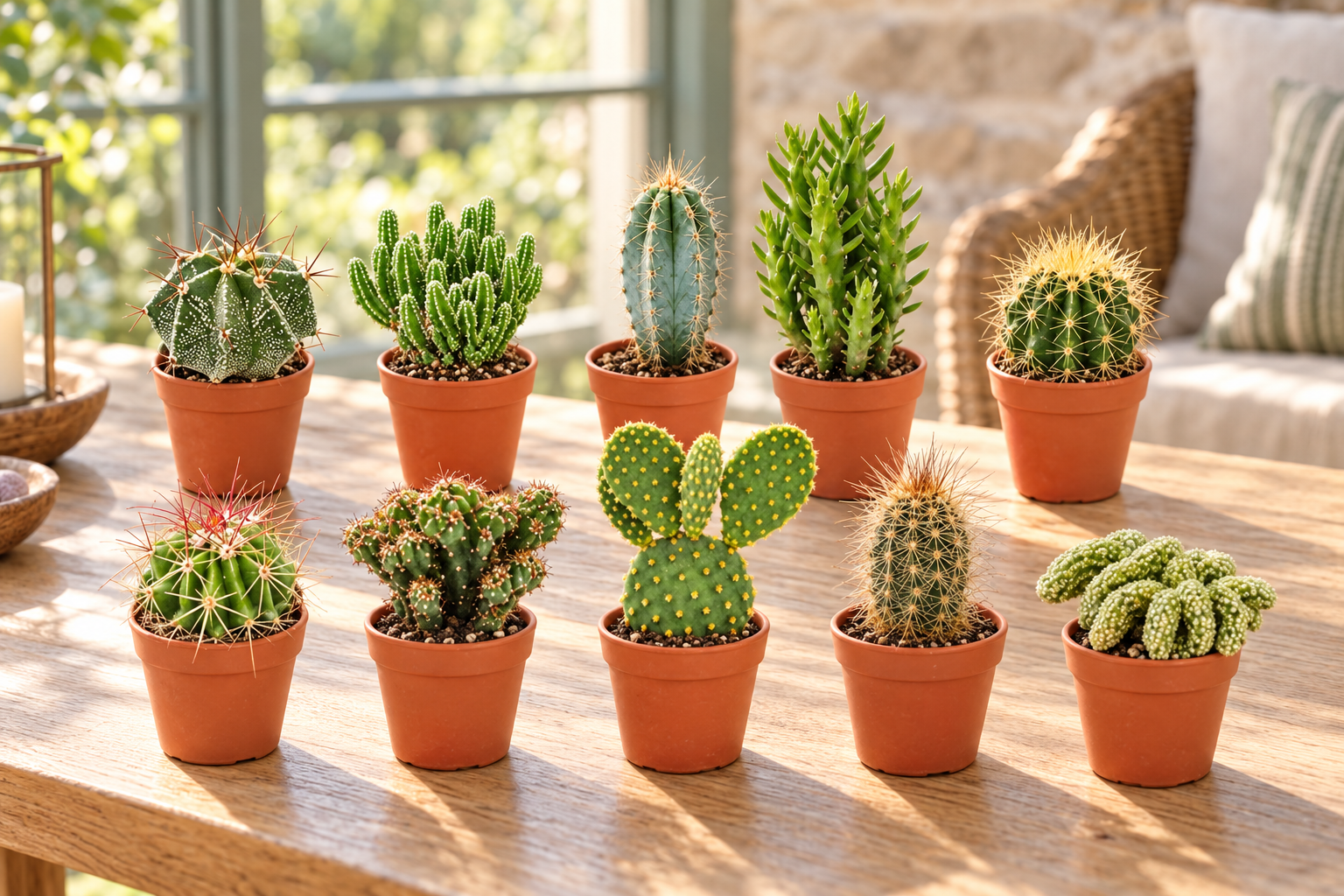
Ten small cacti can be viewed like a row of living sculptures. Differences are not just in height: ribs cast narrow shadows, individual spines add accents, and densely branching segments form a little cushion. Rounded, columnar and branching shapes stand together in the shop photograph. These are selection examples; the plants actually supplied are chosen according to availability. This makes it worthwhile not to derive a long list of names immediately from the picture. First place the pots side by side and discover the shapes in your own collection. Existing labels belong with the plants and are retained.
Small pots are a beginning, not a final size
Each cactus arrives in a 5.5-centimetre pot, with an overall height of about eight to fifteen centimetres including the pot. The shop lists an approximate age of two years. This implies neither a shared growth rhythm nor a fixed later format. An initially narrow form may branch, a globe gradually widen. Arrange containers with a little space so spines do not catch on a neighbour. If you label and photograph plants individually from the start, you can compare their development later without reconstructing every new detail from memory.
Choose the bright stage carefully
A light conservatory, a well-lit potting table or a very bright indoor position can display the little forms beautifully. What matters is how much light actually reaches each plant. The rear row must not disappear permanently behind a tall plant at the front. After transport, increase direct sun gradually; on a hot day behind glass, even a sun-loving plant can suddenly be damaged. In summer, a sheltered outdoor position is possible after acclimatisation. Besides light, consider rainfall, night-time warmth and the ability to bring the set back in during unfavourable weather.
Water goes to the root ball, not by a shared clock
Check each pot separately. If the root space is dry and the plant is growing, water thoroughly and remove the excess. A low broad cactus and a more branching plant may use water at different rates despite equal pot sizes. Small sips that only wet the surface make this assessment harder. Occasionally lift containers and compare their weight. If they stand in a shared decorative bowl, keep the individual inner pots accessible and empty the bowl. A beautiful arrangement should make checks easier, not create a hidden water reserve.
Soil should receive air again between waterings
A suitable cactus substrate and clear drainage holes support a root zone that dries well. When necessary repotting comes later, provide only a little more room; a tiny root ball should not be surrounded by a large permanently damp soil block. Work at the container and protect your hands. If an opuntia with flat segments and fine bristles is included, those bristles often look more harmless than they are: tiny glochids can stick to skin. Do not stroke the surface with bare fingers. A close photograph reveals ribs and spines without unnecessarily touching the plant.
Accompany rest and flowering according to the actual plant
The young supplied plant need not flower yet. Flowering time and colour are not fixed by the variable offer. Many cacti benefit from greatly reduced supplies during slow winter growth; the appropriate temperature depends on the actual species. Keep the collection safely frost-free and clarify identification before trying cooler winter conditions. A cactus from a wetter tropical way of life is assessed differently from a compact desert form. In bright spring, observe new growth and gradually align supplies with it. Feed moderately during growth, not as a general flower trigger.
Calm checks protect the next growth
Soft areas, unusual deposits and strongly thinning new growth are reasons to examine position and root ball more closely. A wet soft cactus is not stabilised by more water. Check sheltered places between segments and around the pot rim for animals too. Not every dry older surface area requires pruning. Start with a recognisable care problem and record changes in a photograph. Ten small pots then become not ten rigid watering schedules but a manageable group whose individual features you gradually learn.
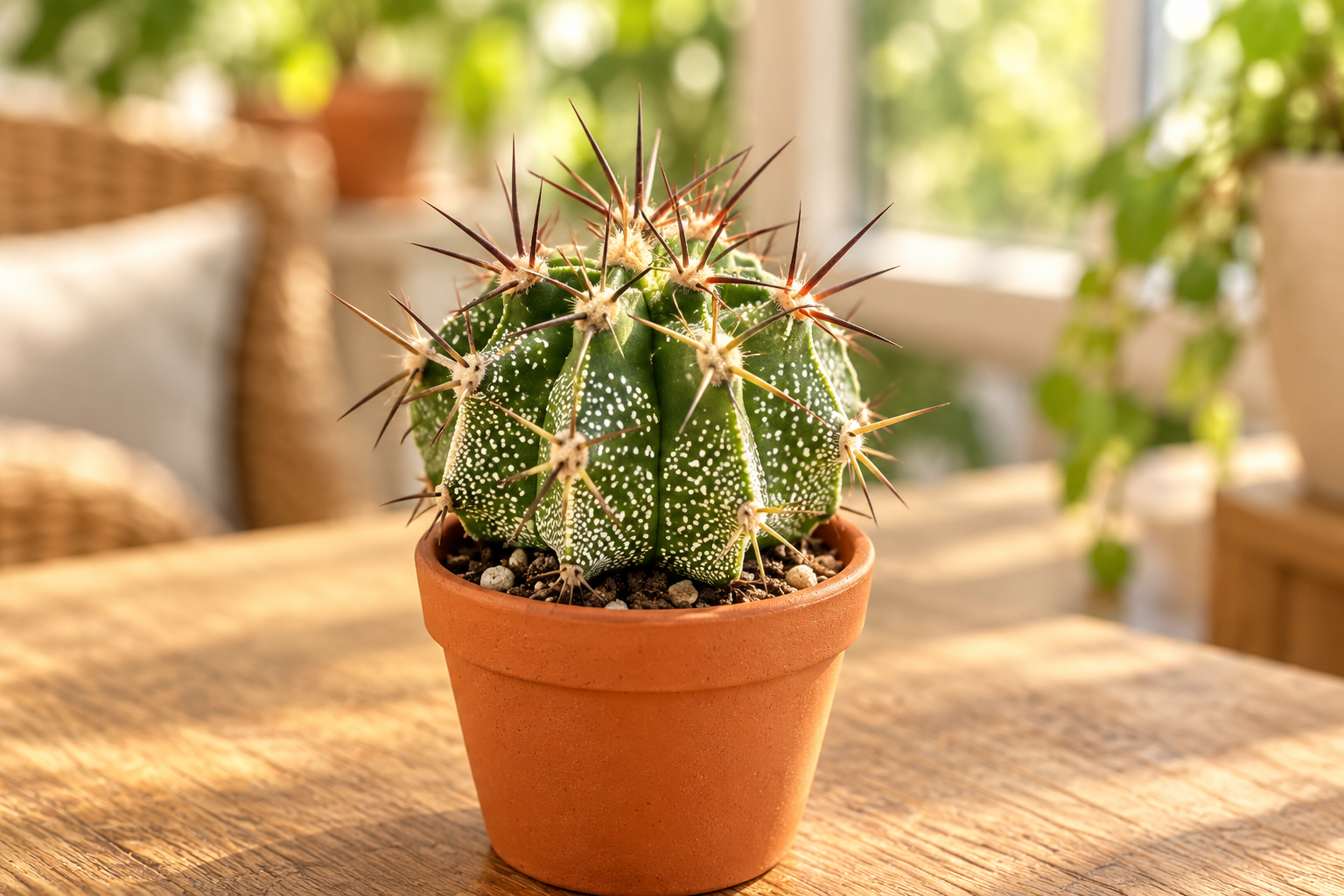
One plant, several views
Good to know
Will I receive exactly the ten plants in the picture?
Selection depends on availability and may differ from the example image. No fixed variety list is guaranteed.
Do they remain eight to fifteen centimetres tall?
This is the overall height of the young supplied plants including the pot. Later size depends on species and cultivation.
Should I water all ten on the same day?
Check each root ball and growth. Equal pot size does not mean equal water use.
Can I plant them in a bowl without holes?
Clear drainage holes are important for care. A decorative outer bowl must not retain standing water.
Are fine dots on an opuntia harmless?
Do not touch: fine bristles, or glochids, can remain in skin. Work at the pot with protection.
Is a cool winter rest the same for all?
The actual species decides. The set stays frost-free; unidentified plants get no unverified shared temperature plan.
Sources and editorial note
- Exotenherz: offer and original images (02.10.2026)
- RHS: cacti and succulents in pots (02.10.2026)
- University of Minnesota Extension: collections, light and drainage (02.10.2026)
- NC State Extension: Opuntia microdasys and fine glochids (02.10.2026)
Shop offer, article number, GTIN, availability and original images checked directly on 02.10.2026. Specialist sources read directly. Variable selection not presented as a fixed botanical list; opuntia advice expressly conditional. Brand stamp in shop images used only as an internal reference; public gallery with labelled AI-created detail view. The scene and, where applicable, AI-created detail view were checked directly against the shop reference; quantity, growth forms and size reference suitable.