
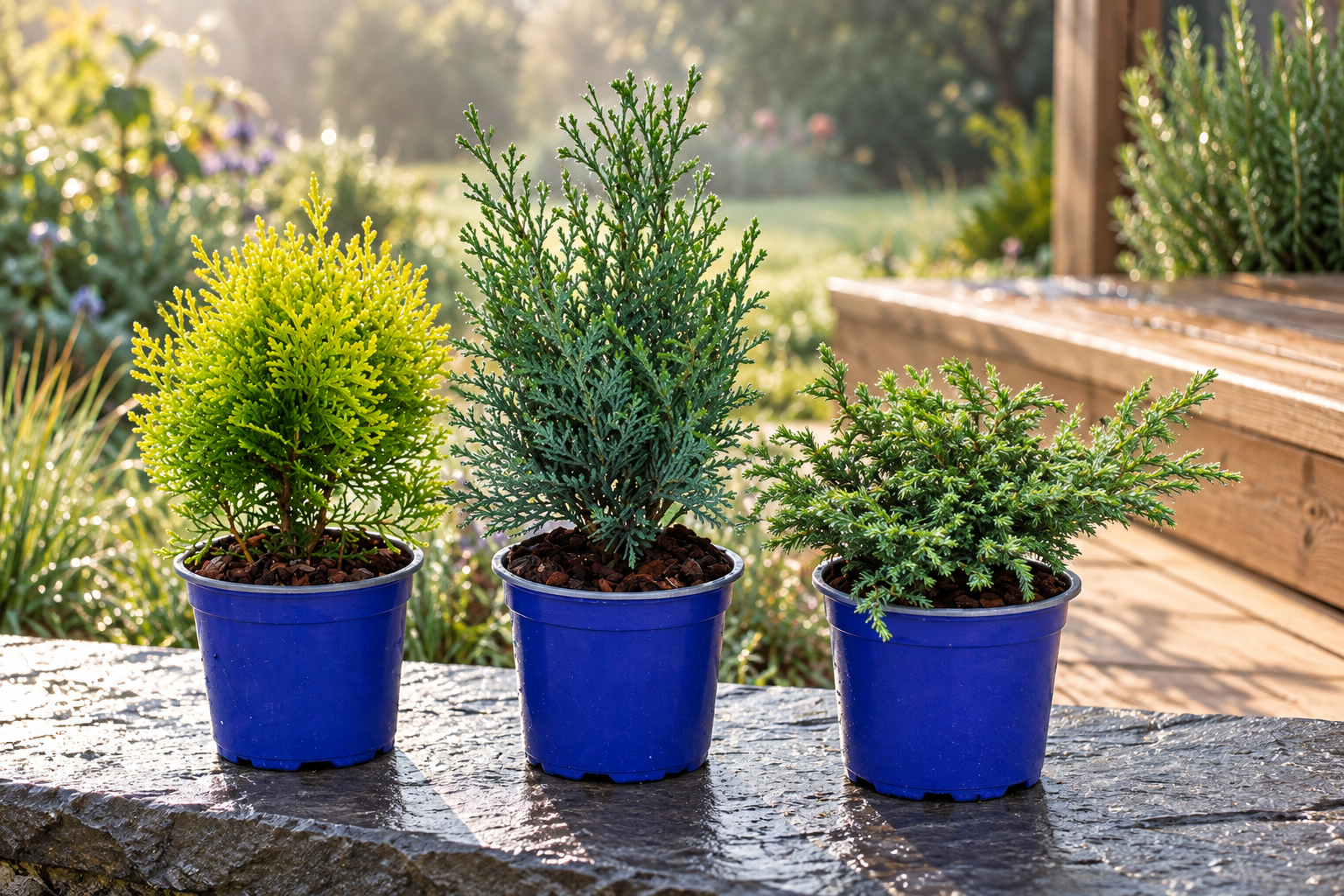
This plant at Exotenherz
Check the shop offer for current availability, price and what is included.
Check the selected shop offer for price, availability and delivery contents.
Your care table
| Topic | What to do | Why it helps |
|---|---|---|
| Planning | Keep the three labels and check later height and spread. | Even slow-growing conifers may outgrow their original pot position. |
| Light | Keep brightly outdoors and observe variety-specific sun needs. | A pretty branch colour does not replace a suitable long-term position. |
| Water | Water each young root ball thoroughly in good time. | Freshly planted woody plants and small pots cannot yet draw water from a wide soil area. |
| Drainage | Provide clear holes and a permeable root zone. | Persistently wet soil can cause brown branches just as dryness can. |
| Planting | Plant at the existing root-ball level and water the soil in. | A deeply buried trunk base is kept unnecessarily moist. |
| Feeding | In containers during growth, feed moderately according to the fertiliser label. | In a bed, extra food depends on soil and development. |
| Pruning | Shape selectively and do not cut into bare old wood without checking. | Many conifers do not reliably reshoot there. |
| Winter | Keep sheltered outdoors, insulate containers and check moisture in frost-free soil. | Leafy branches lose water in winter too; frozen roots have difficulty replenishing it. |
Check the compost and pot weight. The care table explains how far the compost may dry.
Water only when needed. The water should reach the root ball without spilling over the rim.
Remove surplus water from the saucer or cachepot. Then return the plant to a suitable position.
Differences are found on the branches
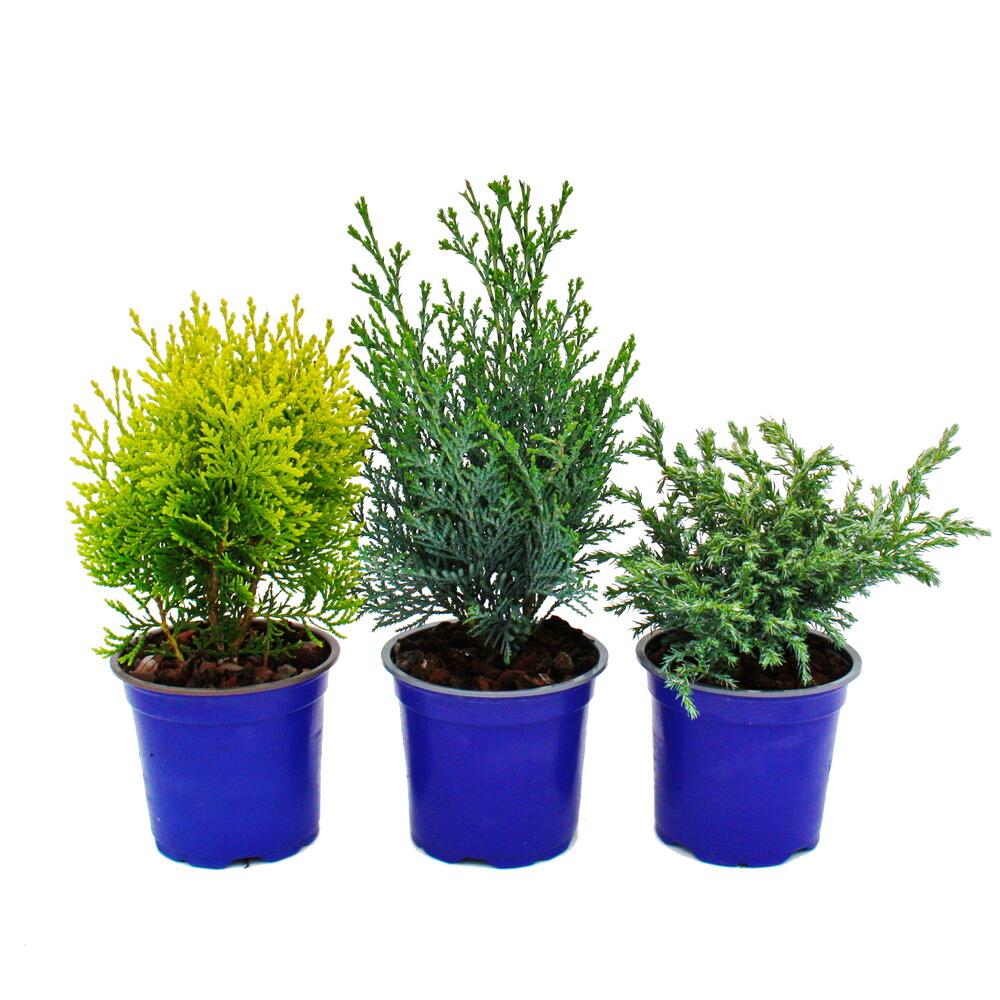
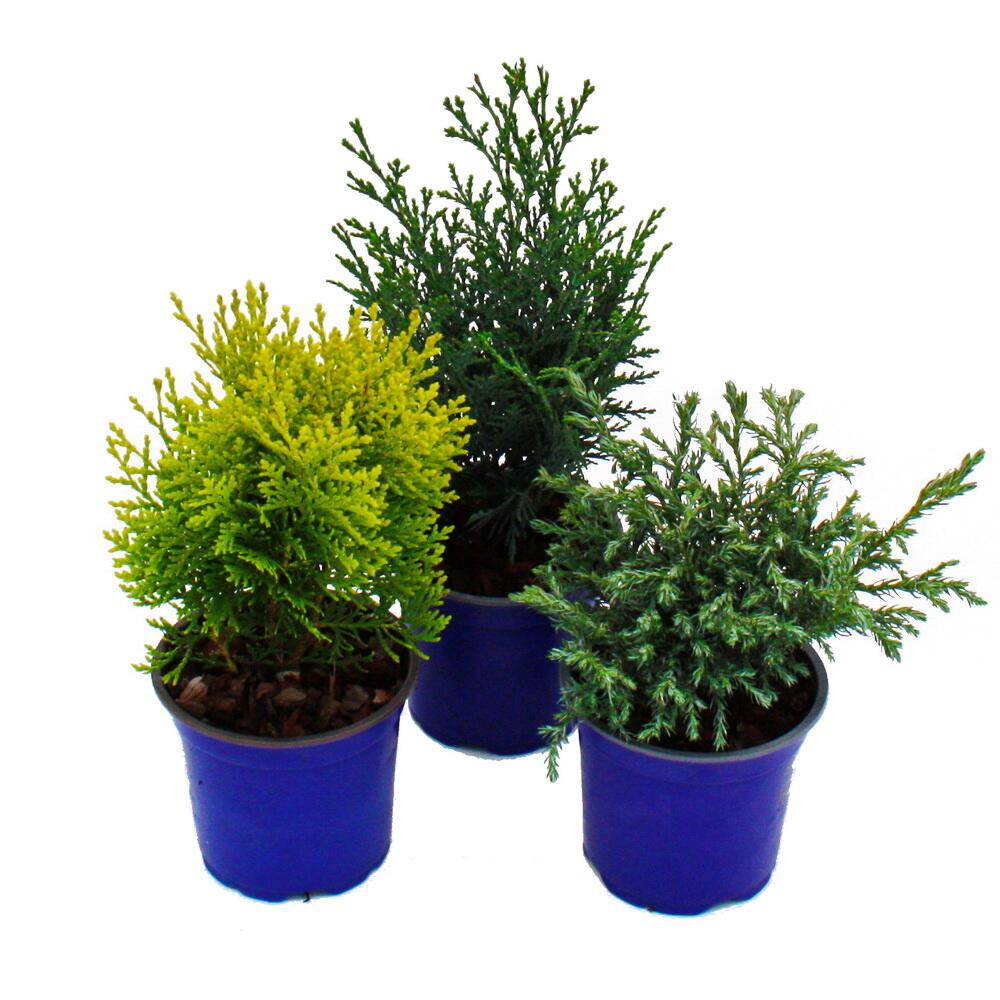
Three small conifers are especially rewarding to look at closely. An upright fan of branches looks different from a low broad structure; yellowish foliage stands out beside a bluish or deep-green neighbour. The offer is called a dwarf conifer set, but its specific species and variety selection changes with season and availability. We therefore do not compile three binding botanical names from the example image. Differences in your actual delivery are the starting point. Keep their labels, because these provide later decisions about position, pruning and space.
Small delivery plant and permanent dwarf are two questions
Three plants are supplied, each in a ten-and-a-half-centimetre pot at an overall height of about fifteen to thirty centimetres. When young, they fit into small displays and are convenient to care for separately. These delivery measurements do not yet answer how large each woody plant becomes over years. Even slow growth does not automatically mean a fixed final height. Before permanently planting beside a narrow path, a wall or in a small bowl, check the identified species or varieties and their development. Our scene shows the young beginning, not three mature miniature trees.
A bright outdoor position reveals the structure
Conifers from this garden offer remain outdoors. A bright sheltered place helps acclimatisation; exact sun tolerance follows the actual selection. After transport, do not immediately put a dry small root ball in an overheated corner. Consider the place in the afternoon too: a terrace wall may store considerable heat, while an open corner receives strong wind. The three pots may look good together, but branches should not remain tightly pressed into each other. Free space simplifies moisture checks and preserves different growth forms without immediately matching them with shears.
Consider later root space when planting
Autumn and spring often offer good establishment conditions if soil is frost-free and not waterlogged. Loosen a sufficiently large area rather than making a tiny hole in compacted soil. Plant at the existing root-ball level and water carefully afterwards. In a container, drainage, adequate volume and stability must work together. Three pots alone do not make the set a permanent miniature hedge: different growth may be appealing in a group but needs suitable distances. Set these according to later width. Small free gaps provide a useful reserve for new branches and roots.
Firm branches need supplied root balls too
Feel the soil before watering and lift the small pots. When needed, water slowly and thoroughly until the root ball is supplied and excess can drain. A dried root zone is not compensated by a quick spray on foliage. Newly planted woody plants need attention during establishment, even if larger rooted specimens later need less help. Container supplies still need more regular checks. During vigorous growth, consider existing soil and nutrient reserves before feeding moderately according to the label. Brown branches are no automatic sign of fertiliser shortage.
Shape without losing the green edge
An individual troublesome young shoot can be assessed selectively. A complete little hedge haircut by calendar does not suit all three woody plants in general. Many conifers respond poorly to cutting far into bare brown wood and do not reliably close resulting gaps. Preserve a green finish where possible and check the actual species before stronger work. Low broad growth need not become a narrow cone. The three plants may keep their differences for a living display. Work with clean tools and avoid major pruning in strong heat or drought stress.
Do not forget winter; reassess in spring
The set is offered as hardy, but roots in a small pot are more exposed than in a bed. Position containers in shelter, insulate if needed and let water drain freely. Check moisture on frost-free days; leafy branches may lose water even in cool air. A warm living room is no better winter quarters for these garden plants. After winter, assess brown parts together with frost, wind, dryness and wetness instead of immediately shortening everything. Healthy new growth helps assessment. Note which woody plant needs more space so the next season starts with a suitable decision.
One plant, several views
Good to know
Do all three remain 15–30 cm tall permanently?
No. These measurements describe delivery including the pot. Later size depends on the actual species or variety.
Will I receive exactly the three plants in the picture?
Composition changes. The original photograph and scene show examples.
Can I make a hedge from them?
Only after checking species, growth and distances. Three different young woody plants do not automatically create a uniform permanent hedge.
Why should I not cut into brown wood?
Many conifers do not reliably reshoot there. Stronger pruning needs a species-specific decision.
Do they need water in winter?
Check when soil is frost-free. Even leafy garden plants may dry out in winter containers.
Can the set stay on the desk?
It is a garden offer. A suitable bright outdoor position and natural seasons belong to long-term cultivation.
Sources and editorial note
- Exotenherz: offer and original images (02.10.2026)
- RHS: planting, pruning and container-growing conifers (02.10.2026)
Shop offer, article number, GTIN, availability and original images checked directly on 02.10.2026. Specialist sources read directly. No guaranteed permanent dwarf size derived from the young shop image; pruning not adopted as a rigid twice-yearly requirement. Scene checked directly against the original on 02.10.2026: quantities, leaf forms, growth and size reference suitable; changing selection made clear.