
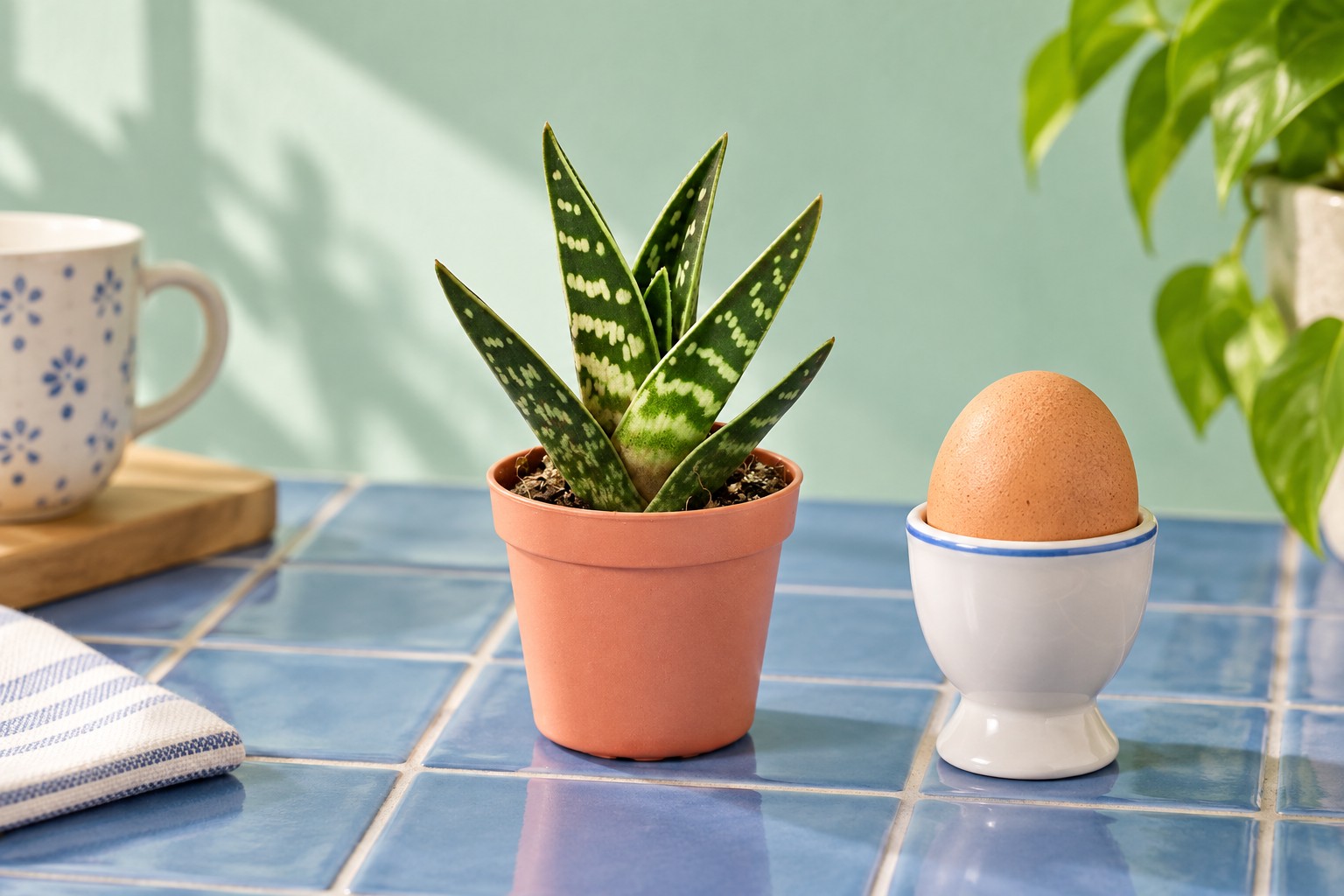
This plant at Exotenherz
Check the shop offer for current availability, price and what is included.
The linked shop is in German. Product details, availability and delivery information are provided in that shop.
Your care table
| Topic | What to do | Why it helps |
|---|---|---|
| Light | Bright; acclimatise gradually to direct sun. | Abrupt strong sun can cause stress. |
| Water | Let the compost dry well between watering. | Fleshy leaves store moisture. |
| Drainage | Remove remaining water completely. | Waterlogging is a common cause of root damage. |
| Rosette | Do not leave water permanently in the leaf centre. | Wet bases are prone to rot. |
| Compost | Choose mineral-rich, free-draining succulent compost. | Roots need oxygen. |
| Fertiliser | Feed sparingly during growth, following the label. | A small specimen needs only moderate feeding. |
| Winter | Keep bright and frost-free, watering much more sparingly. | Low light and cool conditions reduce consumption. |
| Use | Do not eat it or use it for skin applications. | Tiger aloe is not Aloe vera. |
Check the compost and pot weight. The care table explains how far the compost may dry.
Water only when needed. The water should reach the root ball without spilling over the rim.
Remove surplus water from the saucer or cachepot. Then return the plant to a suitable position.
A pattern of pale bands
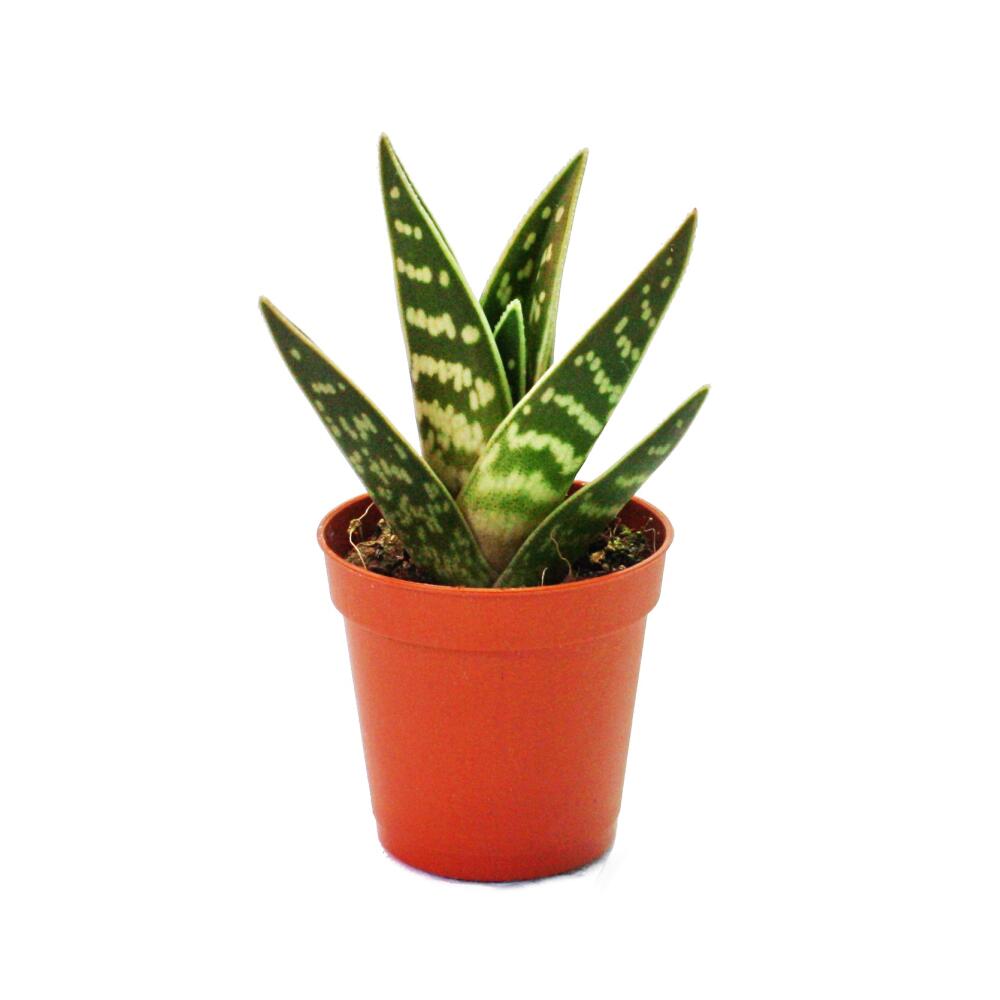
Tiger aloe carries thick, triangular leaves with irregular pale crosswise spots. Young plants in particular show a clear three-row arrangement. The current name Gonialoe variegata is encountered alongside the older Aloe variegata. It is neither a striped Haworthia nor Aloe vera. Adult plants can produce a slender flower spike, but the small listing initially centres on leaf architecture. Shape and spotting differ from leaf to leaf.
A miniature with clear proportions
The offered plant comes in a 5.5 cm pot and is approximately 6–8 cm in size. It suits a very bright small spot, not the effect of a large floor-standing plant. The scene shows this general scale with an appropriate everyday reference. The species remains comparatively manageable later but grows beyond its delivery size. The decorative pot and accessories are examples. The living plant may differ from the photograph in leaf number and orientation.
Brightness without abrupt changes
Choose a bright position and acclimatise slowly to direct sun. Strong midday sunshine may cause stress after transport or winter conditions. Reddish leaves are therefore not automatically a desirable colour goal. Check heat and root-ball moisture too. A dark spot encourages weak, stretched growth. A bright, frost-free position remains important in winter. The species’ drought adaptation does not make frost safe in a small pot.
Wet roots are the greater risk
Let the compost dry well between watering. Water the compost thoroughly as needed, then let water drain completely. Do not constantly water into the rosette centre. Soft leaves in a wet root ball may indicate root damage and should not be treated with even more water. Water particularly sparingly during cooler, low-light periods. Still check the miniature regularly, as its small root ball has limited reserves.
Mineral structure and suitable pot size
A free-draining succulent mix with stable mineral ingredients is suitable. A pot without drainage holes remains inappropriate, even if gravel is added at the bottom. Keep the base at the same height when repotting and provide only a little more room. Offsets can later be separated carefully once sufficiently developed. Feed sparingly during visible growth, following the label. Heavy feeding does not make a young rosette grow faster and healthier.
Preserve the pattern and take changes seriously
Remove dust gently and inspect between leaves for mealybugs. Loosen completely dead outer leaves carefully. Damp, dark areas at the base or a soft centre require close inspection. Tiger aloe is an ornamental plant and is not used for eating or homemade skin remedies. A calm, bright position and deliberate pauses between watering maintain its clear form.
One plant, several views
Good to know
Why is it also called Aloe variegata?
That is the older botanical name. Today the species is listed as Gonialoe variegata.
Are red leaves normal?
Colouring may be linked to light and stress. Check strong sun, heat and root-ball moisture rather than forcing it deliberately.
How often does the miniature need water?
After it has dried well, depending on light and temperature. Check the small pot regularly but do not water it daily.
Can I use the leaves like Aloe vera?
No. This species is grown as an ornamental plant; those uses are not recommended.
Sources and editorial note
Sources checked: 15 September 2026. Product details and delivery contents follow the linked shop listing. Care has been checked against the cited specialist sources and should be adapted to the plant’s condition, position and season.