
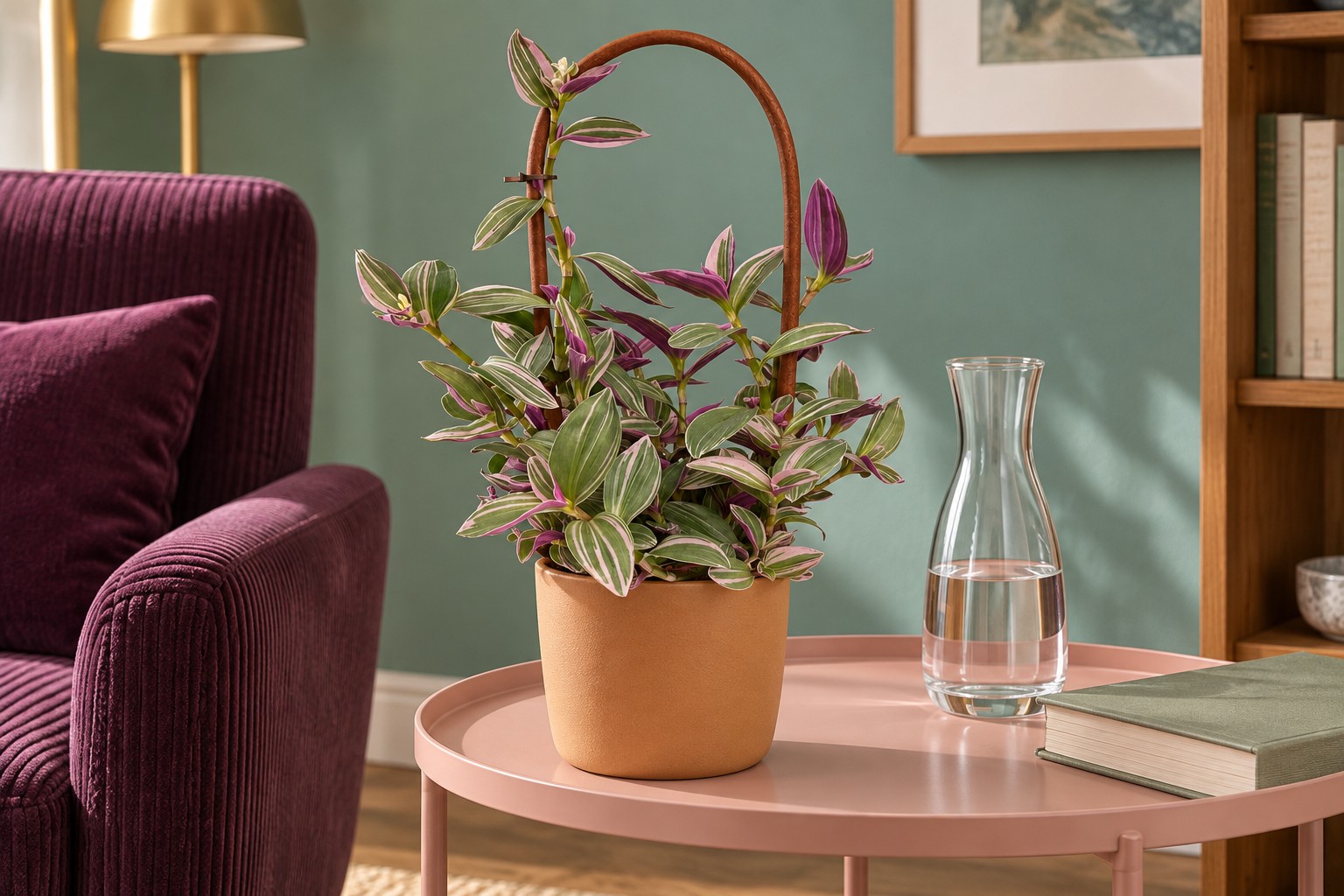
This plant at Exotenherz
Check the shop offer for current availability, price and what is included.
The linked shop is in German. Product details, availability and delivery information are provided in that shop.
Your care table
| Topic | What to do | Why it helps |
|---|---|---|
| Light | Place in bright conditions protected from hot midday sun. | Light supports the pink-and-green markings. |
| Water | Allow surface compost to dry, then water thoroughly. | Fleshy shoots do not tolerate persistent wetness. |
| Leaves | Apply water to the compost and keep leaf axils dry. | Long-standing moisture encourages damage. |
| Compost | Use loose houseplant compost with reliable drainage. | Air and water must reach the roots. |
| Feeding | Feed moderately during growth according to the label. | Nutrients cannot replace insufficient light. |
| Pruning | Shorten long shoots just above a node. | The plant can branch below it. |
| Winter | Keep bright and frost-free, adjusting watering to consumption. | Less growth reduces water demand. |
| Handling | Avoid sap; do not offer for eating. | Sap can irritate skin; the plant is decorative. |
Check the compost and pot weight. The care table explains how far the compost may dry.
Water only when needed. The water should reach the root ball without spilling over the rim.
Remove surplus water from the saucer or cachepot. Then return the plant to a suitable position.
A variety with a recognisable signature
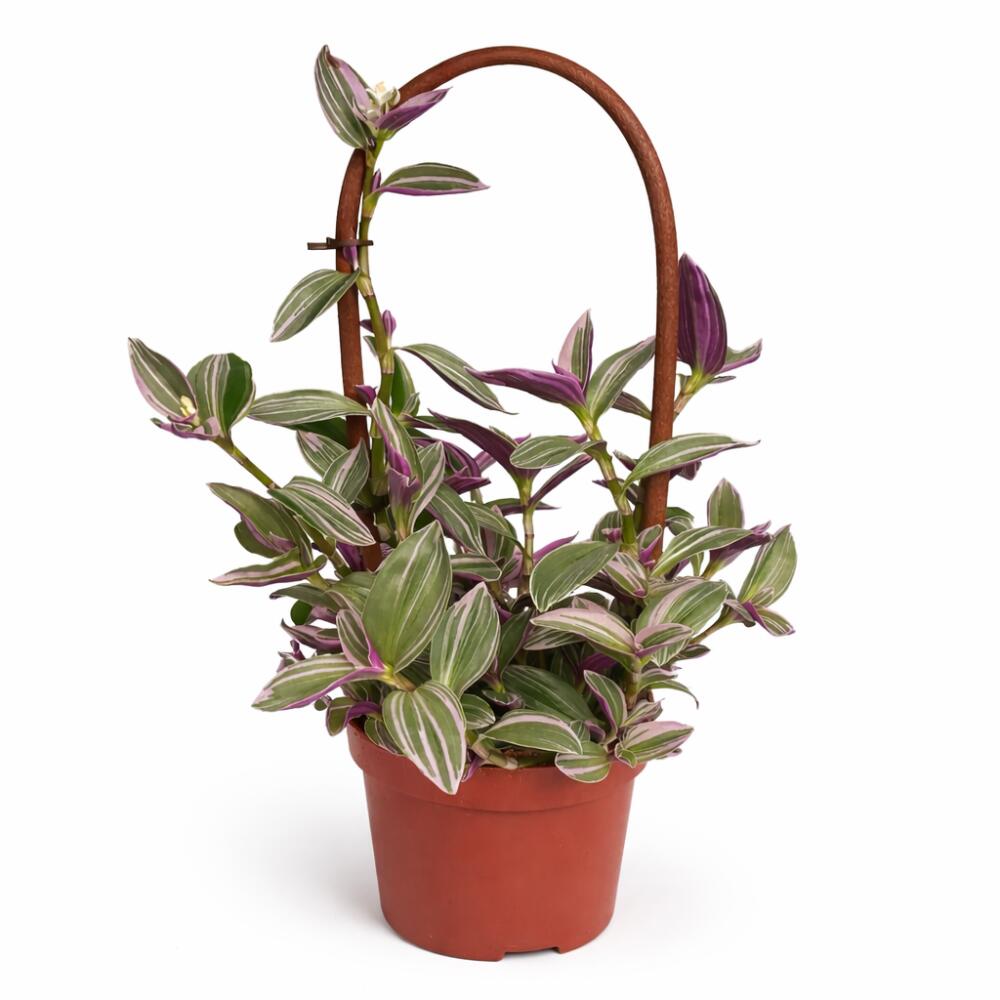
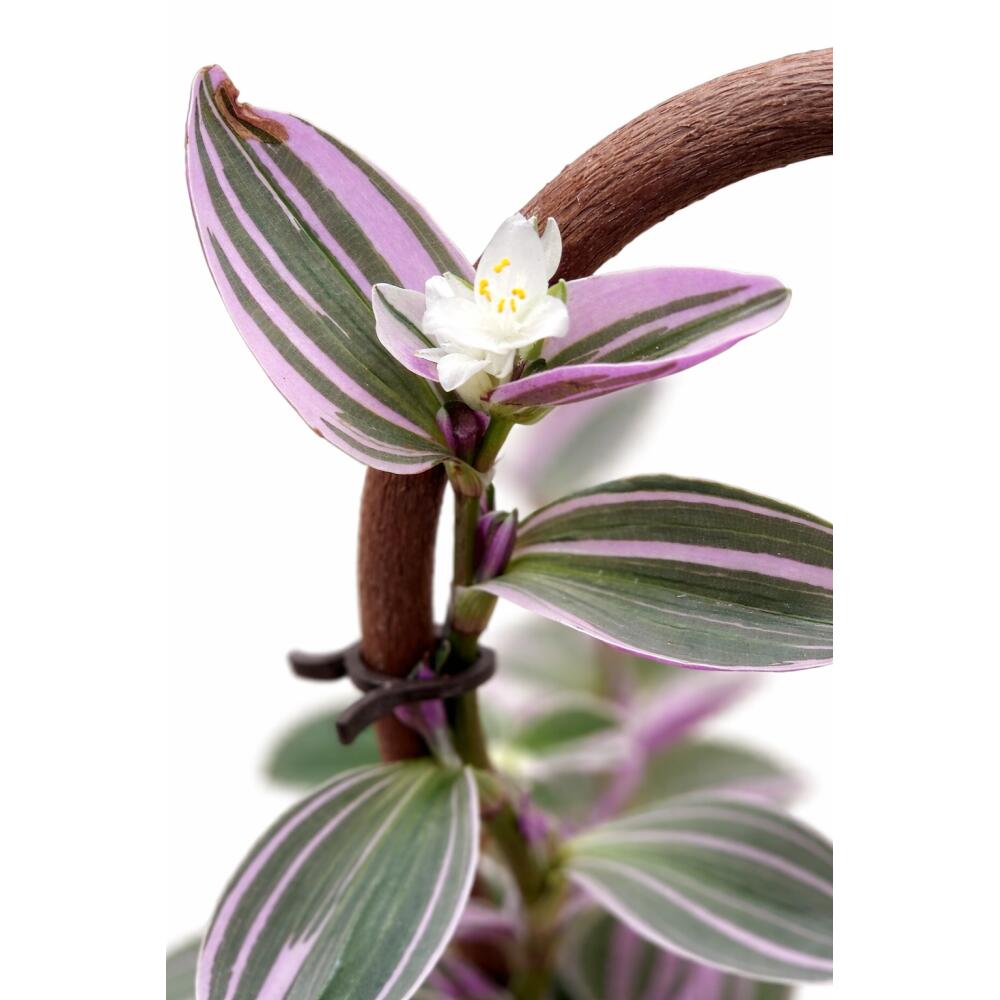
The substantial leaves carry green and pale to pink stripes, with violet tones on their undersides. Nanouk is often offered under different Tradescantia species names. The international cultivar register assigns it to Tradescantia cerinthoides. Colour varies with light and leaf age without every leaf needing to look exactly alike. Initially, the fleshy shoots stand fairly upright. As they lengthen, they lean and may grow over the pot rim.
Presented on a hoop, later styled freely
This presentation is in a 12 cm pot and offered at about 35 cm total height on a hoop. Its delivery form is therefore not a large, freely trailing hanging plant. A console in quiet colours shows the striped foliage well. The hoop keeps young shoots in shape but does not turn them into a self-clinging climber. Check ties regularly for constriction. The cachepot and decoration in the scene are not automatically part of the product.
Brightness brings colour to the foliage
Plenty of indirect daylight supports the markings. A little gentle morning or evening sunshine may suit it after acclimatisation; hot midday sun behind glass is avoided. With insufficient light, gaps between leaves become longer and colours may look paler. Move the plant gradually closer to an appropriate light source then. A draught-free indoor position is favourable. In winter, the brightest suitable position is more valuable than additional feeding.
Water onto compost, not into leaf sheaths
Let the upper compost layer dry before watering thoroughly. Direct water onto the compost so it does not remain between leaves and stems for long. Let the pot drain afterwards. Repeated misting is not a necessary care routine. Check brown areas for wetness, sun exposure and mechanical damage. A soft, dark shoot base requires examination of the root ball, not more water.
Encourage branching through gentle pruning
A clean cut just above a node can shorten an overlong tip and encourage branching. Initially remove only as much as needed for a good shape. Work gradually on old shoots that are bare below. Sap may irritate skin; gloves protect sensitive skin while pruning. Cut material and the houseplant belong neither in the kitchen nor within reach of nibbling pets.
Support the root ball
Loose houseplant compost and a nursery pot with holes are sufficient. A well-rooted specimen is moved into a slightly larger container in spring. While working, check leaf undersides and tight bases for mealybugs. Feed during active growth according to the label, taking account of already fertilised compost. Demand falls noticeably during low-light months. The most attractive Nanouk results from small, regular checks rather than constant moving or strong fertiliser applications.
One plant, several views
Good to know
Is Nanouk a climber?
Its shoots grow upright initially and later trail. A hoop shapes them, but they do not cling to a wall on their own.
Why are the pink areas becoming paler?
Light levels influence colour. Check leaf age too and avoid an abrupt move into strong sunshine.
Should I mist the leaves?
That is not necessary. Appropriate root-ball moisture and air exchange without constantly wet leaf sheaths are more important.
How does it stay bushy?
Gently shorten healthy long shoot tips above a node and provide sufficient daylight.
Sources and editorial note
- Product and delivery contents: Exotenherz
- Tradescantia Cultivar Register: Nanouk
- NC State Extension: plant profile
Sources checked: 15 September 2026. Product details and delivery contents follow the linked shop listing. Care has been checked against the specialist sources cited and must be adapted to the plant’s condition, position and season.