
This plant at Exotenherz
Check the shop offer for current availability, price and what is included.
Check the selected shop offer for price, availability and delivery contents.
Your care table
| Topic | What to do | Why it helps |
|---|---|---|
| Light | Position brightly with filtered daylight. | Colourful leaves need light; hot midday sun may damage them. |
| Water | Let the surface dry slightly, then water the root ball thoroughly. | Fleshy stems store some water; permanently wet roots remain sensitive. |
| Drainage | Allow drainage after watering and empty the cachepot. | A decorative outer covering should not form a water reservoir. |
| Soil | Choose loose, well-draining houseplant soil. | Air in the root ball supports new roots. |
| Fertiliser | During fresh growth, feed sparingly according to the label. | Needs decrease in slow, low-light phases. |
| Pruning | Selectively shorten long shoot tips; wear gloves. | Branching can be encouraged; sap may irritate sensitive skin. |
| Repotting | Move only to a suitable next pot size once roots densely fill the space. | A large unrooted soil reserve stays damp unnecessarily long. |
| Winter | Keep bright and frost-free, aligning water with actual need. | Less daylight usually means less growth. |
Check the compost and pot weight. The care table explains how far the compost may dry.
Water only when needed. The water should reach the root ball without spilling over the rim.
Remove surplus water from the saucer or cachepot. Then return the plant to a suitable position.
Pale stripes accompany the green
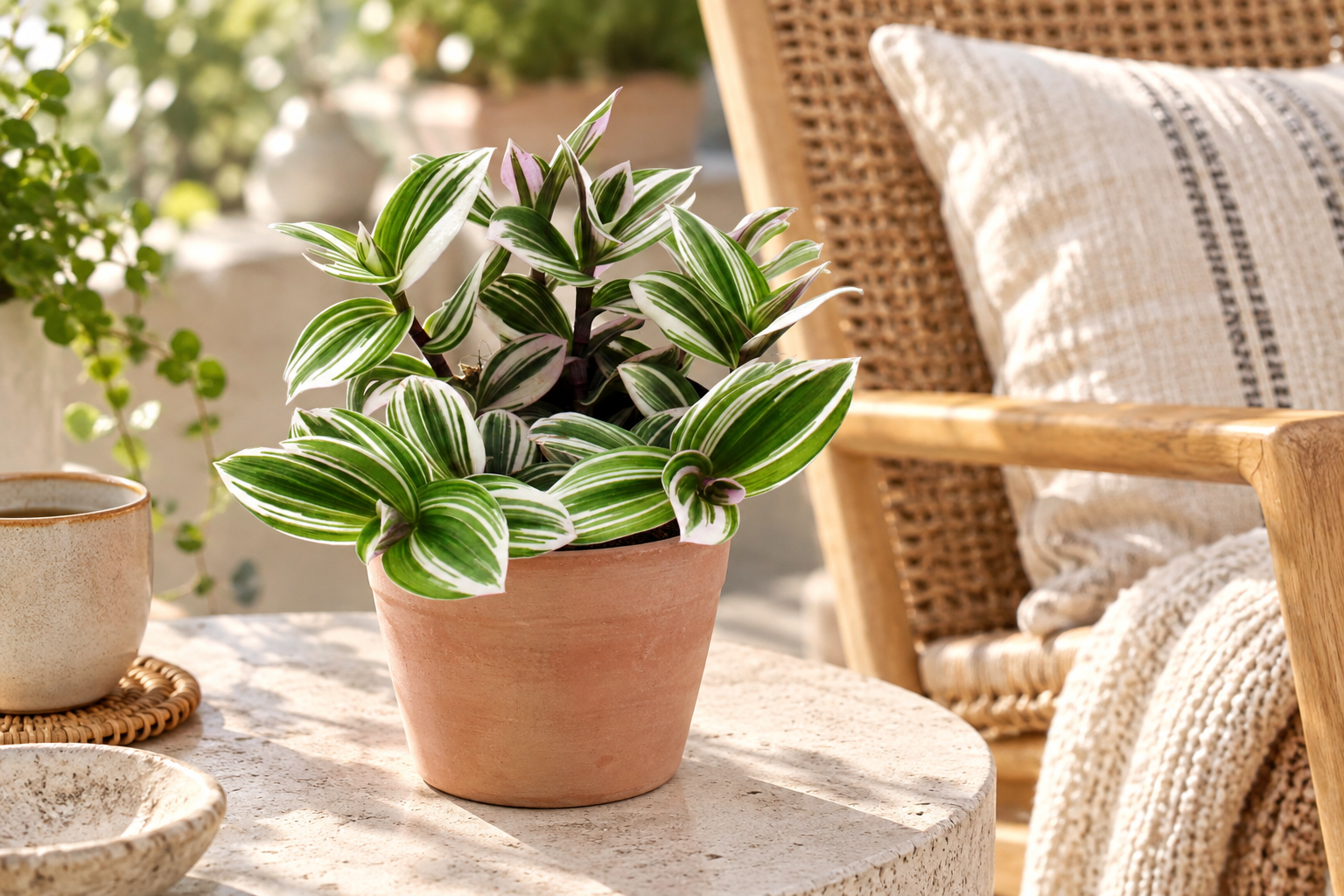
White is not a plant of entirely white leaves. In the original photograph, pale lengthwise stripes alternate with green areas, while purple undersides become visible from the side. This little colour change is precisely what appeals to us. Young leaves initially sit close together and form a compact structure. Beside warm wood or a woven reading chair, the markings stand out beautifully. A calm background helps more than additional colourful decoration. Sitting at eye level while watering also reveals differences between older foliage and a fresh shoot tip.
Putting the young supplied plant in context
Tradescantia White is offered in a 12 cm pot. Pot size is confirmed in delivery information. No fixed overall height is listed. We use White as a trade name without promising additional botanical ancestry. The scene follows the original plant’s young structure. Cachepot, furniture and other items are not part of the offer. With time, stems become longer and may grow over the edge. A position where they stay free is better than a narrow niche between heavy books.
Colour needs a suitable light position
Choose bright filtered daylight. Particularly with pale leaf areas, it is worth checking an apparently friendly place for actual brightness. A sideboard deep in the room may be much darker than the same surface beside a large bright opening. Carefully shield hot midday sun behind glass and do not increase it suddenly after transport. In insufficient light, stems often become longer and looser. A few new leaves then tell more than one old leaf. We change the position gently and give the plant time afterwards to develop new growth.
Water thoroughly and drain completely
Upper soil may dry slightly before the root ball is supplied again. Feel it and compare pot weight rather than watering by a rigid calendar. Give water slowly until it reaches the root ball, then remove excess from the cachepot. Fleshy leaves do not make White a plant for weeks of complete dryness. Persistent wetness is equally unfavourable. If stems droop, check soil first. An already heavy wet pot is not watered again as a precaution. If the root ball stays wet unusually long, consider light, substrate and container size together.
A beautiful form grows from a few actions
Individual overlong tips can be shortened during vigorous growth. Cutting may encourage new side branches without continually shaping the plant strictly. Use clean tools and gloves; tradescantias may irritate sensitive skin. Healthy stem sections with suitable nodes can be rooted. The old plant and a new cutting must both receive enough light afterwards. If one stem appears almost entirely green, watch its further development and cut back if needed. Additional water will not turn such a leaf white-striped again.
Let root space and nutrients develop calmly
Loose houseplant soil combines moisture storage with good aeration. When roots densely fill the ball, move gently to a slightly larger pot. A very large pot holds much damp soil not yet used by young roots. During new stem growth, feed sparingly according to the label. With fresh pre-fertilised soil, reduce extra food accordingly. Fertiliser does not solve insufficient light. In winter, the plant stays bright and frost-free but often grows more slowly. Then adjust water rather than continuing the supplies of a warm bright summer day unchanged.
Use new growth as your guide
A dried tip is a reason to look, but not yet an exact diagnosis. Consider root-ball moisture, strong sun, heating air and a position change together. Inspect leaf undersides and stem nodes regularly too. Small pests show up there sooner than on an already weakened plant. Older long stems may become barer below; gentle rejuvenation then belongs to care. We follow fresh tips. When new leaves arrive densely and healthily, White develops again the light lively form we like so much about this small tradescantia.
One plant, several views

Good to know
Are the leaves entirely white?
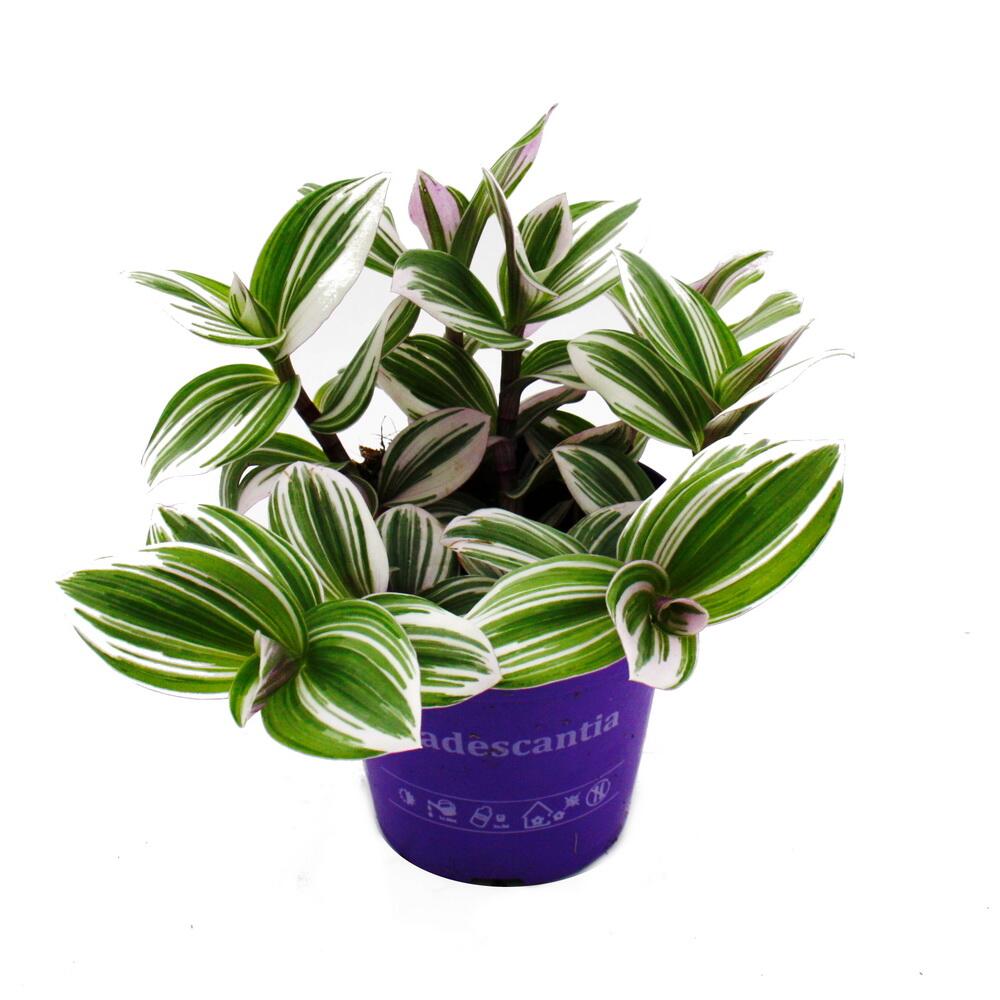
No. The original shows white to creamy-white stripes between green areas and purple undersides.
Which pot size applies?
Delivery information lists 12 cm.
Is a specific height guaranteed?
No. No fixed overall height is listed in the offer.
Why are stems growing loosely?
Too little light may lengthen gaps. Check position and new leaves rather than just feeding more.
Can I root a stem?
Healthy tips with suitable nodes suit a cutting attempt. Use gloves and clean tools.
May water remain in the cachepot?
No. Let it drain after watering and remove excess.
Sources and editorial note
- Exotenherz: offer and original images (02.10.2026)
- RHS: Tradescantia zebrina and indoor cultivation (02.10.2026)
- RHS: houseplant care (02.10.2026)
Shop offer, article number, GTIN, availability and original images checked directly on 02.10.2026. Specialist sources read directly. Pot size 12 cm taken from delivery data rather than the typo 12m. No uncertain Nanouk ancestry or entirely white leaf colour claimed.