
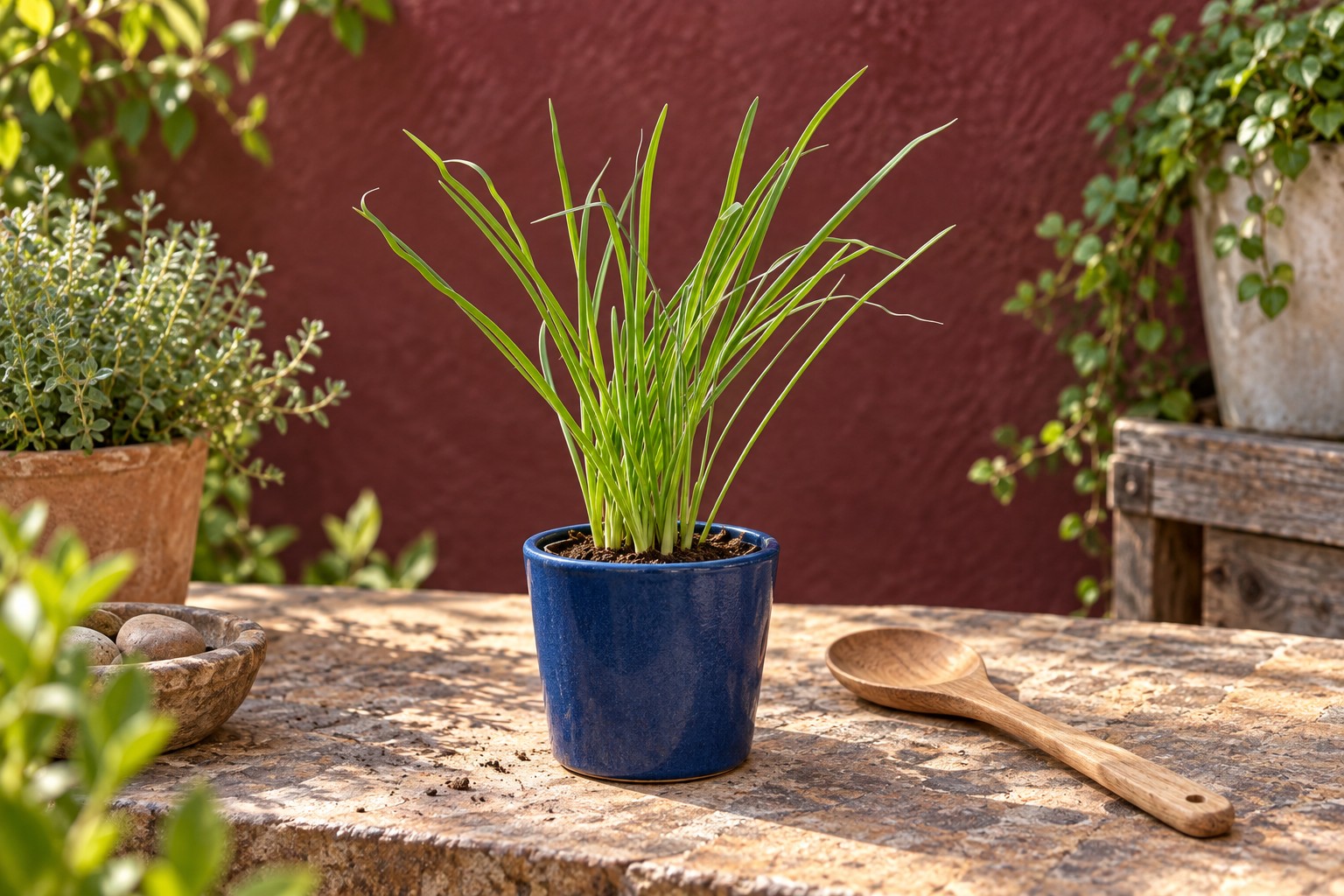
This plant at Exotenherz
Check the shop offer for current availability, price and what is included.
The linked shop is in German. Product details, availability and delivery information are provided in that shop.
Your care table
| Topic | What to do | Why it helps |
|---|---|---|
| Light | Sunny to bright partial shade. | Sufficient light supports strong leaves and possible flowers. |
| Water | Water regularly according to need during growth. | Young pots dry faster than established clumps. |
| Soil | Loose and freely draining; do not plant the clump too deep. | Permanently wet roots become weakened. |
| Feed | Feed moderately as needed during active growth. | Consider nutrients already present in the compost. |
| Harvest | Wash healthy leaves or flowers and use sparingly. | Leave young plants enough green leaf area. |
| Care | Remove dry outer leaves and watch for slugs and snails. | A clean clump is easier to assess. |
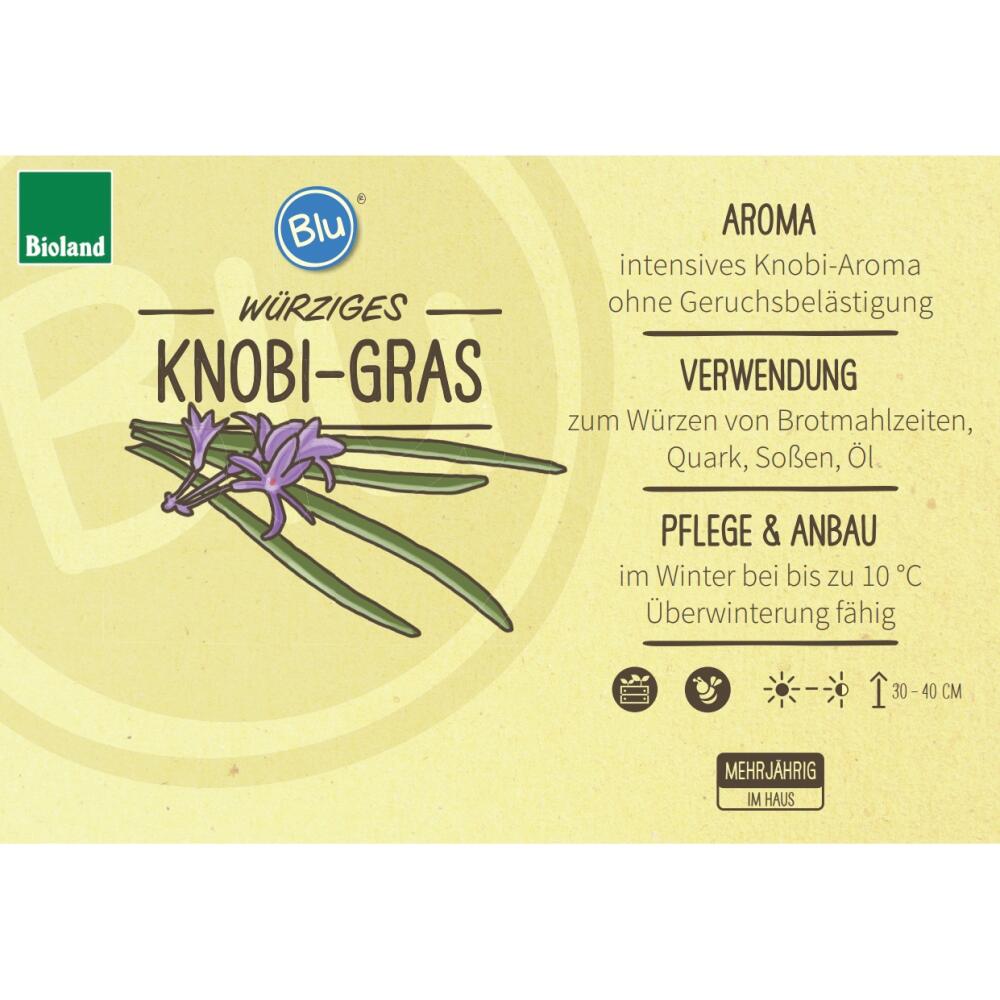
| Winter | Bright and frost-free, from around 10 °C for this offer. | Regional outdoor reports do not guarantee results for small pots. |
| Rest period | Water less and do not feed without growth. | Lower consumption calls for adjusted supplies. |
Check the compost and pot weight. The care table explains how far the compost may dry.
Water only when needed. The water should reach the root ball without spilling over the rim.
Remove surplus water from the saucer or cachepot. Then return the plant to a suitable position.
A grass-like appearance, botanically a different family
Tulbaghia violacea belongs to the amaryllis family. Its narrow flat leaves grow as a loose clump and look grass-like, making the German name Knobi-Gras memorable. Cutting releases a garlic-like smell. During the season, delicate lilac flowers can open above them in small umbels. The plant is not a true grass and is not identical to garlic chives, Allium tuberosum. This distinction matters for its annual rhythm, as the South African Tulbaghia is grown here as a container plant requiring frost-free overwintering.
Begin with a young leafy clump
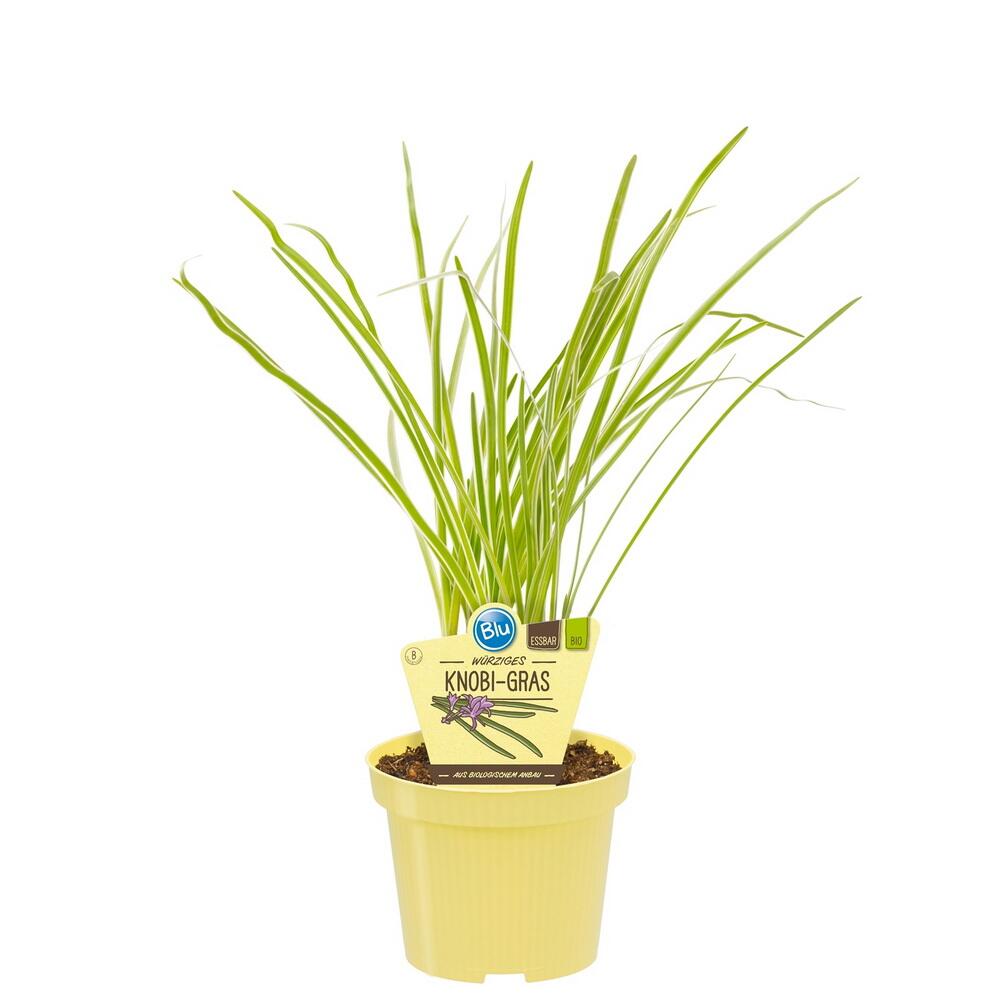
The offer is an organically grown plant in a 12 cm pot. The stated 30 to 40 cm refers to later growth; delivery height is not specified. The original photograph shows a young green leafy clump without open flowers, so the scene does not add flowers as a delivery feature. With good care, the clump can become denser. Its own herb pot or a position in a suitable summer arrangement shows the fine leaves well. Companion plants should have similar requirements for light, water and winter position.
Sun and freely draining soil for healthy roots
A sunny to bright partially shaded position is suitable during the summer months. After sheltered cultivation, gradually accustom it to direct sunshine. The plant tolerates warmth but needs an appropriate water supply for good growth. Use loose, freely draining compost and keep drainage holes open. Do not plant the clump unnecessarily deep. Water must drain from a container; a closed bowl without drainage makes long-term cultivation harder. Once roots fill the delivery pot well, the plant can move into an appropriately larger container.
Match water and nutrition to growth
Water thoroughly as needed and let the surface dry a little between waterings. Established plants tolerate drier periods better than a newly delivered plant in a small pot. Drought tolerance does not mean that even growth is possible without water. Feed moderately as needed during strong growth. Yellow outer leaves can reflect ageing but may also indicate unsuitable moisture. Check the root ball before adding fertiliser. More watering does not reliably improve wilted leaves in already wet compost.
Harvest without exhausting the young clump
Leaves and flowers are used as culinary seasoning. Harvest clean healthy parts, wash them and use sparingly at first, for example finely sliced over a savoury dish. A garlic aroma does not mean that no smell can be noticeable after eating. No medicinal effects are promised here. Take only some leaves from young plants and retain enough green area for further growth. Remove old dry leaves. Dense older clumps can be divided at a suitable opportunity, with each section needing healthy roots and shoots.
A bright place through the cold season
Tulbaghia’s frost tolerance is described differently by region. For this small herb offer, the shop recommendation of bright overwintering at a minimum of around 10 °C is a cautious, understandable approach. Bring it indoors before frost, water less with lower consumption and do not keep it permanently wet. Pause feeding when growth stops. Before bringing it indoors, also check for slugs, snails and damaged leaves. In spring, gradually accustom it to stronger sunshine and outdoor air. New flowers are an attractive extra, while a healthy leafy clump remains the foundation of cultivation.
One plant, several views
Good to know
Is society garlic the same as garlic chives?
No. Tulbaghia violacea and Allium tuberosum are different plants with different growing requirements.
Does the plant arrive with lilac flowers?
This is not promised. The selected original photograph shows a young leafy clump without open flowers.
Can I use the leaves like chives?
Yes, washed as culinary seasoning in small quantities. Do not remove all the leaves of young plants at once.
How can I keep it for several years?
Provide suitable summer care and bring it into bright shelter before frost. A winter position from around 10 °C is recommended for this shop offer.
Sources and editorial note
Sources checked: 15 September 2026. Product information and the contents of delivery follow the linked shop offer. Care advice was checked against the cited specialist sources and should still be adapted to the plant’s condition, position and season.