
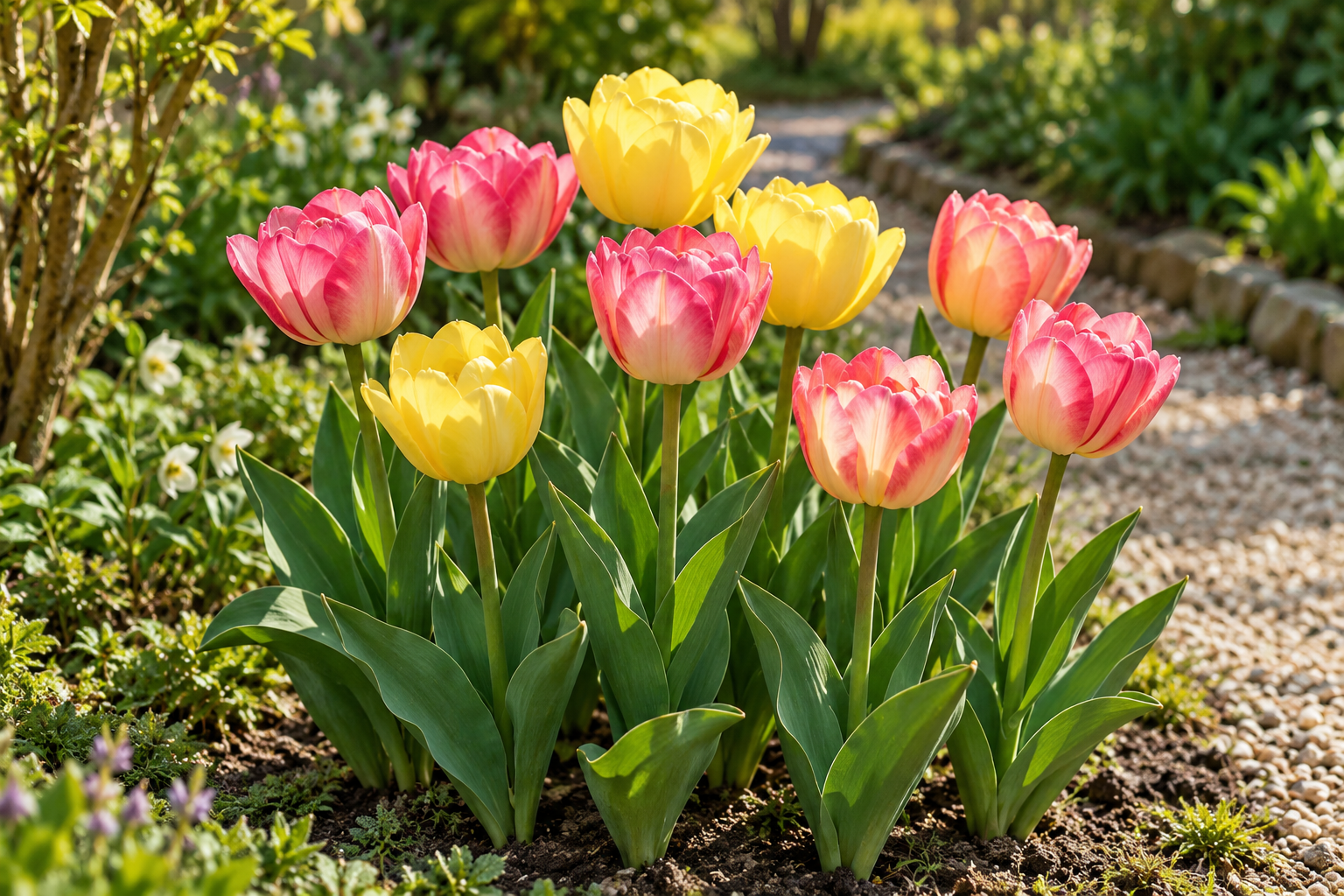
This plant at Exotenherz
Check the shop offer for current availability, price and what is included.
Product and delivery details are given in the individual offer.
Your care table
| Topic | What to do | Why it helps |
|---|---|---|
| Position | Choose a sunny wind-sheltered place. | Double flowers remain easier to observe there. |
| Planting | Plant bulbs in autumn with points upwards. | The later spring display begins with root space. |
| Depth | Use two to three bulb heights as guidance. | Also follow the exact packet instructions. |
| Spacing | Allow at least roughly two bulb widths. | Foliage and roots need space. |
| Water | Supply during emerging growth when soil is dry. | A wet root ball receives no additional reserve watering. |
| Nutrients | Feed during growth according to the label when continuing cultivation. | Account for existing soil nutrition. |
| After flowering | Remove spent heads and preserve green foliage. | The bulb phase continues after flowering. |
| Storage | Keep lifted bulbs dry and airy. | Lift only after foliage dies back; do not eat ornamental bulbs. |
For young plants, feel the soil directly at the root ball. The surface and deeper soil may have different moisture levels.
Water thoroughly after planting; later, water according to the soil, weather and establishment rather than a fixed calendar.
Avoid standing water. For plants in containers, also check that water runs out of the drainage hole.
A spring picture of soft colour transitions
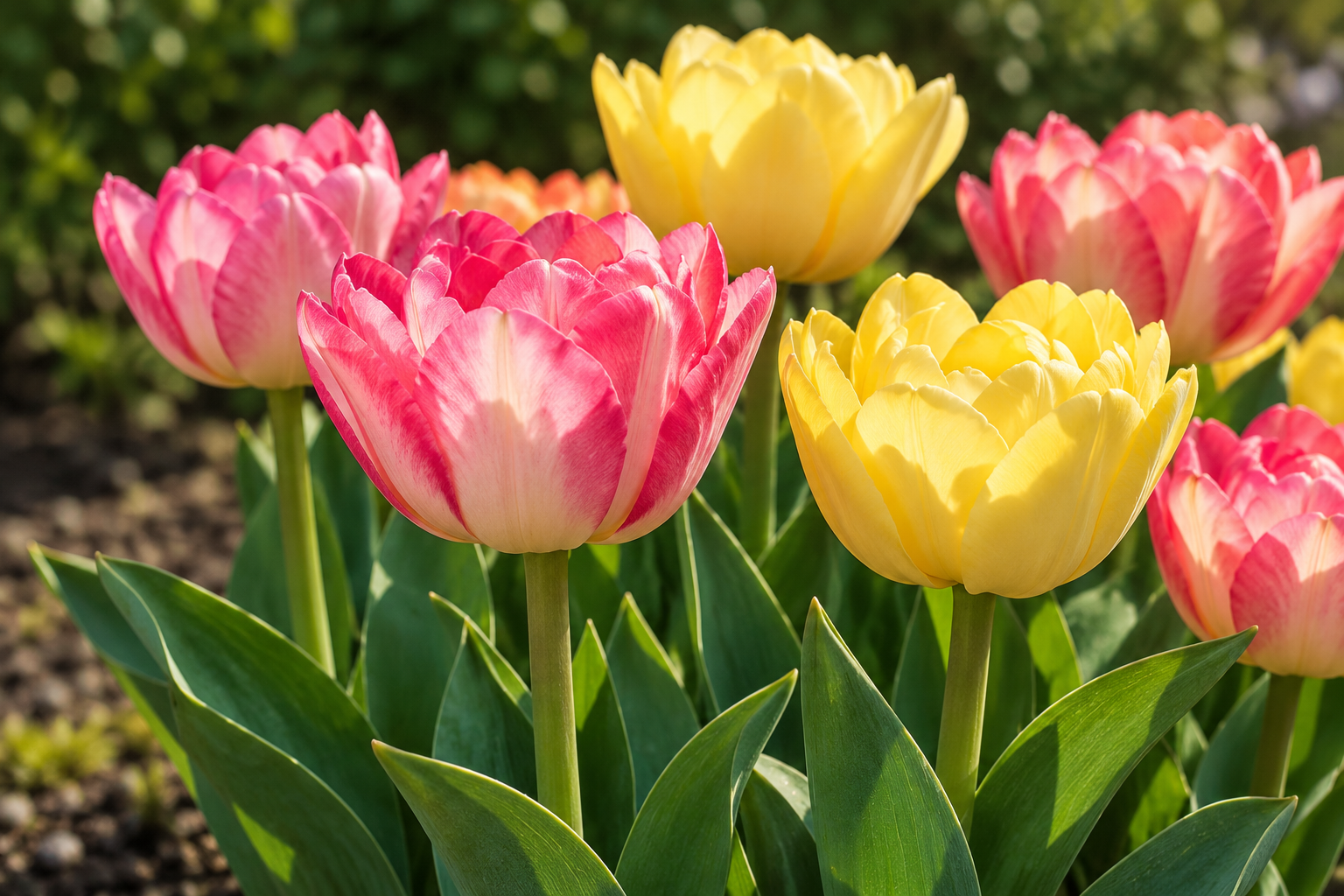
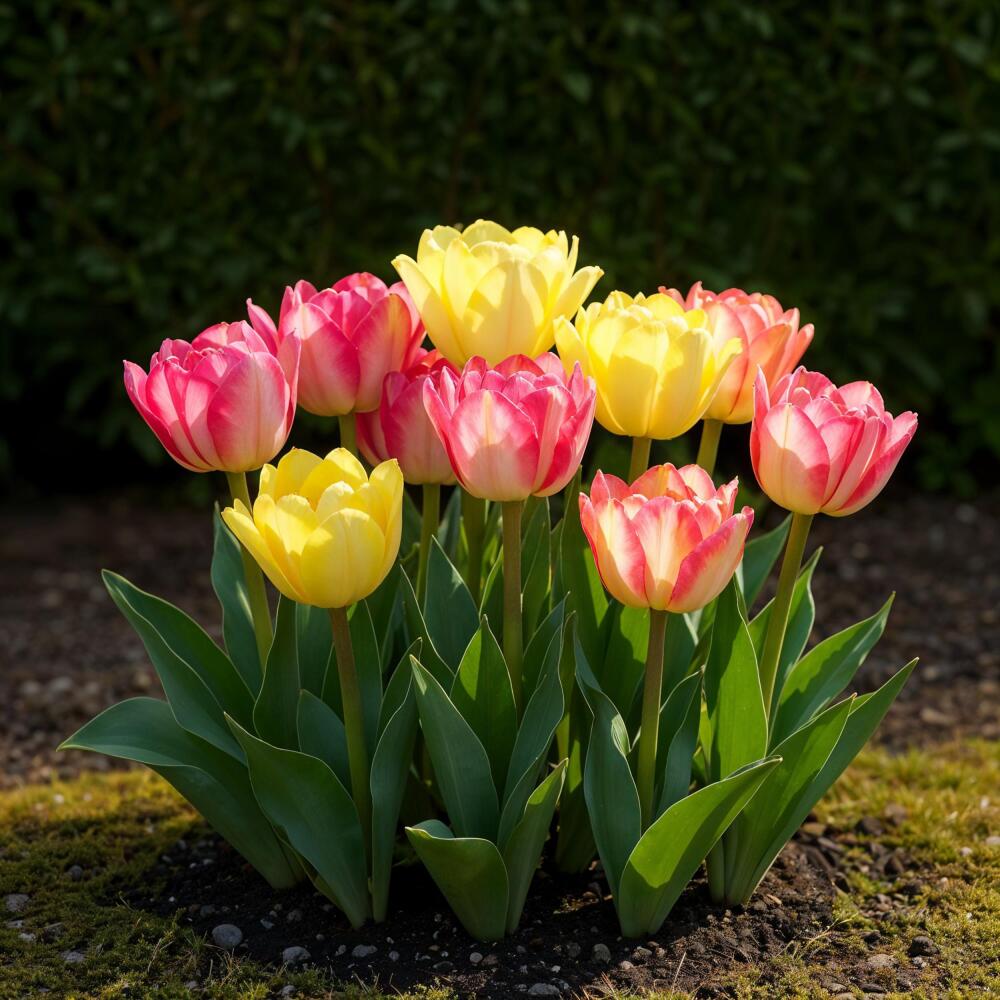
The shop presentation of Foxtrot Mix combines double tulips in pink, cream and yellow. Several layers of broad petals give the flowers a bowl-like shape. Darker pink edges can stand out against a paler ground. Familiar broad green tulip leaves stand beneath the stems. Beside a pale garden path, the mixture looks welcoming and easy to appreciate close up. The portrait covers a trade mixture. It does not turn this into one cultivar whose exact colour distribution every bulb must repeat.
Twelve bulbs are not a finished flowering tub
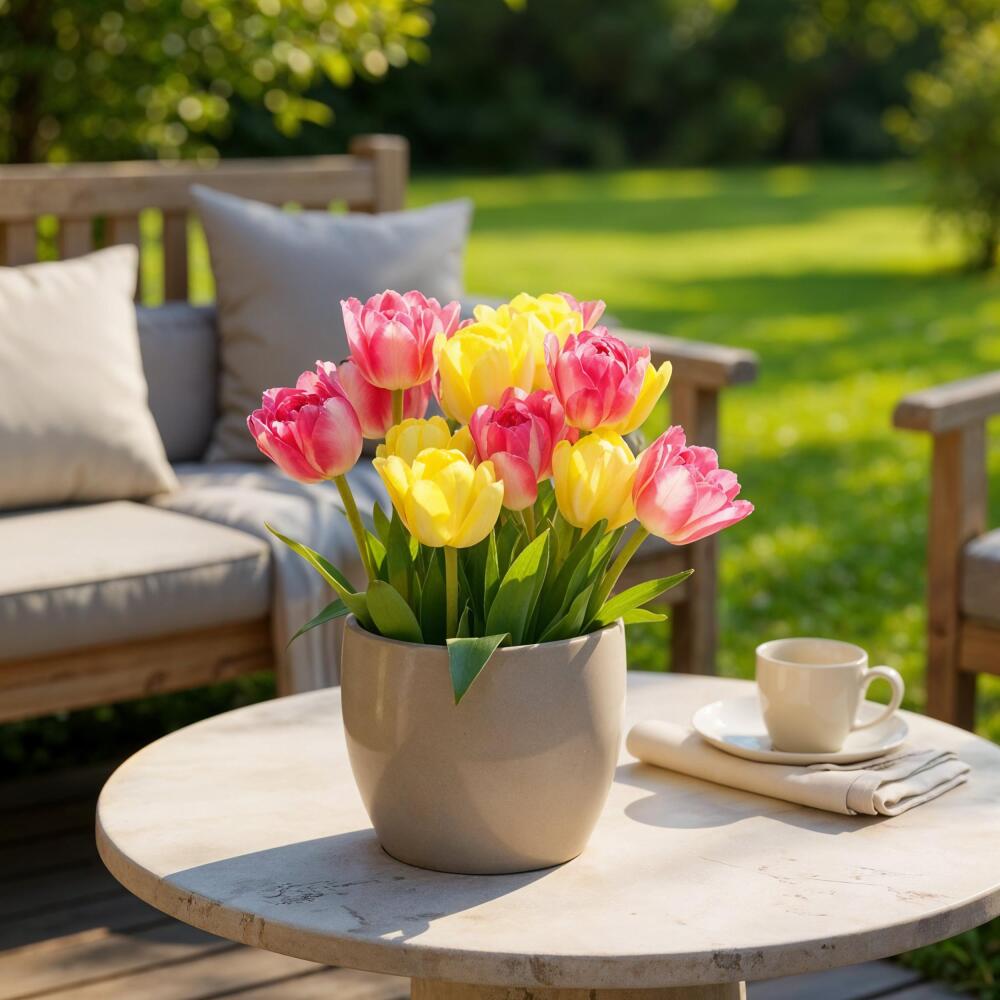
The associated assortment contains twelve bulbs for planting. Photographs show a later flowering display; containers and terrace decorations are not part of the planting material. The offer’s size grade is not adopted as a bulb diameter measured by us. Distribute bulbs according to available root space. A container should allow foliage and drainage room instead of simply promising as many flowers as possible in a small area. A mixture’s colour distribution can differ. Plan its overall effect rather than a fixed number of yellow or pink flowers.
Shelter and soil matter together
A sunny sheltered position makes the later display easy to see. Watch for free drainage too, especially in the wet season. A sheltered terrace can be an attractive cultivation place if its container genuinely has drainage holes. Observe the bed after rain. Double tulip flowers carry more petals than single forms; a quiet location avoids unnecessary strain from strong air movement. Preserve enough room beside the flowers for green foliage, still needed after the finest spring days.
Prepare autumn planting for the spring moment
Plant in autumn into open workable soil, with the bulb point facing upwards. For tulips, roughly two to three bulb heights provides depth guidance; spacing is at least around two bulb widths. Follow the exact packet as well. Until planting, keep material cool, dry and airy. Small groups make the mixture look more natural than a strictly regular line. Mark the planting spot so later garden tasks do not accidentally expose or damage the bulbs.
Flowering is one stage of the annual cycle
During emerging growth, check soil in dry weather. Water as needed without further saturating an already wet root zone. If continued cultivation is planned, supply nutrients moderately during growth according to the label. Remove spent heads but leave green leaves until natural dieback. Neighbouring planting can later partly accompany them without cutting them too early. Repeat flowering depends on the exact selection and suitable cultivation. A beautiful first flowering year does not guarantee the same number of flowers every following spring.
The mixture can look slightly different each spring
Foxtrot is documented as an individual cultivar; these details are not automatically a full cultivar list for the shop mixture. Record actual flower colours, heights and timings of your group in the plant book. Photograph the entire planting and an individual double flower. You can then recognise changes next spring. Lifted bulbs are stored dry and airy only after foliage dies back. Wear gloves for handling and keep ornamental planting material separate from food and beyond curious children and animals.
One plant, several views
Good to know
Will I receive only pink Foxtrot tulips?
The offer is called Foxtrot Mix and shows different shades. An exclusively pink mixture is not promised.
Does the offer contain a planted tub?
No. The associated assortment contains twelve bulbs for planting.
Are all mixed tulips exactly 30 cm tall?
No. The specialist value for Foxtrot is not adopted as a uniform promise for every form in the mixture.
When do I plant the bulbs?
In autumn while the ground is workable.
Should I cut everything off after flowering?
Remove spent heads but preserve green leaves until natural dieback.
Sources and editorial note
- Exotenherz: offer and original photographs (03.10.2026)
- RHS – Foxtrot as a single variety, distinction from the trade mixture (03.10.2026)
- RHS – planting tulips and caring for them after flowering (03.10.2026)
Shop offer, article number, GTIN, availability and original images checked directly on 02.10.2026; specialist acceptance 03.10.2026. Specialist sources read directly. Exact shop article, SKU, dimensions and both unchanged original views checked on 03.10.2026. Currently not orderable: knowledge portrait without purchasing link or social sending permission. Specialist sources read directly; trade name separated from general species care. Review text and images against published reference portraits. No Wawi or tool changes. Currently not orderable: knowledge portrait without purchasing link; social drafts not cleared for sending.